Take Up the Tale: Bringing the Epic Tradition Into Our Time, with Malcolm Guite
The Trinity Forum and Rabbit Room present a special Evening Conversation with Malcolm Guite.
Together we celebrate the forthcoming publication of Galahad and the Grail, the first volume of his epic poem, Merlin’s Isle: An Arthuriad, published by Rabbit Room Press.
A poet, Anglican priest, and Trinity Forum Senior Fellow, Malcolm will describe his vision in creating this epic ballad, a poetic retelling of the legends of King Arthur and the Knights of the Round Table. With beautiful woodcut illustrations by Stephen Crotts, Malcolm’s book renews in our time the ancient tradition of epic storytelling.
Malcolm’s ambitious aim is to “awaken again in the modern world that openness to beauty and mystery which prepares the heart for the coming of Christ.” As he has said:
“I’m trying to lift the veil to see; not so much to re-enchant, but to un-disenchant the world, to help us see what is already there.”

Special thanks to sponsors Cindy and Scott Anderson and to the Friends of Malcolm for support of this event!
Interested in sponsoring? Contact Campbell Vogel.
Speakers
-
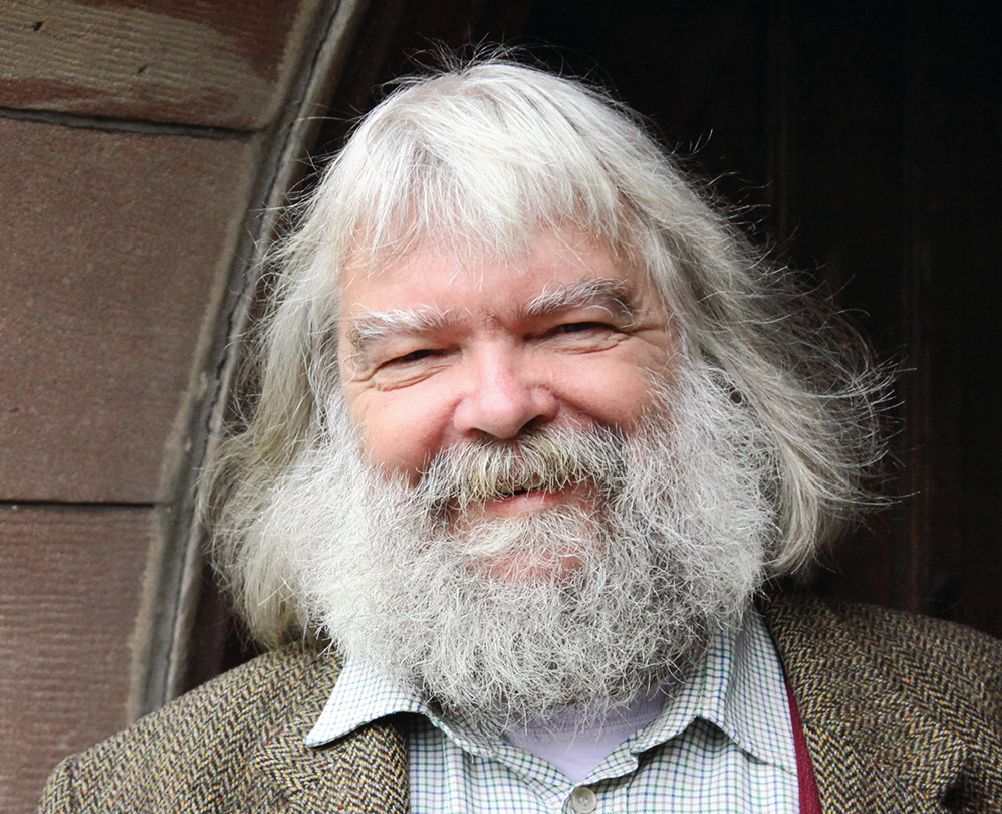 MALCOLM GUITE
 -
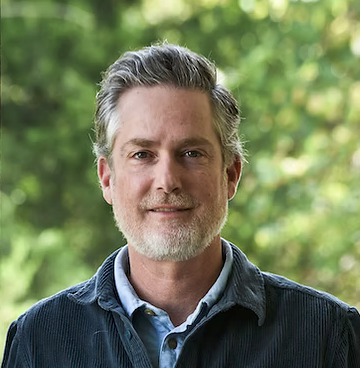 DAVE BRUNO
 -
 CHERIE HARDER
 -
 PETE PETERSON
 -
 QUESTION
It’s really great. This an incredibly beautiful crowd. You all look so wonderful. Welcome to a really special evening. We’re so glad that you’re here. My name is Dave Bruno. I work as the executive director of the Rabbit Room based out of Nashville. I want to thank Cherie and the entire Trinity Forum team. It has been such a delight to partner on this project. And I also need to give a special thanks to Tim Dalrymple and our friends at the John Templeton Foundation. That helped with some generous support to put on this evening. We’re so grateful for them. The Rabbit Room is a nonprofit ministry that this year we’re actually heading into our third decade of operations. And at the heart of the Rabbit Room, we bring together artists and communities of faith to help both flourish. So we believe that the world has been created in such a way, and Malcolm’s going to do so much better at saying this than me in such a way where artistic expression and the imagination is crucial for the formation of our souls and our communities as well. And so we do that in a number of different ways. We have many programs, but one of those is publishing, and I want to introduce Pete Peterson, who’s the publisher of Rabbit Room Press, and an amazing editor and all sorts of things. And I’m going to have you come up and share a little bit more about the evening and Malcolm.
Wow. Good evening. It is humbling to be here tonight for a whole slew of different reasons. can you raise your hand really quickly if you’re not sure what in the world a rabbit room is? Okay, I see a few hands. So, like, by way of introduction, I just want to say that my brother Andrew Peterson, the singer songwriter of whom many of you have probably heard several, well, almost 20 years ago, over 20 years ago now, he was in Oxford, England, happened into the Eagle and Child pub. And in that pub were Lewis and Tolkien used to sit down and share a pint and talk about stories. There is a room called The Rabbit Room where the inklings met, and he came back from that trip really fired up about the idea that fellowship and friendship were a key part of the development of great works of art. And he said, what if we could do something like that here in Nashville? So over the last 20 years, that’s what we’ve been experimenting with. And it certainly looks a lot different, but we believe really powerful, and we believe really powerfully in the transformative nature of storytelling, of art and how these things come together to help us, grasp the secular and the sacred and understand both in a better, more holistic way through the arts. And so we’ve been on a 20 year journey of exploring how we can do that better as artists ourselves. And so it feels in a lot of ways like this work that we have done with Malcolm.
And I checked my email the other day, and we had our first conversation about this back in 2021. So it’s been five years since we started talking about it. And I feel like this project is, in a lot of ways, the apotheosis of the Rabbit Hole mission. It brings together the sacred, the secular. It is both an epic poem. So it’s the written word, it is illustrated. It’s the visual art. And by by virtue of being a ballad, it also brings music into it, the musicality of the language. So in all ways, I feel like it’s a perfect expression of what it is we value at the Rabbit Room. And I told Malcolm earlier that today, which is the official release date, for this book in the UK, I’m sorry, North Americans, you have to wait another month, but it is out there if you want to get it early. it is the official release date in the UK, and it is right and proper that it releases on Merlin’s Isle first, I think. And that also means that today is the day in which Malcolm, ceases to be a mere poet or even a great poet, and joins the ranks of the epic poets. So, I don’t want to take up any more of the time, because I really want you guys to spend time with Malcolm and his great work tonight. so I’m going to invite Cherie Harder, the president of the Trinity Forum, to come up here and introduce Malcolm. Thank you all.
Well, thank you so much, Pete and Dave. It’s such a pleasure to get to partner with you and the Rabbit Room and hosting this evening conversation. And welcome to all of you to tonight’s evening conversation with Malcolm. Guide on take up the tale. We are just so thrilled that each and every one of you are here. I’d also like to just recognize and thank a few people who played a special role in tonight’s evening conversation. Our sponsors, whose generosity and support have helped make this evening possible, including Cindy and Scott Anderson and the friends of Malcolm. You know who you are. We are grateful. I also want to recognize and thank our board chairman, Richard Miles, and our trustee, Catherine Eshelman, who have joined us for this evening, and to recognize Stephen Cross, who provided the gorgeous illustrations that you’ll see for Galahad and the Grail. So he is here somewhere tonight. Stop by and meet him. And I’d also like to just send a special welcome to our first time attendees. And those of you, we know there are several of you who have traveled very far distances to be here this evening. We’re just we are thrilled that you’re here. If you are one of those first time attendees, or otherwise somewhat unfamiliar with the work of the Trinity Forum, part of our mission here at the forum is to cultivate, curate, and disseminate the best of Christian thought and to provide a place and resources for leaders to wrestle with the big questions of life in the context of faith, and ultimately to come to better know the author of the answers.
And part of the way that we do that is by offering conversations and discussions, like our program tonight with some of the most thoughtful scholars, artists, and leaders on ideas of enduring significance to help connect timeless wisdom with timely issues. So our guest tonight is a poet, priest, scholar and songwriter who is well known for weaving together both artistry and erudition. The ancient and the current, and sonnets and songs that invite reconsideration of the importance of the imagination in understanding and appreciating the world. Tonight, we are so delighted to get to celebrate the publication of Galahad and the Grail, the first volume in what will eventually comprise a four volume epic poem collectively titled Merlin’s Isle. And Arthur did this exciting and ambitious epic retells the story of the quest battles and adventures of King Arthur and the Knights of the Round Table. Now, if you find yourself here tonight thinking, well, you know, that sounds impressive and all, but it’s really hard to imagine what King Arthur might have at what significance he might have for life today.
Or you wonder what the point of a retelling might be. Well, our guest tonight would respond that imagination and wonder is exactly the point. And it’s that that he hopes to provoke, awaken and cultivate in his reflections on Merlin’s Isle. He reminds us that imagination is not fundamentally about fantasy or escapism, but a way of understanding and even re-enchant the world. And at a time when so many of us are bombarded with misinformation, propaganda, algorithmically driven outrage, and customized social media feeds, it can be all too easy to become inured to a sense of confusion or meaninglessness. To mistake cynicism for reality and encounter with old stories can offer wisdom and perspective to better understand where we are and orient us on the journey ahead. In fact, our guest tonight has said that unless we read old books and stories, we have no access to any other way of seeing or knowing. Our guest tonight is one of those rare guides who invites us to see our own fractured time in the light of the mythic past, and glimpse the way in which old tales can orient our hearts towards hope and home. Malcolm White is a renowned and beloved poet, priest, songwriter and scholar who has been described as what you might get if John Donne journeyed to middle earth.
Taking cues from Jerry Garcia and fashion tips from Gandalf. He is, I am very proud to say, a senior fellow of the Trinity Forum, as well as a Life Fellow of Girton College at Cambridge University, and has served for more than 20 years as a chaplain there, as well as teaching on the faculty of the Divinity School at Cambridge and lecturing widely across both England and the North America. He’s the 2023 winner of the Lanfranc Award for Education and Scholarship. A singer songwriter with his own band entitled Mystery Train and a remarkably prolific author and poet who writes the weekly column Poet’s Corner, as well as over a dozen books spanning works of poetry, criticism and anthologies including Faith, Hope and Poetry, waiting on the Word, astounding, The Seasons, and, of course, his brand new hot off the press in the UK. Not quite yet. Here work Galahad and the Grail, published by Rabbit Room Press, which we’ve invited him tonight to discuss. So after Malcolm gives his remarks, he and I will have a conversation and then we’ll open it up to questions from the audience. Malcolm, Welcome.
Thank you very much indeed for that very warm welcome. I’m not sure how to follow it. I’m looking at my watch, so, you know, I have mercy. I’m going to oh, you know, we’re going to share some poetry tonight. And, I know sometimes if people aren’t expecting that, you know, maybe it’s particularly they hear, they hear the word poetry and they just put their ears, hands and they say like, just let it be over quickly. And I totally get that. Because if you feel that way about poetry, it’s probably because, you know, lingering somewhere on the margins and edges of your mind is the unrested ghost of a really bad English teacher who, who made you feel like poetry wasn’t for you and kind of, you know, as Wordsworth said about certain kinds of critics, we murder to dissect, you know, and maybe, maybe they they just crushed your first inclinations. And the first thing that was coming. And actually, the the American poet Billy Collins has got a great description in one of his poems of that bad English teacher says her idea was that we should tie the poem to a chair and beat it with a hosepipe till it confess what it meant, you know. And he says, by contrast, you know, I wanted to put my ear up to the murmuring hive of the poem and wonder what, honey, what music the innumerable bees of its words were making, you know, very different approach to the poem.
Or he says, like poem as a canoe. I wanted to just get down and untie it and see where it sent me. Or as the knights in Thomas Malory say. Let us take the adventure that God sends. Just see what comes to us. So anyway, if the unrested ghost of that bad English teacher is still making you think. Oh, poetry. I’m going to just perform a minor exorcism now, and and I’m, I’m going to say to that to that the shade of that English teacher depart, go to the place appointed for you and never return. You know, so, so, so that teacher is now in permanent detention and it’s playtime. So we’re going to enjoy. And the first thing I mean, Sir Philip Sidney, in his defense of poetry in the 16th century, one of the first great accounts in English of what poetry is, he said two things. He said poetry must delight and instruct, and he puts delight first. Unfortunately, a lot of contemporary poetry neither delights nor instructs. I mean, T.S. Eliot rightly said, at a very difficult juncture between the years of L’entre de guerre, between the two wars, he said in this present crisis, poetry to be good, good poetry will need to be difficult. So a lot of people not so good as Elliot following him, thought, thought. That meant if it’s difficult, it’s good poetry, which is not the case. and another American poet, Stephen Spender, said the crisis for poetry after the after the Second World War was.
He said, if the traditional image of the poet is the bird that sings, the nightingale, that sings in shadiest covert darkly hid, or perhaps Milton’s eagle that with no middle flight intends to soar. Those are both birds singing and flying above the plane are all seeing all the things we all hold in common. But lifting them into music, celebrating them in verse. Giving all of you the voice and the sound and the chant and the incantation for the things that you kind of know but slipped away. And now you find them. That’s what poetry was once about. But spender in a letter actually to amazing to our own Dorothy Sayers says if the poet in the modern situation is now still the bird, the bird is in the cage. But the peculiarity of this cage is that the bars of the cage are made of mirror turned inward, and the only subject allowed to the poet is fragmented images of the self. Now I think that was a bad turn and a wrong turn in poetry. Why, poetry’s become a kind of minority pursuit. Whereas my great exemplars. You know Spenser as a national poet or Tennyson, everybody read them. And, you know, working men read them. When Tennyson I followed in Tennyson. I’m following in Tennyson’s footsteps in more ways than one, but including his inveterate pipe smoking. But when Tennyson went down, as Stephen Cross and I went down together to the West Country, first to Glastonbury and then right down to Cornwall, you know, his cab driver, which in this case was like a hansom cab.
It was, you know, a guy suddenly realizing he’s got Tennyson in the back of his cart, breaks down in tears and says, you said it for me, sir. Break, break, break. On thy cold gray stones, O sea and wood. That my heart could utter. The thoughts that arise in me. But Tennyson helped him to. To utter them. So, if the bird is in the cage with the bars made of. Made of mirrors, my whole life’s work and project as a poet was to bust open that cage and say, let’s not write wry little footnotes on life. Let’s not be swathed in so many layers of irony that we can’t remember what we’re being ironic about in the first place. Let’s go on. I’m not talking. Let’s actually let’s actually talk. I’m going to be censored now. let’s, let’s let’s bust out of the cage because what happens in that incursive self-referential thing is that in the end, what the poetry offers is another odd little adventure in the quirky world of me. So what? But if we have something that strikes deep, that strikes rich, that opens up, and that has a kind of music to it, then we can begin. Even if we simply say, as Alexander Pope modestly said, that, I want to say what oft was thought, but now so well expressed.
Shakespeare in his generation kept what they call commonplace books, because the word common was not a bad word then it was a good word. If we had something in common, if we held something in common, then that something had been proved and tested in many lives. And we even used that for one of the greatest things ever written in the English language, the Book of Common Prayer, and they kept commonplace books because what we held in common was proved and worthy of sharing. And so I’m hoping that in many places, although I’m hoping to write an exalted and musical poem, that it’s also commonplace. Now, I’ve been dissing a bit of modern poetry, so I need to let me make many immediate exceptions. And the obvious exception for me is the great late, great Irish Nobel laureate Seamus Heaney, who understood that his poetry was for the whole of his people, that he had to articulate deeply something that they all needed to hear, that he had to get away from the. I don’t want ever to be seen to be saying something by slight an allusion into the American situation now, but I just happened to remark that Heaney realized they needed to get away from the bipartisan. The polarized, the mutual mudslinging, and he found through poetry a way of speaking to both Protestant and Catholic, to both unionist and nationalist.
I had the honor of interviewing Hini in 2002 when he won the, the Wilfred Owen Memorial Prize. Now, Hini didn’t need the Wilfred Owen Memorial Prize. He already had the Nobel Prize for literature. And Wilfred Owen was a Shropshire lad. He was one of the great poets of the First World War who said, my subject is war and the pity of war. And I think Hini accepted it because he loved Wilfred Owen’s work, and because he also knew it was an oblique way of saying, you too, Seamus, are a war poet. Anyway, I interviewed him and he said something about the nature of music or musicality, or the rhythm and meter in poem, which had been my thing, and which will. It’s the last thing I’ll say before I actually start sharing a bit of the poem with you. But he said, we, we were talking about the poems and there’s a wonderful poem by Wilfred Owen called anthem for Doomed Youth. And it’s about the young men dying in that carnage, in that industrial slaughter on the Western Front. Among those men, happily, who survived were C.S. Lewis and J.R.R. Tolkien, both young officers. We, mostly young, lost. If we’d lost them, I think we wouldn’t have. Now think what we don’t have because of who we did lose. But Owen wrote this poem called anthem for Doomed Youth. And the word anthem immediately is comes from the register of the beauties of Choral Evensong in a little country church.
The anthem is sung, and the poem works with a contrast between the the beauty of the passing and the funeral that these young men ought to have had, and the noise and carnage amidst which they died. So I was asking him about this poem and I started to recite the first line. What passing bells for these who die as cattle? And he took it up and recited it. In this he said the first four lines he recited. What passing bells for these who die as cattle. Only the monstrous anger of the guns. Only the stuttering rifles. Rapid rattle can patter out their hasty horizons. And he paused, and he said to me, he said, Some people. His subject was war and the pity of war. Some people think that if you’re writing about that carnage, about that, that brokenness, about that grief, that your poem itself has to be broken and jagged. Not at all, he said. He said, I think of all those musical elements in poetry that you can hear in those four lines the meter, the alliteration, the assonance, the rhyme, The onomatopoeic sounds of stuttering rifles, rapid rattle, the lovely play of orisons that he said. He said, I think of all those musical elements of poetry, he said. They’re like. They’re like the joists underneath the floorboard. They allow a weight to be sustained. They have a certain amount of give. Or like the springs under a sprung dance floor, they have this give and take.
And he said, when you are writing about pity and grief and tragedy, the more you do that, the more you need the music of the poem. And he said, then I never forget this. I mean, I’m quoting him word for word now because it went straight into me. He said, the greater the weight of grief a line is asked to bear, the more beautifully and musically it must be under sprung, because it is only the beauty that helps us bear the grief. You know. Oh, golly. No wonder the Nobel Prize winners throw that out. You know, in a casual remark. But it was hugely significant to me because I was on the cusp of really pushing out and saying, I’ve got to commit to my poetry. And, he ended up asking me about what I was doing and we ended up talking about Dante. And then when I, when I finally gave him my copy of his open Ground to sign, he wrote in it. I didn’t look at it until I got home, but I told him about the fact that I was moving on from being a parish priest to go into university chaplaincy, that I could. I could create that ministry in any way I wanted. I try to be open to people that I wanted to turn to my love of literature And make that part of, of my whole priestly ministry and didn’t know how to do that, but that’s what I was going to do.
So when I opened my book, when I got home, it said From Heaney, I’m going to blush. He said to Malcolm with high regard. And then it said, walk on air against your better judgment. And that’s what I’m doing right now. Okay. Long intro. I’m walking on air now. Two years before I had that actually, for me, life changing encounter with a poet who helped me to become the poet that I am. I had gone on a retreat which my, my, my boss, the team rector, as opposed to the mere team vicar that I was had sent me on. And I think it was actually a kind of sanctified time management course. I think he hoped that I’d be able to keep appointments at the end of it, but that didn’t work. But the aim of this retreat was to try and after lots of reflections on Bible stories and on great Christians you loved and admired and listing all your roles and everything like that, you were to, at the end of the retreat, you were to distill into a single sentence what you thought God put you on earth to do. And when I wrote my sentence, like as soon as I wrote it, it was blindingly obvious, and yet I needed to write it. And I’d written it a couple of years before I met Heaney. But so my sentence was to use my love of language and my facility for it to kindle my own and other people’s imagination for Christ.
That’s what I’m here to do. And then it said, now look at what you’re actually doing. And I realized I was chair of 16 different committees and like, I should not be a chair of any committee. I mean, like I interrupt myself, you know, so, so, so instead of me coming back and keeping all the meetings, I came back and went into university ministry, you know, but I kindle my own and other people’s imagination for Christ. I suddenly remembered, wait a minute. For since I was 16, I wanted to be a poet. Okay, I thought maybe my vocation to be a priest had superseded that. But then I realized how deeply I’d been nurtured by George Herbert and John Donne. And I thought, you know, this interesting. George Herbert, long haired, lute playing, poet, and John Keble, you know, romantic priest, poet. Maybe this a thing. Like it happens every 200 years, and maybe it’s my turn, you know? So. So that’s what I did. Now I had to find out what I meant by imagination. And that’s where the book Faith, Hope and poetry came in. In another book called Sounding the Seasons, and in those, I tried to make a defense of the imagination as a truth bearing faculty. I tried to make sense of the way that it’s one of the means that God has given us to know what is actually the case.
Coleridge calls it the living power and prime agent of all human perception. Cole Lewis summed it up brilliantly. He said, reason is the natural organ of truth, but imagination is the organ of meaning. Now, as I worked on that, theoretically I came to see that Coleridge was right, that there is a film of familiarity that we put over things. We’ve. We’ve made the world mere stuff res extensa, and we think it’s as dull and routine as we have made ourselves. But we need not be dull and routine, and the world is certainly not dull and routine, and we need to open up the other eye, the eye of reason. And that felt to me like lifting a veil. And so I wrote a book called Lifting the Veil about how poetry does this. But all the time there was a voice saying, wait a minute, Malcolm. When you were 16, you swore in Keats’s house in the sacred spot where the Nightingale sang that you were going to be a poet, not a critic or a theorist or a poet theologian, but a poet. You’ve written the theory about how poetry might open our eyes, how it might help us to apprehend more than cool reason ever comprehends, how it might not so much re-enchant the world as disenchant us, so that we know how enchanted the world really is like. Isn’t it time you actually did it? And you’ve done it with some sonnets, but you really need to do it with what you know is the prime story of your own islands.
You need to tell this tale again. And this was so important that I didn’t do it like it’s so it was so important that I kept putting it off because like, this too big to do. And then also I didn’t know what form. And then I don’t know if you’re a procrastinator here, but all procrastinators are really productive people because what happens is that in order to procrastinate, in order not to do task A, task B becomes delicious, you know, and you do it. So one day task A for me was filling in an income tax return form and I was like, oh, and then Bing, my email goes up and it’s email from Rabbit Room. This way back when saying we’re doing a book called The Lost Tales of Galahad. And the idea is it’s the real Galahad that you meet in Malory, but it’s. Malory tells us he had some adventures that were never written down. Now you write them down. It’s like tax return adventures of Galahad. So guess what? One. But I thought I’d just do this quickly, and I had. I used the ballad form. I’d just written a long study of Coleridge’s rhyme of the Ancient Mariner and talked about how delicately and beautifully he uses, how he takes this broad brush. Oral pre-literate form honors all its traditions and yet makes it a really fine and delicate instrument.
So here’s the ballad form. And it just flowed. And I sent it off, and as soon as I’d finished it, I suddenly thought, I have discovered the form for the Arthurian poem I’ve wanted to write ever since my mum told me the stories when I was a kid and I now know from all the theory books I’ve written why it needs to be told and what should happen with it and why we need it now. Now there’s just the minor matter of writing an entire epic, you know. Piece of cake. So I have done it. Now, the best way for me to explain that to you, and I hope Cherie is being a timekeeper. You need to tell me is I, I begin my composition of poetry when I’m walking. I want the sound and the rhythm of walking. to give me the meter I tasted on the tongue and try it in the ear before it ever finds its way through a pen onto the page. And in my view, the poem on the page is lying asleep. And the job of the reader is to wake it up and breathe it into being by reciting it out loud. So I went out one morning and it was midsummer. And midsummer was a is a magical time. And I began to compose a poem which then took hold of a life of its own and pushed back.
And I realized it was the muse. And the poem told me what I should be doing. And I went home and wrote the poem down. And then I began my epic. So I’m going to read you the poem called Take Up the Tail, which is the prelude, which is, I mean, people think I’m being fanciful in this poem, but I’m being a lot more literal in this poem than you might imagine. So take up the tail. As I walked out one morning. All in the soft fine rain. It seemed as though a silver veil was shining over hill and vale. As though some lovely long lost spell had made all new again. And through that in the air I seemed to hear a sound Is there a distant horn were blown in some lost land that I had known that seemed to speak from tree and stone and echo all around. And with the music came these words. Poet, take up the tale, take up the tale. This land still keeps in earth and water magic sleeps the dryad size. The naiad weeps. But you can lift the veil. From where the waves wash. Cornwall’s caves out to the White Horse Vale. The lands still hold the tales of old. Like hidden treasure. Buried gold once more the story must be told. Poet, take up the tale. Tell of the king who will return. Tell of the Holy Grail. Tell of old knights and chivalry.
Tell of the pristine Mystery of Merlin’s, Isle of Gramarye poet. Take up the tale. Take up the tale of courtesy. Take up the tale of grace. Revive the land’s long memory. Summon the fair folk. Let them be something of fairy. Wild and free still lingers in this place. Lift up your eyes to see the light on Glastonbury Tor. Then come down from that far green hill. To where the sacred waters spill. And shine within the chalice. Well. And listen to their lore. Yeah, listen well before you start. Be still as you begin. See through the surface. Round about the noise, the rush, the fear, the doubt. Though modern Britain lies without fare logres lives within. You may yet walk through Merlin’s Isle by oak and ash and thorn. The ancient hills do not forget. And you might wake their wisdom. Yet who knows what wonders might be met on this midsummer morn. So I have taken up the tale. To tell it full and free. The tale that makes my heart rejoice. I tell it for I have no choice. I tell it till another voice takes up the tale for me. So I got my marching on. It’s a bit like, you know I. So having. Having. I don’t know how long I’ve got, but having. Having composed that and then written it down. It was a bit like Sam Gamgee saying, I’m for it now. You know, like I have to do this thing.
And I really felt I did, and I realized I needed this story as much as anything. You may have heard that contrast there between when I have the line, though modern Britain without fair logres lives within logres might be a mystery to you. So logres is the name in Welsh for the kingdom that was Arthur’s. But it’s become to mean much more than that. It’s come to mean the inner heart and soul of a nation. You know nations are in favor and danger sometimes of losing their souls. And they need to remember. And they probably need their poets and artists to remind them. Far be it from me to do anything other than, I mean, I don’t it’s not my business to poke my nose in American polity, but. And I rejoice that you are having your 250th anniversary. That is amazing. And, you know, it’s astonishing, this great experiment in what it is to live together as a community. I mean, obviously there was a bit of a misunderstanding in 1776. And, all I can say is that if King Arthur had been on the throne instead of King George, it would have been fine, you know? You know, but, you know, which is a way of saying England needs Arthur, but so does America, you know? and indeed, so does America. I write this in one sense as a British poet and, you know, like modestly trying to write a national epic and call my nation back to a member of who remembrance of who she was and who she could be and what we can be together, and particularly not to forget the soul and the eternal and the.
I mean, Coleridge had the most beautiful. This story is a moving set of symbols, and Coleridge wants. A symbol is the essence of the eternal in and through the temporal. There’s kind of glimmerings of the eternal in and through the temporal. So I came, as I wrote the poem more and more to know that I needed it. But I hope my nation needs it. But that actually I. If you’re an English. If you’re a poet who writes English and you’re trying to write something that might be a collective story that calls us back to ourselves and renews our deepest roots and communion, then you have to be a poet for the English speaking world. And Arthur, in that sense. I mean, it’s not simply that there was once a Connecticut Yankee in the court of King Arthur, but according to a certain Mark Twain. But, but that, you know, this story belongs to you as well, and maybe you will read it differently, but I hope it’s for you and for your nation as much as it is for me and for mine. I think I’ve only got a little bit of time left, and I think I’ll just give you a little one of the most important things for me.
About this was a recovery of vision and a recovery, particularly of the realization that the world. We may be able to use mechanistic laws to describe nature to a certain degree, but we don’t get the whole of it. And clockwork or mechanism is only one metaphor. And there is another more ancient, and I think very fruitful, scientifically fruitful metaphor, which is utterance or speech. God speaks the world into being. And if I gave you a poem, you know, in fact, I’m hoping to give you a whole big poem. You know, the books are out there. you could take it home and weigh it and measure it. You could. You could find out a lot of facts about its physicality. You could do a chemical analysis of the paper and probably figure out which trees were grown, you know, to make the pulp. You’d then notice the squiggly black things and do a statistical study of their recurrences and Geometrical study of their shapes. And you could do that for a couple of years and you would accumulate a massive amount of entirely correct and possibly useful objective scientific information about the book, but never know that it was a book. You know, but if I walked into the room and said, hey, get this and read you a bit, say, oh my God, it’s a poem. It means something shook. Reason is the order of is the organ of truth. Imagination is the organ is the organ of meaning.
So I’m going to read you just a little bit from a passage in which one of the heroines of the story, Dindrane, is trained in the art of prayer by her aunt, and suddenly discovers this truth that God’s world is also part of God’s Word, that God’s Word speaks it into into being. So let me just find this passage quickly for you. It’s got the most beautiful illustration by by Stephen Cross. So Dendrin is in the forest with this wise woman being taught how to pray. And I confess, I’m hoping to offer some thoughts on prayer to my readers and particularly to my young readers. She taught Dindrane the way of prayer, the way to still her soul, the way to woo each beast and bird and know each creature as a word breathed into being by our Lord. For God Himself is the true bard and sings creation through His Word. And Dindrane learned from all she’d heard and knew. Each star, each stone, each bird as parts of one great whole. By night she kept pure vigil there and morning came too soon, for she would see the stars wheel by, and hear their music from on high, and feel their influence and cry in ecstasy. When she described a sphere of silver light draw nigh. Then she would lift her eyes. And spy above the valley’s chalice. High the wafer of the moon. And there’s Steven’s beautiful illustration of that. So thank you very much for listening. And. I want to say.
Thank you so much for that. That was a great deal of fun. And speaking of fun, you started out your comments by talking about the delight that poetry should offer us. And in various places you have described experiencing poetry, listening to it, Tasting it is something almost yummy.
Yeah, absolutely.
At the same time, DC is not exactly ground zero for poetic delight or whimsy. And so for those of us who may find ourselves here thinking, I feel a little bit like a dog looking at a rainbow. I know there’s something there, but I don’t quite know how to access or savor or enjoy it. What guidance would you give to the uninitiated about how to love and enjoy and savor?
So I take your three verbs that you just used there very nicely. Access, savor, and enjoy. And I would say don’t start with access. Savor and enjoy. And the very savoring and enjoying will give you access. So the most obvious thing to say is that poems come alive when they’re read aloud. And the thing that looks really weird and disjointed on the paper can suddenly spring to life. The other thing I’d say if you’re kind of new to poetry you want to do is don’t start with contemporary poetry like I once was looking through one of these little poetry magazines, and I kid you not, there was a poem and it was called Prose Poem towards a definition of itself. It is literally disappearing up its own fundament there. I mean, it just, you know, can consuming itself, you know, whereas I would say, you know, start with the enchantment of the older poetry. And a good thing that Eliot said about poetry is that true poetry communicates before it’s understood. So don’t like, ask the poem to tell you everything straight away. Be content with the delight. I remember I was I was going through a particularly beautiful poem of Seamus Heaney’s called The Rain Stick with some students of mine in Cambridge, and just drawing out some of the marvelous things in it. And one of my students was looking quite tired. I said, what’s the problem? She said, well, like we all read the poem together just now.
And like, I didn’t even see a quarter of that. And I said, look, you’ve only just read the poem. I’ve been living with and loving this poem for 20 years, and I’m giving you a little bit of that. And I kind of thought, maybe I’ll get canceled for this. But I said, look, listen, guys, piece of advice. You don’t want to go out with a poem that gives you everything on the first date. Like, you know, you, you need a poem that you can have a long term relationship with, and it’s going to sneak up and give you an unexpected little kiss of meaning 20 years later. So, so you don’t, you don’t. So I would go, I mean, I would go, I would go for the old anthologies. And, you know, there are some short, clear, beautiful older poems. I mean. I mentioned, you know, the, the, the Tennyson, you know, break, break, break on thy cold gray stones o sea. I mean, it’s only it’s like a three verse poem. And you know, you know where he is and he knows where you are. And he, he gives you something extraordinary. you know, they used to be poems that just everybody kind of knew by heart, you know, and sometimes a poem has something really beautiful and symbolic to say and you don’t have to like there’s a really short little poem of William Blake’s. William Blake is supposed to be like the most difficult and obscure of all poets.
And if you want to spend a lifetime studying Blake, you can. But I can remember as a kind of. In my first throes of adolescent angst and this weird combination of exuberant energy one day and total dissipated world weariness the next. Right? There’s a poem called The Sunflower, and it just goes like this. Really? It’s just, ah, sunflower. Weary of time. Who counts the steps of the sun. Seeking After that sweet golden clime. Where the traveler’s journey is done. Where the youth pined away with desire. And the pale virgin shrouded in snow. Arise from their graves. And aspire. Where my sunflower wishes to go. Now when I read that I was frankly a youth pined away with desire. So I got that bit of it, and I got the. You know, how do we. But now I’m in my late 60s, and I know that this a poem about the journey from time to eternity. And there is a sweet golden clime where the traveler’s journey is done. And that it’s a pun on clime that I’m climbing in one sense. But I’m arriving at a climb, you know, and. And that what I aspire to, is real. And it’s as real as my bodily desires. But it’s for something far more. And that’s all in that one little poem. But you can read that as a kid and you just enjoy the beauty of it.
One of the things I really enjoyed about reading your poetry is that there’s an element of it that is accessible. As you’ve talked about, but you also constantly point to the glimmerings. The shimmering is a word that seems to come up a lot in your mystery. Yeah, I think you even have a band.
Yeah, mystery train.
What does mystery mean to you?
So mystery, I mean, mystery, of course, was the old word in Greek for the for the sacraments. You know, these are the mysteries. The Eucharistic mysteries. So what does it mean? I remember, the chaplain at Cambridge when I was an undergraduate who helped me on my journey back into faith, he realized that one of my problems, one of my anxieties and inhibitions about returning to Christianity, was that it would just be like stasis. I found the answer. I can stop thinking, you know, this it. I signed the pledge. I you know, I said the prayer, you know. Now I can just get on with my life because I’ve got my fire insurance ticket. And I just saw it, saw some Christians that were like that. I was thinking, so I thought, this intellectual suicide, you know? So this chaplain said, no, you’re not drawn to any of that. You’re drawn to the mystery. So I said exactly the same to him. I said, what is a mystery? And he said, A mystery is something about which the last word can never be said. And then he looked at me and said, that’s not a challenge, Malcolm. But in other words, it will never. There is something. There is a quality of mourning, a quality of transcendence, a sense of the inexhaustible. And this the nature of God Himself. I remember having a debate in, in among my students once about whether we should be using the old book of Common Prayer or other things. Interestingly, you know, in the last ten years, all the students want. They want the Book of Common Prayer.
They don’t want two guys with a guitar, you know, in a coffee shop. They want 1662 BCP. But somebody was saying, yeah, you know, but you’re not going to understand all the words. And this guy said, what’s the point of a religion you can understand? But by which he meant, I want a little headroom, I can. There’s a huge amount. Theology is fighter squadrons, intellectum. It’s faith seeking understanding. But the deepest things of the faith in every. You know, I am not going to put God in a box. God is the creator of the cosmos, and he therefore transcends everything in every category. Now if God had remained utterly transcendent for all time, then I would be taking. I mean, some of you might find this a relief. I’d be taking a vow of silence, but I don’t. Because this otherwise unknowable God has himself revealed who he is in Christ Jesus. I love Paul saying, I resolved to know nothing among you. Save Christ crucified, the wisdom of God, you know, and the power of God. But so I know something now that I couldn’t have known before. I know he’s love. I know what kind of love he is. I know he’s the love that bears all things. But what do I know of love? I’ve. You know all the very words I want to use about God. Which I can legitimately use about God because he’s revealed himself for Christ are themselves words of such profound mystery that they too can never be exhausted. And I find that, frankly, an enthralling and attractive. You know, one of the books that delivered me, I read it as a kid, but I reread it from this worry about Christianity as kind of intellectual stasis was the last battle and the constant refrain further up and further in.
And I think that is going to be our life in heaven. As we get more and more into the heart of the Trinity, there will be more and more of beauty and joy to discover as we go upstream to the sources of beauty, truth, and goodness. It’s going to get better and better as we go along, but it’s still upstream. There’s always I mean, in this book, I have a passage where a naiad has been, taken captive by a kind of industrial overlord and her stream has been polluted. And it’s about how Galahad helps her to recover, but she herself has to renew the stream that’s been polluted. And there’s a constant refrain it, which is to upstream, upstream. And then there’s the word seek the source behind the source. Now, I borrowed that phrase I’ll just give Johnny from Seamus Heaney’s translation of a poem by John of the cross, although it is the night. And he says, how? Well, he says, I know this fountain filling, running, which is the fountain of God’s grace in Christ, but I. But not its source, because it does not have one which is all sources, source and origin. The fount from which every good. I call Christ in one of my poems, the fountain from which every good thing flows. And I find that that’s what a mystery to me is. The capacity to keep going upstream towards the source.
Yeah. That’s beautiful. I want to also ask you about a statement you made several times during your talk, as well as something that undergirds Galahad and the Grail, which is the idea of imagination as a truth bearing faculty. What forms of knowledge or truth do you believe we can apprehend or comprehend for that matter, by imagination, that would otherwise perhaps be inaccessible to us?
So those two words you used just now, apprehend and comprehend are the key words. And in fact, they used twice. Both words are used twice by Shakespeare in the same speech, which is an account of poetry in A Midsummer Night’s Dream. And at the beginning of that passage. And this will tell you why poetry does this. So he says, imagination apprehends more than cool reason ever comprehends. Then he tells you how poetry does it, and then he finishes again by saying, if it would but apprehend some joy, it comprehends some bringer of that joy. So those two words, there are two ways of knowing clearly. And the prehen bit of it is to do with getting hold of something. So, we talk about monkeys with a prehensile tail that they can pick something up with it, which would be very useful, but they, so if you can apprehend something, you can kind of reach out and touch a bit of it, but you haven’t got your mind right around it if you comprehend something. You got your mind right the way around it, but it’s necessarily lesser than your mind. There are some things that we will always need to apprehend, but you can’t live on apprehension on wispy nothings. It becomes, you know, I had this apprehension, but I never did anything about it, you know? So the big question in terms of knowledge, given this, is about knowing this isn’t about making stuff up, this isn’t about subjective fantasy. You know, this about primary match. So how do I get from apprehensive? Is it possible to woo.
My apprehensions bit by bit into comprehension. Is it equally possible to take the things I think I comprehend and open them up to new apprehensions? So this where Shakespeare does it. He says it apprehends more than cool reason ever comprehends. And then he says this. The poet’s eye in fine frenzy rolling, doth glance from heaven to earth, from earth to heaven, from apprehend to comprehend, from. And then this the key. This the claim that has to be made for poetry. Shakespeare says. And as imagination bodies forth the form of things unknown. So it’s an unknown thing which now has a form. And as imagination bodies forth the form of things unknown. The poet’s pen turns them to shapes and gives to airy nothing a local habitation and a name. So you see that in talking. You see that in Shakespeare. You see that all over the place. There are states of mind you’ve been in. You haven’t got the word for. There are dilemmas and questions you need to ask, but you haven’t put them. But you know, you watch Macbeth or you journey with Sam and Frodo across Mordor and all kinds of deep truths about friendship, about endeavor, about how to keep moving in apparent hopelessness, about the sense that maybe there’s more to this than, you know, perhaps you’re in a story too. Perhaps this isn’t all are bodied forth and Shakespeare is, of course, literally bodying forth, you know, things and but even not just things states of mind when I’m dealing with certain, you know, transient difficulties, you know, what the prayer book so beautifully calls the changes and chances of this fleeting world.
I’m occasionally in my imagination. I just go to Lothlorien. I go to Lothlorien. It’s a good place to be. You know, Frodo talks about as though he’d been across a bridge out of time. And there’s something of the ancient still shining in Lothlorien now. I wouldn’t have even had the word Lothlorien had it not been for the imagination of Tolkien. And yet I know the truths I find there, and the kind of resonance of that place and the idea within the big arc of the story, that it’s a place of refreshment and vision, which they need before they can continue on the quest. You know, I mean, and of course, if you’re going to learn, learn from the best. That idea of the place of vision before the deeper place of trial, the clear precedent for that is the sequence in all the Gospels of the vision on the Mount of Transfiguration happening before you go into the close thickets and deceptions and, you know, the sheer bloody labyrinth of Jerusalem at the Passover, they’re going to see their best friend mocked, humiliated, you know, have the skin flailed off his back and crucified. They need to remember that they saw him on the mountain with Moses and Elijah, you know, and that’s one of the things, at the very least, I hope, you know, in its own modest way, my poetry will do that. It’ll give people moments of pure vision and transfiguration that get them through the next Good Friday that’s coming their way.
We’re going to take questions from the audience in just a moment. Before we do. I’d love to basically kind of move from the personal to the more public in regards to what we were just talking about, because ours is a time that seems to privilege the analytical over the imaginative and the intuitive. Certainly that’s true in the knowledge sector. It seems like that will only increasingly be the case. And in fact, just within the last week, one of the CEOs of an AI firm basically said that he envisioned a future where intelligence could be metered and bought from them, basically on a metering basis. And so I’d love to kind of hear your thoughts about what happens to us, not just as a person, but as a people when we start to think about knowledge and even truth, in purely empirical forms as commodified analysis.
Okay so 2 answers to that. The first takes the form of two questions asked by T.S. Eliot before the computer age was even honest in the choruses from the Rock. Two questions. Okay, where is the knowledge we have lost information? Second question Where is the wisdom we have lost in knowledge? So that immediate envisions a hierarchy. You can have as much information as you like, but if you don’t know what to do to do with it or what its significance, it’s no good. And I remember when we were all being told we were now in the information economy and then, no, wait a minute. We need knowledge. So knowledge is precisely what tells you how to organize information, which bits of information are significant. So suddenly we were in a we were in a knowledge economy after being in an information economy, because, you know, we need knowledge. But they never get to the second question where is the wisdom we have lost in knowledge now? I just love us to get to a wisdom economy. But you know, sometimes the word words, wisdom and economy contradict each other because. Because there’s a glorious extravagance in wisdom, you know? But, so wisdom is something we can’t simply acquire by Weighing, measuring, objectifying and commodifying stuff. Wisdom has to be drawn from deeper sources. I mean, you know. I mean, the very thing that we are most averse to because, you know, to cut to the chase, the beginning of wisdom is the fear of the Lord.
Now, that doesn’t mean I’m terrified of God. It means I’m in awe of that which transcends me. I recognize the awe and reverence goes to that. And I know that God transcends me because he created me. Now I know that because if I make something such as a piece of clockwork or a computer, I am greater than the thing I made. It is less than I am. I have, in that sense comprehended it right now. Great thing in the Psalms and in Isaiah about idols. So eyes they have that see not hands. They have the handles not handle, not ears that hear, not. Then the sting in the tail. Those who make them shall be like unto them or those who worship. Yeah. So we dumb ourselves down to our damn idols now. Just look at the history of science. We invent a self-regulating clockwork mechanism which works by action and reaction within a certain tolerance. And it’s wound up. And it’ll keep going, even though the guy that made it withdraws until it winds down. Suddenly philosophers discovered all the world must be just like a piece of clockwork. And then we lose the God of the scriptures who’s intimately involved in everything, and we end up with deism.
And we have this distant, you know, we have this watchmaker, clockmaker God, who’s wound the thing up. And, you know, he’s retired to some distant place in the cosmos, and he’s kind of idly paring his fingernails while it runs down because he doesn’t need to be involved in it. That’s deism. It’s heartbreaking. False theology. But we got to it because we worship what we made. Then, lo and behold, we invent computers with hardware and software. And I was teaching in schools, you know, and this was happening. It’s just an abomination. They started talking about Reprograming children. They talked about the brain as the hardware and the knowledge as the software, and that we had to run different software on kids. Whereas the word education, of course, means to draw out, to draw out something that’s intrinsic and given within. Now we have AI, and AI is a simulacrum. I mean, it’s very useful. I mean, I think to use AI for looking at people’s medical scans, you know, and being able to get the wisdom of having looked at a million scans and knowing what to look for for that little shadow that is absolutely brilliant. Getting a machine to do very well, things we can’t do very well ourselves, is an excellent use of use of God given technology. But as soon as we start making it imitate what we do or give not, it’s not the real thing.
It’s a simulacrum. I mean, AI is supposed to stand for artificial intelligence, but it’s not, technically speaking, intelligent at all. I mean, the two things that AI should stand for, you know, modestly is averaging interface because that’s what it does. It’s just getting everything and running it past very fast and averaging it. But frankly, the other thing I think AI stands for is abominable invention, in the sense that we are in danger of worshiping it, we are in danger of semi deifying one of our own creatures, one of our own creations. And that is of course quite literally what idolatry is. So what, what we need to break the idol is not nothingness or a destructive hammer. The opposite of the idol is not nothing. The opposite of the idol is the icon. The idol is the thing you bow down to and which obscures the God from you. The icon is the thing you look at so intently that you look through it and it becomes a window into heaven, you know, in which God. Now, in order to do that, looking through, you need the imagination. And one thing that AI is never going to have is imagination. You know, that’s another thing that AI means. It means absence of imagination.
So we’re going to open it up to questions from you all in the audience. And those of you who have been to a Trinity Forum event before, know that we have three guidelines for question asking. We just ask that all questions be brief so we can get to as many as possible. All questions, of course, be civil. And finally, all questions should be in the form of a question. So we will have roving mics coming up. So if you could raise your hand and wait to be called on right here in the front row. We’ve got one and the microphone is coming.

What are the particular sensuous delights for you in the shape and form and music of the ballad form.
Wow. That’s great. So I love I love the what you get in a ballad form. And just to cut to the chase, it’s got a strong meter. You heard me reading some things in ballad form. It tends to be it’s usually a four line verse, but it can be extended and it’s for stresses followed by three stresses and then four stresses and three stresses again. And it allows a play of sound. So one of the first ballad form verses I ever heard, I heard my mother recite when we were on a ship leaving Africa and the wake was spreading out from behind the ship. And my mother just said, you know, she had her arm around me. I was, you know, seven, you know, she said the fair breeze blew, the white foam flew, the furrow followed free. We were the first that ever burst into that silent sea. Whoa. You know what was that? You know, and it was so good because you’ve got the four lines, but you get not only the rhymes, you get the internal rhymes and you’ve got you’ve got all the alliteration of fair breeze blew the free, fair foam flew. You know, you’ve got. It’s almost. Now the alliteration goes right back to Anglo-Saxon poetry. So the ballad recalls a little bit of that. So there’s a sheer sensual sound, you know. and I think we miss that. I think rhyme gives pleasure. The reason why rhyme gives pleasure is it’s this particular thing of same but different now. So you get the same sound, but a different. Now the best thing about rhyme not only is a pleasure, but as conveying something in itself.
It was said by Arthur Henry Hallam, who was the young man that died tragically. He. Having written this great essay on rhyme, he was the person commemorated by his great friend Tennyson in the poem In Memoriam. So Hallam said this. He said It all time is a parlay between memory and hope. Because, he said, what happens is when you know you’re in a rhymed poem and you get to the sound at the end of the line. At this point, it’s often it’s not rhymed, right? But you know, it’s going to be rhymed and an expectation, a hope of fulfillment, a kind of little set up, right? But when, when the time comes, it only you can only perceive it as rhyme. If you’ve remembered, it comes back and it recollects the word and it gives you a satisfaction and a conclusion. So rhyme is a parley between memory and hope. Now, frankly, I couldn’t come up with a better definition of the Christian life is a parlay between memory and hope. You know, because thou hast been my helper. Therefore, under the shadow of thy wings I shall rejoice. It is the memory of the Christ event, and the promise of hope that we live. We live between the now and the. Not yet. And in a sense, there is going to be a great, full, satisfying rhyme to the orphaned word that we’re living now. It’s going to be completed harmoniously and in its own way. I think poetry gives us that little that little mimesis of the tension between memory and hope.
So I can tell from your poem, your introduction, Prolog poem, that creation itself of your homeland was sort of involved in the beckoning to take up the tale. So I’m curious, as you wrote the ballad, how the Landscapes and ecologies of Britain continued to speak with you as you as you took up that tale.
Thank you. That’s a really great question. And it goes to actually. How so? The whole topic of Arthur, all of that stuff, all the related stories that I’m telling in Merlin’s. I had a name in the Middle Ages and it was called the Matter of Britain. The subject matter, if you like. Of Britain. They were regarded to be only three subjects worthy of epic poetry. One was the matter of Troy, which. Kind of like Homer and Virgil between them kind of cornered the market in that one, you know. And there was the matter of Gaul, which was the whole Charlemagne story, and the chanson de Roland. You get that? And then then finally there was the matter of Britain. but I when I first conceived this poem and you see that in the prelude, my first idea was to do it almost as a travelog and to go round all the Arthurian sites and write that bit in prose in modern Britain, if you like, and then invoke like, say, a poem that evoked that bit of the land and then have the land speak it back. Now, in the end, I decided not to do that because I think the double narrative would have been too tricksy and postmodern and would have sort of been drawing attention to itself. And I just wanted to do a rollicking good yarn, really, and just tell the story. so I abandoned that, but I didn’t abandon my conviction that landscape is part of the story that that and it is the case that right across, you know, from Edinburgh, you know, down to Cornwall, there are places with Arthurian names and places with lingering Arthurian stories.
There are lots of places that compete for being where Camelot was, you know, was it Cadbury Hill or was it Winchester or, you know, but I would go further than that. I believe that the landscape, because in the end, the process that forms it is in the hands of the living God is a kind of speech. I mean, the Psalm says, the heavens declare the glory of the Lord, and the firmament showeth forth his righteousness. But I think, so do the hills, you know, the hills and the stand around Jerusalem. So Coleridge again, you know, really hero and a mentor of mine. He talks about his young boy growing up and, you know, among the lakes and shores. And he says, you know, thou shalt wander like a breeze by lakes and sandy shores and beneath the crags of ancient mountains. I mean, he doesn’t say, so shalt thou see and hear certain geological and meteorological formations. He says famously, so shalt thou see and hear the lovely shapes and sounds intelligible of that eternal language which thy God utters to teach himself in all and all things in himself. Now, what does that mean? Practically it means that when Steven Cross is here, my great great illustrator and I went to Glastonbury and climbed Glastonbury Tor and saw the sign of the Glastonbury thorn, where Joseph of Arimathea is meant to have leant on his staff.
Literally we were. The story was written as much in the landscape as it is on any page, and he was sketching that landscape, literally sketching it as we. And I was writing new bits of poetry formed by the very kind of hill that we were walking up, and the sense of all the others who’d done it before and again, fantastically, when we went down to Tintagel in Cornwall, the place of Arthur’s birth at the. I mean, it’s extraordinary. It’s almost like an island. There’s a tiny, narrow bridge that, you know, spans across to this, and there’s this high cliffs and crags and these wild winds and the sense of the very edge of things. There’s a cave called Merlin’s Cave, which was to do with the way Tennyson wrote about that. So it’s written in the landscape and it’s written in all the layers of the poetry. and for me, they are both storytelling. And it was really important for me not only to have been there, but to have known that, say Tennyson, who’s the last person who did this at this kind of scale? Had been there, you know, and, you know, in fact, Tennyson visited and his kind of friend and conversation partner was partner was a younger man, Francis Palgrave, who did famous palgrave’s golden treasury. And I had this here’s this brilliant younger man, also my conversation partner, kind of walking into the heart of the landscape itself with me and our conversation. That’s all part of what makes the poem.
Thank you, Malcolm, for just a beautiful and masterful presentation. Really appreciate it. Can you tell us a little preview of the maybe the values and the ideals of that Arthurian world that are so important to you that are that you maybe think are particularly important for us right now? Oh, yeah.
Yeah, yeah. So this really important. because I’m trying to recover not only a lost mythology and a lost vision of the kind of the glimmerings of the eternal through the temporal. I’m trying to do that. But also, I think, you know, one of the, one of the central things about chivalry, as we call it, and about the whole new ethos of the Round Table, is what’s called the Pentecostal oath. And, you know, there’s all this kind of pre-Christian magic, and there’s ladies of the lake and there’s, you know, Merlin, the Druid and everything. It’s great. Bring it on. You know. But there is also the whole stories are ordered around the liturgical year. Galahad arrives at Pentecost, but the Pentecostal oath is the radical oath that Arthur makes all the knights swear, which starts with never doing violence to women or children, goes on to talk about honoring women. Now, we need to put some context into this. If we take a putative. A tentative historical Arthur as a sixth century Romano-British warlord around the times of the kind of internecine struggles of the various competing Celtic tribes in Britain, at the same time being harried by the Saxons coming in overseas. And, you know, Vortigern brings up the I mean, it’s a bad time to be alive. And, frankly, warlords, you know, I mean, to borrow a phrase of Bob Dylan’s, he took whatever he wanted to and he laid it all to waste.
And it was par for the course. Then, you know, that women were the collateral damage of war and that, you know, rape was effectively used as a weapon. And to, to get and for a really prominent young warlord, as it were, under the divine guidance and inspiration to say, no, if we’re going to fight, we’re going to fight to establish an order that is worth fighting for and establishing. And to begin with this radical reappraisal, I should say the entire thing is to create the piece in which the vulnerable can flourish. And then the thing about fairness in fight, the thing about the thing about never slaying anybody who begs for mercy. I mean, it’s kind of a bit of the Geneva Convention ahead of its time, and I’m sure. So you could do the research probably to find that there are elements of Mallory’s very phrasing of the Pentecostal oath, probably in that in terms of not killing prisoners of war and that kind of thing. And this was this was tough stuff. And of course, people kept forgetting it and then needing to I mean, the reason why Mallory is Mallory and the reason why laboriously in prison in Winchester, himself a prisoner of war in the midst of the hideous, you know, Wars of the roses.
The reason why he writes the Arthur story is to remind the Knights of the 15th century that there had been a greater thing that they. That they’d forgotten, you know. And I mean, Shakespeare describes those wars. I mean, it’s extraordinary. He talks about the flower of chivalry. Chivalry inverted commas. They met in furious close of civil butchery. Now, civil and butchery are contradictory terms, but Shakespeare makes them live in the same sentence. And the Round table was a way to say yes. We are going to need a chivalry. We’re going to need knights. We’re going to need to keep order. We’re going to need to repel the Saxons. We’re going to need to deal with robber barons. It’s not that we don’t have to do this, but there is a way of doing this which makes which does not betray the value that the values that the sword is there to defend. And interestingly, on Excalibur, in Malory’s account, he’s given Excalibur and he brings it back to Merlin and he draws it from the scabbard. And he says, what’s written on this side? And it says, take me up. And now turn the sword over. What’s written on the other side? Cast me away. Learn from the sword when to cast the sword away. We need all that stuff again. And that’s partly why I’m writing the poem.
There is so much that you have said about your mother influencing you. And so many of us are parents and grandparents, and in an age where Tik Tok and quick reels are just absolutely like eating candy when we’re at a feast, how do we help our children to not only have an interest, but like a real hunger for the deeper things? What encouragement would you give us?
Well, I would totally encourage you to because you know, I am the person I am. And I’m standing with you now because because of my mother and the dedication of this book, is, is, is to her memory, you know, in memory of my mother, homemaker and storyteller, 1918 to 2020. Now when she did 101, she was when she left this world. Now, like I say, she didn’t sit me in a corner and say, you know, this poetry. It’s good for you and you’ve got to have ten minutes of it before playtime. but she found the words, you know, we would be looking, you know, at a sunset together. And I would say, oh, you know, it’s lovely. And my mum would say out beyond the sunset, could I ever find the way as a sleepy blue lagoon that widens to a bay. And there’s the blessed city, or so the sailors say, the golden city of Saint Mary. And I would get the sense of beyond. There’s a beyond. There’s a golden city, you know, and she didn’t say no. Write that out five times and it’ll be great. So it just flowed naturally. So to have a love poems. But I think kids love being read aloud too. And actually kids love remembering stuff. And you can say, you know, gee, could you recite that to me? And kids like to show off that they’ve remembered something and they’ve recited it. And, you know, I think that’s a natural thing to tap into.
And, I once, when I was a school teacher, I had a whole class of like 11 year olds and there’s this fabulous ballad poem, about, about a highway robber called the Highwayman. And, I got the kids to memorize each verse in pairs. Right? So between them, the class had the whole poem and we did all the sound effects. We did. The highwayman came riding, riding, riding, and we had the. And you know, they did it and it was great. And like thereafter for the rest of the whole of that year that I had those kids, like every time we had a visitor to the classroom or anybody, can we do the highwayman, sir? They were just so pleased that they could do that, and particularly the kids with some learning difficulty, and the dyspraxic kids who found it difficult and dyslexic to write. But they could recite with their friend because they did it in pairs and it totally enabled that group. So make it fun, make it a game. Don’t make it a big deal. And show them that you like this stuff yourself. So my parents recited bits of the beautiful John Masefield poem about I must go down to the seas again, the lonely seas and the sky. And if one of my parents started reciting that poem, the other one would join. So pretty soon I knew it too.
Malcolm, thank you so much, the last word is yours.
Okay. Last word. So I read you the prelude poem, take up the tale and said, okay, I’ve done it. You know, I take it to another voice at the very. I’m hoping that I’m obviously. I’m hoping you’ll. You’ll take up the book in which I’ve taken up the tale. I hope you’ll read it to kids and grandkids and maybe get it as a gift to them. The whole idea of passing this on, I mean, I’m only here because my mother passed this on to me. My first hearing of these was not in a book. It was my mother speaking to me, and then my mother giving me Roger Lancelyn green story. So right at the very end, I hope thisn’t too much of a plot spoiler. The one knight who comes back from the of the three Grail knights, Percival, Galahad, and Bors. Bors comes back to tell the tale, and Sir Bors is kind of my Sam Gamgee. He’s always the one that comes in. So in the very end of the poem, Bors comes back to tell the story and Arthur suddenly realized this important. This particular story, this encounter with the Holy Grail, is not just for this generation. In fact, it’s Arthur realizing that, you know, even though Camelot, even though he’ll die in the battle of Camlann, this joyous shot of how things ought to be was not just for them. It was for us. And so there’s a little bit at the end here about what it means to pass this on. And I’d like to finish with that, with your permission. So Boaz is about to tell the story, and Arthur says, and let the scribes take out their pens and make a record clear that all he tells.
“We may recall the tale that sounded through this hall. And children’s children be enthralled by all that’s spoken here. And good sir Boaz took out his harp, and he took up the tale, the tale of all our hopes and fears, the tale that passes down the years. The quest of joy, the quest of tears. Quest of the Holy Grail, and some who heard it were transformed and changed from deep within. For in the lifting of the veil they saw the love of God prevail. And likewise felt another veil lift from their hearts within. For this I know, said good Sir Bors, we saw the Grail depart, yet it did not depart from us for lovely and mysterious. Its presence seemed to enter us. It shineth fair and glorious in the chapel of the heart. And now I know. In any church where people kneel and pray. And the good priest still sings the mass. There signs and wonders come to pass. The Holy Grail may come to us on any Sabbath day. This tale is not for us alone, but for our children too. So take the tale up if you can, and pass it on to maid and man. That it may grow like living grain. Both beautiful and true. So as I was speaking. And then I have two verses. And so the tale came down. The years in every land and tongue. An old folk told it through their tears, and gave it to the young And even I in these dark days have heard and found it true. So I have taken up the tale and passed it on to you.”
Thank you, Malcolm, and thank you, all of you, to join for joining us. Have a great evening.