Beauty + Justice: Why We Need Both, with Makoto and Haejin Fujimura
In a world marked by fragmentation, injustice, and exhaustion, beauty is often dismissed as a luxury—something secondary to the urgent work of repair. But what if beauty is not peripheral, but essential to healing what is broken?
Trinity Forum Senior Fellow Makoto Fujimura and Haejin Shim Fujimura will be our guides on this question, discussing their new book, Beauty and Justice: Creating a Life of Abundance and Courage. Drawing on their work in the arts and global advocacy, they will consider how cultivating beauty can help us to sustain courage, foster resilience, and contribute to the pursuit of justice.
Join us online May 15 at 1:30 PM ET as we reflect on the role of beauty in healing an injustice-ridden world.
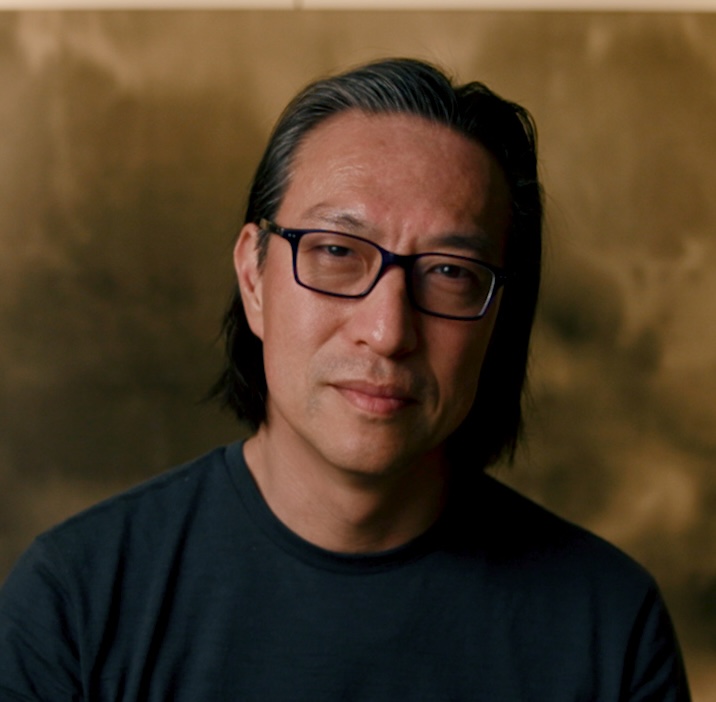
Makoto Fujimura, a Senior Fellow of the Trinity Forum, is a leading contemporary artist whose work has been featured in galleries and museums around the world. A celebrated speaker and advocate for the arts, he is the author of five books and the recipient of numerous awards and honorary doctorates. From 2003 to 2009, he served as a Presidential appointee to the National Council on the Arts. His process-driven, refractive “slow art” has been described by David Brooks as “a small rebellion against the quickening of time.”
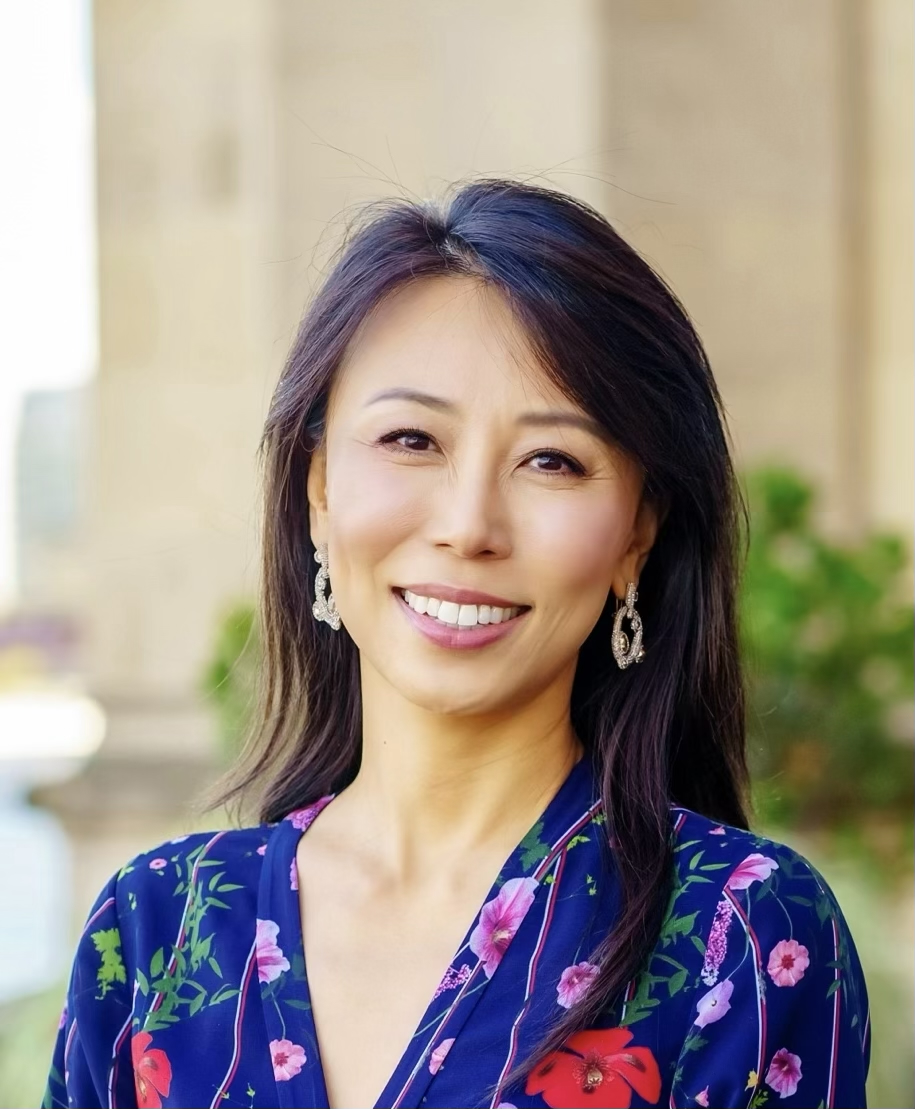
Haejin Shim Fujimura is a creative strategist, futurist, and justice advocate. She serves as legal strategist to a range of nonprofit organizations and mission-driven companies, and is the CEO and co-founder of Embers International, a global NGO working to protect, restore, and empower victims of injustice to break cycles of intergenerational exploitation and prevent human trafficking, and the creator of the Estuary, an innovative and imaginative ecosystem where law, art, advocacy, and business converge to generatively transform culture.
Special thanks to sponsor Nancy Ziegler and co-host Brazos Press for support of this event!

Speakers
-
 MAKOTO FUJIMURA
 -
 HAEJIN FUJIMURA
 -
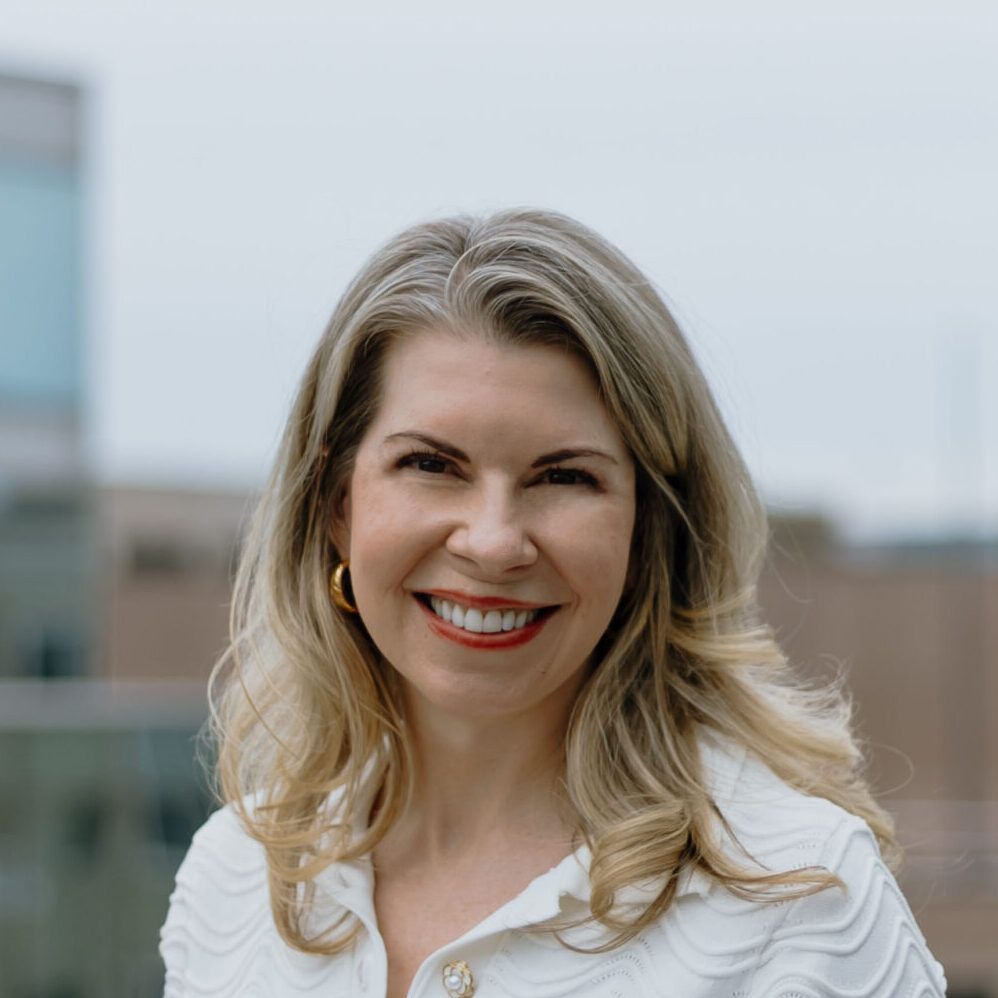 CHERIE HARDER
What if beauty is actually essential to healing? Our guests today, Mako and Haejin Fujimura, argue that beauty is not a mere matter of esthetics, but actually an essential force that sustains and humanizes the pursuit of justice. Drawing on their respective works in both arts and global advocacy, they consider together how cultivating beauty can help foster resilience, renew the imagination, and make possible a more generative life. Mako is an internationally renowned artist, speaker, and arts advocate who is also, I am very proud to say, a senior fellow of the Trinity Forum. As an author, he’s written several books including Culture Care, Art and Faith, and Silence and Beauty. He is also the founder of the I AM Culture, Care and International Arts movement, which has helped produce many of these books. He’s joined by his wife, Haejin, who is a lawyer and CEO and co-founder of Embers International, a global NGO working to prevent and end human trafficking. She’s also the creator of the Estuary, a vocational center where art, law, business, and advocacy all converge for culture care. Together, they have written and just within the last month released their new work, Beauty and Justice, which we’ve invited them here today to discuss. Mako and Haejin, welcome.
So good to be here, Cherie. Thank you.
Thank you for having us.
Absolutely, it’s our pleasure. When I start out, I always like to ask about the story behind the story. Writing a book is a huge undertaking, and there’s almost always an interesting impetus — how it all got started. I think it might be fair to say that you two are the only guests where the impetus for the book actually began with the discovery on a date of a shared life verse. I was hoping you could say a little bit about that story.
Yeah. Isaiah 61 is embedded throughout both of our writings, and not just this book, but many books. As we got to know each other, now close to seven years ago, we realized that God was weaving our lives together in many ways before we even met. Isaiah 61, the passage that inaugurates Jesus’s ministry, speaks of both beauty and justice. For both of us, from different directions, we share in that life verse.
Yeah. We have both led a very missional life individually before we met, and both of our lives were really informed by Isaiah 61. It’s a verse we meditate on throughout our life and throughout our work as artists, lawyer, and justice advocates. It also became our wedding message. Unbeknownst to us, our pastor, Reverend David Kim, gave us a wedding charge based on Isaiah 61 without knowing it was our life verse. It has been a real anchor in our marriage and work. We were also very fortunate to include the entire wedding message in this book.
That’s beautiful. I’d love to ask you more about how your collaboration from very different disciplines converged to define this nexus of beauty and justice. Haejin, your day to day work has been in the very difficult, very gritty work of essentially rescuing trafficking victims from some of the darkest, most oppressed corners of the world. I’m curious how you have seen beauty play a role in healing and restoration. And Mako, I’d also love to hear how your work as an artist — someone who has produced such beautiful and abstract paintings of such complexity — has led you to justice work, where it almost seems like something new has been born of two very different streams.
Yeah. When we think about justice, I could gather maybe 100 different lawyers in the same room and ask what justice means, and we’d probably get 120 different answers. So I always think about the picture of injustice. What does it look like? Whatever situation of injustice you’re thinking about right now, you probably picture violence, a broken relationship, a broken situation, perhaps creation being exploited, relationships that have been broken. In that kind of situation, I think about what those relationships and people are meant to be according to the maker. I think about Genesis one and two, and how God created the world and us in an interdependent space — our relationship with God, one another, and creation — to be good and beautiful. God uses the word tov in Genesis, which means not just good, but good and beautiful. We are created to be beautiful, to receive this extravagant love from the creator.
That beauty has been broken, and that brokenness led to situations of injustice. The reason I pursue justice is actually to mend broken beauty. Without a consideration of beauty, I can’t really pursue justice in a way that leads to redemption and shalom. Beauty is an essential element — not only something I pursue at the end of the work of justice, but something I want justice to look like throughout the entire process. Even in the process of mending, which can take a very long time in places of generational oppression, Embers International is pursuing intergenerational freedom. We are not just rescuing individuals, but rescuing individuals and their families — the mothers and the children, two or three generations who are in situations of injustice. Throughout that long journey of pursuing justice, we want every step of the way to also look beautiful.
If you were to ask people in the art world — artists, gallery folks, and museum curators — what beauty is, you’d also get 100 different answers. In the 90s, when I had my first show in New York, I was told explicitly by many people not to use the word beauty, because beauty had been exploited. They felt there was injustice happening on a philosophical level, but also in terms of what beauty had become — cosmetic, superficial, imperialistic in tone. When I speak about this in this book and others, I explain that when I began my career, it was important to define beauty from the perspective of the Japanese tradition, which has a different, eastern way of pursuing beauty. In Japan especially, beauty has become connected with sacrifice and even death. Cherry blossoms are considered most beautiful not when they are fully in bloom, but when the wind is carrying the petals, at the end of the flower’s life. Japanese poetry from the 11th century speaks of this as a very distinctive way of understanding beauty. It just so happens that this overlaps with Isaiah 61, when Jesus speaks about giving a crown of beauty instead of ashes.
That sense of devastation and injustice — shalom being destroyed or taken away — is actually the entry point into creating beauty in a place of fracture and devastation. I believe the biblical definition aligns closely with the Japanese way of understanding beauty. These are the kinds of things I’ve talked about across every book I’ve written, each time trying to refine the sense of what beauty is. Over time, I’ve moved away from trying to even define the term. I’ve begun to speak about it by sharing stories of what beauty is — and Embers is now definitely part of those stories. In this most recent book, we’re able to create an ecosystem of what shalom looks like: the whole wholeness of societies, communities, the creating of art, serving traditions, and so forth. Beauty needs to be defined in this prismatic, interconnected, interdependent way. I’ve been trying to help people understand beauty, and I’ve even gained some clarification myself, but it has been a journey.
That’s beautiful in and of itself. Your comment about seeing beauty in the repair makes me want to ask you both about the practice of kintsugi — repairing broken pottery with gold, where the final product is actually even more beautiful and more valuable for having been broken and repaired than it would be in pristine condition. I know this has been not just a work of art, but a metaphor that’s been a through line in your work. I’d love to hear you talk about how that image illuminates the relationship between beauty, suffering, and redemption.
Oh Cherie, what a thoughtful question. Thank you. Kintsugi is a venerable art form with a tradition in Japan and also in Korea, where broken ceramics like tea cups and bowls are not thrown away. Instead, the fragments are held together — sometimes for generations — and mended with a precious material called lacquer, then adorned with gold, so that the mended cup or bowl becomes more valuable and more beautiful than before. This art form has been part of a way of life in Korea and Japan. The idea is that when an important bowl is broken, why would you throw it away just because you have another bowl? You keep it, but in a way that honors even the experience of fracture. We don’t want fracture to happen to anybody or anything, but it does happen. In places like Japan, there are a lot of earthquakes, as well as wear and tear and mistakes. That leads to brokenness. Yet these fragments are held until the mender feels ready to mend them. It’s not a quick fix — you don’t jump to the problem and try to solve it right away. You behold it until the fragments themselves look beautiful. That’s a really important part of kintsugi, because the fragments are part of a whole that has the potential to be mended into something even more beautiful and valuable.
Can you see that value now, and in the future? That requires sanctified imagination, which is an essential element in the pursuit of justice and the creation of beauty. Can you see a future that is not just a hopeless reflection of the present? It may appear hopeless, but can you see the hope? We talk about kintsugi throughout our book as a metaphor. Embers International has used this metaphor for years, even before kintsugi became ubiquitous in our marketplace. That process of mending — being able to see, and then pouring precious materials of lacquer and gold to mend something that has fractured and become seemingly useless — and to invest in that to create something new, is an idea of essentially the extravagant love of God. What happens in that process is that the redemption of those broken pieces actually occurs, through a mender who is not the original creator. We have a ceramist who created the cup, and then a kintsugi maker who comes to mend it. There is this idea of co-creation, as God invites all of us to be part of his redeeming plan for this world — to co-create with God toward shalom.
Kintsugi is a fantastic example of redefining beauty. Western idealism brought beauty as perfection. Chinese beauty might be seen in a perfect, flawless porcelain. But Japanese beauty takes into account brokenness — the history of earthquakes, human errors, and so forth. It’s embedded throughout the history of Japanese art. As has been noted, all Japanese crafts, including papermaking and ceramics, originated in Korea and China before coming to Japan. Particularly, Korean esthetic has become emblematic of how Japan developed and refined its sense of beauty. I speak about urushi — Japanese lacquer — in my other book that came out last year, called Art Is. We visited a mountain in Japan where lacquer trees are grown in only two areas approved by the Japanese government as official sources. It takes ten years for one tree to grow, and after it is harvested, you cut into it to extract the urushi sap. You only get a few ounces. At its most refined level, Japanese lacquer is more expensive than gold. I speak about this venerable tradition as a generational commitment — growing these trees so we can continue this beautiful craft. I try to frame it in terms of a generational commitment to create beauty.
One question that comes to mind — and I think this is particularly directed toward you, Haejin — is about mending jagged edges in matters of injustice. With what you’re dealing with in sex trafficking around the world, there are not only generations of victims to be healed and restored, but also the jagged edges of the perpetrators to contend with. I’d love to hear your thoughts on how seeking beauty in the midst of justice relates to punishment, restoration, and possibly even forgiveness. How do we think about beauty and kintsugi when some of those edges are so jagged and the damage caused is so severe?
Thank you, Cherie. It’s a really difficult yet important matter to consider. If we believe that God is the creator of all things and has created all of us to be image bearers of God, and that we are all fallen in some way, then the image bearer of God is someone meant to reflect God’s beauty. When we think about perpetrators, we can consider them also to be people in bondage — in bondage of sin, whose beauty has been marred because of that sin. It’s a really hard situation, because our team knows so well the depth of depravity of human sin and what it has caused to other image bearers of God. As we care for victims, it’s really important for our team to not dehumanize the perpetrators, even while being very clear about the sin that has been committed. We have to do our best to restrain them so they stop committing sin against others.
But restraining them also involves helping them stop dehumanizing themselves further. The kind of redemption God calls us into is where all things are made new — and that includes the perpetrators as well. Because it’s such hard work, it must be accompanied by deep prayer. A daily discipline of prayer where we proclaim that the perpetrators will also become protectors. God calls us to ask for miracles like that, which are seemingly beyond human abilities. But I believe God can enter into the fractured lives of perpetrators and help them turn into mended vessels, just like all of us. That is my hope and prayer. That is the hope and prayer of Embers as well — not only for the families we care for and the hundreds of children we are educating toward intergenerational freedom, but for the entire community they are born into, that all will become renewed because of the hope we have in Jesus Christ.
Mako, one thing that occurred to me is that in addition to kintsugi, another metaphor present throughout your work is that of a garden. In your first work, Culture Care, you talked about culture not being a battlefield to be seized but a garden to be cultivated. This is, I think, at least the third time you’ve been on a Trinity Forum online conversation, and to this outside observer, your argument seems to have further developed with each new book. I’d be interested in your thoughts about how you see this as yet another stage in the development of that metaphor shift — that paradigm shift — in how we think about culture.
Well, thanks for noting that, Cherie. Each book is part of an ecosystem, and you can enter into it at any point. Culture Care is being re-released because of its significance to current realities. IVP is releasing it again with amplified chapters, and it’ll come out this summer with a foreword by David Brooks. Look forward to that. But absolutely, there is a sense in which metaphors can shape the language through which we talk about an issue. The same problem can be discussed from a totally different vantage point if we simply change the metaphor. In this case, moving from war language rhetoric — where you’re demonizing the other side in order to win — to something else entirely. When you demonize, you are actually losing your territory. No one really wins culture wars, because in the end, you basically shrink your territory. A garden metaphor would allow us to think differently. If there are toxins being poured into the ground, you have to do the hard work of cleaning up and detoxifying — which plants actually do naturally. After the Fukushima disaster and the Tohoku tsunami and earthquake in 2011, rice farmers began to plant sunflower seeds because sunflowers naturally detox the soil. They take out the radioactive isotopes. We see this at Chernobyl and in other places. So why not apply that to our current polarization and paralysis of dialogue? Embed what is good, true, and beautiful into the ground of culture for the next generation, so that what is planted will take root and grow.
As I was reading this book, one of the paradoxes that struck me involves kintsugi itself. You mentioned how rare and precious the lacquer is and how long it takes to grow the trees — there’s a real sense of preciousness and scarcity. But at the same time, your work pushes strongly against a scarcity mindset and talks about the relationship between beauty and a life of abundance and generativity. I’d love to hear you both talk about how you reconcile that paradox — on the one hand, rarity and scarcity, and on the other, the call to live generatively. And perhaps also how beauty might help us live generatively in an incessantly anxious, polarizing, and often ugly age.
When Haejin was sharing about Embers, every time she shares that story — and I mention this in the book — there’s a deep sense of beauty being exemplified. And this is what artists are used to. We are told not to do what we do, not to be artists. We’re encouraged to do something more practical. Every project seems to have no budget, and people tell you it can’t be done. So we’re kind of used to impossible projects. Every painting is that, in a way. But when we face the intractable reality of facing a system that has for generations been dehumanizing people and trapping them into violence, you see that as impossible. But the artist in me says no. My faith can be activated. My sanctified imagination can see beyond this reality. Where is that candle — that light of hope? Jesus is always there. That’s why we need to go into these places of marginalized realities. Artists are the ones who understand this. People like Vincent van Gogh understood that the way to understand reality is to spend time with the poor and to depict that in tangible ways. We have seen this impossibility being met, first by Christ’s presence. As we spend our time on our knees praying for these victims, we see every day some miracle happen that reminds us — oh, Jesus is there. Indeed.
I think we are called to discipline ourselves to stand at the edge of the unknown, because we are so obsessed with — perhaps even addicted to — certainty. We want it so much. But in creating art and in pursuing justice, there’s no certainty of what it will become. That’s where sanctified imagination must come in. You’re right, Cherie, we do live in that paradox and tension. But what we’ve learned over time is that the best way to manage our time — because time is limited and set, we all have the same number of hours a day — is actually to slow down. When we try to do more or chase after time, we get disappointed and burnt out. Slowing down is really much more effective and it’s another paradox.
When we think about beauty in places of injustice, we do it one step at a time. It’s never linear. We have to be thinking a lot with our right brain because of the imagination required. But when we look for hope and beauty in places of darkness, I think one moment of beauty or pursuit actually gives birth to another.
That’s what we can learn from artists. One beautiful painting by Mako gives birth to ten other paintings. If you’re a writer, you write one book and find yourself inspired to write five more. The work of justice is the same. When we pursue justice in a place of hopelessness and enter into that invitation, it gives us a pathway to seek justice in a much more expansive and generative way. We can learn so much from creators of beauty.
We’re going to turn to questions from our viewers in just a second. But before that, I wanted to pick up on something you said, Mako — the discouragement that artists get from virtually every side. At times it seems the church has been particularly suspicious of artists, treating them as secondary or even suspect. Since you are both visionary and imaginative people, what would it look like for churches to recover beauty as central to both witness and formation?
Again, this goes back to kintsugi. I always wonder and pray that every church would become a place where kintsugi is happening — where people are welcomed in their brokenness. We don’t immediately try to fix the problem, but we behold it, sometimes for generations. Some traumas cannot be fixed for several generations. And then, finally, perhaps we can begin to bring the pieces together in a new way. That takes patience and a community willing to journey into their own sense of brokenness, removing their masks. That is what art is meant to do. Art provides a language to be authentic, to be truthful, sometimes in a very devastating way. We are uncomfortable with what some artists are doing, but at the same time, it is work for me to tell artists that there is something beyond that brokenness. Kintsugi brings this reality — it says that someday we will see a world in which God will mend the fractures, bring us back into new creation. Not the old — we’re not going back to Eden. What is now is already new in Christ, and we are able to create something on this side of eternity that God will desire to come home to. That’s a profound mystery.This is what art can do — create a portal for new creation.
I think the church has, over the years, lost a sense of patronage. The church used to be the patron of art and part of the creative history of humanity. Somehow, consumerism crept into our church life and we became much more transactional in our mindset. If we can go back to the heart of patronage — where you are part of the creative process by supporting art and artists, not in a transactional way, not to get something back, but to be part of that process and journey — that would be transformative. Mako can explain patronage better, perhaps another time. But it actually started with citizens of places like the Roman Empire adopting a slave child to become a son of that family, freeing that person, and being part of their life toward freedom and flourishing. Even the word patronage carries the sense of beauty and justice coming together. If the church can come back to that kind of essence, that would be something.
Here’s a question from an anonymous attendee: beauty is notoriously subjective. While some of us might find a work of art restorative, others might find it alienating or even colonial. How do we overcome the risk that using beauty as a metric for justice could impose specific cultural esthetics on a diverse population from all over the world?
I’m not going to go into definitional battles here — there are many ways to look at that. But what I will point to is what we do in the book: we’re always pointing to shalom. It’s this wholeness, a place we all know we long for. I always say God is not just a source of beauty — God is beauty. Given that God is the reality that overwhelms our darkness, brokenness, and our own definitions of beauty, we can begin to journey into that place of shalom. You can do it through truth. You can do it through justice. You can do it through goodness. You can do it through the creation of beauty.
Here’s a question from Tim Griffey — and whichever one of you wants to tackle it is great. Please give us some insight into the process of writing this book together, coming from two very different career disciplines but from the shared experience of marriage. How was it?
We began to talk about the idea of beauty and justice coming together toward shalom from the very beginning of our marriage. Mako started to really encourage me — okay, bug me — to write this book. I kept saying, sure, sure, we need to write this, it’s an important book. But I never quite found the time. Then one day a publisher approached us and really set the process in motion. It was the right time, the right season. Then we had to figure out how to write this book together. Do we alternate chapters? Does he write one sentence and I write the next? How do we do this? It took us six months just to figure that out. What we ended up doing was: I wrote the entire book, and then Mako wrote another entire book in response, to kind of harmonize. That was a really fun process. And once we figured out the approach, it didn’t actually take that long.
A lawyer knows how to build a case, defend it, and advocate for something. So it was very natural for her to write down what she always talks about. She’s always talking about bringing justice, whether in a business litigation case or in injustice done to marginalized people. For me, having understood that journey and the process of team building that comes with it, and in pure admiration of what she is able to do every day, I wanted people to get a glimpse into that process and understand that what she is ultimately trying to put into the world is this beautiful space. Her office is the most beautiful office in the world. How can artists participate in that process of creating wonderment in very cold, black and white spaces? We can bring color and prismatic realities to it. Even though her writing is already so clear and pristine, I felt my role was to bring in some of the stories and the ways I have seen things — because beauty is so hard to define. I think those stories go into trauma, into my journey into darkness, and then having justice language to bring back the restored sense of who I am as her partner in life, and to be able to bring out the colors into the conversation.
Here’s a question from an anonymous attendee: how can we apply your concepts of beauty to designing un-beautiful things — such as prisons, inner city housing projects, hospitals, or refugee centers — with the same esthetic intentionality as high end art galleries?
What would happen in changing our justice system or communities if we did this, and why is it so difficult to do so?
First of all, the question itself helps us, right? We know the difference between ugly spaces — completely driven by pragmatism. We know it, we feel it when we go in. We are dehumanized. Compare that to great spaces like museums, galleries, or churches, where people come in and feel not only welcomed, but where everything they see and how they respond is valued. That’s what affirms our journey toward shalom. The question answers itself: if you really want justice in the darkest realms, then whatever we are doing has to be beautiful first. Everyone committed to this work understands that. It needs to be extravagant and beautiful. These children who are in horrible situations need to be given the best, as if they are our own children.
Yeah, I would love to see a beautiful prison. The why question — I can answer just a little bit of it, though we could have a very long conversation. I think we don’t see value in creating beautiful spaces in places where the goal is simply to punish. But if we’re really serious about the renewal of people, and if we recognize that renewal is required not only for individuals but for the entire society to flourish, then we must think about beauty. What we see and experience physically around us becomes part of who we are becoming.
If we can reimagine the spaces where various people are — whether a prison, a shelter, or a hospital — with restoration as the ultimate goal, then I think we’ll have a very different design to begin with.
Here’s a question from Belinda Burman: what’s your perspective on AI and its impact on beauty and justice?
You’ll be surprised — I think both of us have a hopeful view of it. There are certainly dangers. But for me, the question isn’t really about technology. We’ve always had science advancing to create nuclear weapons or cure cancer. It’s a question of imagination.
To me, the key question — especially in education — is how do we create an environment where sanctified imagination can be developed in young people and in us? That’s the most important question. Whether AI will replace illustrators’ jobs or not, those are valid questions we have to address. But again, it goes back to the role of imagination and seeing — creating a future that is abundant and shalom driven.
I think we can decide whether we will approach, analyze, use, and continue to develop AI out of fear or out of hopeful imagination. I think AI will continue to reveal more of what humanity is meant to be and become. The development of technology may not consume us, but may continue to reveal who we are meant to become.
There are a couple of questions specifically around your work, Mako, so I’m going to combine two somewhat different questions on the same topic. One is from David Miller, who asked: how do you verbally and visually translate your work — which is Christian and infused with Christian motivation and worldview — to secular, non-religious people? And Alexander Davidson asked: which of your works has inspired the most conversation or collaboration across disciplines in the areas of justice, beauty, and new creation? And if there is one, why do you think that has been the case?
Great questions. We created a space — we call it the Estuary — in Fort Lee, New Jersey, where it started out as a law office and incubation space for nonprofits, including Embers. Now it also includes a beautiful gallery. It happens to be the mediation room where Haejin brings her clients. They are surrounded by beauty as they talk about resolution. And it really works. There are several pieces in there, and depending on the person, they’ll pick different pieces to behold and spend time with. An artist’s role is to create something and offer it back to the world. I’m not talking about galleries and transactional reality or the market — I’m talking about art simply being present in people’s lives and community. And that is given away to this interaction. Artists do not own that. Rather than me dictating what I want people to see, I much prefer that they spend time with my work and share what they’ve been able to see, or the stories they feel invited to participate in. That kind of exchange enlivens everything I do.
And to David’s question — it’s a setup for me to say there is no sacred/secular distinction for me.So I do not separate what I do as a Christian thing or a secular thing. I am fully in God’s spirit to create. The studio is the most sacred space, where I get to be fully myself alone with God. The spirit guides me, and the spirit doesn’t ask, is this Christian art? The spirit asks, is it authentic? Is this glorifying your creator in a way that is most authentic and true and beautiful? If I can do that honestly, the best way I can is to be myself. I can’t be some other artist who does this better or that better. But my limited abilities to grasp that one reality — or a refracted reality, the essence of faithfulness — will determine how much it will communicate generatively rather than reductively. That’s what the role of art is. Art is always creating new worlds. It’s a portal into new creation.
So now we’ve arrived at the point many of us are always excited about, which is to ask for a final thought. A last word from our guests today. Haejin, we’ll start with you, and then Mako, the last word is yours.
We had the great privilege of getting our book endorsed by people we respect very much — like Nicholas Wolterstorff, who has thought about justice his entire life, and Gary Haugen, who is my hero and mentor, founder and CEO of International Justice Mission. In his endorsement, he said this book has brought deep refreshment to his soul. Because of that, this book is already successful in my opinion — to be able to provide that deep refreshment to my hero and mentor. He ends his endorsement with this: “As they share their lives on these pages, they bring invigorating new insights that I hope will encourage many toward renewed partnership with God in his mission to end violence and to make all things new.” I hope this will be an encouragement to all of you.
I gave three G’s of generative living in Culture Care, which has now become five G’s of generative living in Beauty and Justice. The first G is Genesis moments. I want to leave the audience with the thought that every moment is a genesis moment — no matter what happened today, yesterday, or months before, no matter what we’re going through, every moment is new. As we sometimes struggle to believe this, we need a community like this one to keep reminding us that there is always more to what’s happening than what we think. Every moment, God will bring a fresh perspective to rethink the past, create in the present, and map out the future we long to be part of. And that does not stop at any point in our lives. Every moment is a genesis moment.
Thank you Mako. Thank you Haejin. This has been beautiful.
Thank you. Thank you so much.