

Ryan P. Burge is a professor at the Danforth Center on Religion and Politics at Washington University in St. Louis, and previously taught at Eastern Illinois University. His previous books include The Nones: Where They Came From, Who They Are, and Where They Are Going and, with Jim Davis and Michael Graham, The Great Dechurching: Who’s Leaving, Why Are They Going, and What Will It Take to Bring Them Back? He holds a PhD from Southern Illinois University and was the pastor of an American Baptist church for more than 17 years.
Speakers
-
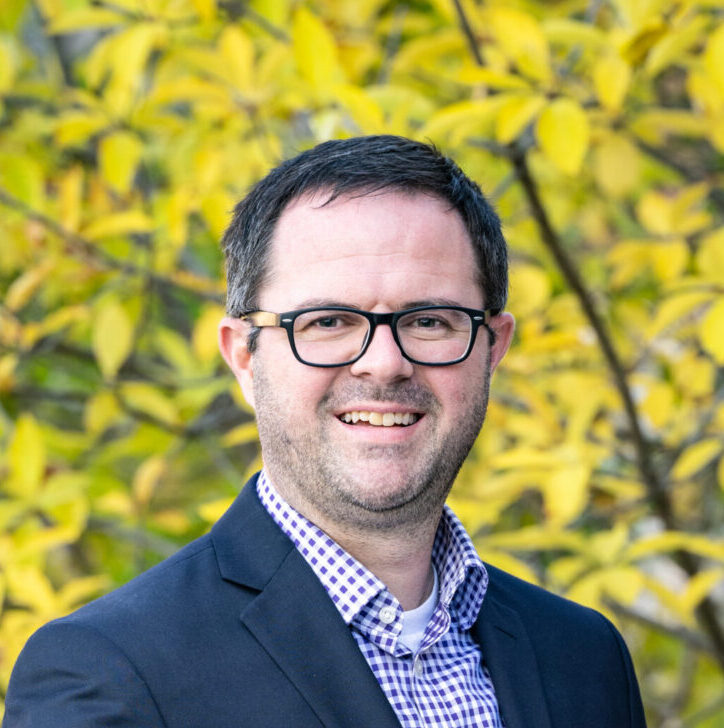 RYAN BURGE
 -
 CHERIE HARDER
Welcome to all of you joining us for today’s online conversation with Ryan Burge on The Vanishing Church. I’d also like to thank Brazos Press for their support and partnership in hosting today’s event. We so appreciate you all there and wanted to invite so many of you who are joining us today from all over the world. I know that we have close to 100 different, , folks joining us from at least 15 different countries that we know of and just really appreciate you being here. If you haven’t already done so, let us know where you’re joining us from in the chat feature. It’s always fun for us to see the people kind of tuning in from all corners of the globe. And I’d also like to send a special welcome to the over 151st time registrants who are joining us today. We’re really delighted that you’re here. If you are one of those first time registrants or otherwise new to the work of the Trinity Forum. we seek to provide a space to engage the big questions of life in the context of faith and offer programs like this online conversation to do so, to help all of us come to better know the author of the answers. We hope this conversation will be a small taste of that for you today.
Our guest today is a sociologist and a scholar who has spent his vocational life studying the question of what’s happening to faith and religion in America. He’s been called the best data scientist in the country on the subject, and he’s brought empirical clarity to questions that many people of faith may sense but struggle to wrap their arms around. Who’s leaving the church? Why are they leaving? Why are so many denominations becoming hollowed out and polarized? And what does this mean for all of us and our common life? He does so not only as a data scientist, but also as someone who has spent his adult life as a pastor, serving nearly 17 years as a pastor of an American Baptist church, a church that faced many of the same pressures that he chronicles in his scholarly works and ultimately had to close just a couple of years ago. Ryan Burge is a professor at Danforth Center at Religion and Politics at Washington University in Saint Louis, having previously taught at the Eastern Illinois University. And he’s the author of numerous books, including The Nones, The Great De-churching, and his new release, The Vanishing Church, which we’ve invited him here today to discuss. Ryan, welcome.
Thanks so much for having me. I really appreciate being here.
We’re really excited to talk with you. So as we start out, you have written a number of books now on what you’ve called The rise of the nones. N o n e s not n u n s. And you’ve argued that their growth is the most important social movement of the last 30 years. So just as we start out sort of give context, I’d love for you to help us better understand this social movement. Who are the nones? What kind of people are they? Where are they coming from? And what has driven their disaffiliation from church and from religion in the US?
Well, obviously an easily answerable question in 30s or less, right?
More time.
So, yeah. I will give it my the college try. So the nones, are people who are non-religious in America, were 5% of the country in 1972, 6% by 1991. And today, about 30% of American adults claim no religious affiliation. among generation Z, it’s closer to 45% claim no religious affiliation. So we’re talking about literally tens of millions of Americans, maybe up to 100 million Americans now identify with no religion at all. And while the number is 30% now, it’s going to rise in the aggregate as those older generations who are more religious are going to die off and be replaced by these Gen Z who are going to come of age. And it used to be we could pretty much predict where the nones were going to come from. Typically it was people with the left side of the political spectrum higher levels of education. and now you don’t get 30% of America by just being one thing. So it’s not just young or old. It’s not just male or female or white or nonwhite or educated or not educated. It really is a wide swath of the American population now. I mean, we see African Americans are almost as likely to be nonreligious as white Americans are. We see, people with high school diplomas, almost as likely people with graduate degrees. The one common through-line I will say is if you’re a left of center politically, you’re more likely to be nonreligious than if you’re a right of center politically. For instance, among political conservatives, only 12% are non-religious. Among political liberals, it’s close to 50% are non-religious. And among young political liberals, it’s closer to 65% who are non-religious. So there’s definitely a political divide happening in the nones.
But in terms of other demography, it’s really hard to predict, what would make someone non-religious today. And I think it’s had a tremendous impact. And I think we’re only beginning to feel the front edge of what that impact is going to be, because a lot of these churches are still running on legacy. You know, whether it be funds that were collected 50, 60, 70 years ago, membership that’s still largely baby boomer. But as I’ve argued many times, people don’t understand, there’s this there’s this tranche of people who are clustered around the baby boomer generation. They’re basically propping up American religion. And when they move on in 15 or 20 years, we’re going to see the wholesale collapse of many denominations. There’s going to be thousands of churches closing down, , mergers, all kinds of things we can’t even begin to imagine. And it’s going to affect all of us. I think that’s the big point. You’re like, oh, this is a religion problem for religious people. And what does it have to do with me? I think religion’s provided a social safety net for America for generations now, and it’s almost invisible. You know, you just expect that church to do that thing or to have that program. But when those churches are closing down, who’s going to step into that gap and fill that void and help, you know, do things like Alcoholics Anonymous meetings and polling places and blood drives and back to school backpack, giveaways, after school tutoring, and the list goes on and on. We’re going to all be impacted by the rise of the nones in one way or another, whether we realize it now or not.
Yeah, well, there’s so much to talk about there. One thing I wanted to pick out and kind of ask about that. You mentioned that young people are a much more secular than older people. And for the last 30 years, as you’ve described in your book, each sort of succeeding kind of cohort has been more secular than the one before. There’s been a lot of chatter recently that there may be a revival going on, particularly among young men. That has been really hopeful for a lot of people. Is this what you’re seeing in your data?
It’s a question I get asked this, you know, multiple times a day. Religious revival. What’s up with young people? And I mean, I hate to be the bearer of bad news, but there’s no really reliable survey data that indicates that generation Z is returning to religion. And actually the data points almost in the opposite direction. They’re the least likely to believe in God, without a doubt. They’re the least likely to attend church. , they’re the least likely to affiliate with a religious tradition. I mean, you just go on the list, and the thing is, even if you compare Gen Z now to, like, baby boomers when they were 18 to 29. So, like, do a direct comparison. Gen Z is significantly less religious than, than boomers were when they were in their, you know, their 20s. So there’s really no metric you can look at now. I hear anecdotal stories all the time, and I do appreciate those. But what I tell people is if there was an honest to goodness religious revival happening in America, especially among Gen Z, you wouldn’t even need me to tell you that you would see it, you would feel it, you would know it.
It would be hundreds of stories, you know, churches filling up with young people, not just one college ministry or this church over here, but it would be a groundswell of information. And as far as gender goes. So we’ve always had a gender gap in America when it comes to religion. And that that is the idea that women are slightly more religious than men, depending on what metric you look at, maybe two, three, four percentage points more likely. And we can you know, there’s all kinds of like sociological, psychological reasons why that’s true. But with Gen Z, what we’re seeing and this is really important, is both genders are so leaving religion, it’s just women are leaving it faster than men are. And that’s what’s causing the lines to cross. So it’s not like the line for men is turning downward. It’s just going up more slowly while the line for women is going up quicker. And that’s causing this intersection. And I think the most accurate thing to say now is among Gen Z, it’s more than likely the gender gap has disappeared among young adults.
Now that’s unusual. I assume you have some theories about why that might be.
Yeah, they’re all theories at this point, right? There’s not a lot of data to test this stuff out. But I do think I mean, I do think we have to politics is part of the conversation on this. I don’t think there’s any way to preclude politics, because if you look at, social issues, Questions like acceptance of transgender people is good for society. Acceptance of gay marriage is good for society. What you see consistently is that women are more likely to say yes to that question than men are. But every successive generation is sort of more liberal, more accepting. But the gap between Gen Z men and women is the largest gap of any generation that we can look at. So it looks like the young Gen Z women on social issues are as progressive as any group. But Gen Z men are not. They’re actually sort of like middle of the road. I wouldn’t call them conservative. That’s not the right word, but more middle of the road on those issues. So I do think there’s some social, some political stuff. And then, you know, add me too, to the conversation where a lot of young women are like, I’m tired of putting up with institutions that will not give me full access to leadership and have abused us, you know, for so long. Why would I be part of that? And they’re leaving. So, you know, and then, you know, add Dobbs to the list. You know what is the pro-life movement in America? Its religious people and women are more obviously more affected by Dobbs than anybody else. And so, you know, I think that all that is a combination of factors. I think politics is absolutely playing a role. And, I think it’s actually driving the gender gap in Gen Z is huge, not just on religion but also politics. Now, I think it’s only going to get worse going forward.
Yeah, well, we want to kind of explore some of the implications of the God gap in a moment. But I also wanted to ask, you know, for so long many of us have heard that, well, you know, institutionalized religion might be declining. Church attendance is certainly declining. but that many of the people may not have walked away from they may have walked away from orthodox expressions of faith, but not necessarily walked away entirely, that there’s a growing group of people who are spiritual but not religious, who, you know, maybe cafeteria Catholics or, , you know, the kind of the growth of all sorts of, , different unorthodox political expressions. It seems like you have sort of said that is actually not as big as we may have thought it is. Could you say a little bit more about what’s actually going on with the cohort of folks who are spiritual but not religious? Are they spiritual?
That’s and that’s always what we heard, right? Is like, oh, the young people are leaving religion, but it’s okay because they’re going to replace it with sort of spirituality. And the data on that, by the way, is exceedingly clear that we did a survey of 12,000 people using John Templeton Foundation grant. And what we found was that if you ask non-religious people how spiritual you are from not at all to very spiritual, 25% said they were very spiritual and 25% said they were not at all spiritual among religious people. Meaning like Catholics, Protestants, Jews, 62% of them said they’re very spiritual and only 11% said they’re not spiritual at all. So the idea was like that, that spirituality and religion run in opposite directions of each other. So the more religious you are, the less spiritual you are, and vice versa. But the data actually says they run on the same track. People who are more religious tend to be more spiritual, and so when people throw off one, they throw off both. And we even ask, you know, do you do in the last 30 days in yoga, meditation, crystals, tarot, horoscopes, saging. Like every new age spiritual practice that we could think of, and we did not find a single instance where non-religious people were more participatory in those actions than religious people. So even meditation and yoga and tarot. Protestants and Catholics engage in those things at rates that are the same as non-religious people. So, you know, the idea of like, you know, young people are replacing religion with spirituality. Actually, the data says they’re replacing it with nothing. which is, you know, sort of a theological crisis in a philosophical crisis, because I think, you know, if you grew up in the church, you were always told, we all have a God shaped hole. We have to fill it with something. But you look at the data in a growing number of people, especially young people are not are not really filling it with anything.
Mhm. Yeah. You know it’s well the whole idea that we are we as a society are sort of increasingly bowling alone. You know Bob Putnam’s expression of just the, the tendency really for the last more than 30 years, 40 years, perhaps a little bit more to, , to stop joining things, to stop belonging to groups. you know, the church has always been, you know, like perhaps one of the, perhaps the most potent form of social capital. And so it it kind of seems intuitive that if, if we stop belonging to houses of worship, our participation in the, you know, in the other forms of civil society, , are going to drop as well. Do you see, , how do you see kind of like these trends towards, kind of fragmentation and disaffiliation, you know, is what’s happening in the church. Is it, is it an excess of what’s happening in society? you know, or are they tracking in general what’s going on there?
So bowling alone, I mean, Putnam collected data for 60 years, going back to the 40s on, you know, Boy Scouts, Girl Scouts, moose, Elks, VFW, Legion, bowling leagues, all these social organizations. And what he found in that book, by the way, came out over 25 years ago now. So it’s sort of a classic, but it’s also like reflecting an era that doesn’t exist anymore. He found that all those things were collapsing except for religion. You know, religion was one of the last sort of bastion of socialization that was still holding strong against this tide of social isolation. But two things I want to point out about that. One is this has been going on now for 75 years. Like the atomization of American society is not just something that we can blame on, , social media or smartphones. This is something that’s been going on that predates that by decades. But what’s funny is Putnam blamed it on cable television. That was one of his. Which sounds so quaint today. You know, like, oh, you had 100 channels, you know. Now we’ve got a billion channels. and so whatever Putnam saw in that data, we’re only seeing that accelerate and that wave that pushed us away from the Elks and the moose and the VFW, and the bowling league is now pushing us away from church, too. So, you know, people are like, what is it about religion, why people are leaving? I don’t think that’s the right question.
I think it’s why are we just becoming less social? And then religion was caught up in that atomization that we’re facing as an American society. And I do think that, you know, the data on this among young people is really compelling. By the way, Jean Twenge wrote a book called generations about it, and I’ve done some work with this data set called Monitoring the Future. You ask young people, high school seniors, how can you go on dates? How can you hang out with your friends with fun or recreation? How many of you have a job? All those numbers have plummeted in just the last 30 years and especially the last ten years. And you look at the data, there’s inflection points around 2010 or so. And guess what that that’s indicative of. That’s when the iPhone came out. That’s when smartphones became ubiquitous. That’s when social media became ubiquitous. So I think whatever Putnam saw, we’re just seeing that like tenfold now. It’s so funny that we were like, sold this bill of goods with social media. We’ll bring people together. But the social reality is it’s actually pushed us farther apart than ever. And I don’t know if there’s anything. It almost would take a complete change of our mindset to go back to sort of the social era that we had 75 years ago.
Yeah. You know, as you were talking about, you know, kind of Gen Z basically disaffiliating and there’s there’s nothing really taking the place, you know, of course, you know, our our energies, our energies go someplace. And there has been a fair amount of, surveys and studies done. And, you know, you will probably have a lot more nuance and context just describing how money, , fame and frankly, power has become Increasingly important to young generations.
And can I give you an interesting data point about this? So UCLA just did a survey of 13 to 25 year olds, generation Z, you know, or the upcoming generation Z, and ask them on a list of ten things. What would they seek out in life? So fame, money, happiness, fun. You know, all those things. The number one answer they gave was to be safe. That was the most popular answer among generation Z. I called generation Z the most socially isolated, safest generation in American history. They’re terrified of getting hurt, getting in an accident, causing problems. And you can see this in the data, by the way, the alcohol use among high school seniors over in 1975, over 90% of high school seniors had drank alcohol in their lives. Now it’s down to 50%. Cigarette smoking has gone from 80% down to 20%. Marijuana is gone from 75% to 38%. And by the way, vaping 12% of high school seniors have ever had a vaping habit. , teen pregnancy is down 75% since 1990. So what you’re seeing is like, they they’re like, they’re so afraid of getting canceled or saying something online that’s going to haunt them forever that I think, like they don’t want to have fun. Like we used to have fun because you knew you knew no one was going to videotape you, and that was going to be played on the internet for the rest of time. So they’re actually sort of terrified, I think, of just living their life and, you know, unbuttoning and just, you know, having fun because of everything. It seems like it’s forever now. It’s permanent. And I think that’s. Listen, you cannot blame that on anything except the rise of the smartphone.
Mhm. Yeah, absolutely. And of course, you know fear leads one in different directions. And one of the things that that I was actually kind of surprised by in your research and maybe this is fairly basic, but you know, many of us, you know, assume especially just given with all of the talk that the, , most political, you know, religious group, , in the US are evangelicals, but you found something rather different, and you found that actually, by a fairly significant margin, the most politicized, most politically active, and activist group, you know, are actually the nones. would love for you to say a little bit more about what you found there.
Yeah, it’s actually atheists specifically among the nones, which is fascinating because actually.
Let me stop you. Is that because the, you know, the nothing in particular have just sort of dropped out of everything. okay.
That’s exactly. So nothing in particulars have some of the lowest levels of education of any religious category that we have. And atheists are at the top. , agnostics are right behind them. So actually, I make this whole argument that I think, like putting all three categories of nones, atheist, agnostic, nothing in particular in the same box is actually really sociologically problematic because this group is disengaged, they’re disaffected, they’re dropping out. They’re not. They’re falling behind socioeconomically. Well, atheists, agnostics are actually doing very well. Thank you. You know, like they’re getting involved, they’re getting engaged. And atheists are really the ideal politically active group because they have good education, they have good income, they have free time. You know, they’re less likely to have children, which, let’s be honest, gives you more free time to go do other things. And they are getting politically engaged. And you actually see in the data, if you ask atheists where they are on a political scale from 1 to 7, one being very liberal, seven being very conservative. Atheists are the farthest left of any religious group we have in America, and they actually see the Democratic Party as going toward the middle. Over the last ten years, which is you talk to an evangelical like, are you crazy? Like, you think the Democratic Party is going. And so they’re the only group that sees themselves outside the parties. And I think they’re actually doing a lot of the work of trying to pull the Democratic Party to the left on some of these social issues, which I mean, not to go too far afield, but that might have been one of the reasons they had such a hard time in 2024, because they were staking out social positions that were far out of step with the median American, especially the median American Christian on a lot of these things.
Yeah. So let’s shift a little bit to, further. Right. Right now. I mean, so you have basically this growing class of people, between atheists, agnostics, nothing in particular who are increasingly, at least nothing in particular, increasingly kind of cut off from the institutions of, of, you know, of shared common civic life, , atheists becoming increasingly politicized and increasingly left, you know, possibly, , looking essentially for to politics, for a sense of, of meaning and purpose. , and then in terms of like religion itself, the, the practice and expression of it seems to have become increasingly polarized as well. , you mentioned that, you know, say 30 years ago, if you had gone to, not just a mainline church, but an evangelical church, you would be just as likely to be sitting next to a Democrat As a Republican, that has obviously changed. Maybe you can walk us through what has happened.
So, in the data from the 1970s among white evangelicals said the majority of them were Democrats. Over 50% were Democrats. Now, a lot of those were Dixiecrats, right? So it’s like pro segregationist Democrats, like FDR Democrats, southern Democrats, which is something that doesn’t really exist anymore, by the way. But what you see is that number starts dropping almost immediately when the General Social Survey starts. And then by the mid 1980s, the lines between the Democrat and Republican chair are right on top of each other, about 45% each. And then from that point forward, that Republican share just keeps going up and up and up, and the Democratic share keeps going up and down and down and down. And now white evangelicals are more politically homogeneous than at any point, and significantly so, by the way, like by a factor of two. They’re more politically homogenous today than they’ve been in the last 50 years of polling data. So a lot of what I have to tell, especially young people, because they don’t have, you know, a long sense of like, American religious history is they think it’s always been this way.
It’s not always been this way. Actually, it wasn’t this way even 25 or 30 years ago. We’re living in a very strange sort of religion and politics time, because it used to be that most Christian groups, Catholics, mainline evangelical, were politically sort of mixed and matched. And now that’s becoming less and less the case, especially in the white church, that to be a Christian, whether it be evangelical or Catholic and even some mainliners, is to be a Republican, there are very the only large majority Democrat denomination, white denomination in America is the Episcopal Church. There is no other one the best or some are 5050, but there’s none that are like 70 Democrat, 30 Republican except for the Episcopalians. Meanwhile, there’s Southern Baptists, Assemblies of God, non-denominational, that are 75, 25 Republican. So, you know, white Christianity used to be, you know, the scales were fairly balanced, and now the scales are way out of balance. And it’s almost you have. If you are a white Christian, you have to be a Republican. Or at least that’s what a lot of young people are telling me now.
Mhm. You know that sense of identification or like almost the conflation of identities and one’s religious identity with a political identity is something I wanted to ask you about and that, you know, it’s, well, one of the things that really struck me in your book and I actually found, fairly horrifying is, you cite a couple studies. I want to say it’s like the American Theological Survey and, um.
Yeah, state of theology. Yeah.
which, basically surveyed just self-reported evangelicals and asked them whether they agreed or disagreed with the question that Jesus was a great moral teacher, but he was not God. And you found that in one case, I think in 2020, it was like 30%, and in 2022 it was 40% of self-reported evangelicals, agreed with the the statement that Jesus was a great moral teacher. but was not God. And, you know, you think about like there’s actually, you know, there are creedal requirements to being an evangelical and there’s a whole sense that, you know, I forget who was it who formulated the idea that, you know, in essentials, unity and non-essentials, liberty in all things charity. But at this point, if, you’ve mentioned just how homogeneous evangelical political behavior is, , and frankly, voting patterns are, , twice as high in terms of, like, you know, the affirmation of support for, , you know, for the president in the last election was double the amount of the the affirmation of the idea that Jesus is God. What is going on in terms of if. Now the essentials seem to be more political and there’s more diversity over something as central as the deity of Christ. , what has happened there?
I think it’s for a long time we just assumed that religious people, when they went to the ballot box, they thought to themselves, okay, who would Jesus vote for? And then vote for that person, right? That religion was the first lens, and then politics sort of lived downstream of religion. that might have never been true. We just don’t know. We have better data now for the last 20 years or so. And what we do know is those lenses are probably flipped, that politics is the first lens in your eye, and then everything sort of lives downstream of your partizanship. There’s even studies going back to the 1990s that looked at Catholic parishes around South Bend, Indiana, and they found that pro-life Catholics went to pro-life parishes and pro-choice Catholics went to pro-choice parishes. What we’re seeing now is that that on a grand scale, where it’s like where you choose to worship, if you choose to worship, how much you choose to worship is all more a political question than it is a sort of theological or philosophical question? And I think this is something like I hope to balance the scale like this world is dominated by theologians and, you know, they want to think that everyone has sort of like a consistent, coherent, thoughtful, you know, theological framework to, like, get through life. In reality, we don’t have that. I think we sort of mix and match.
That’s why you see a lot of cafeteria Catholics that I’ve written about before, you know, they reject Catholics are fascinating to me. Right, because the Catholic Church, you know, is against abortion. But 60% of Catholics are in favor of abortion. They’re opposed to birth control. 95% of Catholics have used birth control in their lives. They’re opposed to female priests. A majority of Catholics are in favor of female priests. So it’s like, but wait, wait, wait, how can you how can you go to something on a regular basis when you disagree with sort of like the main tenets of what it is, and it makes you realize that maybe it’s not theology for some of not everybody, but for for a significant number of people. It’s not theology that’s keeping them there. They actually reject a lot of the theology that they’re there for, they’re more there for the sociological reasons and the political reasons and the sort of group cohesion reasons. And so I think we need to rethink how we think about religion and politics and thinking that people have a coherent worldview. I look at data all the time. People just do not have. They’re just pragmatists. They just look at one issue at a time. They don’t think about the grand scheme of things. And even among evangelicals, you don’t have a lot of, you know, theological orthodoxy, little old orthodoxy, even in that group.
Mhm. You know, that strikes me, as a problem, not only just of muddled thinking, but really a problem with discipleship because, you know, so often we, well, we try to justify what we’re actually attracted to and what we love. And so really that goes back to how we’re formed. you know, what it is that we love most, the order of morum. , that sort of thing, which kind of takes us back to, you know, how are we being formed? How are we being discipled? Both. you know, both within the church. , but for those of us who are, for those who are not in the church, kind of what is discipling them, and there’s so much I’d love to ask you about, but I also just want to bring up the fact that, you know, in addition to being a data scientist, in addition to being known as worldwide as the charts guy. you know, you have been you’ve been a pastor for most of your adult life in one capacity or the other. And, you have personally kind of, , and, you know, dealing with a declining population that in, within declining a group of parishioners, , within your congregation. and I’d love to hear you talk, as not just as a data scientist, but someone who’s actually, , faced this, , as a pastor, you know, vocationally, how do you think about kind of offering a new way in terms of, encouraging people and inviting people to to love rightly, to to value the right things to, to, you know, to love Christ first and politics second. Because of course, the opposite is idolatry.
I mean, this is this is the I call it the you first problem, which is like, I would love to go to a church that is, you know, different, diverse, theologically, politically, racially, economically diverse. And the next guy over that one house over goes, I’d like to go to a church. That’s all those things. The next guy over says, the problem is it’s you go first. You know, you start the thing, you join the thing that there’s this really funny exchange I had on social media a couple of years ago. This guy wrote, I wish there was a place to like for people to just go hang out and socialize. Maybe no alcohol and it wasn’t like expensive to hang out or anything. That’d be awesome. And I was like, I hate to be that guy, but there’s probably one less than a mile from you right now that would love to have you and you should have seen all the comments are like, no, not that. No, that’s that doesn’t work. And I’m like, what are you waiting for? Like what? What is this magical, mystical thing that you think your grandparents had that you don’t have? They had the exact same things that you have. They were just more willing to get out of their house, put their phone down and go be in the real world. And I think that’s the bigger problem we’re facing is everyone’s lonely, but lots of people, they don’t want to take the steps to sort of get over that loneliness and get out of the house.
There’s opportunities if you want to have them. It’s just I think you have to be more intentional about those opportunities now than prior generations did. You have to, like, make a conscious effort to go hang out with people. I know that sounds so like our grandparents are like, what are you talking about right now? I’m like, but that’s how we, you know, that’s how we interact. So, you know, the church is like my church when I got there. And this is a situation that a lot of churches are in America. When I got there, it was it was already the die had been cast the first day I stepped foot in the pulpit because we had 50 people and they were all 65, 70, 75 years old and older. And a young people, young person walks into my church and they see me at the pump and go, okay, I’m cool with that. But then they look at the pews and go, I don’t want to hang out with my grandma on Sunday. I’d rather hang out with people like my grandma, but also people my age too. And I think that’s the problem is a lot of these.
Churches, they don’t.
Yeah, exactly. But they don’t. And that’s the problem. I think the problem is they if a lot of like 20, 30 and 40 somethings decided to like one Sunday show up at church, we’d all look around and go, this is awesome. Like, we need to do more of this and it would start a movement. But hopefully if this book does anything, it’ll cause one person just to go show up at a church on Sunday and just plant themselves down and say, I’m going to try this out for six months and see how it goes. And then the next week, maybe someone else will show up, and then all of a sudden you’ve got a core of people that can really. And by the way, and this is not just theological, although I do believe it’s salvific, I think it also is just good for your soul. It’s just good for you as a person to be part of a community like that. And I tell people all the time, whether Unitarian, Jewish, you know, Muslim, I don’t care. Show up to something like, it’s going to be good for you. It’s going to be good for your community. And like I argue in the book, I think it’s actually going to be good for democracy for you to realize what it’s like to go, to use a phrase, the kids use touch grass, get in the real world and realize it’s actually a cool place to hang out, and there’s value in that.
Mhm. And so I asked you a question about basically kind of what we in the church should do. Let me ask you kind of a broader question about like we as citizens should do, you know, if we are in fact in a place where essentially, , a atheistic, , disaffiliated left is looking to politics for spiritual meaning, , and a highly homogenous, politically mobilized kind of, , religious right is kind of looking to have their politics affirmed in church. , that’s basically kind of a setup to turn political conflict into holy war. , how do concern people of faith who want to love God and love their neighbor? Act as citizens, you know, in the civic sphere to disrupt that dynamic?
It’s the most basic thing in the world, which is finding the humanity in the other. I mean, I think that’s the most transformative thing that I’ve learned in my life, is it’s really easy to despise people in two dimensions. You know, just looking at them on a computer screen or looking at their tweets or posts or whatever it is on social media. But then when you go actually meet that person in real life in three dimensions, you realize that they’re the same as you. They have the same thoughts and fears and dreams and hopes and disappointments and failures, and they’re just trying to get through life as best they can, just like you’re trying to get through life as best you can. And when you see the humanity in the other, it’s like all those fights that you had online just start to quickly fade away because you just see them. As for what they are. I think that is what people of faith need to realize about atheists and agnostics. One thing I will make an interesting point about them is we asked those 12,000 nones, have you in the last 12 months, have you tried to convince someone to leave religion? And only about 10% of them said yes. So the idea of like, there’s like all these militant non-religious people who are actively trying to like, tear down Christianity, like numerically speaking, is not true. It’s just online. Those voices get amplified to a certain level. And I would even say the same on the other side, those far right Christians who are trying to say that, you know, all these weird like, fringe beliefs, social media distorts our view of what normal is.
And when you actually get out in the world and actually talk to people, what you realize is most people are very sensible. They’re very consensus seeking. They’re looking for compromise if you just speak to them face to face. And so I think that’s if we reduce things to our online conversations, we can easily Really polarized. But if we actually meet people where they are, like in real life and just have conversations, what you find is more often than not, you find a whole lot more common ground between you and them. And you do differ on things. But I think it’s okay to reasonably disagree. But also you’ll realize there’s a lot of things you actually reasonably agree on. Basically, in principle, that’s that’s been my experience over the last year, talking about this idea for this book with people, you know, here, there and everywhere, people who don’t agree with me politically on anything. We actually kind of sit down and go, yeah, you think that’s crazy too, right? Like, oh gosh, yes, that’s absolutely crazy. So like, why can’t we say that stuff louder? You know, like, why can’t we make that the discourse. But unfortunately the discourse is being run by the 8% on the far right and the 8% of the far left. And the rest of us are saying in the middle going, why am I not? So, you know, like so extreme on these issues.
Yeah. You know, I think, you know, in many ways, Christianity is weird. and, you know, we we embrace that weirdness like, and there are exclusive truth claims to it, but, but there really is something to the, the face to face and and personal that that’s hard to replicate it. So, so many more questions for you. , Ryan, it would be great fun to continue this for another hour, but we also have a bunch of questions just piling up in the Q&A. So just a reminder to all of you, if you like someone else’s question, give it a like button. It helps us see some of the most popular questions where this is not a popularity contest. We’re not just going through the most popular ones, but, but always kind of love to see what people are interested in. So let’s start out with a question from Jim Shanley. And Jim says, we are members of Episcopal Church in Hillsborough, North Carolina. Our attendance has been steady at 160 for the last ten years. Our age demographic is typical of most are over 65. , we’re in the process of searching for a new rector. Many in the parish want a strong focus on social justice activism. Others do not. Somewhat more politics. , others do not. What’s your general advice for our rector search. If we still be a viable church that survives in 25 years.
Yeah. So Jim and I have actually emailed about this. Oh, okay. And I will, I will give. I will say publicly what I told him privately, which is if people think the solution to the growing conservativism of evangelicalism is growing liberalism of the mainline, they’re going to be sorely disappointed. I’ve looked at data on this, and we asked young people if you knew that church was open and affirming of LGBT, would that make you more likely to come? No, it doesn’t really move the needle. And I think what more and more Americans are telling me is that they want that religious space to be a comforting place, a sheltering place from all the political nonsense that goes on outside the doors of the church, which I think is what, you know, what happened in Minnesota over the weekend was actually really disconcerting. Take the politics out of it, anyone? Like storming into a house of worship for whatever reason, like breaks against how we feel about what that space should be. And and I tell people and I honestly, if you think it’s okay to lead with your rainbow flag out front, but then you get mad when a church down the road has a Maga, you know, a Maga slogan on their front yard. You’re not being what Christ wants us to be, which, you know, politics have a place. But I think that should not be that should not be centered in the religious conversation right now.
We should be trying to turn down the temperature on those debates, because you know what you’re going to do? You’re actually going to bring in people who look like you and think like you and vote like you. And that is antithetical to how I understand the role of the church and the role of the kingdom, right. In a functioning society. I think the solution to them being right is not you being left, it’s you being everyone you know, you being open for everyone. And I think that’s really if I was going to, you know, give some advice to the mainline, it would be the solution to that is not that it’s it’s actually like just being in the church I seek out is actually the kind of church that’s in the middle that doesn’t preach politics the most political. They are United Methodist Church is open minds, open hearts, open doors. And if that’s political, I don’t know, you know, like to me that’s just the most general saying in the world. Right. That’s and I talk to many people who go when I go to a new town, I look for is the most liberal evangelical church or the most conservative mainline church. That’s where I want to be. I want to find my way in that middle part of the distribution. That’s a huge untapped market, by the way, and I wish more churches would think consciously about getting into that market.
Yeah. So a question from an anonymous attendee who has said you’ve described a drop in religious affiliation among Gen Z and explicitly compared that to the boomers when the boomers were aged 18 to 29 themselves? Do we know why the boomers didn’t drop off from their religious affiliation? Was it inertia, hesitation to disappoint their parents, or was it something more positive?
Speaker4: So he actually look at boomer attendance.
It’s fascinating because we can actually track boomers across almost their entire life course. Because the data we use goes back to 1972, and that’s when a lot of boomers were sort of moving into young adulthood. And what you see with their attendance is from 18 to 29 is about 25%. Then it jumped up to about 30% when they moved into their 30s and 40s. And that number stayed exactly the same as they’ve aged throughout the rest of the life course. So, you know, it’s like this young, restless, you know, moving around and sowing your wild oats, and then you get married and settle down. Attendance shoots up. But boomers have actually stayed relatively their religiosity overall stayed relatively stable throughout their life course. The reason that religion is declining in America, though, is every success. We talked about this, every successive generation is just noticeably less religious than the prior generation. So it’s not an intergenerational drop. It’s a drop between generations, which raises a whole host of questions. Right? Which is like, why have we been so ineffective at preaching the value of being religious to our kids and to their kids, you know. And why? Why can’t we be better at that equipping people? Because if it’s valuable to us, they should see the value and then reflect that value in their own lives. And, you know, people say, what generation are we blame for? Religious decline? I say the next one because it really is the next one and the next one and the next one. And every generation has just been noticeably and that’s Catholics, that’s Protestants. I mean, that’s Jews, that’s across the board. So that is the to me, that’s like one of those like million dollar questions that hangs in the back of my mind is why have why have Christians, actually all people of faith, been so ineffective at inculcating the value of religion to their to their offspring? Because the data is really clear. That’s exactly what’s happened.
And in your studies, , the, the young people who are turning away, is it they’re turning away because they don’t think it’s true, or they don’t think it’s valuable or or or both. I mean, is there a way to tease that out?
So one big shift is it used to be that most nones were made not born. Right. So they were they were raised in a religious household and then left religion, actively left religion at some point in their lives. But among Gen Z, that’s less and less true. And now, among Gen Z nones, only 60% of them grew up in a religious household. So, you know, the idea that, like, there are fewer of them are leaving. They’re just staying now. And the stickiness rate of being a non-religious person, the retention rate is what we call it, is actually as high as any religious group now. So 80% of people who are raised non-religious are still non-religious when we ask them survey questions. So, you know, I think for a lot of Gen Z, they just never and this is a huge point to make. If you grow up in a household where your mother and your father are both Christians, so Catholic, Protestant, and they go to church on a regular basis, the chance of their children being non-religious among Gen Z is 13%. So if you grow up in a deeply religious household, there’s a very small chance that you’ll end up being nones for a lot of Gen Z and actually a lot of millennials, too.
They never were that religious to begin with. So they’re not going from this side of the spectrum to this side. They’re just kind of clicking, you know, maybe 1 or 2 clicks away from religion when they would have said they’re a Christian when they’re 20. Now they’re 40. They’re like, ah, I’m nonreligious now. So it’s not like people are actively sort of leaving evangelical churches in droves. By the way, the share of Americans who are angelical, meaning they grew up evangelical and then say they’re nonreligious today is about 4% of the population. So, I mean, even that group is not that big. So the sort of the comforting message to all the listeners here is if you raise your kids in a deeply religious household and you’re active in your faith, there’s a very good chance your kids are going to be religious. Now, they might be less religious than you, but they’re probably not going to be completely away from the church. Not saying it doesn’t happen, but on the average, that’s the best you can do.
Yeah. So a question from an anonymous attendee who asked, you mentioned the white church specifically. We often divide American Christianity into like the white and the black church, but there are many Latino and Asian churches, etc.. Do you see the same trends you mentioned for the white church affecting the other churches dropping membership, particularly from women, politically aligned congregations, and so on?
So we do see a clear move toward the right among Hispanic Catholics. And that really that that showed up, particularly in the 2024 election cycle. If you actually look at how Spanish Catholic voted, like in 2016, there were no fans of Donald Trump. But then in every subsequent election, Trump’s share went up and up and up. So you are seeing and you’re actually seeing black Protestants. And by the way, the black church is the base of support for the Democratic Party. 90% of them vote for Democrats on Election Day. You saw that with Trump drop to about 80% vote for Harris. So you are seeing sort of cracks begin to form, and I wonder if the new fault lines in America are not about race, not about religion. They’re about race, you know? Oh, I’m sorry, they’re not about race. They’re about religion. Now, you know, where it’s like, oh, well, if I’m white, I’m voting for Republicans. If I’m nonwhite, I’m going to vote for Democrats. But now the second variable is, what if I’m a black Protestant? I’m a Hispanic Catholic, I’m a Hispanic evangelical. That changes the calculation. And now the Republican Party is the party for religious people, period.
Not just white religious people. Does that draw some of them toward the Republican Party? To me, that might be the biggest open question of what we’re facing politically right now, because if that’s true, it puts the Democratic Party in a really difficult spot because there’s not enough votes to be found among the nones. And then those smaller groups like Jews, Hindus, Muslims, there’s just not enough of them to sort of overcome all those Christian votes on the other side. So the Democratic Party and this is, you know, I’ve said this publicly, I think the biggest flaw in my book is the Democratic Party seems like it’s doing very little to court people of faith. it seems like it’s leaning in other, especially Christians. They’re talking more about smaller religious groups than they are talking about Christians right now. And I think they forgot the fact it’s still 63% of Americans are Christians. I mean, it’s still a ton of people, and they still need to be wooed and courted and talked about. And the Democrats don’t seem comfortable or willing to talk about Christianity very often.
Mhm. Yeah. So Zach Phillips asked. He’s like I, I’ve read that large churches are getting larger while small churches are dying. Is this true. And if so what do you make of it.
Yeah. So the average church in America is about 70 people. That’s the that’s the median, right. So the middle of the distribution is about 70 people. About 55% of all churches are less than 100. And only 20% of all church goers go to those 54% of churches. And then among the big churches, it’s the opposite. 20% are like over 300. But half of Americans go to one of those big churches. So we have a whole lot of really tiny churches in America and a small number of really big church in America. But lots of people go to those big churches and not go to the small churches. And what we really do see is that sort of dividing line, right? It’s hard, you know, as a guy who’s always been part of smaller churches, it’s hard to maintain a small church for all kinds of reasons. I’ll even say in the town that I live in right now, we have a mega-church literally a mile from my house in a in a county of 40,000, in a town of 15,000. They have 1800 show up on worship every Sunday. I think the most influential person in my in my community is the pastor of that church.
He speaks to more people than anybody else. And guess what? A lot of the people who whose kids grew up in the church that I was pastoring at ended up in that church because they had the kids area, they had the youth pastor, they had all the programing, they had all these things. And let’s be honest here, small churches can’t compete with the programing and the slickness and the production and and in the community too. Like I always say, if you want to run for like city council in my town, you’ve got to be a member of that church because you’ll have 1800 votes, you know, right from the start. So, you know, growth feeds growth. I think we all realize that’s how life works, whether it be, you know, population growth, church growth, whatever it is. And a lot of those smaller churches just don’t they don’t have enough to be attractive, you know, to people like that. And I really do think the future of America is fewer churches, but the average size of the church is going to go up as those smaller churches close down.
Yeah. So a question from Holly Adams. Holly asks, what role do you think religious leaders have played in the decline of mainline churches and religiosity in general? And if you see a correlation, what role is played by the seminaries that have trained them, those clergy leaders?
Speaker4: Yeah, that’s.
This is my huge critique of the mainline, is there’s such a tremendous disconnect between the politics of the clergy and the politics of the people in the pews. And this is something that people had always told me about. And I, you know, I’d seen different things, but then I got data about it from Prri did a poll of mainline clergy, and then I have other data about mainline laity. And you can see these just tremendous divides on politics. For instance, the clergy, only 12% of them say they’re conservative Republicans when it’s 40% of the laity who say they’re conservative Republicans. If you look at a lot of denominations, like everyone says, oh, the liberal United Methodists, 60% of those liberal United Methodists voted for Donald Trump in 2024. So, you know, when they say liberal, they mean theologically liberal, which is an open question. But you cannot say that the clergy are the liberal ones and the people in the pews. If you think what a mainline. The average mainline Protestant is a white person in their 60s with probably a college degree or a graduate degree who are retired and have pretty, you know, have a pretty decent life income wise. Guess what that is? That’s a Republican like demographically. And yet, you know, you see you see seminaries, you see clergy continue to try to lean in to the leftward edge of American politics. And I think a lot of people in the pew sort of sit on their hands and go, do we have to do that? Like, I don’t I don’t want that to be here.
And I actually think in some ways the perception is the reality for a lot of people outside the mainline. They think, well, I can’t go to a mainline church because it’s going to be a bunch of, you know, liberal people that I don’t agree with. So I won’t go there either. But when you actually go to the average mainline church, you know what you find out. There’s no politics here. We talk about loving Jesus and loving your community and loving your neighbor. And building the kingdom like that to me, is like that perception gap that exists, and it’s largely perpetuated by the clergy, because there’s accounts on social media that just clip sermons out of clergy, mainline clergy saying really unorthodox things sometimes and then make that go famous. So I think it’s almost a perception problem. And I even asked this question and I’ll say here, if you’re a mainline seminary, would a Republican feel comfortable coming to your seminary and being one of your seminarians. Because if not, then I think you’ve got to really reevaluate who you are and what you are and what you’re doing. Because to me, the clergy should reflect the laity in terms of their, you know, their political beliefs and their orthodox beliefs. And that’s not happening right now. And I think that’s actually one of the easy fix. Easier fixes in the mainline is just think about the other side of training up, you know, right of center or even middle clergy and then elevating those people into the hierarchy.
You know, one thinks about the Catholic Church, which, you know, basically disappoints both parties as, as one thinks that it should, you know, it would be very difficult to basically try to map a political, platform, , across the Bible. And so, like, it does not fit neatly into any category. And so, you know, you would hope that that would be reflected. But, but I also want to ask Repeat one more question from viewer Bill Singh, and Bill says how much of the problems of churches boil down to their failure to truly disciple people to Jesus? While church attendance may not grow that way, it will lead people to being truly transformed to be more giving, loving, and able to treat others humanely. Um. . Which is what you said is needed to overcome politicization. So, yeah, his bill’s question is like, is the real root problem of all this just a failure to disciple?
I’ve learned something very valuable in life, which is you can’t take people to where they don’t want to go. and even the book of Isaiah talks about that right after, you know, Isaiah has that big here I am. Send me moment. The next part that no one reads is they’ll be always seeing, but never perceiving, always hearing, but never understanding. And I think the reality is, if you could find an effective way to disciple people in a way they would want to be discipled. You’ve hit on something that we all seem to be failing on because a lot of people, and this is something that I have to constantly remind myself, is I think about religion all the time. I bet a lot of people in your audience think about religion all the time. You know, this is we are a weird group of people, folks. The average American doesn’t think about religion that much. Maybe not even once a week, or once a month, or once a year. So for them, you’ve got to convince them that this is a valuable thing for them, because many of them, they’ve gone 30, 40 years of their life and not thought about it to wits, and they don’t feel any different, you know, about their life.
So I think that’s the that’s the problem is you’ve got to you have to as my job as an analyst, I cannot lay my preconceived notions like, you should care about this or this is what you should do. I have to restrain myself as much as possible, because I don’t know how the average American thinks about these issues. So, you know, the idea of, like, if we just discipled people better. But I’m not sure that a huge number of people in America are seeking discipleship actively and not getting it. They just don’t. They don’t care. You know what? They’re more worried about? Feeding their kids, going to work, paying their mortgage and just living a good enough life. And so for them, it doesn’t it doesn’t even filter in. Is it something they need to think about that much? And by the way, I don’t have an answer to that. And I don’t think any of us do. you can’t make someone care. You just. You just can’t.
Oh, so we’re rapidly running out of time, but we’ll try to fit in. Another question from John Watkins, and John says, you’ve done a terrific job of defining and describing the problem. But do you also have suggestions on how lay and vocational church leaders address these root cause problems?
Mhm. I think you’ve got to teach theology in such a way that allows people to make their own connections. You know, I think like, can you be political from the pulpit? I think you should, but you should be political in such a way where you’re not saying, well, obviously the Trump administration is wrong on this, and obviously the Democrats are wrong on that. Instead, you should talk about how Christians should think about what it means to be an active citizen in a functioning democracy. Should we care about justice? Oh my goodness. Yes, we should care about justice. Should we care about mercy? Yes. You know Micah six eight, right? Act justly. Love mercy. Walk humbly like we should talk about what that is. But then you have to trust your congregation to take the the next step and say, okay, my pastor taught me and discipled me about what it means to be a person who seeks justice and loves mercy. And what does that mean, politically speaking? Because I’ll give you a great example. Acting justly and loving mercy is biblical principles. But what does that mean in terms of healthcare? Does that mean universal healthcare is the way to meet God’s design? I think we can all debate on the proper way to administer healthcare to people, but that’s where the debate should happen, right? It’s like we know what our aims are as Christians.
We know what the goal should be as followers of Christ. What we should be trying to do is salt and light in the world. But we can debate the methods. The most effective way to bring that about, and I think that’s the best kind of preaching and discipleship is saying, I’m going to teach you the core principles like Imago Dei, every human being is born, the image and likeness of God. So what does that mean for our abortion policy? What does that mean for our immigration policy? What does that mean for our elder care policy? And let them make those that next connection in their own mind about how they can map their own theology onto the political debates of the day? I don’t think they want you to tell them what to think on this issue and that issue. On the other issue I want I think they really do want to help you, like give them a mental scaffolding, a theological scaffolding to put all these ideas in, to help them make sense of all this stuff that’s happening to them.
Yeah. Well, Ryan, this has been fascinating. In just a moment, I’m going to give you the last word. But before doing that, just a few things to share with all of you who are watching. First, immediately after we conclude we’ll be sending around an online feedback form. We would love for you to fill this out. We read these every time, and as a small token of our appreciation for you taking the time to do that, we will send you a code for a free Trinity Forum reading download of your choice. There’s a few titles we would recommend that kind of deal with some of the topics that we’ve discussed over the last hour, including Reinhold Niebr, The Children of Light and Darkness. , other readings, such as wrestling with God by Simone Vey, The Strangest Story in the world by G.K. Chesterton, and Brave New World by Aldous Huxley. But there’s well over 100 titles to choose from, so, , feel free to just go to town. also, we will be sending around an email tomorrow with a lightly edited video of today’s online conversation, along with a list of other readings and resources. If you want to go more deeply into some of the topics that we’ve explored today, so be on the lookout for that.
And please share with your friends and others. We would love that. Also wanted to extend an invitation to each of you watching to join the Trinity Forum Society, which is the community of people who get who are together. Advancing Trinity Forum’s mission of cultivating, curating, and disseminating the best of Christian thought for the common good. There are many benefits of being a member of the Trinity Forum society, including a subscription to our quarterly readings, a subscription to our daily What we’re Reading list of curated reading recommendations, and as a special incentive for all of you watching when you join the Trinity Forum society, or with your gift of $150 or more, we will send you a signed copy of Ryan Burgess The Vanishing Church. So would love to have you join us for that. Also, please stay tuned. We’ll be announcing a bunch of other online conversations over the next couple of months. We’ll be hosting Mako and Fujimura James K Smith, many others. Be on the lookout for that. And of course, every other Tuesday, we release the content from these online conversations in a podcast form as Trinity Forum conversations. Like and subscribe. We’d love to see you there as well. Finally, as promised, Ryan, the last word is yours.
I’m going to be pastoral for a minute because I’ve been a data analyst this whole time. And I’ll just say this I think the most important spiritual discipline you can have is gratitude. That’s changed my entire life. You can be too smart, you can be too kind, you cannot be too grateful for everything that you’ve been given. And my entire mentality changes when I go from saying I have to do something to. I get to do something. I have the opportunity to do these things. You have the opportunity to live another day in the Jewish faith. You know, they had these little short one sentence prayers, I think Baruch Atah Adonai, blessed are you, O Lord. You’re supposed to say that all the time for everything, including when you go to the bathroom. You know, it’s the big things and the small things in life that we take for granted so much. We live in a wonderful, beautiful, amazing world. And I really do believe this. Every fiber of my being. The best time to ever be born in the history of the world is right now, and the next best time will be tomorrow. We live in an amazing, amazing world, and whatever we’re facing right now with political polarization, we’ve survived the Civil War and the Revolution and nine over 11 and the civil rights movement. If this takes us down, we were never as good as we thought we were. We live in the greatest country in the history of the world at the greatest time to be alive. If we could turn our hearts and minds just just a little bit towards gratitude, I think it changes everything else about how we approach other people, approach politics, approach the world, and just think about daily life.
Yeah. Ryan, thank you so much for joining us. This has been a real pleasure. And thank you to you all for joining us as well. Have a great weekend.