2025 Michael J. Gerson Memorial Prize Event
Michael J. Gerson—beloved White House speechwriter and senior policy adviser, and Washington Post columnist—brought wisdom, moral clarity, and uncommon grace to our public life.
The Trinity Forum, with support from the College Board and the Haslam Foundation, is honored to carry forward his legacy through the newly created Michael J. Gerson Memorial Prize for Excellence in Writing on Faith and Public Life.
The Prize honors and celebrates emerging writers whose work reflects Michael’s conscience, courage, and hope. The announcement of the first honoree, chosen by our selection committee who joined us for a panel discussion, was held on the evening of November 19, 2025 at the Washington National Cathedral.
“Conscience, Courage and Craft: The Duty of the Writer in an Age of Confusion,”
with
Peter Wehner, chair
David Brooks
Christine Emba
Russell Moore
Karen Swallow Prior
Learn more about Michael and the Prize here.
With thanks to our sponsors:
$25,000 sponsors:
President and Mrs. George W. and Laura Bush
The Honorable and Mrs. Don and Penny Evans
The Gates Foundation
The Honorable and Mrs. Joel and Laura Kaplan
More Perfect
$10,000 sponsors:
The Honorable and Mrs. Josh and Ann Bolten
Mr. and Mrs. David and Katherine Bradley
The Honorable and Mrs. Stephen J. and Ann Hadley
The Krauthammer Foundation
The Rockefeller Foundation
The University of Pennsylvania’s Program for Research on Religion and Urban Civil Society
$5,000 sponsors:
Mr. David Campaigne with BlueTrust
Professor John DiIulio, Jr.
The Honorable Sara Fagen
The Honorable Ari Fleischer
The Honorable Karen and Mr. Jerry Hughes
The Honorable and Mrs. Frank R. and Deborah S. Jimenez
The Honorable Ann Thomas (AT) and Mr. Murray Johnston
The Honorable Harriet Miers
The Honorable and Mrs. Edmund and Karen Moy
The Honorable Dr. Condoleezza Rice
Sagamore Institute
Mr. Greg Shaw
Mr. Fred Smith
The Honorable Margaret Spellings
The Honorable Charity Wallace
Other sponsors:
Aspen Institute — Religion & Society
Council for Christian Colleges & Universities
The Honorable Gregg and Reverend Julie Petersmeyer
Redeeming Babel
The Honorable Karl Rove
Interested in sponsoring a future event? Contact Trinity Forum Partnerships Director Campbell Vogel.
Speakers
-
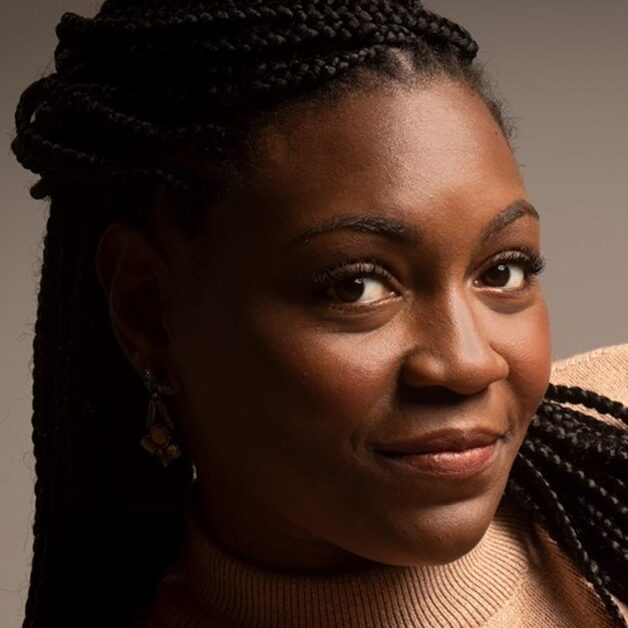 CHRISTINE EMBA
 -
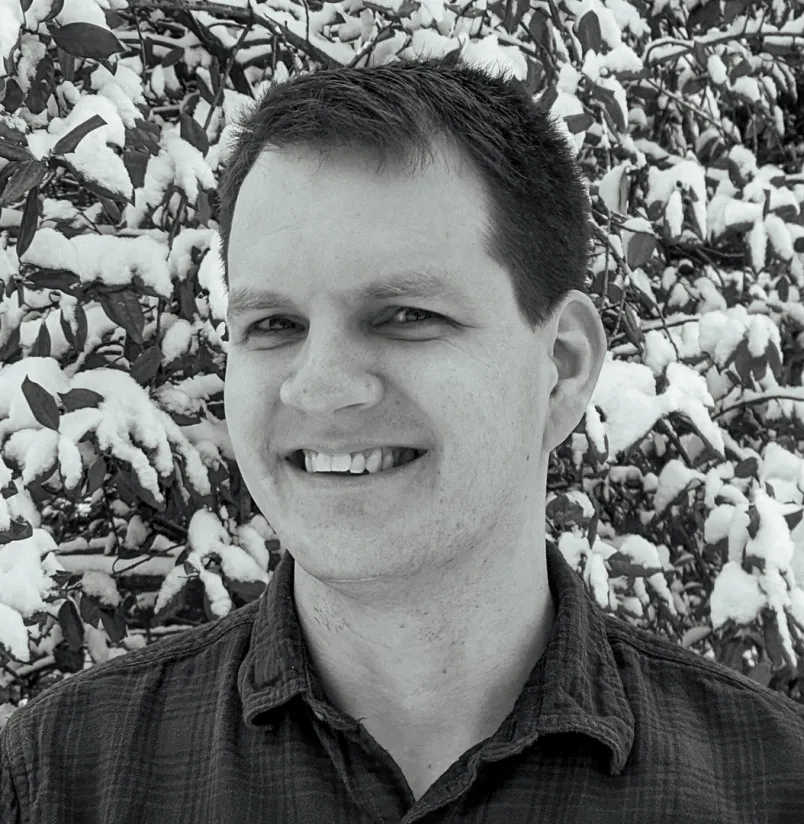 MATTHEW LOFTUS
 -
 PETER WEHNER
 -
 KAREN SWALLOW PRIOR
 -
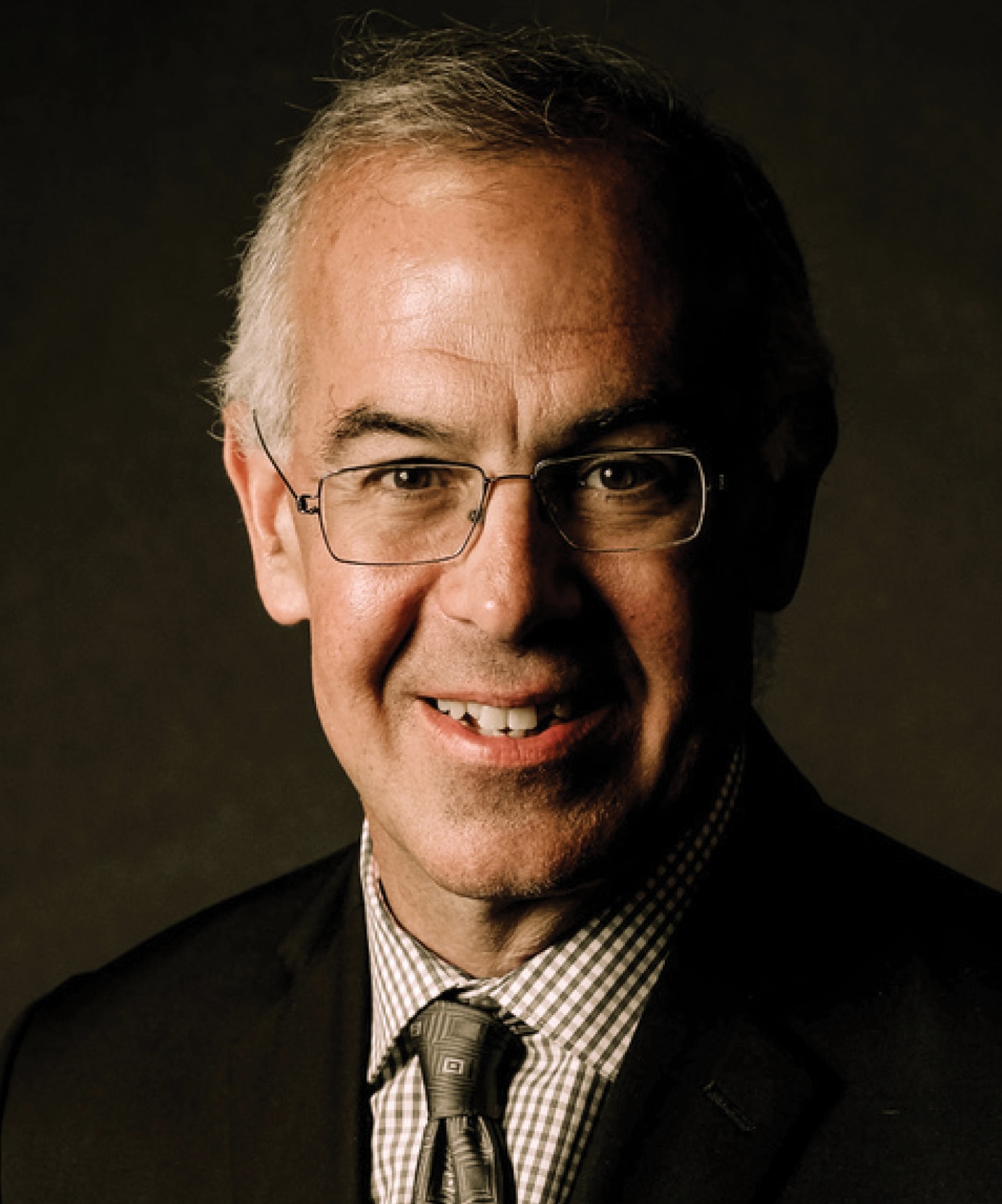 DAVID BROOKS
 -
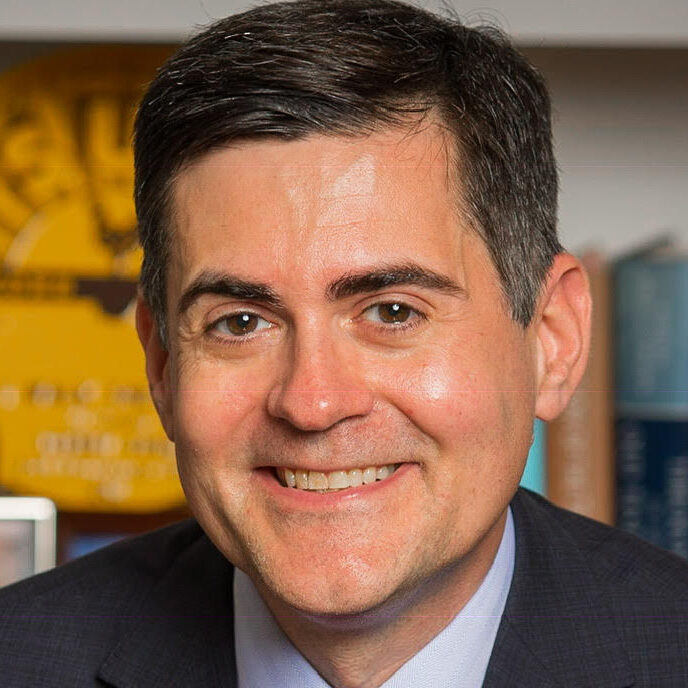 RUSSELL MOORE
 -
 CHERIE HARDER
 -
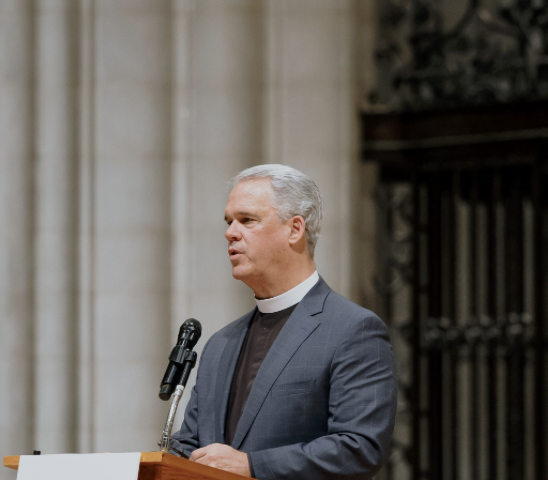 RANDY HOLLERITH
 -
 RICHARD MILES
 -
 DAVID COLEMAN
 -
BONO
-
GEORGE BUSH
Good evening and welcome to Washington National Cathedral. My name is Randy Hollerith, and I am the dean of the cathedral, and it is wonderful to have you all here. I am grateful to the Trinity Forum for inviting us to host this event. It is an honor indeed, especially for the inaugural Michael J. Gerson Prize for excellence. Mike Gerson was a great friend to this cathedral. He preached one of the most powerful sermons ever given in that pulpit one Sunday morning, a sermon that I will never forget. And then in Mike’s last days, he called me one day and said that he wanted to connect us to Bono, and that he wanted to connect Bono to the cathedral because Bono needed to come here and talk not only about his book, surrender, but more importantly, he needed to be in this space to talk about his faith and what a wonderful evening that turned out to be. Mike is missed in so many ways by so many people, but I am glad that his legacy lives on in many ways, especially in this prize. Now, it is my pleasure to introduce Cherie Harder, the president of the Trinity Forum.
Thank you, Dean Hollerith, for that introduction. And on behalf of all of us at the Trinity Forum, we so appreciate the hospitality you and your team at the National Cathedral have shown. And what an opportunity to be able to host this event in a venue that meant so much to Michael Gerson. I’d also like to extend my profound gratitude to the many generous sponsors who have made this evening possible. It’s a long and a guest list, and so rather than read through each and every name, I’ll just encourage you to look, refer to the list of benefactors who have made this program possible. To all sponsors, your generosity is so meaningful and so appreciated. Now what a wonderful way to honor a beautiful soul. I’d also like to extend a special welcome to Dawn and Bucky Gerson, Mike’s wife and son, who are with us tonight, along with Mike’s brother Chris Gerson and his wife, Tara. We are honored that you’re here. And we’re glad that so many of you have joined us tonight. We know that many of you were friends or colleagues of Mike’s in the Senate or in the White House, or from the world of journalism, whereas others of you know him primarily through his work. But for all of you, your presence here is a delight. Mike was certainly a singular talent. He wrote widely, wrote widely on faith and politics, but also far beyond that, on his own journey of faith, on the joys of his life and the suffering he endured, on the injustice he witnessed and the theologians he admired, and even on his beloved dog, Latte. And those of you who are familiar with his work know that perhaps his most moving column was about dropping off Bucky at college. He was also an extraordinary thinker, and he marshaled words to illuminate what was true and inspire a love for what is good. He opened eyes to the soft bigotry of low expectations of the underprivileged, articulated ways in which churches and ministries can serve as armies of compassion to meet the needs, both physical and spiritual, of people in need in ways that government cannot. And he faithfully and often fiercely advocated for the global AIDS initiative PEPFAR, which has since saved tens of millions of lives. Mike wrote to call forth the better angels of our nature, to celebrate the praiseworthy, to comfort the afflicted and afflict the callous, to lay out wise responses to confusing times. He profiled heroes of the faith and over time became just that to many of us. His example is all the more needed when just three years and two days after his death, faith is so often instrumentalized and even weaponized for ends having nothing to do with the ways of Jesus. While there will never be another Mike Gerson, we need more writers like Mike. And so we are so excited to bestow tonight the inaugural award of the Michael Gerson Memorial Prize. This award will honor and recognize an emerging talent writing on faith and public life in a way that exemplifies Mike’s conscience, courage, and mastery of craft. Our hope is that the prize will not only benefit the practice of journalism, but also the country at large, by cultivating fresh voices of similar moral clarity and vision. It was an idea first proposed and developed in conversation by an admirer of Mike’s, David Coleman, who we’ll hear from later tonight and which the Trinity Forum has been honored to lead with the support of the College Board and the Bill and Crissy Haslam Foundation. Our mission at the Trinity Forum is to cultivate, curate and disseminate the best of Christian thought for the common good, which we aim to do through our programs, our conversations and our readings. Mike was a good friend of the forum as well as a frequent speaker and participant. He reflected a deeply faithful, thoughtful, and hope filled vision for justice and flourishing in civic life. We believe and hope his example will be both an inspiration and a catalyst for a new generation of writers. Now, selecting the inaugural winner of the prize was no small feat. But we had an absolutely incredible selection committee leading the effort, chaired by Atlantic writer, and I am proud to say Trinity Forum senior fellow Pete Wehner, a close friend and colleague of Mike’s. The committee also included New York Times columnist David Brooks, Christianity Today editor Russell Moore, author and educator Karen Swallow Prior, and author and AEI senior fellow Christine Emba. The selection committee solicited and evaluated nominations from a broad swath of journalists, writers, public intellectuals, and faith leaders in making their final determination. We are so grateful for their generosity with their time and expertise, and we know it was a labor of love. In just a moment, we’ll hear from members of the selection committee as we discuss together the topic of conscience, courage and craft, the duty of the writer in an age of confusion. But first, we will hear from two very good friends of Mike who knew him well.
I’m delighted to be part of this prize created to honor a wonderful person. Mike Gerson. Mike was a brilliant speechwriter, and to me he was so much more. A friend, trusted advisor, and a voice of conscience at the White House. He harnessed the power of the pen to not just write about good policy, but to drive it. He was a key catalyst behind the life saving PEPFAR program, urging in 2002, if we can do this and we don’t, it will be a source of national shame. Mike was a man of many parts, all grounded in being a person of deep faith. That faith animated almost every area of Mike’s life. He can’t be understood from it. At the core of his work was the idea that everyone is made in the image of God, and that all people therefore deserve to be treated with respect and dignity. This value permeated everything he believed and wrote. I consider Mike one of the most important and persuasive voices of his generation. We all wish he had more time with us, but his words and work continue to live on. I’m pleased the Trinity Forum has created the Michael J. Gerson Memorial Prize for excellence in writing on faith and public life. Thank you for encouraging fresh voices who work on faith and public life. There is no more fitting way to remember our friend than carrying on his good work. May God bless Mike’s memory.
I think Mike would have loved this prize. He would have loved that emerging writers are being recognized for writing on faith and public life. Not with sanctimony, but with conscience and courage. Two words in short supply in too many places these days. Two words that could sum up Mike Gerson if you had to be succinct, and you could sum them up, but you can’t, really. Mike believed so strongly in words, that words could heal or harm. And he had a rare gift for words. And they seem to do what he said. He’s a master, really, of communication. In the last years of his life, I remember his kind of discomfort and then almost outrage as he saw his Christian faith, being distorted and disfigured, really. And I remember his writing getting even bolder. I remember even he was even calling out his own community of evangelical Christians. And I’m sure he lost some friends in the process. But, you know, he loved God more than he loved religion. Loved Jesus. In one of our last exchanges, referring to the blowback he received for writing about Jesus as the world’s desire in a puking infant, Mike wrote, the idea of an embodied god is scandalous, yet a God embodied in the poor, the refugee and the oppressed is even more threatening because it demands something of us. The incarnation either means nothing or it means everything. Yet if it means everything, it isn’t easy to live within the light of that truth. Amen. And yet Mike lived and wrote in that light. And 26 million people are alive today, living with the light of that truth. Because of PEPFAR, President Bush’s AIDS initiative that Mike and other people of conscience, from the right, left and center willed into being and has held together for 20 years. It remains the largest commitment by any nation to fight a single disease in history. Mike Gerson didn’t just appeal to our better angels. He gave them wings, with his words, and for those of us lucky to have known him with the example of his life, a life of courage, of obedience to his gift, and to love itself. God is love. We miss him. We miss him at this moment in history even more. Love to you all.
In terms of what made him a compelling writer, well, at the risk of going on for the next three hours, let me let me try and encapsulate some of what Mike possessed that made him so special. The first thing is that he wrote like an angel. And that is just a God given talent. But he was extraordinary that way in terms of the combination, the fusion of the mind and the heart and the way that he could give expression to that. That’s a rare, rare gift. And he was able to do it as, as both a speechwriter and a columnist. And that’s pretty rare too. There have been a couple people in history who have done it. They’re somewhat different crafts, somewhat different arts. And Mike was able do both and to do both exceedingly well. Part of it was it was a product of his reading, his love of books, his love of poetry. T.S. Eliot was a favorite of his. So he read a lot, and he absorbed what he read. It imbibed, and it became part of who he was. And part of it was just sheer hard work. You know, very few people are born great writers. And Mike became a great writer, and he was a craftsman. You know, there are people who are artists and musicians who exceed excel in their craft. And Mike did it in writing, and he took that responsibility really seriously. And he had a love for excellence, human excellence. And he would go over, over, over and over and over again, speeches and columns looking for just the right words. Some of the people I see, some friends and former colleagues in the Bush administration, Josh Bolten and others, and they’ll remember that Mike would go to Starbucks. And he loved to work there. And he’d go through these drafts of important speeches with these yellow pads, and they were nearly inscrutable in terms of his handwriting and his doodles, these frantic scribbles. And he would be chewing on his pen and his feet would be going, and it was almost like a nuclear reactor kind of going off. And Karl Rove once said that if those notepads ever became part of the presidential records, that the future historians would say that some deranged person got a little too near the president. Another thing about Mike is the great writers have great, enviable eyes. That is, that they see things that the rest of us don’t see. And Mike had great, enviable eyes. He could see into people, into events, into moments. And then he was able give expression to it. Another thing is he believed in things. He wasn’t just an observer. At the core of Mike, I would say, was, one of the cores of Mike was a commitment to justice. For him, I think it was the most important of the cardinal virtues, or at least the one that was closest to his heart. And he, he cared too much to ever be cynical. Sometimes he would get down, and his emotions would come out, but he was never cynical about it. Just a couple of other things. He was a moralist at heart, but he was never moralistic. And there’s a difference. He cared passionately about the moral good and the common good and right and wrong. But thankfully, and blessedly, he had too much humility, too much self-reflection, and too much humor to be to be moralistic. And so he always stayed on the right side of that line. Two other things, his honesty, I mean, I couldn’t tell you the number of conversations that I had with Mike, both as we were speechwriters and as we were both columnists. Just questions about is this right? Is this fair? Is this true enough? He cared about that. I think he knew he felt strongly about things. So there was some internal check that he had, which I want to make sure that I get this right. And then the last thing which President Bush alluded to was Mike’s faith. It is really at the core of who he was. It touched every part of his life. It was like drops of food coloring in water. It colored everything. In my experience, faith makes some people, it gives them harder edges. They become more judgmental, less compassionate. For others, it softens the edges. It gives them a generosity of spirit and a capaciousness. And I think that was true of Mike. And so Faith was central to him. It made him better than he was. He loved God. He gave his life to God. And in the final days of his life that that was the most pronounced thing about him. And it was it was faith that took him home.
David, I know you worked with him quite closely.
For those of you who have never seen a miracle. I handed my microphone to Pete Wehner. I have never done that before. And I would like to apologize to America. I never will again. I got to know Mike in the 1990s when he was working, I think, for Senator Coats on what would become compassionate conservatism. And he had that intellectual and moral consistency the whole time I knew him. I once said he was the had the most finely tuned conscience of our generation. And that started from the very beginning, and it lasted till the very end. He was a man of the people. Speaking of Bono, I got to be with Mike during his first rock concert, and it was, naturally enough, a U2 concert, and Bono dedicated a song to him as I’m standing next to Mike and I had to whisper in his ear, this doesn’t happen every time. I always got the impression that some people are born good. They just have naturally ebullient personalities. And that really wasn’t Mike. I think he had naturally inward personality, a bit of a neurotic personality, but also a hint of waspishness. And I think his faith and his commitment to being a better and more emotionally open person carried him forward toward that. And Randy referenced this, but up at that podium, he gave a talk about his depression. And really, one of the things that hit Mike was the book of Job. Heart issues, cancer, depression. And I remember at that pulpit he said that he explained what depression was and one of the phrases he used, I’ll never forget it, said depression is a malfunction in the instrument we use to perceive reality. And that’s as good a description of what depression really is as I’ve ever heard. And he bravely did that right here in the National Cathedral. And then he, at the end of his life, I got to tell him a few things of what he’d meant to me. And at the end of his life, he was not afraid of death at all. He was just telling stories. And I had the chance to tell him. For example, some of you may know my wife, Anne Snyder, who’s a Trinity Forum senior fellow and edits Comment magazine. And she was a young student at Wheaton several years after Mike was a student at Wheaton. And she was wondering, what do I do with my life? And she saw this guy, Mike Gerson, who was then a presidential speechwriter, and she thought, that’s what I’m going to do with my life. I would love to be like that guy. And so I think Mike set that example for many of us. And at the end of his life, I got to tell him how he changed not only Ann’s life, but my life. I got to have a wonderful marriage because she was drawn to Washington to be like Mike Gerson. And sadly, that was not always reflected in his behavior toward me. I was once during the Bush administration, during the PEPFAR years, I was working at the New York Times and Mike and a woman named Kristen Silverberg and a guy named Mark Dybul who was running PEPFAR. We all took a trip through Namibia, South Africa, Mozambique, and the final leg of our trip was in Mozambique. And they got a call that the government plane was taking Mark, Michael and Kristen away, and they left me in Mozambique. And how do I get out of Mozambique? So he was cruel that way. Okay. But I just think that the essence of a conscience, that is something that you’ve worked on and you’ve worked on, not through submission only to Jesus. So that was part of it. Sometimes you meet a Christian, they think, well, there was Jesus, and then there was me. But Mike studied 2000 years of Christian social teaching, and his conscience was not only honed by his dedication to the Lord, but to all those thinkers who created a philosophy. This is how we treat other human beings in the concrete circumstances of life. And that gave him both a humility and a power.
You know, Pete, you mentioned Mike’s emphasis on the importance of truth. And for many writers today, one of the big challenges is the very media of communication that is used often has a bias towards distortion towards that which is speedy, sensational, snarky, salacious and the like. Your publication, The Atlantic, at one point estimated that fake news actually spread six times as quickly as the truth. It penetrates more deeply. It’s more likely to be reposted. All of you are writers operating within this context, and we’d love to hear from each of you and Russell maybe we can start with you. What is the duty of the writer in the context we find ourselves in?
I remember giving Mike one time a word of encouragement from a young Christian that I had talked to who wanted to be a writer, who said that he read Mike Gerson because he realized from his writing that he could care about hurting people and still love Jesus. And Mike furrowed his brow and said, do you realize how insane it is that we have to say that you can both love hurting people and love Jesus? And it is insane that we often have to say that. But a lot of what one has to do in a time like this, with algorithms and social media and everything else, is to restate the obvious. And I think when Pete mentioned that Mike wrote like an Angel, I think that’s exactly right. And not the angel that’s the caricature in American popular culture, but the Luke 2 kind of angel that provokes both great fear, he’s telling the truth and telling it honestly, and has good tidings of great joy, which shall be to all people. And so I think in a time like this, there’s this combination of having to restate what should be obvious and to try to maintain one’s own equilibrium and one’s own attention. I think Thomas Merton said at one point that maintaining one’s attention is an act of love of neighbor. And I think that’s essential right now.
So I was not a close friend of Mike’s, throughout his entire career. I actually met him when I started at the Washington Post as a young editor. And we were assigned columnists and pieces to edit. And at one point I was assigned Michael Gerson as my columnist to follow. And this was a wonderful and terrifying assignment, because it was Michael Gerson who I was editing, who was an amazing writer, a figure who I had respected for years. And also, it was an excellent assignment because there was not that much to edit. He was a great writer. He would submit pieces and I would look at them and be like, well, looks… can I move a period to make it look like I’ve done some work? But one of the few comments that he would send with his pieces when he submitted them, especially sometimes his pieces that were the most powerful or that actually did sort of point the finger or call out a moment of low character or a failing would be to ask, is this too harsh? I don’t want to be unkind here. So look at X paragraph. And I think in this moment on social media, there is a tendency to be as harsh as possible, as unkind as possible to relish pointing the finger at someone else and ignore perhaps the fingers pointing back at you. And I think that one thing that I took away from editing Mike, apart from realizing that perfection is rare and hard to achieve, and maybe I was seeing some of those examples, was this emphasis on thinking of the other, not just oneself, noting the impact that a misplaced word or a misjudged moment could have, and holding oneself back and feeling that actually holding back could be a virtue at times, and being open to other people’s thoughts and correction. I think social media makes us solipsistic. We think we know everything. We cast our thoughts out into the ether without really thinking about who they’ll impact. And I think that is one of the things that writers, and really anyone existing in this moment needs to come to terms with.
So we all know it’s a common truism that we are living in an attention economy. And so much of what passes for writing today is really just clickbait and hot takes. And it’s so easy to draw our attention to those things. And so I think the task and the duty of the real writer today, the one who loves people and loves words, is, well, in many ways to follow the example that Mike has offered by being not just a prophet, because I think it’s also a truism that writers perform the role of prophet, in all times. But in this time in particular, I think we also have to play the role of physician. To use our words as, as Bono mentioned, to bring healing. And sometimes what heals does hurt, in the short term, but it is done for love and in love. Because that is what writers who really love words and love people and are not seeking to serve themselves can and should do. And we in this attention economy, I think our greatest role is to help draw people’s attention. Our own attention and our readers attention to what is good, what is true, what is beautiful, and what will bring healing that we need so badly right now. Okay, Right.
As Karen was talking, I was thinking of a saying from Simone Veil that attention is the purest form of generosity. And I was reminded of a story I once read that Dan Rather was interviewing Mother Teresa, and Rather asked her, “When you pray to God, what are you saying to God?” And Mother Teresa said, “I’m not saying anything, I’m just listening.” And Rather asks her, “Well, what is God saying to you?” And she said, “Oh, he’s not saying anything, he’s just listening.” And if I have to explain that to you, I can’t. But I’m thinking, Mike is a writer. A couple of things just popped into my head. One, to go back to that pulpit. I think George W Bush gave the post 9/11 speech from that pulpit, and Mike had a hand in that speech, let’s put it generously. And one of the beautiful things and most generous, generous things a speechwriter can do is to inhabit somebody else’s voice, make them a little more eloquent than they actually are, but not totally alien to who they are. A few years ago in Republican politics, there was a guy named Bob Dole who you may remember, and he hired a guy named Mark Halperin to write his speeches. And Mark Halperin wrote speeches suitable for Dante. And Bob Dole was not Dante. And so you’d see him reading the speeches and was like, it’s an iambic pentameter. And he’s like, I’m from Kansas. Like, what the… But my other favorite Bob Dole story is after he lost the presidential election, somebody asked him how he was doing. He said, “I sleep like a baby. I wake up every two hours screaming.” but Mike had the ability to take President Bush’s voice and make it a better version of President Bush, which is just a rare skill. And then when he became a columnist, he did something that is now becoming increasingly unusual, which is, I heard one of my colleagues, a very great journalist, talk about the Democratic Party. And he said, “we.” In other words, he did not have the detachment for the Democratic Party that in my view, a journalist is supposed to have, or the Republican Party. Mike had literally worked in Republican politics for much of his adult life, and yet he still had the distance that my loyalty is to journalism, is to writing, is to truth, not to partisanship. And that, for a guy who spent his life in Republican politics, was an admirable and important step that he took when he became a Washington Post guy.
Yeah, just a couple of things. First is, I’m glad that we’ve finally gotten to the end of a mystery that a lot of us have had, which is why did David Brooks have five straight weeks of bylines in Mozambique? We all thought, jeez, we didn’t know he had such a fascination with Mozambique. But now we know the real story. The other thing I want to, before getting to the duty of the writer to mention, because it’s been referred to a couple of times as the speech that Mike gave about depression, that was here. And somebody, actually, just this evening during the reception, came up to me and talked about how much that speech meant. And the reason it meant so much, and David alluded to this, is that Mike gave voice to something that people, most people who were experiencing depression didn’t, weren’t able to give voice to. And he had experienced it himself. And so that created a connection with them. And there’s something else about it as well, which is Mike was not particularly emotive person, and that was an incredibly vulnerable speech. And it was therefore courageous speech for a person like Mike to open his heart. And his mind at that moment was an incredibly generous, generous thing. Just in terms of the duty of the writer. And people have alluded to it in this moment, and I think it’s the duty of a writer in any moment, and that’s to tell the truth and to tell it well, and to tell it in a way that’s accessible to people, in a way that doesn’t succumb to dehumanization, or cynicism or powerlessness, and then to connect truth to human flourishing. it’s not an abstract argument. Somehow you have to be able to reach people and show why does this matter in my life. And it’s interesting, if you think about some of the great writers and great dissidents, you know, Solzhenitsyn in the great 1970 Nobel Prize speech said, one word of truth shall outweigh the world. Václav Havel, in a great essay in the late 70s called The Power of the Powerlessness and the Central Focus. As he said, you have to live within the truth. Don’t live in the lie. And the last thing I’ll say about it is it’s, I think it’s very important that writers write what’s true, write what’s on their heart, and don’t get too knotted up on whether it’s going to succeed or not. I think people have to think about being faithful, not successful. You always hope if you’re faithful, that success will follow. But sometimes it doesn’t. And success isn’t always and often it isn’t within our power. But being faithful is, C.S. Lewis, who had an enormous influence on Mike, said, it’s not your business to succeed, but to do right. And when you’ve done that, the rest lies with God. And I think that’s probably a word that all of us can take to heart.
Karen, I want to follow up on something you said, which was the power of words to heal. And certainly as people of faith who worship the word, there should be particular care and concern given. And one of the things that was so striking about Mike’s speeches and writing is that he unabashedly used the language of morality, of spirituality and of virtue, and that those type of words in that kind of language is not what’s often used right now. And in fact, David, I think in your book The Road to Character, you did something that I thought was so clever and elegant, which was you looked at Google inwards, basically the aggregation of language over time and found that there were really interesting things happening. The language of we went down, the language of commerce went way up, individualization, and certainly the language of virtue just tanked. And I think that was ten years ago that that book came out. And I think since then there’s been a huge explosion of the language of domination in our discourse. And I’d love to hear anyone who would like to sort of jump in, whether you see a need for the revivification of moral and spiritual language in writing on public life. And if so, what would that look like?
Well, as someone who has studied, you know, a small amount and as a novice in virtue ethics, I think that the work of Alasdair MacIntyre is important, especially his book After Virtue, in which he gives a pretty pessimistic picture of even using the vocabulary of virtue, because we don’t have any common ground that coheres in the way we use these words. But I think that we can still, and still need to use these words, use the language of virtue and morality. But we cannot assume that we all mean the same things by these words. I mean, MacIntyre’s argument is basically that modernity emptied out virtue because we no longer believe in telos or purpose, and so we use the words to express our emotions rather than to talk about common virtue. But I think that if we go, if we’re willing to go beneath the surface, to go beneath the words themselves, to find out what it is that people mean, even in a in a polarized and fractured society and one that’s defined. Well, I think especially in the American context by religious pluralism, which I think is one of our virtues, that we do still have common ground, we do still have a basis for our common humanity, but we have to get beyond the language and beyond the terms and ask one another what we mean and and identify those common values. It’s just harder to do in a pluralistic society, in a fractured one. But it’s still the work of the writer, and it’s still, really, I think the only way to get to the healing that I talked about earlier.
You mentioned that that language of soft bigotry, of low expectations from Mike. And I think I think that has a lot to do with what happens with writing. We live in a time where no one expects to be able to persuade anyone else. There’s a mentality that everyone is as bad off as as possible, just seeking his or her own interests and all that ultimately really matters is owning someone, to use the language that is often used in some sort of a take. But if you think about the power of what writing actually is, it can get beyond that because it understands how people actually do change, and almost no one changes at the end of a ten minute argument, if we think about the way any of us have have been transformed on anything small or large, normally we think about it and ponder it and and it sits within us, and sometimes even the very thing that we’re arguing the most forcefully against in an argument is working its way in, and that that’s what writing is able to do is to allow people to overhear imaginatively. This is what it would be like to be in this situation. And Mike could do that. I look today because I suspected this would be true, that still, the most read of his columns is the one about taking his son to college with that. That line, 18 years is not enough. He was able to take an experience that that people aren’t able to articulate and put them into it in a way that has the force of what Jesus is doing with the parables. It’s not just that there’s a moral in there. It’s that through that storytelling, you actually experience second hand what it is to pass by a wounded man on the side of the road. And writing can do that.
I do need to jump in here. Because when Russ mentioned the idea of persuasion, we must think of Jane Austen, who wrote a novel called Persuasion, which is about that, among other things. And really, all of her novels are about people being persuaded by the other characters, by their inner wrestling. And MacIntyre actually points to Austen as the last modern virtue ethicist. And so I can’t let the evening go by without recommending everyone to read Jane Austen, to see how this works. And one of the speeches that I listened to that that Mike gave over ten years ago, he talked so eloquently about the power of persuasion over domination. And so just kind of to tie all those things together, and give a shout out to Jane. Thanks.
I mean, I have to second that recommendation, obviously. But I also want to call back to one of the things that you said earlier, Karen, about writers being lovers of words and lovers of language. And I think that this is one of the things that was evident in Mike’s writing and in the writing of truly persuasive authors, speechwriters, columnists. They can use language, the language of virtue, the language of ethics. And you can sense that they believe it, that they find something beautiful and elevating in talking about the good, in talking about flourishing. They find ways to weave it into their stories, to actually make that accessible. And also alluring to the reader. And I think as writers, especially in this moment, one of the things that will be our responsibility and is our responsibility is to reintroduce, or at least to remind our readers and our audiences of the good, the true, the beautiful, the virtuous, and not as sort of, you know, waving a club and saying like, you’re not good, you’re not virtuous. This is bad, I hate this. But to show that those things can be lovely, actually, to redefine those words in ways that don’t make them, you know, smell of just old books and past lectures that we’ve moved past, but something that can be alive in this moment, whether we’re talking about, you know, as Mike wrote, the love of, you know, his tiny little dog or taking his son to college or even with sort of righteous and moral anger, about the work that America had done or failed to do abroad about our responsibilities to others. We have to talk about virtue. Writers, especially writers with skill, have to be the ones who elevate our language beyond owning and takes and any other sort of horrible and demeaning slang we use today to something larger than ourselves and something that draws people in.
Sure. You mentioned the sort of the demoralization of American culture, and I saw recently like the word humility has gone down. The usage of the word humility has gone down like 60% over the last 50 years. I wanted to remedy that by writing a book on humility, and it was going to the front. The cover would be humility and then David Brooks and those. But but when I was talking about that book Road to Character, before it came out on some TV show, and I got an email from an editor at a different publishing house, and he said, I love the way you talk about the book, but I really would drop that word sin from the way you talked about Saint Augustine or Dorothy Day. He said, don’t use the word sin. It’s a dark word. Use the word insensitive. I was like, ah, it’s not quite the same. And so just keeping that language alive is part of the thing. And I learned writing that book, wrote character, that writing a book on character doesn’t actually give you good character. And even reading a book on character doesn’t give you good character. But buying a book on character does give you good character. So I recommend that. But one of the things I discovered when I would teach undergrads was that they have been deprived of a moral vocabulary. They’re not bad people, but they’re morally inarticulate. And if you take away from a couple generations words like sin, grace, redemption. It’s really hard to understand, even if you’re a secular person. What’s going on in here? You just don’t have the categories to explain moral degradation or moral sanctification. And so one of Mike’s great traits was to be that rarest of creatures, an attractive moralist. And I sometimes think, how did he pull that one off? And I think part of it was having a poetical style. It is super hard, Christine, or all of us super hard to write with voice in modern media. The internet wants to flatten voice, so we all sound the same. And Mike was able to do that. But more importantly, he wrote about morality, always from a position of coming and under, always from a position, never from a position of moral superiority of his own self. And if you’re clearly working on yourself, as Mike always was, then you can be moral without being insufferable. And that he did.
Yeah. Just a couple of points on that question about the revivification of moral and spiritual language. The first thing is, I think writers should be less afraid of using moral and spiritual language than they are, and I understand why they are. Because I think many times the people who do use that language misuse it. And so it creates caricatures. So people are kind of want to stay away from it. But my own supposition, and I think probably the supposition of a lot of people up here, is that the moral and the spiritual is where most people live their lives. Now, they may not give it exactly those words, but the moral, the spiritual, the imaginative, the things that are almost ineffable. That is what drives us. And we’re all searching, in one way or another to try and understand what the meaning of our lives is. And language can help do that. It’s not the only thing for sure that can. It’s not even the most important thing, but it can help to do that because it can articulate some inchoate sense of things. And to be able to say, okay, that’s what I’m looking for. That’s what I need. Second point I wanted to make is referring back to something that David said, which was President Bush’s National Cathedral speech, which he gave right there at that podium. And that was on September 14th. So it was Friday at noon. And that was about 11 or 12 minute speech. I think it’s still the best speech that he’s ever given. And I think it’s one of the best speeches a president has given. And the reason I mention it in this context is because that speech in like 12 minutes did several things. But one of the things it did is it used unapologetically, unapologetically spiritual language to explain to the country what had happened. And it did so in several ways. It spoke to grief. That’s not easy to do. But if you if you read that speech, you’ll see someone who was tuned in to what the grief of the country was and gave expression to it. And then it put grief in the context of larger purpose. And it used explicitly religious language to do it. In fact, it quoted from the New Testament. Nobody freaked out when it was used like that because people were saying this is helping us at this moment, not only to put words to our grief, but also to try and put it in a larger context. Last thing I want to say about words is if you think about five titanic figures in American history. Jefferson, Lincoln, FDR, JFK and Ronald Reagan. I would bet, if you ask most people what comes to mind when you ask them about those people? They would be words, not policy proposals. All men are created equal with malice toward none, with charity toward all. We have nothing to fear but fear itself. Ask not what you can your country can do for you, but what you can do for your country. Mr. Gorbachev, tear down this wall. And that tells you something. It means even for presidents, it’s the capacity to put into words those kind of deep sentiments. And when people see it at the right moment, it can make a world of difference, including over time, character formation.
Thank you. Pete. You know, there’s so much more that we could say about Mike, about writing, about the power of words. But I’m confident that many of us here today are not writers, maybe don’t have aspirations of being so. But at the same time, for good writing to endure, for the care of words, to endure, There needs to be an audience for good writing, an audience of people who appreciate and who seek out clarity of expression and concision and the use of beautiful language aptly. And all of us are readers, and would love to hear your thoughts. And, Christine, maybe we can start with you. What makes for a good reader?
I think two words immediately come to mind. Time and taste. The first one seems fairly obvious, but in this moment is the sort of obvious thing that we tell ourselves we’ll do. And then we don’t. You know, I’ll pick up that book tomorrow. I’ll make time to read that piece. I’ll join the reading group sometime. Not right now, because I’m looking at kitten videos on Instagram. But at some time in the future I will make space to read, and I think we’ve talked enough about attention on this panel, but in this moment, making sure that we we give ourselves the time, we carve out a space learn, to read, to devote to looking at words. That is a necessity for even maintaining the ability to read. In this moment. And then, yeah, the second word, taste. I mean, just thinking about this conversation. Austen. MacIntyre. Lewis. Solzhenitsyn. I think when we talked about moral language, many of us noted in in different ways that there is a little bit of a fear in this moment of making judgments, of saying something is better than something else. Of saying something is sinful, of being insensitive or judgmental. But I do think that we know that some works are better than others. Some writing is better than other writing. Some writing has sort of persevered and withstood the test of time because it teaches us something, because the language is beautiful, because the references sort of rain through the books that have come after it. And so also not just reading anything but reading good works, reading works that are that are core, that actually have real messages seeking those out, even though they might be more difficult to suggest or digest rather than like the latest Romantics or Dan Brown. But again, making time to do that is what it takes to be a good reader and eventually writer.
I want to put in a brief word, which is hard to add. After that I would say the same things. Time and taste. But I want to put in a word for legacy. We are living right now in a very transitional moment for many reasons. We’re seeing the transition from a literate culture to a post-literate culture, and it’s hard to live through. Most of us are probably feeling anxiety about that. And our attention is being drawn away and sold and marketed. But what we do in this moment is parallel to what people did 500 years ago with the invention of the printing press, which was a very messy time, and people gave their lives for the debates that were swirling around. And in this moment, not to be overly dramatic, but how we learn to manage digital media and the post-literate culture that we find ourselves in. The way we steward this now will leave a legacy for generations to come. So think about that as you’re reading and you’re deciding what to pay attention to.
A few years ago, the Merriam-Webster’s word of the year was gaslighting, making someone feel as though they’re going crazy. I saw the other day that perhaps the the word of this year will be like gassing, which is the reverse of that, with sycophantic AI telling more and more people when they put in, “I’m having this problem with my family member who’s to blame?” And the AI is always going to say, well, you’re in the right and they’re in the wrong, but ultimately you you’re left with someone saying, “I really need something other than algorithms and chatbots,” saying back to me what I already think reading in exactly the way that Christine was talking about with, with time and with with taste, but taste that takes time to cultivate. It’s not immediate. Can do that. Can give you a perspective outside of yourself. What I’m encouraged by is that when I’m talking to a lot of 22, 23 year olds, even those who say, I’m finding it difficult to submerge myself into reading right now, they all know that’s happening and don’t want it to be. So I think there’s a hunger that we ought to see as something good cultivated.
David, Pete, I’ll give you a last word.
Just on reading, one of my favorite novels is, Crossing to Safety by Wallace Stegner. And he has in there a it’s a story between two older couples. One of the men is a literature professor and the other is a writer. And the writer says to the literature professor at one point, you have to realize you read to appreciate. I read to steal, and that’s how I read. Okay? I have eight books, it’s like, what can I rip off from this guy? And so I’m a bad person to ask about writing a book because I think about a great reader. I’m reminded of the story of Samuel Johnson when he was a kid. He was reading Shakespeare, and I can’t remember what scene it was. Let’s say it’s Hamlet confronting the ghost of his father. And he got so terrified he had to run out into the street to look at daylight. And so to be that immersed in a book that you have to run outside to remember that you’re still in real life and not in that book that’s reading.
Pete, Karen, David, Christine and Russell, thank you so much. We’ve been talking about what makes for a good reader as well as a good writer. And our next speaker is someone who has devoted much of his vocational life to encouraging deep reading and clear writing. I’m so delighted to be able welcome him to the stage. David Coleman, the CEO of the College Board, was actually the person who first came up with the idea for this prize. And the College Board has been one of the seed funders. So we’re so delighted to get to welcome to the stage, David Coleman.
Forgive me if I pause for a moment to collect myself on seeing this view for the first time. It is a wonder, and I thought it might be nice to pause for a moment to allow the spirit of this moment to descend on us. But you also might wonder, what am I doing here? You might wonder why is Collegeboard, known for the SAT and Advanced Placement, why did we approach the Trinity Forum to sponsor a prize celebrating Mike Gerson. In the tradition of the four questions of Passover, I offer you four reasons. First, it’s all about Mike. I did not know Mike as well as many people here today, so I won’t say much, but I will say that first reading Mike was, for me, as refreshing and forceful as reading George Orwell’s nonfiction prose. May I say this to his family and friends assembled here if this prize accomplishes nothing else, may it help make his memory a blessing for you and for all of you who love and admire him. And may this prize also inspire thinkers and writers to imitate his unflinching encounter with faith, liberty, dignity and justice, as we also say on Passover. Dayenu. That would be enough. My second reason is that the sundering of faith and education has impoverished the world of education and perhaps faith. Look first to the university. We lost so much when we lost the Bible as a shared universal text in the university that grounded the great debates between faith and reason. I believe the decline in the public’s faith in the university has much to do with the decline of the role of faith in the university. Without a binding moral threat, the university devolves into self-improvement. Religious practices in the evangelical, Catholic, Jewish traditions all cohere around the sanctity of shared texts, reading well in the demands of productive solitude and sustained attention. Such devotions such habits could not be needed more now, as our panelists so unforgettably expressed. Education is soulcraft. Years ago, I read the C.S. Lewis papers at Wheaton College with some of you here today. And forgive me. While the panelists said many fine things about reading, well, I give the award to C.S. Lewis as writing the best phrase of what it is to be a good reader, Lewis wrote in the face of a work of art. Surrender. Forget yourself. Get out of the way. And it was this experience that led me to defend Wheaton’s accreditation, to speak widely on the unique gifts of a religious education, and to engage the homeschooling community more fully in College Board’s work. Third, since Mike hated false dichotomies and false choices, I will offer a third reason we need to stop pitting faith and soul against career readiness in the world of work. Mike saw that power on this earth must be matched with faith. He called this a professional vocation. Business leadership and entrepreneurship at their finest, bring values to life and are part of the founding spirit of our country. Just as all Americans need to learn civics, so too they need to learn the powers and possibilities of starting something of business. What it takes to turn their ideas into action. Productivity. What is it to build an institution? That’s why College Board has developed an AP business course where students learn to think as an entrepreneur, as someone who owns the business and takes responsibility. We’re partnering here in DC with Goodwill Industries, where faith animates their commitment to see the dignity of everyone they employ and whom they serve. And I have good news for those of you civics fans. How many in the crowd? Civics fans? I think quite a lot. Any of you think kids should learn more civics these days and perhaps not care enough about civics these days? Do I have a quorum? One good news. Hear me students favorite AP course last year. We have all sorts of cool surveys. Their favorite AP course last year was AP Government and Politics, where they are immersed in our founding documents. Our students are eager to inhabit the civic life in which Mike so brilliantly wrote and lived. Four. Finally, my greatest faith and cause for hope is in people. That begins with Mike and my faith that the model of his work offers for a generation of writers, as we will soon see as our winner, is soon to be before us. But it also includes Stefanie Sanford, the general behind bringing this prize into the world. Stefanie has been a partner to me in much of the best work of my life. Stefanie, would you please stand? And remain so standing. And of course, the leaders we have just heard from. And since I’m going to talk about the panelists now, I’d like them to come back on stage as I name them, which is unexpected. So don’t trip in this sudden move. Cherie Harder, whose work leading the Trinity Forum is always beautiful, intelligent, necessary. If you remember no other sentence from what I say to you, if you are ever looking to do something good, please invest in Trinity Forum. Cherie would you please stand? Join me. Pete Wehner, who embodies the words he wrote years ago. Civility isn’t weakness. It is strength under control, a reflection of respect for others and confidence of our own beliefs. Pete, please join Cherie. Christine Emba, who’s writing recalls Immanuel Kant, for in our most intimate relationships, we must treat others not merely as a means, but as an end in themselves. Christine. Karen Swallow Prior, who inhabits C.S. Lewis’s intelligent dedication to literature and cares for the people around her with the same fierce love as the book she cherishes. Karen said on stage, you need two things to be a great writer. You need to love words and you need to love people. And that is this lady. You’re a great lady. Glad you’re here. David Brooks, is there a more steadying force when paths are darkened than David? He always provokes without stooping to mere provocation. David. And finally Russell Moore. I met this man only today, but in a very non-creepy way, I have observed and admired him from afar for many, many years. I have read his words and I have observed his actions. If there is a man who has shown more courage and self-sacrifice in our public life, I have not seen him. Kant says that a person who sacrifices a great deal to follow the moral law shows all of us what we can do. Kant says, these moral heroes show us what is possible through freedom. Russell Moore. The folks standing here near me have and will build. Stephanie, would you join us on stage, my dear? Please, please. The good Lord won’t forgive me if I don’t invite you. The folks standing here have and will build this monument to Mike, but are also a circle of people whose testament calls us to our best selves. My heart is full being in your presence. Please join me in showing our gratitude for this circle who assembled here tonight. Keeping sacred the memory of Mike Gerson. Thank you.
Good evening. My name is Richard Miles, and I’m chairman of the Board of Trustees of the Trinity Forum. I’ve had the honor of serving on the Board of Trustees for almost a decade. And almost two decades ago, I also had the honor of briefly serving with Mike Gerson at the White House when I was a staffer at the National Security Council. Mike got to write speeches for the president. I got to write memos for Steve Hadley. Other than that, it was pretty much the same. One aspect of what the Trinity Forum does is this: we work to keep the Christian intellectual tradition alive. We are convinced it is a source of wisdom for meeting the challenges of today and tomorrow with hope. Mike Gerson is a wonderful recent exemplar of that long tradition, as we have heard. Keeping the Christian intellectual tradition alive also means nurturing new growth in it. The prize we’re presenting tonight supports that new growth. So it’s my honor to announce that the inaugural winner of the Michael J. Gerson Prize for excellence in writing on faith and public life is Matthew Loftus. Before we bring Matthew up on stage to accept the award in his remarks, I’m going to turn it back to Pete just to explain why the selection committee selected Matthew.
Thank you Richard. It was an honor to chair the selection committee. As you can imagine, having spent some time with them for the last hour. So I wanted to thank all of you. They’re all busy people, and they give a lot of their time and effort because they cared about this award and they cared about Mike. In looking for the candidates, we cast a pretty wide net and we received a lot of superb recommendations. And one was for Matthew, the first person who recommended Matthew came from someone whom I respect, a theologian named Wesley Hill, and he told me Matthew is one of the most hopeful voices writing today. And I thought, well, that’s vanishingly rare. So it got our attention. And the more that we looked into his work and his life, the more obvious choice it became to us. Let’s just say that there were no dissenting voices for his nomination. We selected Matthew for several reasons. One is how he writes. Matthew is an excellent writer. He’s clear, at times gripping, evidence based, and a person with an interesting and impressive mind. He tells stories in his work. His life experience, including his experiences as a physician, inform his writing. He brings a global perspective and he’s a writer with a conscience. Second, we took note of the range of topics which he writes on, with thoughtfulness and sensitivity and with nuance subjects like mental health and medical ethics, race, why he’s pro-life, characters and novels like silence. He writes on moral formation and the global AIDS initiative. On the latter, Matthew weighed in several times when PEPFAR was under full scale attack, when others within Christianity were silent, and he did so persuasively and carefully and courageously. He took seriously the words of Jesus, what you did for the least of these you did for me. And third, we appreciated the spirit which animates Matthew’s work. He aims to dispense light rather than generate heat. There’s a generosity of spirit in his work. He wrestles with complicated issues in an impressive way. He has strong beliefs that, as one person put it to me, he writes in a way to win friends and enlightened minds and hearts, regardless of ideological commitments. Two last things about Matthew. Like Mike, faith is central to his work and his life. He writes about it openly and in an inviting way and in places like Christianity Today in the New York Times. And secondly, Matthew practices medicine and saves lives in Kenya at a mission hospital that has been supported by the President’s Emergency Plan for AIDS relief. As many of you know, as we talked about earlier, that is a program and a cause to which Mike dedicated his life. And because of that program, that effort, more than 25 million people are alive today. To many people, including too many Christians, those in my faith, those in my tribe are too indifferent to that fact. Matthew is not, and it seems to me and to us that that’s worth honoring. So taking everything together, we believe we couldn’t select a more fitting first recipient of the Michael Gerson Memorial Prize than Matthew Loftus.
Thank you Pete. Just a bit of background on Matthew. He grew up near Baltimore in a family of 15 children. He’s joined here this evening by his parents, who deserve an award too, if not a round of applause. As Pete mentioned, since 2015, he and his family have lived in East Africa, where he teaches and practices family medicine at a mission hospital. And alongside that, calling as a medical missionary, he’s pursued his vocation as a writer. In just the last few years, his work has appeared in outlets such as The New York Times, The Atlantic, Comment Magazine, Christianity Today, The New Atlantis, and Mere Orthodoxy. We trust that the $10,000 prize that comes with the award will help Matthew as he pursues that vocation. And there’s a QR code on the back of your program that will lead you to some of Matthew’s writing, which is now in the Trinity Forum website, along with ones by Mike Gerson. His first book is forthcoming in Spring 2026 from InterVarsity press. It will be entitled Resisting Therapy Culture: Dangers of Pop Psychology and How the Church Can Respond. Matthew. Congratulations.
Wow. Thank you. I’m so honored and grateful to be here this evening. I want to thank everyone at the Trinity Forum. All the sponsors, the selection committee, my family, and all of you here. I especially want to thank my mom and dad, because all of these wonderful things that people have been talking about tonight, I learned first from them, and they have been a great encouragement in my writing from a very, very young age. I would also like to thank my wife, Maggie, who unfortunately couldn’t be here tonight. She had to stay back in Kenya with the kids. But I’m also very grateful for how she’s supported my work over the years and been an excellent sounding board for many of the things that got published. I was a teenager and I remember watching the 2003 state of the Union address on television. That was some of Michael Gerson’s most memorable work. And I remember hearing about the PEPFAR, the president’s emergency plan for Aids relief, and I thought, wow, that’s great. At the time, I didn’t realize just how momentous that was and how much work had gone into that moment. But the words that President Bush spoke at that time marked a watershed in the history of public health and HIV care, as has already been discussed tonight. And just really illustrated how powerful words and the faith that goes behind them can be. So, I mentioned and now that I live alongside, work with, worship in church with, and take care of patients living with HIV, I can really appreciate all the more just how powerful and valuable those words and that work can be. I mentioned PEPFAR, as many others have, because I think it’s a really important picture of, Michael Gerson’s legacy. But, you know, his legacy was not just about one program, but really about the whole life of allowing one’s faith to transform the way that they think and speak and treat others. We do live in an age of confusion, and we face a lot of really big questions that I think require that kind of care with words and thought. Questions about how to think slowly rather than simply reacting to everything that happens. Questions about how to love people who feel hopeless about themselves or the world. And I know that those were all questions that Michael addressed over his life and through his work. The advent season is nearly upon us. And Michael once said that the Nativity demonstrates how God offers us, in his words, a different kind of security than the fulfillment of our deepest wishes. He promises a transformation of the heart in which we release the burden of our desires and live in expectation of God’s unfolding purposes until all his mercies stand revealed. I’m grateful to be a part of a community of people that are telling people about God’s mercy and all the implications thereof. We are still looking forward to the kinds of transformation that mercy might unleash. Within ourselves and within others. So when I look at my friends and my patients and their kids, my kids play with who are alive today because of PEPFAR, I see one small picture of Michael’s legacy and the way that his words drew people towards God’s mercy. Thank you. Again, I look forward to honoring Michael Gerson’s legacy with you in the years to come.
Thank you Matthew and hearty congratulations! We are excited about you and we are excited to read your future work. As we wrap up this evening, I want to thank again our extraordinary sponsors for tonight’s event, as well as again, give our thanks to the College Board and to the Bill and Crissy Haslam Foundation, whose seed funding has made this possible. And if you are interested in contributing to the prize in the years to come, or in either supporting or simply learning more about the Trinity Forum, I’ll note that in addition to the QR code that our chairman, Richard Miles, pointed out about learning more about the prize, there’s also a QR code in the back to learn more about the Trinity Forum, so invite you to avail yourself of that. If you have friends who wanted to be here tonight but couldn’t make it this, fear not. This will be on video. We will have that up on our website at TFF.org in the very near future. As we adjourn, there will be tables on the back with a variety of Trinity Forum readings and resources that deal with some of the topics that we discussed tonight. And we encourage you take 1 or 2 along with you, just as a gift from us to you. So, as we conclude, it seems only appropriate to end with thanks for the many people behind the scenes who helped make tonight possible. I again want to thank not only the Cathedral and Dean Hollerith, but also staff members Laura Lynn Lee and Margaret Rawls, our incredible selection committee and panelist. I also want to add just huge thanks to Justine Sterling, Stefanie Sanford and Charity Wallace, who’ve done extraordinary work behind the scenes. It is always a joy to get to work with friends on a worthy endeavor, and that’s what we’ve experienced in working with them. We also had a number of volunteers help us out tonight. Say thank you to them on the way out the door. And finally, I want to give real thanks to my extraordinary team at the Trinity Forum. Tom Walsh, Campbell Vogel, Marie-Anne Morris, Macrae Hanke, Frances Owen, and Heidi Little. Finally, of course, thank you to each and every one of you for joining us tonight. Have a good night.