To Live Well in a Chaotic Time, with Alan Noble
How do we live a life of meaning, in a time when so many competing voices tell us who to be, what to want, and how to live? Told to construct meaning for ourselves, we find anxiety instead of wisdom, and exhaustion instead of clarity. For the decisions we face each day, we need insight.
“Practical Wisdom for Moving Through Chaotic Times” is the subtitle of Alan Noble’s new book, To Live Well. A wise guide, Alan will help us locate answers for our lives today – and for those we love – by exploring the seven virtues of prudence, justice, fortitude, temperance, faith, hope, and love.
Join us Friday June 26 at 1:30ET for an online conversation with Alan Noble.
Special thanks to co-host InterVarsity Press for supporting this event!

Speakers
-
 Cherie Harder
 -
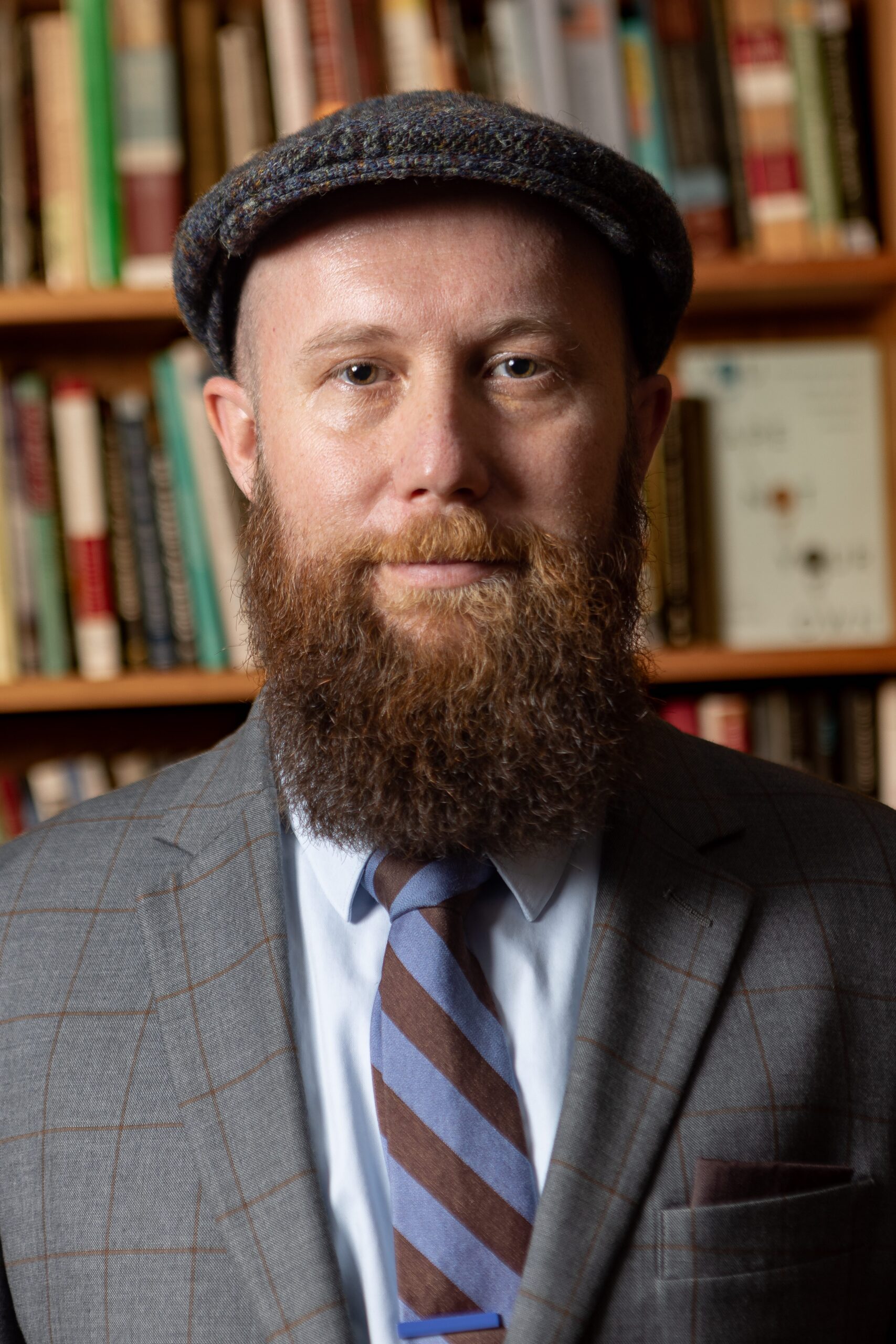 Alan Noble
All of us hunger to believe that our lives matter. We want to live lives of significance, goodness, and meaning for our time on earth to make a difference. But we each receive so many contradictory messages about what it means to live well, that it’s all too easy to wind up confused, paralyzed, or deeply disillusioned, striving to do the right thing but never quite sure what it might be.
Our guest today suggests that a way forward lies not in new life hacks or optimization techniques to become richer, slimmer, more powerful, successful or influential, but rather in the cultivated habits of the traditional virtues that align us with who God created us to be and enable us to live well, not by escaping life’s messes, but by living wisely and faithfully through them. Alan Noble is associate professor of English at Oklahoma Baptist University, a fellow at the Keller Center for Cultural Apologetics, and the former editor in chief of Christ and Pop Culture. He’s written on faith, technology and literature for a wide variety of publications, including The Atlantic, Christianity Today, Vox, In Touch, First Things, BuzzFeed, and Modern Reformation, and is the author of several books, including “Disruptive Witness,”” You Are Not Your Own. On Getting Out of Bed,” which we were able to host him for just a few years ago, and his latest work, which we’ve invited him here today to discuss, “To live well, practical wisdom for moving through chaotic times.” Alan, welcome.
Thank you for having me.
Well, it’s great to have you here. So I always like to start off by asking about the story behind the story, because for any author, books are a real labor of love. It requires a big investment of one’s person. So what led you to write this book?
So there are two big things that were happening that really inspired me to write this book. One was just working with college students. As you said, I’m a college professor, and so I constantly have college students coming in, visiting with me and talking to me about the things that they’re struggling with. And one of the things that I’ve noticed consistently is that they’re really struggling with questions about life’s big problems. They’re questioning what it means to be just, what it means to love, what it means to be prudent, what it means to have courage. And it just struck me that there’s a lack of orientation about how to live well. And I was having a lot of similar conversations with students about these big life questions. And it seemed to me that, um, that it would be helpful for these students to have a kind of guide. So that was one piece that was happening. The other piece that was happening that was sort of in the back of my mind was when I wrote “You Are Not Your Own,” my second book, I made this case that we live in a world that is inhuman in many respects. And I laid out that the argument that it’s inhuman because we assume that we are our own and belong to ourselves. And the solution to that is that we recognize that we are not our own, but belong to God, which is what Paul teaches.
And when I went around the country giving lectures about that, a lot of people responded with, “well, that’s that’s really important to recognize that we belong to God. But what does that mean in my day to day life? What does that look like? What is the practical application of that?” And that seemed to me like a really good, legitimate question, but just one that I didn’t answer in that book. And so I wanted to write a follow up that put some meat on the bones of belonging to God. What does what does it look like to walk that out? And so this book is really doing two things. It’s, it’s addressing the felt need that I have witnessed, not just in young people, but sort of the narrow target is, young adults maybe 18 to 30, who are, are struggling with these questions. But also it’s addressing the question, what does it mean to live in a world where there are these doubts, there are these doubts, where we question what it means to belong to God? And I believe that means that we recognize that our telos is in, in belonging to God.
You mentioned your previous books and having read some of your previous books, one of the things I wanted to ask you about, and in part it’s a leading question, because I perceive a string, a thread that runs through them. But essentially this is your fourth work. “Disruptive Witness. You are Not Your Own,” “Getting out of Bed,” all basically dealt with respectively, distraction, reclaiming identity, cultivating fortitude amidst real personal challenges and now living well. How would you describe, the thread that runs through them or whether is there like a single animating question that you’re taking different stabs at through your various works?
That’s a really great question. I did not set out to write a series of books that had an animating question behind them, but I do think that there’s a kind of Christian humanism that’s animating them and starting with “Disruptive witness,” it’s asking this question, what does it mean to be a Christian made in the image of God? And so there’s that Christian humanist question. And, for that book, the question is, what does it look like to deal with technology of distraction and secularization? But the question also is, what does our society look like? How, how are we being deformed by our society? And what is how, how does that play out? And then I pick up in in my second book, You Are Not Your Own. So those first two books are really cultural analysis, analyzing how are we being culturally deformed and how do we need to be reformed in the image of God? But the problem I set up in those books needs to have an adequate response, and I start to give that response in “On Getting out of Bed.” And in that book, it’s a very intimate response.
And that response is, as you mentioned, personal fortitude. What does it look like on a spiritual, intimate level to get out of bed each day, to have the spiritual fortitude to get out of bed each day when you feel emotionally distressed? And then I’m building up in this book, an individual level, system of virtues to say, okay, now what does it look like to practice as an individual in community, these virtues that help us walk out belonging to God. This is the concept that I tease out in “You are Not Your Own.” And then the next book, which I’m working on, (I’m in the right in the middle of) is going to be about institutions. So how do we do this communally? Because it’s not just enough to talk about the individual. We need to talk about how we respond communally as well. And so that’ll be the next book. So there is a thread and it is teasing out this problem in the first two books and then how do we move out of that problem into moving forward in these in these latter books?
Well, we’ll look forward to that next book, but we’ll also dive into the current one here. Your book begins with the observation that, well, you know, we’re all both looking for, but also constantly encouraged societally to kind of live a meaningful life, live a really significant life. The guidance that we’re given is not only incoherent, but often mutually contradictory. Often flashy, really attractive. And you borrow a phrase from T.S. Eliot to kind of refer to that conflicting guidance as a heap of broken images. In reading this, I sort of thought it’s like our hunger for significance is stoked, while the food that is being fed us is junkier than ever. And I was kind of just wondering, how do you see the situation? How did we get here where our hunger is particularly acute and food that is served seems nutrition-less.
Well, I think part of the answer to that is that we’ve cut off this concept of an external telos. So a telos is a direction towards which we’re moving. The idea that there’s an external telos, a telos that is outside of us has ,for most people, been cut off. And instead we’re looking inward. Now there are plenty of exceptions to this. There are plenty of religious people who still continue to look out outside of themselves from Judaism, to Islam, to Christianity. But for many people, particularly in the West, when they look toward answers and they are looking to gurus or experts or influencers for answers to life’s problems, those influencers are really telling them look inward. The advice that they’re giving them is look inward to yourself, to improve yourself because the answers are inside you And so, then you’re just getting more self-absorption and as you said, more junk. Not that there isn’t value in introspection, but that’s different. Solitude and introspection is different than self-absorption and believing that your ultimate end or telos is inside of you. The lie that modernity is telling us is that everything that we desire, everything that we need is inside of us is, is in self-sufficiency. And that’s just not true. We need community. We need God ultimately. We need that external telos. And so when we have these gurus telling us this, whether it’s on YouTube or Instagram, or self-help books, an exercise instructor or yoga instructor or whatever it might be, it’s feeding us junk. It’s feeding us nonsense.
So you instead have offered sort of the four cardinal virtues and the three theological virtues, the cardinal virtues being prudence, justice, fortitude, and temperance, and the theological virtues being faith, hope, and love. Why did you choose these virtues for the basis of living well, as opposed to, say, The Fruits of the Spirit or other articulations?
It’s a great question. So there are a number of things that you can do. One, I could have gone with the Fruits of the Spirit and that would have been a no pun, maybe a pun, intended, a fruitful book too, but it’s just not the book I wrote. I think that those kinds of books have been written and they’re valuable, but the church has long taught and had valued (by the church I mean both the Catholic and Protestant traditions) virtue. Calvin wrote about the virtues and the value of the virtues, and he said, look, I hope people continue to write about the virtues. I’m paraphrasing, obviously, but in the “Institutes” he says, look, the church fathers talk about the the virtues. There’s value in the virtues. We should be writing about them. And he says, I’m just not going to do it. Other people should do it. And so, whether it’s a Catholic tradition or Protestant tradition, the virtues are valuable. And they are valuable lens for understanding the human person and who we are in God. And the Bible is filled with language of virtue. I mean, Proverbs talks about prudence.
It talks about fortitude.Obviously the Bible talks about faith, hope and love. Temperance is talked about. Self-control is talked about (there’s some debate about whether those are the same thing, but for the sake of argument, let’s say they are).So we have these virtues in the Bible, so we’re not going beyond our tradition when we talk about these virtues. So that’s one thing to think about, but there’s still the question why these virtues? Why not add in humility? And why not add in patience? Why not extend the list? Why these seven? And so that’s a good question. The answer I would give is the answer that many people have given. And that is that you can arguably reduce most of the virtues down to these seven. So humility could go under justice. To do justice properly, you must be humble before those you owe their proper due. So that’s why I would say that these seven are there.
You started with prudence, which you called the mother of all virtues. And it seems like prudence is a pretty unsexy virtue, so i wanted to know, why did you start with prudence as the starting point in order to live well?
So in order to act justly, you have to know how to think prudently. Prudence is the practice of is practical wisdom, thinking through and making practical judgments. It’s assessing a situation, thinking through reality, rightly seeing reality, rightly making a judgment, and acting resolutely. We often don’t do that. Instead, what we do is we see reality through our own lenses, our own biases. We don’t get counsel from other people. We don’t recognize what the good is. Instead, we recognize our own private good and then instead of acting resolutely, we deliberate in our head forever. We spin our wheels. And then when we do decide, we do it half heartedly and then we have regrets about it. And we’re like, well, maybe I shouldn’t have done that. Now I regret buying this car or whatever it is. I should have got the other thing. I got the wrong kind of cereal and now I feel guilt. Prudence is about making practical decisions. Well, if you’re trying to act justly, you have to have prudence. So if you don’t first have prudence, then you can’t make judgments. You can’t judge whether something is right or wrong. You can’t decide whether to give somebody on the street corner some change or not. You can’t decide whether or not to vote for a certain candidate or not because you don’t first have that prudence. And the same thing is true with courage. You can’t decide whether to rush into a certain kind of danger or to whether a challenge is worth it or whether its recklessness, unless you first have prudence. The same thing is true with temperance. So prudence is foundational to the other to the other virtues.
You just mentioned courage and fortitude and i was really intrigued by the way that you described courage and fortitude. And it wasn’t just you, you were pulling on Thomas Aquinas and the like, but it in some ways, the way you define and describe it seems a very countercultural and you kind of divided it in between essentially attack and endurance. It seems largely like our current conception of courage is a certain distortion of the first and an almost complete dismissal of the latter. A lot of what is valorized as courage right now is largely a fairly image- based or performative belligerence practiced by keyboard warriors and politicians talking about fighting and whatnot. You, quoting Aquinas, said that actually endurance is the bigger part of fortitude. I’ll note that when we kind of confine courage to attack, particularly in image based, performative belligerence, we’re also largely confining it to the realm of the loud and extroverted male, who essentially kind of practices that form of engagement. So I’d love to hear you just talk a little bit more about what courage is properly understood, why you and Aquinas believe that endurance is actually the greater part and what endurance has to do with the life well lived, because it sure doesn’t sound fun.
Well it’s not often fun, but it is part of the life well-lived. I think that’s a great observation that a lot of what we see portrayed as courage is actually correctly categorized as recklessness. To be courageous, you have to be acting according to the good and Aquinas is really clear on this that the to actually be courageous, you have to risk suffering for the sake of the good. If you risk suffering and it’s not for the good, you’re just being reckless, you’re just being risky. For example, gambling is just being reckless. A lot of these keyboard warriors that you’re talking about, a lot of people who are bombastic, are just being reckless. But what they’ll say is, ah, but it cost me something. And you can reply, well that’s right, it did cost you something. But that doesn’t make it courage just because it costs you something. Just because you can get canceled for it doesn’t make it courage. It could be recklessness. So that’s an interesting point that you’re making, I think it’s really important.
But to your point about endurance and why is that the greater part of courage or fortitude, it’s because of this. Aristotle and (Aquinas is getting this from Aristotle too), argues that the soldier rushing into battle who has to charge into battle is risking something and it’s dangerous, but the soldier who has to just stand there and endure the arrows coming is enduring something actually much greater. And when I think about this, through my own mental health struggles, there are some things in life that you have very little agency over and you just have to sit there and endure it. And sickness is often like this, right? There’s little agency you have over it. I mean, you can seek cures, you can seek treatments, you can do certain things, but sometimes you just have to sit and endure for a period while the treatment does its work. What this means is that the person who is enduring a great suffering, who may look like nothing like the muscular soldier that you’re thinking of, could be a tremendously courageous person who looks very sickly but is enduring every day, striving every day to do their best.
That is courage. It’s courage because they’re enduring and endurance is the greater part of courage.When I understood that, it was perspective altering and I recognized it immediately as truth. That’s not to denigrate heroes who risk their lives to protect us, or first responders or anything like this. But it’s to recognize that the great human truth that that suffering requires a great deal out of all of us. And to your third question, what does this have to do with the life well lived, it kind of goes back to my third book. Life is going to require a great deal out of us. And so this means that we’re all going to need to have a great deal of fortitude in order to endure, so you’re going to need to develop this virtue in order to endure.So the question is, how do you endure well? Fortitude teaches you to endure.
Speaking of that, we will all have to endure suffering and often later life brings a lot of suffering. But for our younger years, one of the things that we’ve sort of experienced in the last decade is that technological advances have, in addition to eliminating a lot of unnecessary suffering, which is awesome eliminated a lot of the normal friction that can be very healthy. Friction that just comes from interactions with other people and with other things and we’ve gotten to the point where we become accustomed to disliking any friction that we’re willing to choose isolation over having to endure what used to be just considered normal friction. So in the process of kind of developing fortitude earlier in life, before cancer comes or before the death of loved ones, how does one do this as a young person? And related to that, can it be done alone or does it necessarily require community?
This is a hard question to answer. but the answer is it requires community.I don’t know how this could be done alone. I think that you have to find community and that might be upsetting to someone, but that doesn’t necessarily mean if you come from a broken family or something, because I know that’s a reality for many people, your family, but you, it could be a church home, it could be friends, but you’re going to need to find a community where you can find people who will walk alongside you, who will help you have conversations, who will challenge you in your, in your walk with God, who will challenge you in your social behavior, who will challenge your views on movies, who will create friction. Because that friction is going to allow you to grow as a human being. You need that. You need that as iron sharpens iron. We need that in our lives.
And that creates community and that’s really healthy for us. One of the things that I keep thinking about as we continue to go down this road of moving our lives online and not only online, but away from even social media (I mean, we’ve talked about the ills of social media so much) but now I’m worried about the ills of of AI companionship as a replacement of those social media. We might be looking back, you know, wistfully at our at our Facebook days and thinking, “oh, at least then we were corresponding with real people.” I think the one way the church can stand out is having face time with each other, such as meeting for coffee and interacting. That’s what I would say and that means that, ,ideally, families and friends need to create moments where they’re interacting with each other, challenging each other, having conversations, getting into each other’s lives, and investing, because that’s where the friction happens and the challenges happen and growth happens.
Somewhat related to that, I wanted to ask you about the virtue of hope, which of course you’ve described as a virtue to be cultivated in practice rather than rather than a feeling to be experienced or waited for. But we’re also in a time where so many people, and perhaps particularly young people, have really lost hope in once trusted institutions, leaders, parties, even in entire denominations, that they once placed a lot of trust in. In many ways we are oriented to look to them for orientation. What does practicing the virtue of hope look like when we are actually deeply disillusioned and perhaps even disoriented?
That’s a great question and this question is very pressing to me as I write this next book because it’s all about the value of investing in institutions and why we should. I think that we need to acknowledge that the value of hope, the essence of hope is trusting in God’s promises. Hope is not foolhardy. Hope sees reality as it is, and yet it desires the good. And so what that means is that we can look at our human institutions, and we can recognize that they are full of fallen human beings, and yet we can hope and desire for them to be good and functional, and we can work and desire for them to be good and functional. And I think that’s the tension that we want to live in and we have to live in. And that’s what hope in practice looks like, accepting that when you walk into an institution, when you walk into a church, whether it’s non-denominational or whether it is a denomination, you’re still walking into an institution. Whether you abandon a major party for a smaller party, you’re still walking into an institution and they’re still going to have people and they’re still going to be fallen, and you’re still going to have to commit, and you’re still going to have to desire the good for that institution. And that means working together with other people and committing yourself for the good of that place.
Disillusionment can be a healthy thing if your illusion was that the party, the church, the denomination was pure. Some scales need to fall from eyes and see that reality is a mess. Sometimes you need to peek behind the curtain and see that Oz is back there,that things are messy and that you’re dealing with real human beings. But hope demands that. Hope demands something supernatural and that is that you don’t stop working and desiring and fighting for the good. And this is where I think Christians have something that I think secular people will look at and maybe say “I think you should stop” because for Christians, we say we have an obligation to desire the good and I think for secular people, there’s an off ramp. There’s this point where they can say “I can just look out for myself, I don’t think that humans are redeemable, I don’t think there’s any hope here.” But we have a desire for the good, and we have an obligation for the good where we have to just keep going. We have to keep working through institutions. We have to keep working together for the good of our neighbor and for the glorification of God. And so that’s what I think hope looks like, practiced even in the midst of disillusionment.
I see the questions piling up and we’re going to turn to audience questions in just a moment, but before we do, one of the things that strikes me is in some ways, there’s a real challenge to the message of your book in that you’re making the case for the kind of rootedness which nourishes and informs but so much of what’s actually rewarded in the world is the image of the flower. What you’re essentially advocating for is that time is zero sum. You know, we have limited resources and attention and everything else and almost all societal incentives, whether it’s popularity, profit, power, influence, things that are much more linked, frankly, to image than to rootedness. How do you make the case to your students that essentially they should value the often hard realities of the practice of virtue over the far more enjoyable and rewarded appearance of it?
So the case that I make to them is that the pursuit of image, the pursuit of power, the pursuit of profit, these kinds of things, is a Sisyphean treadmill that will run them ragged. The pursuit of, the worship of these things will end up killing them, it will end up running them ragged, that is pushing a boulder up a mountain for eternity. It will leave them feeling hollow, it will lead them feeling empty inside, it will leave them feeling defeated, leave them feeling meaningless and purposeless and always lacking, always inadequate. Inadequacy is one of the the major feelings of our time, inadequacy and inhibition. This feeling like you can’t act in part because you’re inadequate.And so when I talk to them about that, they often resonate with that. They often recognize, gosh, when I try to promote my image, when I try to live in that mode of life on social media or whatever it is, that’s what it feels like, whereas when you live this more rooted life resting in your identity in Christ, in who you are before Him and, and because of Him, living out these virtues, there’s grace and peace in that and there isn’t this endless hopeless treadmill, which is a relief.
We’re going to turn to questions from our viewers. So a question from James Zeller, who says “I was reading a New York Times article on AI and was thinking about how detrimental it is to think of “efficiency as a virtue full stop.” Do you think that one reason to talk about the classical and Christian virtues is to try to displace the imposter virtues that have crept into our society? And if so, what do you think the main imposter virtues of our current cultural moment are? And which virtues do we especially need to displace them?
That’s a great question and there’s a lot there. I mean, efficiency would have to be up there near the top, if not the top. I would say that a vision of love that is distorted, a redefined vision of love as something that comes from deeply within and which only the individual can define and is an entirely private expression of the individual would be one would be one of those ‘virtues.’ What else would be would be up there? So efficiency, love would be up there.
That’s a lot right there.
Yeah. That is a lot right there. I can’t really think of any off the top of my head. I mean, efficiency is a big one because it covers it covers a lot of what we do, everything we do from the techniques that we live by to optimize our life on the micro level from parenting techniques to laundry to the moral ways that we live. I talk about this at the end of the book, but Ben Franklin tried to practice the virtues to maximize his life, but he did it in a, in what I would describe as a technique and efficiency method. He tried to do each of the virtues and do one of them at a time and he kept a chart too. I don’t know that this exists, but I suspect that there’s a Ben Franklin virtue app out there that will help you track the virtues until you master them one at a time, because that’s the kind of country we live in right now because we love efficiency and we love apps to track our, our progress. Efficiency is just this monster of a thing in our lives today that really rules us and rules the way we evaluate people and the way we evaluate morality. I argue in “You are Not Your Own” that it is one of the last virtues or values that we have. We have a hard time deciding on sexual morality, but we have an easy time saying, “well, if something’s inefficient, then it’s bad.” So, I think efficiency is probably one of our last shared virtues.
I feel like I have to think more about that. A question from an anonymous attendee who asked, “to what extent is the modern church failing to help us quote, ‘to live well,’ because it’s failing to truly disciple us to Jesus, instead leading us down the wide path of easy faith without the hard work of self-transformation and right relationships and community. What needs to happen for this to change if churches are worried that they’ll lose attendance by leading us through the narrow path that truly following Jesus demands?”
So this is an interesting question because I think what’s behind this is the question of works and discipleship and the tension between grace and freedom in Christ. The reality is that our faith does require a lot from us and some churches are a little uncomfortable talking about sin, about what sin looks like and why we need to turn from it because they’re afraid of sounding legalistic. And that can be a fear, right? They don’t want to sound fundamentalist or they don’t want to sound legalistic. Even when you’re talking about the virtues, I had to be very careful in writing this book especially a from Protestant perspective (I’m personally Reformed), people get a little questionable if you’re talking about virtues in your Protestant and your Reformed because that sounds Catholic and Works and I had to be very careful to be like, well, we’re doing this out of grace, not out of, out of, not to merit anything. I think what I would say is this:even from the Protestant perspective, the reality is that we’re always following Christ faithfully. We are called to walk in a manner worthy of the gospel. That is a reality of our faith. That is what Paul tells us to do and that is a great calling and we should be excited to do that because we can do that because what Christ did for us on the cross. And so we should be excited to do that. And we should be stirred on to love and good works but we do that because of what Christ did not in order to earn Christ’s merit. That’s the distinction I would make. I do think churches can do more for discipleship, that’s probably always the case. I mean, that’s, that’s like saying, can churches do more prayer? I mean, it’s like, yes.
Your answer leads to a question from another viewer, Catherine Hayes, who asked “faith, hope and love, the theological virtues, are gifts of God theological virtues freely offered to everyone Is the same true of the cardinal virtues, e.g. is everyone freely offered fortitude and do some people freely choose cowardice?”
Ooh, that’s a great question, it sounds like a premise for a novel. Does somebody freely choose cowardice?
They’re posing to the reformed guest.
I would say that the Holy Spirit works in us to help us develop these virtues, these cardinal virtues but we need to develop these cardinal virtues. We need to exercise,to work to develop them. That’s what we talked about earlier with being in community and actively working to have community with friction to have the opportunities to develop these virtues. But I think we can actively choose cowardice and lots of people do, lots of people do daily.
So a question from Brenda Burman who asked “I appreciate the emphasis you put on prudence as a foundational virtue. At the same time, I wonder if it could be said that in reality, each of the virtues are integrally linked with one another, e.g. a true optimal expression of prudence is rooted in authentic hope in God and courage, etc.”
Yes, that’s definitely the case. Prudence is foundational, but a deeper understanding of the virtues would be as a spiral where each of the virtues is actually interrelated to the othe and I do try to make that case, I try to connect the virtues to each other as often as I can without being redundant. I make the case in the love chapter that love is actually dependent on all the other virtues and all the other virtues are dependent upon love. I mean, you can’t be prudent properly without loving properly and so on and so forth. You can’t have courage properly without loving properly. It they’re all dependent upon each other and that’s the beauty of the virtues, honestly. But you have to start a book somewhere and so I think the strongest place is to start with prudence.
That’s great. Um, before I get to our next question, I will note that one viewer put in the chat that there is indeed a Ben Franklin virtues app available in Apple store.
I knew it, I knew I didn’t even want to check because I knew I knew.
So, two related questions from two anonymous attendees, so we’ll just lump them together here. One is, “can you suggest a good way to get a conversation going with non-Christian friends on this topic?”And then somewhat relatedly, “how would you suggest we start conversations about this with the young adults in our lives?”
So for the non-Christian, that’s an interesting question. How would you start with a non-Christian? You might try just giving them the book and seeing if they would be open to that. I would like to imagine that my prose would be interesting enough that that they would be that it would be approachable to them. But, they’re not amenable to that, then then I would just talk to them about the virtues in general. Ask them what they think about the cardinal virtues and these concepts and the goal being to get them to the place where they’re interested in talking about the telos, because the cardinal virtues really hinge upon the question of telos. If prudence doesn’t have a good that it’s pointing to and that good isn’t God, then prudence becomes rather meaningless. If the good is only your private good, then it’s not really a fundamental good. If courage isn’t defined by God, then it’s not a fundamental good. I think that would be an interesting conversation to have with them.
Now, for a young adult this is how I approach it with my young adults (I’ve got multiple teenagers in in my life) is just using the language of virtue in conversation, like saying that was courageous, you showed fortitude just using the terminology in, in your conversations, introducing it that way. And then maybe conversations start from it, maybe not, but just using that vocabulary is helpful so that they develop it.
I want to combine two maybe slightly related questions, but they both have to do with kind of societal impact. A question from Laura Bush (I don’t think this is my former boss, but if so, hello, Mrs. Bush) who asked “would the notion that all progress is good by default be one of those false virtues? And if so, how do you see it affecting our daily lives?” And then a maybe slightly related question from an anonymous attendee also wants to move from the individual to the societal level and asked “what changes are needed so that societally, our ethos will reward pursuit of the common good, community building, and higher meaning instead of rewarding meritocracy, self-help, and hyper individualism?”
Okay, I’ll try to juggle these two questions. So to the first question, I would say yes and I would say it’s the sin of presumption. It’s an it’s an error of hope. Instead of hoping that God will redeem all things, it’s the assumption that we don’t actually need to hope in God because instead, we can actually just trust that humans are going to figure things out themselves and so we can trust in AI to solve our labor problem, solve cancer, solve climate change, solve everything and fix things. As for the societal change thing, I take a optimist- realist approach. I don’t know what that that looks like or that if that makes any sense, but this is my perspective. I don’t know what changing society looks like in a realistic perspective. I do not believe in retreating from society. I believe that we are called to be lights to our neighbors, to work for justice for our neighbors. So I don’t have a ten point plan to change society, to change civilization, to dominate civilization, “to rescue Western civilization.” I don’t know what that looks like. But I do know what it looks like to care for our families, for our churches, for our neighbors, for our cities, and do some justice for our states and that’s good work. It that starts by thinking about these virtues and practicing them daily and most of all, walking in a manner worthy of the Gospel, which I think these virtues help us to do.
Another question from an anonymous attendee who says, obviously relying on an app isn’t what we want, but could you suggest ways that we measure or reflect on how we are growing in these virtues?”
I can’t recommend a way that you could measure, but I could say because virtue growth is not a measurable thing, but reflecting on, I think you can do and I think you have to do. I do think you have to spend time and you could do this nightly, you could do this weekly. It could be (in my tradition, the Presbyterian tradition, we have weekly Lord’s Supper), when you confess your sins, maybe it’s that time where you just reflect on your week and think, “what did I do this week that needs to be confessed?” It could be then.
It could be daily where you just spend a few minutes with your eyes closed thinking through in what ways was I timid instead of showing fortitude? And what ways did I act imprudently? In what ways was I intemperate? And you’re not going to catch them all, but there’s got to be some reflection in your life where you’re, you’re reflecting back and hopefully you’re doing it perpetually throughout the day, I mean, not a constant surveillance state, kind of like a judgmental, oppressive thing, but just as you catch sins in your day, confess them and release them because of God’s grace. Notice them and let them go. Acknowledge, you know what, I was on my phone too much and that was intemperate. I should have put it down. Okay, noticed, let it go, moving on, do better next time. Maybe I need to put some a timer on it or whatever I need to do. Observation is an important thing to do.
Allan, I promised that the last word is yours and we’ve come to the time where we ask you to share a final thought before ending our time together. The last word is yours.
Thank you.The thing I would say is, these virtues, as wonderful as they are, the things you need to remember about them, is that ultimately we depend upon Christ’s grace. You’re going to get them wrong. You’re going to mess up as wonderful as it, as important as they are to strive towards an order as ways of glorifying God and loving your neighbor and as pursuing who God created you to be (all of which I think are good goals), you’re going to make mistakes. You’re going to be intemperate. You’re going to be imprudent. You’re going to act timidly at times. You’re going to lack faith and love and hope. But there’s grace for that and God loves you and He will carry you. It is not through these acts of virtue that we earn God’s merit, but because He loved us first and that’s why we do these things. So that’s what I want to leave us with.