Poetry, Prayer, and Passion, with Dana Gioia
This is the full, unedited version of the Trinity Forum Evening Conversation with Dana Gioia on “Poetry, Prayer, and Passion” at The University Club.
Speakers
-
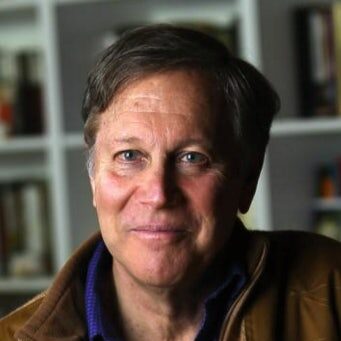 DANA GIOIA
 -
 CHERIE HARDER

Evening. I wanted to start out just by thanking Roberta and Howard Ahmanson and the Fieldstead Foundation for their very generous support of this event. It’s hard to imagine a person better equipped or has more of an expertise in the areas of poetry, passion and prayer than the gentleman to my right, Dana Gioia. Dana is unusual among poets in that he’s also served as a literary critic. He has an MBA. He served as a marketing executive, spearheading the Jell-O campaign, and more recently, was actually the longest serving NEA chairman at the National Endowment for the Arts.
He’s unique as a poet. He already has four different poetry collections, including Daily Horoscope The Gods of Winter, which won the 1992 Poets Prize, Interrogations at Noon, which won the 2002 National Book Award. And now, just recently, his latest collection. Pity the Beautiful, which he’ll be reading from this evening. He’s also an active translator from Latin, Italian and German, and has composed two different opera libretti. As a critic and an author, his essay Can Poetry Matter, which was published in The Atlantic Monthly in 1991, generated such a huge response that it was actually unparalleled in terms of the response it engendered until just a couple of years ago, when some article came out urging single women to settle when they marry. But for almost 20 years he held the title. His literary anthologies include 20th Century American Poetry 100 Great Poets of the English Language, Literature, Introduction to Fiction, poetry, Drama and Writing, and his articles, essays, and reviews have appeared in The New Yorker, The Atlantic, The New York Times Book Review, slate, The Hudson Review, and many, many others. As the longest serving chairman of the National Endowment for the Arts, he was appointed by the president and twice unanimously confirmed by the Senate for that role, and strengthened or succeeded in strengthening support for a previously as well as a subsequently embattled agency.
In fact, Business Week termed him the man who saved the NEA. And certainly it wasn’t at all an exaggeration. During his eight years there, he established the Shakespeare in American Communities program, established Operation Homecoming to provide a voice for veterans returning from the wars to articulate their experience, developed the NEA Jazz Masters program started Poetry Out Loud, which was a national recitation contest involving more than 150,000 high school students, as well as launching two seminal studies, Reading at Risk and To Read or Not to Read. He also founded the largest literary program in the history of the government, The Big Read, and his few short years at the NEA convinced over 400 communities to hold month long celebrations of literature. Since leaving the NEA, Dana has divided his time between writing poetry and serving as a professor at the USC, holding the Judge Widney Chair, a chair created just for him, and during all that time also managed to pick up ten honorary doctorates. He is also, I am very proud to say, a Senior Fellow of the Trinity Forum. Dana, welcome.

Good to be back.
Now, all of your previous collections, I’ve noticed of poetry have included some allusion to time in the title. We had The Gods of Winter, the daily horoscope. This is the first poetry collection to not include an explicit reference to time. Were you focusing on different themes in this collection, or was it just time to do so?
Well you know, the other titles were just the titles that, you know, basically suggested themselves. And then after I’d got three of them that all had time in it, people began pointing this out and say, well, your fourth book has got to have something with the time in it, but it’s, you know, and I did my best, but, you know, it just seemed to me sort of silly to be to be confined by some petty, you know, you know, uh, consistency that you had before. And, and, you know, I mean, I actually think that the largest topic both in the American arts and I would even say for people of faith at the moment is beauty. When our culture lost its understanding and conviction that not only beauty exists, but beauty matters and that beauty is a conveyance of essential truths. The culture went bad. Um, and so there’s a, there’s a little bit of that going through, you know, through the, the title poem. It just struck me as kind of a catchy title. You know, it’s a, you know, it’s not a profound statement on esthetics, though I think it’s probably a fairly true statement about life.
I wanted to write a poem that was as transparent as a pop song, but that was still a good poem. And I also wanted to write a poem that was made out of the kind of language people really use. Um, and, you know, I have slang from my dad’s generation, from my generation and slang that I hear my kids use. Uh, and the poem goes like this. Pity the beautiful, pity the beautiful, the dolls and the dishes. The babes with big daddies granting their wishes. Pity the pretty boys, The hunks and Apollos. The golden lads whom success always follows. The hotties. The knockouts. The tens out of ten. The drop dead gorgeous. The great leading men. Pity the faded. The bloated. The blousy. The paunchy Adonis whose luck’s turned lousy. Pity the gods no longer divine. Pity the night the stars lose their shine. Probably not a typical Trinity Forum poem, but you know. Anyway. So that’s. But you know. So I was just, you know. You know, I let the poems dictate it. See, I’m the worst possible poet. I mean, one of the people on the board of First Things is tonight, and I’m. Any editor’s nightmare. Uh, because I hate to write something if I don’t feel the impulse is really there. True. So I may wait years to finish a poem. I’ll get halfway through it and I don’t know where it goes. And I have to wait for the muse to guide me. And so this book was largely dictated by by impulses I thought were genuine, because you can sort of manufacture art, but art is actually something that one discovers. Beauty is something one does not manufacture, one participates in, one discovers, you know, one has the blessing to witness.
One of the things I noticed in your new collection is you start out with a quote from Antonio Machado, which as translated says traveler, there is no road. The road is made by walking. And then you follow that up with a poem entitled The Road, which basically describes a bewildered traveler who felt he had missed his life by being far too busy looking for it.
That describes everybody in Washington, I think. I mean, we’re so we’re so locked into just getting what we have to get done day by day by day. You know, we sort of let the rope, we sort of stumble down the road rather than choose it. I mean, the road is if you look at Western poetry, the metaphor, the metaphor of the road is the is the central Western metaphor for life. I mean, you know, you know, time is a river, but the life, the life we choose is a road. And it goes from Dante to del camino di nostra vita, mi ritrovate midway, you know, on the road of life I found myself in a dark wood to Robert Frost. Two roads, you know, you know, you know, uh, you know, you know, and this is a kind of thing. And Machado uses it. And what Machado says is that, you know, it’s not even you see different paths in the in the yellow wood the way frost does. It’s not that you’re getting lost on, on a well-traveled road the way that Dante talks about it, but actually the road that you make, you make by walking, you don’t really see the road until you look back. And even when you look back, Machado points out, you can’t go back. If you go back, it’s a different road. And so and so, you know, I think of it, you know, as, uh, our life is a pilgrimage. It is a pilgrimage, uh, you know, to, uh, you know, towards, you know, towards both self-discovery and self-realization. And so actually, that metaphor goes to a number of the poems in the book.
This collection seems especially rich with spiritual imagery.
Well, it’s it’s the poem. The book is more overtly Catholic and Christian. Um, and it’s just because that’s, you know, um, I think I didn’t, I think when I was younger, uh, although that was there, I didn’t I didn’t have the forms in which they naturally express themselves. I think as you get older, you know, you, you know, you begin to discover that I think actually leaving Washington, being in Washington and leaving Washington was good for me as a poet.
How so?
Because this is the city of man. At, uh, and and I realized that I belonged that I, I don’t know if I belong, but I want to be in the city of God. And if you go back to Augustine, Augustine said that there are two worlds that we coexist in. One is the city of man. We all know it. You know, Washington is the perfect embodiment of the city of man. It’s the city of power, of of material rank, of wealth. Uh, and and it’s done by the basically the rules of mankind. But the city of God is this invisible city in which you coexist, uh, in which you try to live by the rules of God, which is. And you join it. Electively. I mean, it’s it remains invisible until you choose to become a citizen. But once you do that, uh, you realize that they bring you in very different ways. And, and Washington, DC, I think is a very difficult city for a writer. I mean, this is me whining, perhaps, um, Uh, you know, uh, all poets love to whine. In fact, this is, you know, it’s, you know, it’s that you’re here. And the daily power struggles in Washington are so entertaining. Uh, so absorbing that you could spend all your energy doing it. But I felt that I needed distance. And once you get distance, you know, it gives you a sense of, like, why do you make the decisions? You you do. So a lot of the poems in this book are about the, the decisions people make and the consequences of those decisions. I mean, even the central poem, which is sort of a ghost story wrapped up in a love story at the very end of it, you realize it’s neither a ghost story nor a love story. It’s a book about religious self-discovery.
One of the recurring themes in your poems also seems to be the power of words. Um, one of my favorite poems of yours, which is entitled words from Interrogations at Noon, has the line to see a red stone is less than. To see it as jasper to name is to know and remember. And you have some beautiful lines in your poem the lunatic, the lover and the poet, you write, we weave the fabric of our own existence out of words, and the right story tells us who we are. What is it about words themselves that enables us to weave the fabric of life from them?
This is a big central issue. If you know, a lot of people here would have gone to college in the 90s and in the early 20th century, when postmodernism, which is now really crumbling before our eyes, thank goodness. Um, you know, held sway. And one of the things that postmodernism said is that really, there’s no objective truth. There’s only interpretations, rival interpretations, all of which are just trying to get power. And the language itself signifies nothing. Language is a self-referential system that only refers to other words. And, you know, like most, uh, bad philosophies, there’s an element of truth in that. You know, there’s an element of truth, that there’s a self-referential quality of language, but you’ve got to believe, I think, and I can describe someone that you’ve never seen. I can have four people walk in the room and you’ll recognize the person I’m describing. I can describe a place you’ve never been to. I can give you directions someplace, and you’ll recognize it from the words alone. So there is obviously some correspondence between language and reality. And the social purpose of writers is to make language more exact, more precise, not more vague and imprecise. And so it seems to me that’s the central work of the poet, you know, to, you know, what’s the, you know, basically to sing the songs and tell the stories of the tribe in language that is both is memorable, beautiful and true and and the notion that the true and the beautiful are related is central to our culture.
It’s been central to our culture since the beginning. And when we lost that, when we lost that as poetry. So so that’s what’s behind it, which is the notion that there should be a correspondence between the words we use and the reality we experience. And this is actually what makes language something that’s not private but communal. Uh, that’s civic, ultimately political and cultural. Now, if you take it one step further, which is stories, um, you know, I’ve and just think back on your own lives, uh, when you meet somebody and they and you ask them, tell me about where you know, where you’re from and things like that. I always ask people questions so that they tell me something about their story. And you can tell right away whether the person you’re meeting is, unhappy is spiritually unhealthy. The story that you tell about your life is the story that you’re currently living. And and so living a life is almost by definition, a literary endeavor. Uh, you have been living a story, and you have to imagine your own future, which calls you into it. Uh, I mean, there’s a reason I think that I mean, Jesus, at least to my knowledge, never really once, you know, practiced theology. He told stories. Uh, he gave a few recommendations, and he, in a sense, gave poems like the Beatitudes, where he put moral principles in a kind of memorable poetic shape. But I think the reason he tells stories is that most of the of the reality that we participate in, most of the truths that we struggle with are situational. It’s not like one abstract thing. It’s all of these things, you know, impinging on it. The parable of the Prodigal Son. When I was a kid, I thought it was a story about a bad kid, you know? Uh, once my. You know, once I became a parent, I realized it was a story about a father. Once I began dealing with my younger brother, I. You know, I realized it was a story of the good brother, you know. You know, and it’s all of those things and and the genius of the story, the wisdom of the story, the truth of the story is that these are situations. And so it is important, the stories that we tell about ourselves. It’s it’s important for us to hear the stories that other people tell about themselves. And it’s all and it’s most important of all for us to have the ability as our situation changes, as the as the narrative necessities of our life change, to be able to imagine the right story that pulls us into the future we want. Uh, I think that this is in some ways, uh, one of the basic things about about a spiritual life. The great saints did not begin as great saints. You know, they I mean, they began as people that imagined what the life of a great saint would be like. And, and, uh, and that narrative pulled them into the into the future.
Christianity is certainly a very word centric faith. In the beginning was the word man doesn’t live by bread alone, but by the Word of God. Has your own faith influenced your understanding of both word and story?
Well, you know, I think it’s the words. I mean, I think it’s just the opposite. You know, the story’s called me into my life. I mean, um, you know, Saint Luke shaped me more than, you know, than Harvard or Stanford did. Uh, and it’s because, uh, that story invites you into it, and then you try to participate in that. And so, you know, I was raised Catholic. I had 12 years of Catholic school. I took a lot of philosophy in college. And so by the time I was 21, you know, I was a formidable theological, you know, theological. Uh. Uh arguer. And it strikes me in retrospect that that was all foolishness. That had nothing to do with the the person I needed to become. The things that I needed to believe. The things that I needed to do. I mean, I mean, it wasn’t it wasn’t as harmful, perhaps, as heroin addiction.
You know, but it was. But what it did, is it, it it made all these barriers, not barriers. It made these these wonderfully intricate and fascinating levels that you could fool around with and never get down to the real business of things. And so and so I think it is, you know, uh, you know, that, you know, it is the stories, it is the beatitudes and things like this which, you know, have this power, I think, to summon, you know, you know, our our best self forward versus our more common worst self.
One of the points that you made in your essay Does Poetry Matter is that part of the power of poetry is the power of purifying language. And it was a point that Orwell sort of made as well.
And it goes all the way back to the, you know, to, uh, Mallarmé, actually, who said the purpose of the poet was, is to give us a sense more pure to the dialect of the tribe, you know, and he was oddly, he was using that as praise for Edgar Allan Poe, who, you know, sort of a strange poet to claim to was doing that. But, you know, but it was really saying that, you know, that, you know, it was what Orwell does, which is that, you know, I mean, has anyone noticed in the last week, has anyone watched TV in the last week? Has anyone noticed words being misused in the last week? I mean not in Washington, not in Washington, but, you know, but, you know, and so that’s really what, you know, to, you know, to, you know, in a sense, to insist on the, the, the precise relationship of words, you know, the relationship of words and truth and, you know, and not using words as a screen, but using words as a, as a lens, as it were.
Sort of switching roads. What’s your favorite poem in your latest collection? Or your top three?
The poems that that interest probably the lunatic, the lover and the poet because it’s a love poem. It’s a philosophical poem, and it’s to my wife. I mean, those are three good reasons.
I want to read it.
I will recite it even better. I’ll stand for this one. Um, this the title comes from Shakespeare and Shakespeare, said the lunatic, the lover and the poet are of imagination, all compact. Which is to say, all three of them are crazy. And there’s two things in the, you know, the Shakespeare then goes on to say that the odd thing is that in their craziness, they actually see things that sane people don’t see. Uh, you know, they actually in their, their fine frenzy rolling, they, in a sense, can pull things out of imagination that, that, you know, that we’d missed in the world. And so that’s the first theme of the poem is really about, uh, the fact that we, the story we tell about our life becomes our life. The failure of that story becomes the failure of our life. But the other is that I think love, especially marital love, is above all conversation. It’s a kind of endless palaver and even sex, I think is sort of that it’s, you know, it’s basically having somebody whose story you cannot live without. And so you constantly have to update your stories. You have to wrap your conversation around theirs. This is a double sonnet in a form I invented myself, which is seven, seven, seven and seven, and each seven. It has the kind of sonnet’s turn, the type of language, the mood changes, the lunatic, the lover and the poet. The tales we tell are either false or true, but neither purpose is the point.
We weave the fabric of our own existence out of words, and the right story tells us who we are. Perhaps it is the words that summon us. The tale is often wiser than the teller. There is no naked truth but what we wear. So let me bring this story to our bed. The world, I say, depends upon a spell spoken each night by lovers unaware of their own sorcery in innocence or agony. The same words must be said. For the restless moon will darken in the sky. The night grows still. The winds of dawn expire. And if I’m wrong, it cannot be by much. We know our own existence came from touch. The new soul summoned into life by lust. And love’s shy tongue. Awakens in such fire. Flesh on flesh and midnight. Whispering as if the only purpose of desire. Were to explore its infinite unfolding. And so, my love, we are two lunatics. Secretaries to the wordless moon. Lying awake together or apart. Transcribing every touch or aching absence into our endless intimate palaver. Forever. Body to body. Naked to the night. Appareled. Only in our utterance.
You’ve been not only a practitioner, but also a proponent of poetry readings and recitations. Why is it so important to read poetry aloud?
Well, first of all, I’ll make two statements. Poetry is the oldest human art. It goes to the prehistory of humanity at a time when what we now think of as dance, poetry, music, we’re all one. Art goes back to before there was writing. It is our most ancient, primal connection to our our humanity. Second observation the educational system has made poetry unbearably boring. Uh, pretentious, uh, you know, just off putting to any sane person. I mean, it’s only the oddball that somehow, you know, comes to poetry with any expectation of pleasure or enlightenment anymore. And so you’ve got this tremendous potential of an art and this kind of appalling reality. Now, one of the reasons, one of the many ways in which they’ve made poetry unbearably boring is that if you’re given a poem in a classroom, you’re you say, oh my God, I have to write a paper on it. I’ve got to analyze it. I’ve got to take this, this, you know, beautiful fish swimming through the stream. And then I got to take it out and, you know, slit it and pull the parts apart. And so it seems to me a couple of things. That poetry is holistic. It’s it’s experiential. It’s performative. The way in which we naturally, uh, hear a poem, we experience a poem is by having somebody say it aloud. That’s where it becomes a lot. That’s where it goes back into the into the stream and you see the trout catching the sunlight and swimming just out of distance, and maybe is best experienced as something that we don’t catch, something that we simply witness the splendor of.
Uh. And so when I was chairman of the NEA, we one of the things, the main reason I took that thankless job, um, was that everywhere I went in the United States and I did a talk and I would do a Q&A afterwards, somebody would stand up and say, in my school, in my daughter’s school, in my grandchildren, you know, child’s school and the school in which I teach, they’ve canceled the arts education programs, uh, all over the United States. They’ve dismantled arts education as one of the components of public education. Uh, which means that you have a whole generation of Americans. And it’s not simply about growing up without the appreciation of arts. Arts education actually awakens something in people that makes them better in whatever they do. Uh, it’s one of the if you look at this, you’ve got right now, you’ve got the doorway where you can be an A student, you can be a student leader, or you can be an athlete, and otherwise you fail in school. Those are the doorways. And if you can’t get crammed in one of those doorways, there’s no way forward. There’s no community for you in school. There’s no acknowledgment of your excellence in those schools. Arts opens up the possibilities to a whole bunch of other kids. So we’re trying to figure out on the measly NEA budget what art education program can we do? We couldn’t afford anything. And I said, ah, poetry is cheap. Uh, you know, uh, and and so we said, well, what about if we did something that all of our grandparents did, you know, which is to memorize and recite poems.
Now, I had the inestimable advantage of being raised by poor people. It was good for me in so many ways, which I didn’t fully appreciate until I was, uh, you know, on my own. But one of them is my mother never really had much education, but she was in those terrible old days when they made children memorize poems, and these, for her, became these precious things that she carried through in her life. And she had, you know, a childhood of brutal poverty and poetry represented something beautiful and pure and true that, you know, really, you know, recognized what was best in her and best in her life. And so she would, you know, you know, you know, you recite these poems. And one of her favorite was it was many and many a year ago in a kingdom by the sea and a maiden there lived whom you may know by the name of Annabel Lee. And that maiden she lived with no other thought than to love and be loved by me. I was a child, and she was a child in this kingdom by the sea. And we loved with a love that was more than a love I and my Annabel Lee. A love that the winged seraphs of heaven coveted her and me. And she would. She knew all kinds of you know. You know, you know of, you know of other things. I mean, I mean, one of her favorite things was this little excerpt from Ogden Nash when called by a panther, don’t anther.
Um, you know, so I grew up hearing it, and I just saw how how for her as this sort of really dirt poor, you know, Mexican American in LA during the depression. And it opened up all these things. So I said, well, why don’t we try this? Uh, the educational experts were unanimous in saying that this was unacceptable in the current world. And there was three reasons, because we wanted to create a poetry recitation contest. One, uh, memorizing a poem was repressive. I mean, I mean, this is really I mean, you have to go to Stalinist Russia or the Third Reich to see repression quite so awful. Um, you know, second, you know, you know, kids, you know, didn’t like poetry, teachers didn’t like poetry. And third, and most important, it was, uh, ridiculous. It was insulting to do the arts in competition. Now, about that time, American Idol was about to start and dancing with the stars and things like this. So, um, through a combination of good cop and bad cop, I was the bad cop. Um, you know, I said, well, you know, I got all this money. It wasn’t that much. Um, I guess if you don’t want to do it, I’ll just give it to the symphony. No, no, no, don’t give it there. Uh, you know, so, you know, because no bureaucrat wants to see money taken away.
So they agreed that they would try it for one year. And then when it failed, uh, I would agree to do something else. Uh, and in fact, in these meetings, they were just vociferous about the the size, the inevitability of this calamitous catastrophe. Uh, make a long story short. From the moment we did it, the kids loved it. Uh, there’s now, actually, you know, about 400,000 kids participating in this completely underfunded, under organized thing. The states, it’s become their signature program. But what I think happens is this. And I made a speculation, which actually turned out to be true, that if you’re a teacher, you’re a student is never going to win. It’s going to be the disruptive kids that you know are always the class clowns, the kind of tormented jock, the drama queens, you know. And it gives them some place to put their put their their energy, their identity. So it’s been enormously, enormously important. And I think it does a couple of things. First of all, it’s not a bad thing to make young people comfortable with public speaking. It’s not a bad thing to have them speak audibly and clearly. It’s not a bad thing for them to internalize great images, great emotions, great ideas. And probably it won’t hurt them much to learn something about literature, and that actually they’ll learn it more naturally if they’re able to learn it experientially, rather than forcing them to be little mini literary critics, you know, I mean, and I have to say that there was poems that I knew by heart that I didn’t really understand until I had to teach them once.
I said, what the heck does that mean? You know? You know, it’s a poem by Auden. Where are you going? Said reader to writer, that valley is fatal when furnaces burn yonder’s the midden. Whose odors will Madden. That gap is the the grave where the dead return, you know. And it goes on. And I loved it because I loved the sound of it. But I had no idea what it meant. And I found myself teaching it once, and I had to kind of figure it out. Because the appeal of a poem is not primarily intellectual. It’s emotional, it’s physical, it’s imagistic, it’s experiential. And so I think that there’s a better way of leading kids into literature. And we have a generation now that is not really learning to read very well, not learning, you know, not developing language skills that 80% of the new generation is slipping down to the top 20. Top quintile is still doing very well, but the other 80% is drifting down. And it would be nice to bring some a little bit.
You’re unusual in that not only are you a proponent of recitation, but of reciting other poets poems in your in your article, can poetry matter? That’s one of the things you specifically recommend. And I noticed that in your book, you start every chapter with a quotation by another great poet. Why do you think it’s so important for poets to recite other poets poetry?
Well, in some cases it’s because their own poetry is so bad that you just want to hear something else. But, you know, let’s put those to one side. Uh, well, think of it. This I mean, uh, literature is a conversation. It is a conversation that began before history, you know, in terms of being able to record it. And it’s this conversation that some of the greatest minds and greatest creators have participated in. And how do we begin this? You don’t just sort of, you know, if you have a a great conversation going on, you just don’t come in and interrupt everybody. Say, listen to me for the next four hours. You begin by listening. By listening to what people have said. And then you begin to participate in it. And I feel that poetry as this ancient, this sacred art that we should always honor, the art itself, the capacity, the responsibilities, the glories of the art itself. And then and only then, you know, enter into it. So I think of it as, as a both practical and, and, and, and sort of spiritual respect, you know, for the endeavor that you’re, you’re, you have the audacity. I mean, what kind of, of ego does it require? I mean, you know, you know, in a language that has Shakespeare and Wordsworth and Eliot and Frost and everybody else to dare to, you know, utter your own poems. I mean, you know.
What modesty what poets do you most admire?
I love a lot of poets. I mean, my favorite poet. This is like people ask me. I’m almost embarrassed to say it. Shakespeare. Because if you say Shakespeare like, like, that’s the best you can come up with, you know? You know. You know. But, you know, I think Shakespeare is the greatest poet in the language for all kinds of reasons. I think the greatest American poet is Frost, you know, two poets who mean a tremendous amount to me, you know, both because they’re modern Christian poets are Eliot and Auden. Um, you know, uh, but I, you know, there’s a lot of poets I love Philip Larkin, you know, you know, misogynistic atheist, you know, uh, you know, hard drinking cynic, you know, but he’s funny, uh, you know, so it’s, uh, but, you know, so but I but I actually like poetry. I mean, that’s, you know, an odd thing to say. I know, even for a poet.
You’ve been a leader within the New Formalist movement, which emphasizes rhyme and meter as being quite important to poetry. Yeah, obviously, that’s a controversial opinion within some poetic circles. Why do you think it’s so important, and why has that become such a controversial stance?
Well, actually, it’s becoming a little more mainstream now in oddly. But in the late 70s, when I began writing, you know, I wanted to be, first of all, just have the freedom to be able to write in whatever shape the poem suggests. I mean, if the poem wants to be in free verse, put it in free verse. If the poem wants to be in meter, put it in meter. If the poem wants to rhyme, let it rhyme. There’s certain effects that you can only get when you rhyme. You know, I mean, here’s a little poem by Robert Bridges. It’s only eight lines long. And it’s a trial which the lines are repeated. When first we met, we did not guess that love would prove so hard. A master of more than common friendliness. We could not guess who could foretell this sore distress, this irretrievable disaster. When first we met, we did not guess that love would prove so hard a to master now. It’s a very small poem, but the effect that it has, you can only get with repetition. You can only get with rhyme. You can only get with that kind of tune, because it’s about a kind of being trapped, as it were, in a sort of tragic emotion. And so and so, you know, so I liked, I wanted to use meter and rhyme, which I do in about two thirds of my poems, because, you know, I wanted the musical effects, I wanted the physical.
I mean, I think the physical rhythm of poetry is part of its power. When you write poems for the eyebrows up, you know, they’re they’re pale and weak little things, you know, you know, it’s got a physicality in poetry. There’s some things you can only communicate through the rhythm and the the physical sounds of the words and, you know, and, and also, you know, the average person I think likes to have a tune, likes to have meter, likes to have rhyme. They like to know the rules by which a poem proceeds. Now, when I oddly, I was attacked by saying that rhyme was elitist, you know? And I’m just saying I didn’t know any elite people, you know? And, uh, and so, you know, but it’s but actually, I think it’s, I think after being, I mean, I was viciously attacked for a quarter of a century, uh, but they’ve kind of run out of steam because, you know, now everybody’s using, you know, rhyme from, you know, poet, you know, from, you know, Ivy League poets to Snoop Dogg. I guess he’s now Snoop Lion, uh, you know, and so, you know, rap and things like this.
So I think it’s just but see, part of it is that I have a larger theory of poetry, of which I’m the only one that believes, uh, which is that, you know, if you go back 40 years ago, poetry was something it was like a typographic art. You read on pages. Uh, I think the way our culture is moving, uh, you know, through radio and recording and cell phones and YouTubes and poetry readings and things like this, I think literary language has languages become more spoken. You know, it’s performative. And if you’re if you go back to before typography, before mechanical typography worked, all poetry was formal because it’s the form, the rhythms, the meters, the stanzas, the rhymes are the way that you can organize words through sound alone, where people always know where they stand, you know. And so and so. For me, it was just, it was one of the things that really came from the fact that I wanted my poetry to be, to be heard rather than just seen. I, you know, I write so that it can be very can be read on the page with, I hope, complete enjoyment. But it really, you know, it’s like music. It cries out to be, to be sung, to be belted out like some old nightclub crooner, you know.
Do you see that as like, sort of the hope for the future of poetry? If, if in the past, reading was really the way that poetry became understood and appreciated. But reading is in decline in America is our our big hope for the future of poetry. The more formalistic spoken.
Well, there’s two things there. I mean, first of all, if we lose reading, we’re in trouble. If we lose, you know, high level literacy in a democracy, it’s a recipe for disaster. But if we do, poetry will still do pretty well, you know, because poetry exists, you know, as you know, in a literate society, poetry is, you know, is the primary, primary art before writing. And, and, you know, alphabets and things like that are, are, are developed, you know. But see, part of it is more fundamental. And this is something I think, once again, is very primary. And I don’t think it’s well understood in our society, which is that we’ve begun to think that literature, poetry, arts are these primarily conceptual, intellectual things. It’s not true. I mean, if you think about this, I think this is this is as true for poetry as for painting. What art does is it communicates to us in the fullness of our humanity. It simultaneously addresses our intellect, our physical senses, our emotions, our imagination, our intuition, our personal memories without ever asking us to divide them. And this is the way we go through life. You know, if I if you’re in this room and it’s too cold or it’s too hot, it’s too crowded, this is part of your experience. You can’t have a platonic conceptual room that you’re in. And so the power of art is that it addresses us as we actually live our lives in our humanity. And it doesn’t try to abstract anything. And that’s why when we lose art as people of faith, when we lose art in our culture, we do not have the full means of speaking to people in the world. We lose one of the most important ways in which any truth, any anything, can be said in a way that truly affects people. And they remember.
One of the few places where the more average American can encounter a poetry outside of the Academy is in the Bible, where the Psalms. There’s poetry throughout the Bible. So one would think that people of faith might have a greater readiness to be appreciative.
Well, I don’t think a lot of people of faith fully, fully really think that God knew what he was doing. You know, somebody has to come and improve on it, you know, clear it out. He just was so confusing, you know. And so, so I think that, you know, but I think when we, when people lose the habit of. Reading the Bible aloud, I think we, you know, we you know, we lose that. You know, I mean, it was a very instructive thing, you know, for I think my wife and I was, uh, you know, we during lent, uh, you know, we would we would before dinner, we would read one of the parables aloud. And we’d read it aloud a couple of times and talk about it. And I just did it because I just didn’t think my my boys were new, the Gospels very well, and I figured that was the way to begin. But if you actually do it, you actually read them aloud a couple of times. It’s an extremely interesting literary education how those, you know, the, the, the compactness and the precision of those stories is remarkable.
The resonance, you know, that they have, you know, and the same thing, I mean, you know, these great passages like, like the Magnificat, you know, in Luke, you know, my soul doth magnify the Lord. I mean, is there one is there some of the greatest moments in, in, in poetry and in English? The King James, uh, is the single most important literary work in the English language. You know, put it’s its canonical authority aside. And when people lose that, I think they lose. They lose part of it. But I do think that I think that one of the great crises in American Christianity, I think actually, Western Christianity, is that we’ve lost art, Dart for 2000 years. Um, you know, there was this, this deep, this inextricable connection, you know, between beauty and faith. And, you know, we’ve, you know, we’ve we’ve lost that even the Catholics have lost it. And until we regain that, I think that we’re going to that we’re going to have, uh, an inability to make our to make the, you know, to make the Gospels fully heard in the world.
Walt Whitman once said that great poetry requires great audiences. What do you think makes an audience great and worthy of the poem?
Well, I think a great a great artist, a great poet calls his or her own audience into being. Bob Dylan’s audience didn’t exist before Bob Dylan, you know. You know, a really great artist, you know, has that now. But it also means that at some point, people in the audience come forward and champion. You know, the the artist. I mean, one of the most important things I think I did as chairman of the NEA and and as a critic beforehand and as a professor now, is that I try to champion, uh, that, you know, I’ll come across somebody who just strikes me as an altogether different magnitude of greatness. Uh, and I will try to champion that person’s work. And, you know, it’s interesting. It works. You know, you can if people do this, you can bring someone to millions of people, but, you know, you’ve really got to do it with a kind of, you know, you’ve got to, first of all, pick the right people. But, you know, but I think that we need, you know, we need cultural heroes. You know, we need admirable, substantial cultural heroes. And how few of them we have. I mean, if you go back to the 40s, when you had Eliot and Auden and C.S. Lewis and Tolkien, you had all these, you know, some of the most important writers, you know, Flannery O’Connor, you know, you can go on and on. You can list 50 or 60 of them. You have no comparable situation right now. And and you know, we must, you know, in a sense call, you know, you know, help these things, champion these things and create the culture we want to live in. I’m sick of the culture we have. You are too. Even tonight, perhaps, I don’t know. You know.
We’re going to open up the floor to questions. But before we do that, I wondered if there were a couple of poems from your latest collection that you’d like to recite.
I’ll do. I’ll do maybe 2 or 3. Okay. There’s a, you know, those of you who’ve been to the southwest or Latin America know there’s a thing called Santos. It’s a tradition of carving religious images out of wood. And they were some of them were made for rural churches. Some of them were made for the little home altars, you know, that were that were there. And, uh, in Mexico, you know, uh, you know, during the revolution, all the churches were looted and destroyed. And, you know, some of the some of these things have ended up in museums and things like this. And this is a a poem spoken by a Santo, a damaged statue of an angel that’s now in a museum. And it’s sort of about what happens to a work of art that’s made, created for worship, but is now used just simply as an object of esthetic contemplation. It’s called the angel with the broken wing. I know it by heart, but if I put my finger on the poem, I don’t miss any words. I don’t have to look at it somehow. It’s. I am the angel with a broken wing. The one large statue in this quiet room. The staff finds me too fierce. And so they shut Faith’s ardor in this air conditioned tomb. The docents praise my elegant design above the chatter of the gallery. Perhaps I am a masterpiece of sorts. The perfect emblem of futility. Mendoza carved me for a country church. His name’s forgotten now, except by me. I stood beside the gilded altar where the hopeless offered God their misery.
I heard their women whispering at my feet. Prayers for the lost, the dying and the dead. There their candles stretched my shadow up the wall. And I became the hunger that they fed. I lost my left wing in the revolution. Even a saint can save her irony. When troops were sent to vandalize the chapel. They hit me once, almost apologetically. For even the godless feel something in a church. A twinge of hope. Fear. Who knows what it is? A trembling, unaccounted by their laws, an ancient memory that they can’t dismiss. There is so much I must tell God. The howling of the damned can’t reach so high. But I stand here like a dead thing. Nailed to a perch. A crippled saint against a painted sky. Um, let me write. This is a poem that’s a free verse poem. Just to let you know I write those. This is a poem that I don’t think needs any explanation. The title should say everything. It’s called finding a box of family letters. Don’t follow it on the page. Just listen. Let it just make it part of you. Don’t make it homework. Just make it part of life’s, you know, infinite pageant. The dead say little in their letters. They haven’t said before. We find no secrets. And yet how different every sentence sounds heard across the years. My father breaks my heart simply by being so young and handsome. He’s half my age with jet black hair. Look at him in his navy uniform, grinning beside his dive bomber.
Come back! Dad! I want to shout. He says he misses all of us, though I haven’t yet been born. He writes from places I never knew he saw, and every one he mentions now is dead. There is a large, long photograph curled like a diploma. A banquet 60 years ago. My parents sit uncomfortably among dark suited strangers. The mildewed paper reeks of regret. I wonder what tune the band was playing just out of frame as the photographer arranged your smiles. A waltz, a foxtrot. Get out there on the floor and dance. You don’t have forever. What does it cost to send a postcard to the underworld? I’ll buy a penny stamp from World War Two and mail it downtown at the old post office, just as the courthouse clock strikes 12. Surely the ghost of some postal worker still makes his nightly rounds, his routine too tedious for him to notice when it ended. He works so slowly he moves back in time, carrying our dead letters to their lost addresses. It’s silly to get sentimental, but isn’t it equally simple minded to miss the special expertise of the departed in clarifying our long term plans? They never let us forget that the line between them and us is only temporary. Get out there on the floor and dance. The letters shout. Adding love always. Can’t wait to get home. And soon we will be. See you there. Let me do one more. Let’s see. What? Do you have a request?
Seven Deadly Sins?
Seven deadly sins? Okay. Okay. This is one, uh, I imagine a guy going in with the seven deadly sins to a really lousy diner. Um, and, uh, and there’s really one sin that the deadliest of the sins is the one who’s narrating the poem, and he’s just talking to this guy. The seven deadly sins. Forget about the other six, says pride. They’re only using you. Admittedly, lust is a looker, but you can do better. And why do they keep bringing us to this cheesy dive? The food’s so bad that even gluttony can’t finish his meal. Notice how avarice keeps refilling his glass whenever he thinks you’re not looking. While envy eyes your plate. Hell, we’re not even done. And anger is already arguing about the bill. I’m the only one who ever leaves a decent tip. Let them all go. The losers. It’s a relief to see sloths fat ass go out the door, but stick around. I have a story that not everyone appreciates about. The special satisfaction of staying on board as the last grubby lifeboat pushes away. You know. So. Well, you know. You know, I never read that poem, you know. You know, in public. Because, you know, it just takes too much explaining. You know, this audience probably, you know, you know, at least at least knows the seven deadly sins. Probably. Personally, I don’t know. Look at them, you know.
But that was great. We’ll open the floor up for questions now. Are we going to use the mic in the center there? Margaret, if you could just pull that a little bit more to the center. Anyone who has a question line up to the mic. One encouragement is just to keep all questions in the form of a question, as opposed to an argument. But thank you.
Two simple questions. Uh, first is, um, who are some of your favorite living poets today?
You know, I think there’s a there’s a couple of rather wonderful poets. Kay Ryan, who was recently poet laureate, I think is a wonderful poet. The poems are very short, slightly gnomic, but they’re essentially they’re wisdom poems and they’re funny. And I really think that she’s she’s quite wonderful. Um, another former poet laureate, you know, and I was, was Ted Kooser. Her? I think Ted Kooser’s early work, not so much his recent work, but the the bulk of his work is really, really wonderful. It’s sort of, you know, uh, the poetry of small town America. And I, and I find it really, really quite wonderful. And then we are fortunate to still have with us at the age of 91, the person I think is the greatest living American poet and is certainly the greatest Christian poet in the English language, Richard Wilbur. This is a poet of historical greatness, almost completely unrecognized by the Christian community, although First Things has begun publishing him. Uh, but he’s he’s truly a great poet in the tradition of Frost.
Okay, second question. Uh, if if our own society is seeing a decline, uh, in literature and poetry, could you perhaps point out any society or culture in the world today that you think isn’t experiencing that decline?
Well, the interesting thing is that in the Arabic world, poetry and religious poetry is thriving His mass audiences, you know. And I think in some ways, you know, a culture’s vitality, you know, you know, is expressed in its literature. And, you know, and so, you know, you know, it’s, uh, but I think, I think generally in, in the West, except in a few places like Ireland, you know, uh, you know, you don’t have a very strong poetic. You have a lot of poets, you know, because, you know, but not many readers. Uh, well, you know, I take that back. There’s one other country, Russia. Russia still has that thing. And it’s because the poetry, as in Ireland, the poetry is mostly meant to be read aloud. And once again, in Russia, you have important Christian poets. You know, faith is still, you know, one of the main, the major preoccupations of those poets.
Thanks for your time. Uh, I was wondering, are there any, uh, can you name 1 or 2 crimes against the language that you notice are habitually perpetrated by not high school dropouts and illiterate, but people like us in this room.
Well, one of the, um, the, uh, the habitual crimes against language is this, you know, I don’t think it’s prosecutable. Uh, is euphemism, you know, rather than saying, Joe beat Billy into a bloody pulp and threw him through the window. You’d say, uh, uh, Joe had a mood control incident, you know. You know, the way that, you know, people are unwilling, in a sense, to take the responsibility for saying something that might be slightly unpleasant, slightly disturbing. Um, so, you know, I think euphemism is one of it. And, you know, also title inflation, you know, uh, you know, the, uh, the mobile, uh, you know, uh, mobile, you know, waste disposal engineer, you know, garbage. You know, the guy who drives the garbage truck, you know. You know, and so and everybody wants, you know, you know, titles inflated and things like that, but you’ve got you’ve got sort of vagueness that creeps in a kind of, you know, and we don’t want. And it’s a crippling pleasantness in a language, uh, you know. So I think that, you know, I think. Watch your syllable count. You know, you know, if you’re, you know, if the titles get too large, the terms get, you know, get too, you know, too large, you know. You know, I think and, you know, I mean, nobody ever uses the seven deadly sins anymore. We have psychobabble, you know, definitions from them, you know.
I, uh, I heard it said once or or read somewhere that that William Blake was a was a could have been a great poet or was a great poet without a great theme. Um, unlike Homer, who had Troy and Odysseus or or Dante or Chaucer or any number of people who really identify them closely with that one great cultural event or sort of epic moment, whether they were epic or not. Um. I wondered what you kind of what you think of that kind of that way of assessing poets and the, you know, what it might say about in contemporary culture, what’s the you know, what, what are the themes and who’s the poet?
Well, let’s talk about Blake for a second, because I think Blake is is is exemplary. William Blake is a is a great poet. He’s a great writer. But there was a I find a kind of crippling problem in his work, you know, and that, you know, that Blake is the perhaps the first writer who did something that’s been habitually done afterwards, which is who wanted, in a sense, to. To create his own holy book, his own mythology that would replace previous mythologies. And I think, you know, until Blake gets into his later prophetic books, he’s a very great writer. He remains to be a great visual artist throughout those. But it’s, you know, you know, it’s a sense of, of, uh, of trying to do a task that’s greater than his own imagination. So it ends up confused and, and and and weirdly complicated without necessarily being illuminating. It provides a great deal of work for academics in terms of writing about it. Um, and what it does suggest is that a writer, in some ways, is at the mercy of his or her age. Certain ages perhaps present greater themes, but I’m not sure I accept that because, you know, was it immediately obvious to someone like Mike Elliott to write The Wasteland and Hollow Man in Four quartets. It seems to me, you know, that all ages are problematic, you know, and that really a great mind in a sense, finds a way of dealing with it.
And a less great mind does not. But I think right now we’re in a very difficult age for a poet, because the audience for poetry is rather small. It tends to be specialized with poetry professionals who are really cut off, I think, from the real spiritual needs of a poet. So I’ve always felt as a poet I am here. The people I want to reach are there. There’s no direct way for me to reach them, except I have to write in faith that my work is good enough, eventually will make the connection, and that the people, the tastemakers in between all have their own agenda that may or may not have anything to do with what I’m doing. But I think that I think if a serious writer basically writes despite, you know, the problems and if you’re good enough, you know, you actually you actually create that. I mean, I mean, Dante wrote the greatest poem in the Western tradition as an exile from Florence, from his family, with almost no money, living off charity under terrible conditions. But he took that terrible fate, and he turned it into a kind of of the finest articulation of the Christian worldview, you know, in, you know, in the West poetically.
Can you can you write to, to create an audience, or does it have to be kind of a if you build it, they will come?
Well, you know, I’ve lived my life believing that, you know, you know, and not just but see, part of it is that I don’t believe it’s just about me. You know, I mean, I’ve created writers conferences. It helped sustain presses because, you know, I believe in the city of God. I believe that we have to create spaces in our society, in our culture in which we live, our values, you know, and different professions, it’s different values. But to put together exemplary communities and we practice the art that we love and the way that we love and we treat people in a way that’s that is true to both art and true to our faith. Um, you know, and, and people, you know, reporters will ask me, well, I’ve created this thing, which is the largest annual poetry conference in the United States. And I said, well, what was your model on that? And I tell them, Saint Augustine, and they don’t know what to say, you know, because it’s not an acceptable answer. Uh, so it never makes it into the final copy. Um, but, you know, but you do that, you create you create the communities. And it’s not a community just about you. It’s a community about the things that you believe in. And so, you know, I think we’ve, you know, I try to do I try to run the NEA that way, to run it in a way that it was was always true. No, that wasn’t true to sectarian values, but true to the values of democracy and the principles of art. And if I was doing something that was neither democratic or neither true to what really art should be at its best than I knew, I was doing the wrong thing. And one hopes that out of that comes a slightly better culture.
Um, in the summer, I think it was. You were in New York at the Mobia with the Von Hildebrand Legacy Project. And there I was really encouraged when you said that, um, you were defining beauty and you said that it’s not necessarily the pretty, and it’s that which arrests that makes us stop, think, and hopefully move toward knowing. So, um, this is rather a personal question, because you also said here today that, um, if we don’t if well, if reading doesn’t start early, then there’s not enough stories to also inform the growth of the person. And I know you’re a big champion of education, so maybe you can help me with this problem or what I see is a problem. Um, I have a seven year old who, from a very early age, has been really fascinated with macabre, creepy things. And now he’s a boy. I don’t know what to make of it. We’re. We have no TV in the house. We. You know, we’re doing our best. And I got a call from the school. I had given him $10 because I didn’t have change for the book fair. And he got not just one book, but the whole set of Alvin Schwartz, which is Scary Stories to Tell in the dark, which is something published in the early 80s, I think. Um, not bad stuff, but it was a little disturbing, except I thought about what you had said, um, earlier on in the year, and I thought, you know, for those parents out there who might censor. And also, his teacher actually got in touch with me during the school day so that he would not open the package. And, um, I don’t know if you want your son to take this home, you know, with every cent that you gave him. And I said, well, I’ll take a look at it and we’ll talk about it. Um, so what would you say to that teacher or to the concerned parent whose son is like this.
Well first of all, I think your son is entirely normal as a little boy. They like monsters. They like dinosaurs, they like dragons. Uh, in fact, if you. And secondly, I’d say that that teacher is, is, uh, part of the reason that boys have stopped reading. Uh, you know, my son’s, uh, didn’t start reading until relatively reading, you know, in a serious, voluntary way until relatively late, because in school they were always given the same book, you know, it had different title, different author, but it was always about some, some new person who comes to a community with some disability, you know, a race of this, that or the other meets initial resistance. But then people come together for a new and deeper understanding, uh, you know, and the boys are.
Uh, I imagine the girls are too, but I just know the boys are, you know, and they. And reading struck them as always. Moralistic, platitudinous, you know, stuff. And so I read them, C.S. Lewis, I read them Tolkien, I read them Edgar Rice Burroughs, and they love that boys like. And this has been been documented, uh, again and again, uh, tales of wonder, adventure resolved, danger and mastery. They like, you know, the, you know, the story of, you know, someone who goes through all these things and mastering it. Now, if you look at Western literature, that’s largely the literature you know, of until about 200 years ago, you know, they were it was written in that way. So I think you should allow your son, you know, within some reason to, you know, to follow the things that interest him, that delight him. If you see something that’s truly disturbing, then, you know, smack his little butt, you know. But it’s but I think that that’s how you do. You know, people read because of pleasure, of wonder, uh, you know, in a sense of sort of, of knowledge and, you know, and you can’t predict what somebody really likes, you know? So, so I don’t think you should you should worry. And Ithink the teacher should worry, you know, and as he the more he reads, the more his taste will develop. And, you know, Marcus Aurelius said that the path of wisdom is that as we learn, we replace baser pleasures with higher ones.
Well, I have a problem. And how can you help me? Because I don’t believe in objective truth. And yet, the majority of Christian religions are so sure of themselves about a vast variety of different things, doctrines and things. And this I find disconcerting. And I wonder if you could say something to help a person like me. Thanks.
I well, I know what you’re saying, and I and I actually I share that concern too, which is a kind of narrow and intolerant, you know, version of your truth. And, uh, you know, trying to force fit it on other things. You know, it’s sort of funny, you know, and I do not offer myself as a theologian. I do not offer myself as a moral example. But the older I get, the less. Concerned I am with fine points of doctrinal understanding of doctrinal statement, and the more concerned I am of living basic Christian values of love, of humility, of patience, of fortitude, of prudence. And I think that you know that that is the it’s the fruits of Christianity versus the small doctrinal points that are the things that are most important. And I think those are the things that are compelling to people. I think that’s why people come, uh, come to faith or come back to faith. You know, because they don’t experience those elsewhere in the world. But I do believe that there’s I believe that there are some things that are objectively true and are not. It’s difficult for us to know what they are. You know, I mean, even science only allows you to get so close. And every time they find some new instrument, then they have to refine those things. But when you give up the struggle towards truth, then I think you’re. Then you’re in trouble. You say, well, there’s no there’s no truth. So let’s just, you know, uh, you know, let’s just make power statements or, you know, rival theories that are based on something other than than their demonstrable.
Well, I actually have just a softball for you. You. Once I heard you refer to your first two books as the Sins of my youth, but I wonder if you would indulge me anyway and read or recite Rough Country.
Okay. Yeah, I tend to make my first book, The Sins of My Youth. This is, you know, this is the sin of my middle age. I’ll tell you something that’s funny is I wrote this poem, and it’s an imaginary poem. Um, and then I found myself actually stumbling upon the place in deciding to live there. And so, in a sense, the poem called reality into being rough country. Now, this is a very Californian poem, because anything in California that you can pave over and destroy, you will. It’s part of our part of our state, creed.
Rough country. Give me a landscape made of obstacles, of steep hills and jutting glacial rock with a low running. Streams are quick to flood the grassy fields and bottomlands. A place no engineers can master, where the roads must twist like tendrils up the mountainside on narrow cliffs where boulders block the way, where tall black trunks of lightning scalded pine pushed through the tangled woods to make a roost for hawks and swarming crows, and sharp inclines where, twisting through the thorn, thick underbrush scratched and exhausted, one turned suddenly to find an unexpected waterfall not half a mile from the nearest road, a place so hard to reach that no one comes. A hiding place, a shrine for dragonflies and nesting jays, a sign that there is still one piece of property that won’t be owned.
This is an odd question. Okay. Pitti the beautiful. So you mentioned the connection between faith and beauty. Yeah. And I believe it’s in Isaiah where it says something about beautiful are the feet of him who comes to bring salvation. And yet Isaiah is all about suffering. Servant. Could you say something about how we actually might have to pity the beautiful? That relationship between suffering and beauty?
Well the beauty is one of the central concepts of civilization. And we no longer understand it. So it’s not surprising that we’re losing civilization. And first of all, beauty is not pretty. You know, prettiness is something else. Beauty is not about outward, decorative, external things. You know, what beauty is about is a certain experience. And the experience is, I tend to think of it as in four parts. The first is we’re going through life. We won. Our attention is arrested. We see something, we hear something, we smell something. We experience multiple senses and it makes us stop. So we have this moment of of contemplation or experience in an otherwise life that is pushing forward. Secondly, we realize that this arresting is combined with pleasure. There’s something pleasing about being in the presence of this thing. And I’ll use a visual metaphor because I think it’s easier. So as we look at this thing, which may be in some ways terrifying, I mean, if you stand at the edge of the Grand Canyon and look down, it is not pretty. It’s something far beyond that. It’s dizzying. It’s terrifying. It makes us, you know, when we, you know, take that same thing. And then the third thing is, we understand as we look at it, as we experience it, as we listen to it or whatever, you know, whatever sense it’s going into, we begin to see something about the world, about reality, about our place in, in reality that we had not been either conscious of or we had forgotten or we had sort of let slip away. And this pleasure and this wisdom, this knowledge is inextricable. And the fourth thing is that it’s over. And if we stand there for an hour, we cannot sustain it. It is something beyond us. What’s the most beautiful play in the English language? It’s probably King Lear, you know, which is about father turning against daughter.