Bringing Meaning to the World of Work, with Barry Rowan
We want the thousands of hours we will work over our lifetime to matter. But how do we know they’re really significant? How do we go from being defined by what we do to having our work become an expression of who we are?
In The Spiritual Art of Business, Barry Rowan invites us to be transformed by God that he might transform the world through us as we begin to see our work as an extension of our faith.
He says, “We don’t derive meaning from our work; we bring meaning to our work.” Relating his extensive past in high-ranking executive roles, Rowan beckons us into a connection with God that will infuse our lives, our offices, and our world with meaning.
Join us for an Online Conversation with Barry Rowan on June 12 to discuss his book, The Spiritual Art of Business.
Special thanks to co-host InterVarsity Press for supporting this event!

Speakers
-
 CHERIE HARDER
 -
 BARRY ROWAN
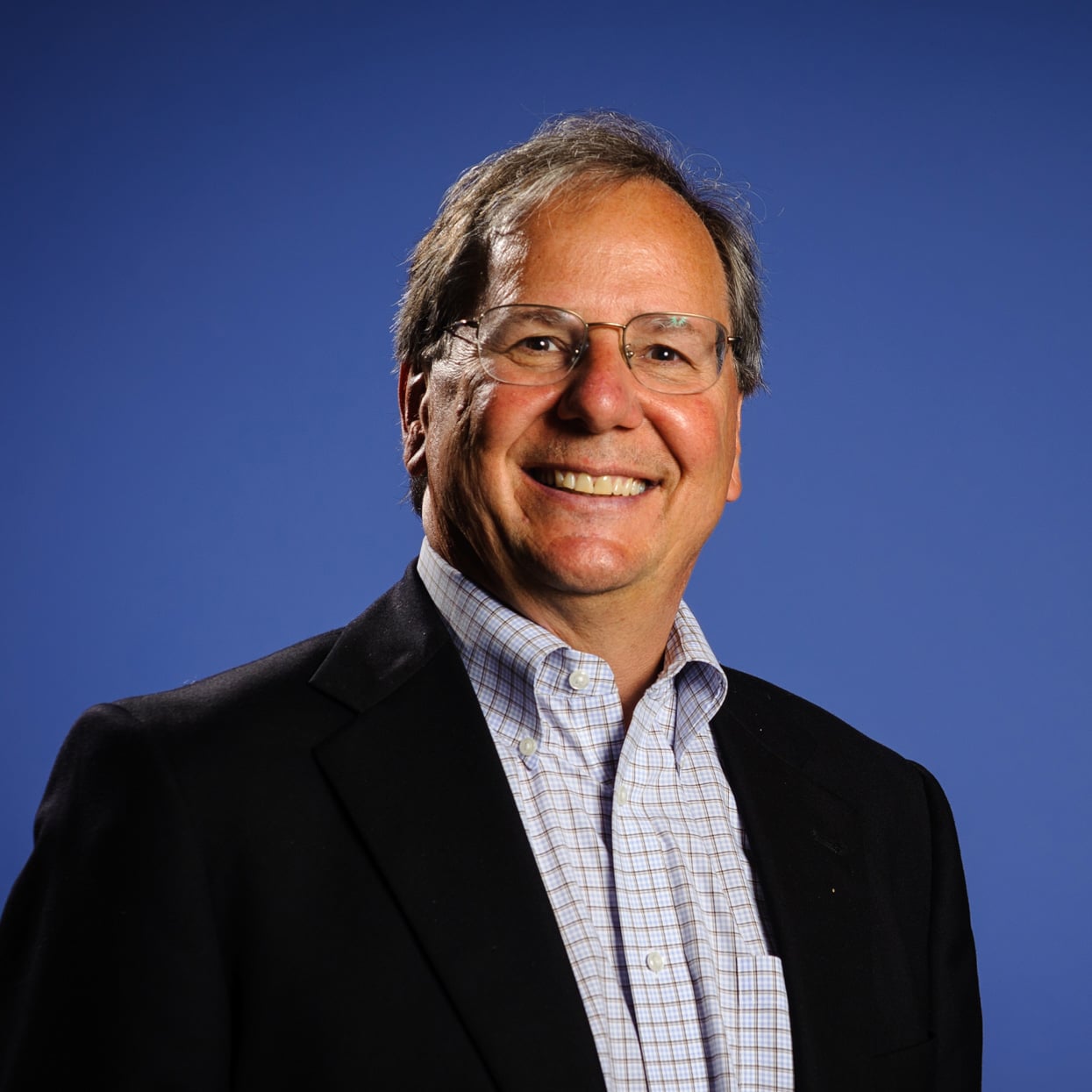
All of us want to live a significant and meaningful life. We long to know that who we are and what we do matters and makes a difference. For many of us, that translates into seeking meaning in our work and the rewards and influence it offers. This pursuit can be both all encompassing and ironically, for some of us, can seem ever more elusive with each advance and promotion.At the same time, public trust in business institutions and leadership is actually in freefall, fueled by growing concerns that the pursuit of profit often takes precedence over people, purpose, and the common good. But what if these two challenges are more connected than we realize? Our guest today has spent decades at the highest levels of business leadership. In his new book, “The Spiritual Art of Business,” he argues that work is not the supplier of meaning, nor the yardstick of significance. Instead, he contends, God uses our work to do his work in us, and it’s through that work that the transformation of the world around us can actually begin. It’s both a provocative inversion of our assumptions, and an exciting new portal to a way of understanding our purpose. And it’s hard to imagine someone who can make that case today with more expertise, experience, or wisdom than our guest, Barry Rowan. Barry is a Harvard Business School graduate who spent his entire career of many decades in C-suite roles, including building, transforming, or turning around eight different businesses, primarily in the areas of technology and communications. He serves on several, both for profit and nonprofit boards, and is the author of the excellent work “The Spiritual Art of Business,” which we’ve invited him here today to discuss. Barry, welcome.
Hi, Cherie. Thank you so much for having me. It’s a great joy to be with you.
We’re really excited to have you and excited to dig into this. So I always like to start off by asking about the story behind the story, because there’s always a story in putting together a book. And I’m particularly interested in how your life experience led not only to this book, but your particular approach in in. You’ve titled your book “The Spiritual Art of Business,” which might strike some people as a bit of a puzzle or a paradox, in that we tend to associate business with the left brained, the transactional, and the competitive, and certainly not the spiritual or artistic. So what led you to write this book and to take the approach that you did?
Well, first, let me start with the second half of your question by saying that I don’t really view it as a book. I really view it as an invitation into a conversation with God. So for those of you who haven’t picked it up yet, it’s 40 short chapters that are really designed to lead us into that conversation, that we might develop our own life giving perspective of work as seen through the eyes of God. The way the book came about came out of my own crisis of meaning and work when I was in my late 20s. I found myself on top of a mountain looking out over this beautiful Arkansas River valley and just started weeping. And I thought, ‘what is this about?’ And what I’ve since come to realize is that the serenity and the harmony of nature often reveals the disharmony within me, and as I did that, I said, ‘I am just sick and tired of living a divided life,’ and so I would spend the next six months reading 16 books to try to get to the bottom of that, and I thought it was a crisis of meaning and work, which it was.
But God had to provide a purpose in life in order to provide a context for understanding meaning,and work. So I decided that I would believe that God existed. And then said ‘well then who are you going to live your life for? God or yourself?’ And that ultimately led to me surrendering my life to Christ. But it still didn’t answer the question of meaning and work. So I would spend the next eight years writing 350 pages of myself, mostly in the middle of the night, trying to understand these things. And God took me through a total transformation of my perspective of work. And I’ve spoken hundreds of times around the world on the subject, and almost every time I do. People said, ‘would you write this down? We’d like to just think more about it, reflect more on it.’ And so that was really the thing that led to the book. And so when people ask me, ‘how long did it take you to write it,’ I say very truthfully, ‘probably 30 years.’
That’s great. So it seems like your central argument of your book is that we don’t derive meaning from our work; we bring meaning to our work, and that it is in itself a sort of an inversion about how we often think about our vocation. And I’d love for you to just unpack what you mean by that a little bit, as well as talk perhaps a bit about what the both theological and practical consequences are of getting it backwards, as we so often do.
I really did have it backwards for a long time. And as I mentioned, I had to really go through an eight year process of God taking me through what I would describe as a succession of paradigm shifts. I was just thinking about life and work all wrong. God is a great psychologist and cardiologist for me. I have problems with the mind and problems with the heart. And the problems of the mind were were multiple. But the fundamental error I was making was that I was thinking about life from the outside in instead of the inside out. I thought if I just get the right job somehow, I’ll be filled up. If my circumstances change, it will answer that echo within my heart. And we of course, know that that’s not the way it really works. And what really was a breakthrough in that for me was when Paul describes in Colossians, the mystery that has been hidden throughout the ages is Christ in you, the hope of glory. So when we begin to think about it that way, it’s from the inside out, so that everything we do is an expression of Christ living in in us, so that over time, its less and less we who live than Christ who is lives in us, as the Apostle Paul tells us. So work in that context is important to understand through this lens.For me, that’s why we don’t derive meaning from our work. We bring meaning to the work, but it’s really God’s perspective of the work that brings meaning to it. So, the way he describes work for us in Genesis before the fall, for example, and that we get to be co-creators with Him as we work alongside with Him and as we’re emptied of ourselves and filled with Himself. That transformed perspective of work has really animated and energized my work life for the last 30 years. It just brought it alive and made my work fulfilling and fun.
So I have to ask, you know, you just mentioned that this book really was the result of 30 years of life and kind of flowed out of that, but also that you have spent hundreds of pages journaling. I understand that some of your colleagues refer to you as a as a corporate mystic, but you know, it seems, at least to this viewer, that if you’re spending hundreds of pages of journaling and reading a ton of work that you’re paying to what’s going on, that there’s a certain discipline of attentiveness there. But I think for so many of us, the work world is one of constant demands, distractions, pressures, and the like.I’m sort of curious did the attentiveness precede some of the revelations? And if so, how did you build that in from the get go? What sort of postures preceded it as well as sustained those apprehensions that willingness and openness to change and surrender.
Well, I think if it was an attentiveness, it really was a response to pain, because the reason I spent so much time thinking about this was I was in anguish over these things. I mean, this was not an intellectual exercise for me. It was ‘why am I spending so much time at work?’ And I am I’m a deeply purposeful person and the real question for me was, ‘how do I connect what I’m doing in this moment with my purpose in life?’ Because our lives are just the summation of the moments of our lives, so that was really the question I had to ask and answer. So I think the thing that propelled me into that was this deep, deep anguish of the soul. And that was what led to writing these 350 pages. But I would just say, now that I’ve actually written over 10,000 pages in a journal and my prayer life has evolved from what I would describe as a discipline ten minutes a day to praying an hour a day when I turned 40. When I turned 50, I went on a first eight day silent retreat and I now do an extended silent retreat for the last 18 years and actually did the one thing on my bucket list when I finished a corporate career, and that was to do a 30 day silent retreat because my wife, Linda, and I have been married now 45 years, and we wanted to lay this next season on the right foundation with Christ as the cornerstone. And so what I’ve found is that there’s a big difference between striving and abiding. So to answer your question directly, I think for many of us who are are in business, who have particularly in our 20s, high ambitions, it’s about striving.
But what I think the real answer is to follow Jesus’s admonition to ‘abide in me and I will abide in you,’ and that as we abide in Him, as we spend time with Him,it will transform the nature of who we are. Jesus is the Word made flesh, but I often say kind of tongue in cheek that we are the flesh being made word. I start as flesh and hopefully a little bit of the word comes alive in me and that yeast begins to work its way through the dough. So as that happens, it really transforms the nature of who we are and the way we go about our every dimension of our lives being a husband or a dad or a business leader. And then we can see how every moment can connect to our purpose in life. So if I have somebody working on a formula in an Excel spreadsheet, for example, on a business plan, well, how does that connect to my purpose in life? Well, it’s because I really view business and all of our work lives as ordained by God and that there are some distinctive ways that our work lives and even business contributes to a better society. So somebody needs to get that formula in an Excel spreadsheet so the business can achieve its God given potential so that it can fulfill its purposes. And so if I’m then called to serve in business by helping the business be successful, I will be living a life that is lived on purpose.
And just practically speaking, what does that look like? What does it look like to abide in the midst of the the hecticness and the hurly- burly ness with lots of different competing obligations and duties.
My understanding, and probably my practice of abiding, has evolved dramatically. I think it starts as an aspiration or for me it actually started as anathema. I mean, when Jesus says ‘apart from me, you can do nothing.’ I said ‘nothing, really?’I said ‘no, surely I have some talent. I can do something.’ But it used to be something that I tried to avoid and now it’s something that I try to adhere to. And so I think the process of writing for me is a progression. So as I mentioned, even my prayer life started as ten minutes a day and as we fall more deeply in love with God, we are drawn to abide in him. So we know we live in these very demanding worlds with very demanding jobs. One of our businesses sold for $10 billion. And for public companies, it takes discipline to basically carve out that time. But what I’ve found is two things. One is, if I don’t get the time, my prayer life has gone from kind of a discipline to a craving to now a responsibility. If I don’t get that time, I’m out of whack with God and I’m out of whack with the world.
And so I know that getting that time is important. But secondly, as I’ve come to see that ,as we surrender our whole lives to Christ over time, he works Himself into every dimension of our lives, and we see him in every moment of our lives. So the abiding means to see God’s will embedded in every moment of our lives. For example, I’ll give you one of the ways this really came to life. We were refinancing a company that had hundreds of millions of dollars worth of debt, at 16 to 20% interest rates. It was credit card debt. And, so one of the, the ways we needed to turn that company around was to refinance the debt and we got a deal negotiated. We had bids for the debt on Monday night that were a little less than half of what we had to refinance. We had bids for $90 million, we’re refinancing $200 million. And the next morning on Tuesday, I was in church praying about this. And I thought, ‘well, at the end of the day today, we’ll either get this done and we can uncork the champagne or we won’t. And we’re going to have to pull on the muck boots and start all over again.’
And,I just sense God saying to me in that moment, ‘Barry, are you willing to embrace my will that is embedded in your circumstances?’ In other words, if at the end of the day you get this done, you can incur the champagne, but if you don’t (I felt called to this company to try to save the jobs and turn it around), then God’s will was basically ‘suck it up, you know, put on the boots. Do it again.’ And that was kind of a time where I really began to see that in every moment, God has a point of view. And so if we have the eyes to see, we begin to see His desires for us in every moment of our lives and it has taken for me a much deeper level of surrender and trust than I had to say. ‘Lord, am I willing?’ Or God is saying to me, ‘are you willing to live fully in the present moment and let me, God, unfold the pattern of your life as I see fit?’ And it took me years to be able to say yes to that because it felt like giving up control, which was an artificial sense of control. But I find that as I do that, it leads us into this freedom that is beyond what we could have asked or imagined.
As I was reading your book, obviously you’re a corporate leader with a lot of familiarity with different financial models, but it struck me that there were actually at least two kinds of financial models that were actually being referred to. I mean, you talked a lot about essentially being a steward and you use the term ‘assets under management’ to essentially describe kind of the whole of who we are, not just our work and our vocation, our talents, but our relationships and even our story. But you’ve also sort of described what could be seen, I think, as a bit of a gift economy in that, we offer as stewards, the managing that has been given to us and we give it back. Then you’ve talked about how God then gives us, through a transformed character, the invitation to have a transformative effect in the world. And I want to ask you, if I’m reading you correctly, those two different models are intentional and what you were thinking about that.
Well, again, they kind of came out of my own struggle. I mean, next to my struggle to find meaning in work, the second biggest struggle I had was a struggle over wealth. And actually, one of the people who I saw signed up for this call today, I won’t embarrass him by saying his name, but was very helpful to me in this. So, I’d taken him out to lunch and we were in this beautiful place and I said, ‘I’m having a really hard time, you know, even eating in a place like this with these beautiful views and everything out over the Pacific Northwest’ and he said ‘Barry, you are spitting in the face of God.’ And what he meant by that was it was pride that was preventing me from being willing to accept the gift of God. And the verse that really came home to be helpful to me was out of Ecclesiastes, God gives any man wealth and possessions and the ability to enjoy them. This is a gift from God. And notice the double gift there. One is the wealth and possessions, which of course is a major gift, but the much bigger gift is the ability to enjoy it. And so how do we enjoy it? To accept it as a gift. And it’s not about the 10%, it’s about the 100%.
So to your question about it being a gift. Isaiah says ‘as the rains come down from heaven and do not return to it without causing the earth to bud and flourish, so is my word that goes out from me.’ Well, I view the things that God gives to us as a cycle of gifting. So he gives us this gift, we give it back to him because nothing is ours. And then he gives it back to us to manage on His behalf. And it’s a kind of an ongoing, perpetual, beautiful cycle. When I begin to see it that way, it causes us to move from a life with our hands gripping on the wheel to a life of surrender and openness and freedom. So yes, everything that we have is a gift. And I think that we are called to be stewards of it. And as you mentioned, we’re stewards certainly of our financial resources, but also of our of our families, of our relationships. You know, being stewards of our relationships is one of the most important things that we can do. And being stewards of our stories, as you mentioned, that we see our stories and the stories of others. And when Paul calls us to be a living sacrifice, I think one of the ways we do that is to pour ourselves out by being willing to be vulnerable and share our stories with others, so that we can connect with one another and deepen our own humanity and live more divinely.
Just thinking about the challenges of stewardship. The Bible says that no man can serve two masters, and as the steward of one’s not just wealth and talents and time and story, it seems like often the, the calls and the requirements of God can at times not always, to understate, align with what say might be, say fiduciary duty to shareholders. You’ve had decades in corporate leadership, you’ve been the CFO for publicly traded companies,I think it’s been over $20 billion worth of financial transactions you’ve been involved in. And when you have felt essentially the pull of different masters, God being one and a corporate responsibility to shareholders that might not always align with that being the other, what does a spiritually artful business leader actually do in those circumstances?
It’s such a great question and we all wrestle with that at first. I think the first response is to be willing to wade into the mess. And, you know, very often our temptation is to step outside of it or to say, ‘I can’t do this’ and just to acknowledge that we live in a harsh world that is run by the prince of this world and there are very different competing demands now. My personal view is that God’s views and the interests of the shareholders are highly aligned in the long run. The challenge comes in the short run where you have to make very difficult decisions, like to lay off employees in order to save companies. And it’s very, very painful to do and you can say, well, is that in the interest of the shareholders, or is it in the interest of God? And the way I think about that is that this sacred secular divide is a completely artificial distinction of mankind. I think everything is under the Lordship of Christ and when you begin to see it that way, there is a sacredness and a seamlessness to what we do. So, even when we’re making those very difficult decisions about laying people off or being in bare knuckled negotiations with people, and I’ve done that a lot through my career, as you can imagine, God has a point of view about that. So if we’re going to lay people off, do it with a sense of dignity and respect. The biggest failure of my life was a company in Brazil, where we raised $2.5 billion and hired 4000 people in two years. And it took off like a rocket, We filed to go public, the stock price tripled in the first year, and then the telecom meltdown happened. I was the CEO and had to lay off 1500 out of 4000 employees. And it was the hardest thing I’ve ever had to do, as you can imagine. But if we didn’t do that, everybody would have lost their job. Well, we we went beyond the call and we gave lots of outplacement services and severance and way more than was required. And we didn’t have a single lawsuit. That’s not why you do it. But I think that was God’s point of view was ‘take care of my people as best you can.’ And so I think that those interests are largely aligneD, IF you are working for the right people. Now, I think there are some people in business who have a very different set of values and that is probably for me, the biggest challenge in this, whether it’s at an individual level, a company level or a national level. I mean, think about the values of what has made the US great versus the values of pick your favorite communist country. There’s a different set of rules that people play by. And that is one of the hardest things to manage. And I think what you do is, as one of my friends used to say, you just muddle through, you do your best and recognize that we will be accountable to God for every moment of our lives. But it’s a matter of starting by wading into the mess.
Well, I mean, you you absolutely anticipated something I wanted to dig into and get your thoughts on. You’ve written a lot about the importance of a surrendered character as a leader to be able to lead wisely and well, and yet not just in business, but in other sectors as well, it does seem like there are many institutions that are designed to reward not just performance over virtue, but sometimes a way of performing that is counter to a surrendered character. How you think about leaders being able to operate with a surrendered character and environments that often incentivize the opposite?
Let me answer that in two parts, if I can. First is, let’s talk a little bit about surrender, because I think there are so many misconceptions about surrender. Surrender does not mean being a wimp, being this spineless lump of clay that is willing to just drift in the wind. You know, the best example to surrender for me is Jesus in the Garden of Gethsemane. And as I mentioned, I did this month long silent retreat. And one of the exercises during that retreat was to be with Jesus in his agony and in his Passion and his Crucifixion. And, as I did that, I realized, ‘wow,’ I mean, you enter into that passion with Him. And immediately I burst into tears and I realized, these are my tears, not Jesus’s tears. And as I as I’m weeping for Him and His pain and as I read the Gospel, I don’t think there’s any record of Jesus shedding tears during his passion and crucifixion. It was sweat that was like drops of blood falling to the ground. Jesus was a warrior and the whole battle was for whether God’s will would be done or his will would be done. I know it’s possible. Everything is possible for you. And if it’s possible, take this cup from me, but not my will, but thy will be done.
Look at the strength that it took. And it takes so much more strength to let go than to hang on many times. My best working definition of surrender, is submission to the will of God. And it does not mean it’s always easy, believe me. And in these kinds of jobs, it’s often not easy, but it’s submission to His will. It’s being willing to stand up for the people that are taking advantage of you. It’s being willing to stand up for doing the right thing. So,I think when you get into environments like you’re talking about, I think there’s a difference between working in an environment like that versus dealing with people outside of our organization who operate under different practices. So in the second case, if they’re operating, outside of us, I think you still have to operate on the same set of values and not compromise our integrity. And it doesn’t mean you’re spineless. I mean, it takes the strength of Christ in the second garden to be able to enter into some of those things. But in terms of working in an organization where those values are absolutely antithetical to what we believe in, I think you have two choices.
You can either try to change the system from the inside out by being who we are and by the way, I think as we go further in our careers, there’s a convergence that happens between who we are and what we do, that what we do is simply to be who we are and as you get farther in the leadership path and more senior levels, I think that’s what people see is who we are. And so you can change it from within and do your very best to do that but at some point, people may be called to say ‘you know what, this is such a clash with my values that I don’t think I can live an authentic life, one life under Christ here.’ But I would give a little caution to that, which is that it’s often easier to check out than to check in. And I think sometimes people leave for those kinds of reasons when sometimes God’s calling us to stay and to just enter into the thickness of it. And that was a big part of my call was.
Yeah, that’s really interesting. One thing I definitely wanted to ask you about is, your book has been out for just a couple of years, but it kind of comes at the cusp of radical changes ahead. And so, it provides a great deal of wisdom in thinking about like the transformational ways that God uses our work to change us. but there’s also transformational change coming to the world of work because of artificial intelligence and other technological advances. There has been talk about the potential for eliminating entire sectors of work, even creating a universal basic income, because so many sectors of work will be wiped out and I’d love to hear your thoughts about how you think about work, meaning and vocation when impending technological change may mean that our labor itself may no longer be needed or valued in large swaths of industry and even different sectors.
Yeah, that’s a huge question. Often when I give talks, people say, ‘well, let’s do Q and A at the end.’ I say ‘I don’t actually do Q and A, I do Q and P because I don’t feel like I have the answers, but I might be able to offer a little bit of perspective on the questions.’ So that’s probably about as much as we can do here. But first, I think it’s hard to know. And I’m not an expert in artificial intelligence, though I’ve spent my career in working with in technology companies. But from what I read, for example, the Wall Street Journal did an interesting interview this last week with 16 economists, and they all agreed on one thing, which is AI will absolutely be a productivity enhancer. What they did not agree on was whether it would actually create jobs or shrink the number of jobs. So I think, even among the experts, there’s still a lot to be done about that. But I think there are some really important dimensions to this that we have a responsibility to think about. I mean, first is, as faithful followers of Jesus or whatever our faith tradition is, people who want to do things under the Lordship of God, we have a responsibility to bring God’s perspective to these things. So for example, in the whole smartphone revolution, people of deep ethical character were on the sidelines. And we’ve seen the consequences because people did not breathe into the design of those machines in ways that is going to protect children. So now we’re responding to that, and I think people are stepping up to that. One of my favorite examples is Pope Leo. I’m sure most of the people on this call know the reason he chose his name. You know that Pope Leo the 13th presided over the Industrial Revolution in the 1800s and this Pope believes that he’s going to preside over an equally transformative change based on technology. And so he took the name Leo the 14th. And so I’m thrilled to see people like that and there are many people in technology who are raising their voices with the right, well -informed perspective that would bring God’s perspective to our work.
So,I would say, we don’t know exactly where it’s going. We have a responsibility to engage with it and I think, as we were talking about before, about how to live our lives kind of moment to moment,the path to a fulfilling life is to fulfill the duties of the present moment. So if someone is in technology or someone is using technology (and it’s virtually all of us), our duty and our responsibility is to say ‘well, what are we called to do right here?’ If you’re the leader of an organization, I think we have a responsibility to understand how AI and other technologies will affect the people in our organization, because the people have souls that are going to last into eternity. The corporations do not. So how do we think about that in a way that is going to be additive to the productivity and that values creation opportunity in this world? I think one of the roles of business is responsible value creation and I think that’s a sacred privilege we have to do, but it must be done through these eyes of faith and in a way that takes a holistic view of the world.
I see the questions kind of piling up. In just a second, we’re going to turn to questions from our viewers. But before that, I wanted to ask about the last part of your, your book. You basically follow a cycle of personal transformation leading to eventually the way God changes the world is through changing us and then we become change agents in the world. I think probably all of us long to be a divine change agent. That’s a thrilling prospect, but at the same time, some of the folks one encounters who seem the most zealous to do that also cause great damage and there are times where it seems like not just zealousness, but discernment is really needed. I would love to hear your thoughts on, you know what spiritual principles or guidelines help differentiate between what is truly God’s transforming power and our own energized, perhaps misplaced certainty.
To underscore your thesis there, I was in a seminar one time a number of years ago, and there was a person who was really advocating for peace and I mean, stridently advocating for peace. They’d been in jail for it and all of that. As I got to know them, I said, ‘I think the most important thing you can do for peace is to find peace in your own being, and it will be that peace that flows out into the world, because they were bringing the war within them to the war outside of them. And I think that happens so often. So in terms of principles, for followers of Jesus, I’d say stay close to Jesus because I know this is a rapidly changing world. And it’s a moment to moment relationship with him that I think all of us are subject to being easily drawn off course from. That’s one thing that I think is really important. I think as we try to go through this also, it’s to approach it with a profound sense of humility. You know, we need to approach this work on our knees, not with our fists clenched. And in each of us, as Paul says, there is the sinful nature and the divine nature.
I know that to be true because I’ve looked in the mirror. It starts with me. And that’s why I’m so focused on submitting to God that he might transform us, and that it is he who is transforming the world through us. So I think it’s really important to recognize that it’s His work being done through us and not our work. And that creates a sacredness to it, a holiness really to it. And,Jesus on the day of His Resurrection breathed on the disciples and said, ‘Receive the Holy Spirit.’ And one of the most profound things about that is that He transformed the the natural into the supernatural. He transformed air into spirit. And that’s what He does when he does His work in us, He transforms us into love, so that we can be carriers of His love out into the world. And so as we come into that place where His love is, we’re emptied of ourselves, we’re filled with Him, and then He overflows into the world. And to me, that is a much safer way to go about doing this than feeling like I’m the Messiah.
That’s great. So, we’re going to turn to questions from our viewers. Our first question comes from Nathan Swanson. And Nathan asks ‘Working in business is fast paced and hectic. What advice do you have for Christians in business with regard to adopting an approach where we work and serve well in our respective roles, while still displaying the fruit of the spirit and avoiding burnout?’
Great question. I think it gets back to living life from the inside out. One of the temptations in business and in other professions is it is fast paced and it’s incredibly adrenaline producing. I mean, it’s fun to set a goal and to achieve it with people you enjoy and respect and to build things. And,so in many ways, the lure of business can be the seeds of our own burnout. And so my advice is to make sure that you take care of the soul from the inside out. And for me, that means spending time alone with the Lord. It means reading spiritually impactful books, by the way, including the Trinity Forum booklets. I have a list of over 300 books that have been spiritually impactful to me. It’s really getting into Scripture because as Scripture comes into us, as that yeast begins to work its way more deeply through the dough, it actually changes who we are, so we can deal with these things. It gives us eyes to see when we are coming close to burnout. It gives us ears to hear kind of the cry of the poor and be able to serve them and to do those kinds of things. We’ve made 25 trips to Central America as a part of that work, for example. So what happens is that this life of Christ being lived through us, we will be this holistic life that is under the single Lordship of Christ or of God, depending on your beliefs.
That’s great. I think there may soon be some requests for your list of 300 books coming up. Our next question comes from Victoria Martineau. Victoria asks ‘how do you balance personal spiritual discernment with corporate spiritual discernment?’
By corporate, I’m not sure if Victoria means in a corporation or among people, but let me try to address it. So first discernment comes from being close to God, so as we submit ourselves to God, He will give us eyes to see more and more and as we come to know God, we will know His character. And so, I think the way that I find myself discerning spiritually is listening for Scripture. And very often, as we know, Scripture will become relevant in this very situation. Or if there’s a decision to make, it’s like, ‘oh if this is this in keeping with the character of God and the person that the God that I know him to be or not.’ And we get, I think, much more clarity and developed eyes to see the will of God, as we were talking about, embedded in our circumstances. At a corporation level, business meetings are a form of discernment. You know, when you’re sitting in a strategy meeting, this is back to God’s will being embedded in every moment. Is that not a form of corporate discernment? What’s the right thing to do? And even though people may not have the same 91% of the iceberg that’s underneath the water that I do, we stil have the same objectives at the top, which is how do we make this business most successful? And in my view, the reason to make it successful is so it can it can achieve its God ordained purpose on this planet: for responsible value creation, creating jobs, serving customers, and being a good corporate citizen. You can have discernment, I think, even in a place that would be viewed as “secular” and that’s why there’s no such thing, in my view as a sacred secular divide.
But then corporately for people of faith, reading the Acts of the Apostles is a great way to see that. And, you know, the early church did a lot of that corporate discernment and praying and fasting together. And the readings this week around sending Paul and Barnabas out and laying hands on them because they felt this word from the Spirit. So I think it’s going deeply with people in faith, in prayer, with an intentionality to listening to the will of God and then doing.
Here’s another way I’ve found really helpful. I view my plans and our life as a succession of fleeces.I think our listeners are probably familiar with Gideon and putting a fleece out. And,you know, ‘Lord, if it’s of You, cause the dew to be on the fleece and not the floor,’ and then vice versa. And so my view is, you know, God can’t steer a parked car, so get the car moving. Then view that step as as a fleece and then do what Jesus said to His apostles in the Garden of Gethsemane: watch and pray. Watch for where the energy is. Watch the response of other people. Is this helpful to people? If it’s running a business, is this advancing the business closer to its goal or not? Eisenhower used to say, plans are useless, but planning is invaluable. And so it’s that planning, it’s that entering in through that posture of having a point of view about where we’re trying to go and then adjusting ourselves constantly along the way. One of my favorite statistics from the Apollo mission was that it was off course 98% of the time. So our lives are kind of successive approximation. We’re in this constant kind of adjusting to the will of God.
That’s great. I want to combine two related questions, both from anonymous attendees, the first of whom asks, ‘what is your advice for early career professionals, not yet leaders, but who want to be. How should they choose where to be? How should they navigate things like mentorship on top of professional and personal development? And then, somewhat relatedly, a second viewer asked, ‘what is your advice for seeking out mentors for more junior people?’
Yeah, thank you for that question. I love the way you worded the question asking where we should be. For example, I would first start with a question about not where to be or where to go, but who to be. Somebody asked Mother Teresa one time,’how was it that you were called to serve the poor?’ And she said ‘I wasn’t. I was called to Jesus and this is where he led me.’ And it may sound like it’s splitting terms, but it’s dramatically different. We are first called to God, and out of that call, He will lead us places. And so my advice for people in the early career, first is to do the very best job you can at what you are doing. My kind of working job definition from my very earliest years was to do what you think is important and do it well. And so that’s the very best thing you to do, to just be stellar at what you do. One, it’ll be good for you because you’ll grow by fully applying yourself. Secondly, it’ll be good for the organization you work for. And thirdly, it’ll be good for the world because our organizations serve the world. So that to me, is doing the very best job you can. Combining that with the second question on mentors is, I would actively seek them out. I did not have a lot of mentors, particularly in my business life, but one time I heard a guy speak at the Seattle King County Prayer Breakfast in Seattle.
He was the co-chairman of Nordstrom. And I was very touched by him and his whole story that was so authentic. I wrote him a two and a half page letter. I hadn’t met him and I said, ‘would you be my spiritual mentor?’ I said, ‘I don’t even know what that means,’ but he was such a, a winsome guy. And we went out to dinner three times and, and then I think he didn’t know what to do with me. But coming out of that, we together put a group of older guys and younger guys together, a men’s group. There were four people in their 60s and I was in my mid 30s at the time. And we met for I think six years and it was incredibly helpful. So I would say take the initiative. If you see somebody that you are drawn to who you think can be helpful to you, reach out to them and I think you’ll be surprised. If they have the time, as people get older, they want to invest. I don’t actually call it mentoring. I call it intergenerational friendships because mentoring one, it applies we actually have something to say and it puts too much pressure on us, and two, it’s a bidirectional relationship. We old geezers get at least as much out of seeing the energy of the young people as they do from having us help them not fall in the potholes we’ve fallen into.
That’s great. So another question from an anonymous attendee who asked ‘one thing work unavoidably entails, at least for most of us, is some degree of conflict. Can you talk about the things you’ve learned about navigating conflicts, really hard ones, in a redemptive way?
Conflict is an inevitable part of it. Jesus said ‘where two or more are gathered there am I with you.’ And I often say, where two or more are gathered, there will be conflict. It’s just the nature of what we do. And a few thoughts on how to deal with conflict. First is to recognize it. And sometimes I will have a sort of low grade anxiety about something, that’s for me, a form of prayer. God is the great I Am, and He meets me just as I am. ‘Lord, I’m coming into this time of prayer today. I can’t quite tell, but there’s a sort of malaise about me and show me what’s going on.’ And sometimes it’ll be you’ve got this really difficult person at work. Other times it’ll be very apparent what the source of the conflict is. So, for me, the very first thing to do is to submit it to God and He understands conflict. Then read the Gospels. One of the ways to pray is to go to places in Scripture where people are experiencing something that I am experiencing, and then don’t analyze the Scripture, insert yourself into the Scripture. Go to that place and see how Jesus was attacked by people.See how He responded.
Now, a key difference is He is God and we are not. So He could say things that we shouldn’t. But there are some really important things about that. For example, Jesus was not really knocked off His rocker. What I’ve realized, and this came from sitting with Jesus in front of Pontius Pilate when Jesus says, ‘you would have no power over me were it not given to you from above,’ one of the mistakes I’ve made for a long time, particularly working under some very difficult people was that I had give them power over me that was not from above. If people send zinger emails or they say really harsh things, I have let that into the place that only God belongs and for it took me 20 years to really get to the point where I could run to God as a fortified tower. As Scripture tells us, He is our rock, our redeemer, and our fortress. It enables us to grow into this detachedness from conflict that,I’ve come to call a kind of spiritual Gore-Tex. The way Gore-Tex works is, (I’m a chemistry major) it doesn’t allow the water to come in, but allows the vapor to escape because the molecules are smaller. So we have a sort of spiritual Gore-Tex that allows love to pass through, so that the love of others can come in to me.
I can receive love and my love can flow from me into them, but it does not allow sin to pass through. The reason conflict is so difficult, is because it’s the sin of others interacting with the sin in me. Their woundedness creates woundedness in me. The Enemy wants us to live in that woundedness. So one of the ways to deal with this is, (it sounds theological, but it’s highly practical), when Jesus said, you must take up your cross daily to follow me, is that there is a place beyond woundedness and it’s death. And the way to live into relationships and to truly love our enemies and to pray for those who persecute us, is to die. The wounded self will die, and who will be resurrected in its place is Jesus Himself, who will love the enemies that we cannot love by ourselves. So, what I find is that the deeper the intimacy with God, the better we are at being able to deal with the conflict with others.
That’s great. I think I’m going to remember the Gore Tex analogy. Another question from an anonymous attendee. They write ‘I understand that you’ve been quite engaged in charitable non-profit work in addition to your day jobs. Do you have thoughts from your experience on how to think about that as part of your calling?’
The way I think about my life, as we’ve talked about, is life from the inside out. And so I think about it as self, family, society. And I literally manage my files this way. My computer files are organized this way. I’ve always viewed this as sort of a portfolio life lived from the inside out. So in that outer concentric circle of society, it’s being a business leader, it’s being a friend, it’s being a friend to the poor, it’s being a member of society, serving on board. So my advice to you is to just start. The first nonprofit board I was on when I was 26. Actually it was when I was 20 in college. So start early and you can do this. Just start early and it becomes a habit of the heart. And yes, these are very demanding jobs that we have, but as you prioritize it, it’ll become an important part of our lives. So, yes, being on nonprofit boards has been a big part of my own career, whether it’s college boards or Christian boards or now, as I mentioned, we’re very involved with helping the poor and have made these what will be our 25th trip to Central America this fall. I took vacation to do that and also we did it with our family. That’s the other thing that’s been important. We have two sons, and there are so many things that take us away from one another. We decided to walk more intentionally with the poor when our kids were in high school and college, and we did it as a family. We went on those trips together. The more we can do it in a way that is holistic and integrative, with our spouses, with our friends, with our family, the more or the less it feels like it’s a distraction that’s pulling us apart. It’s something that is pulling us together.
That’s great. And now the time has come for a last word from you. We would love to hear your last word.
Well, thank you Cherie. We’ve covered a lot of ground today, so let me try to summarize it in a couple of sentences here. The thought I would leave us with is, as we surrender ourselves to the living Christ, He will empty us of ourselves, fill us with Himself, and overflow into the world that He loves. God is love and we will be transformed by this love into love. As we are, we will live into the pinnacle of our humanity.
Thank you Barry. It’s been great to talk with you.
It’s been an absolute joy. Cherie. Thank you so much.