A Conversation with Ben Sasse in Washington, DC
Ben Sasse is an author, former senator, university president, husband, and father.
In December, a terminal cancer diagnosis gave Ben a new vocation: to use the time he has left to help the rest of us focus on what really matters.
On Tuesday evening, June 2, Trinity Forum, with support from College Board, hosted Ben for a conversation in Washington, D.C.
Where: Capital Turnaround
700 M St. SE, Washington, DC 20003
When: June 2, 2026




Brent and Katie Allen
David Campaigne with 
Andy and Catherine Eshelman
Philip and Asriel Greendyk
Katherine Haley
Murray and AT Johnston
Richard and Phoebe Miles
Ed and Karen Moy


Speakers
-
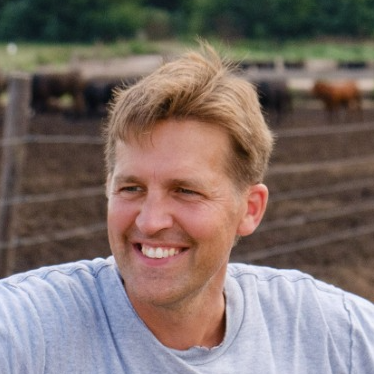 BEN SASSE
 -
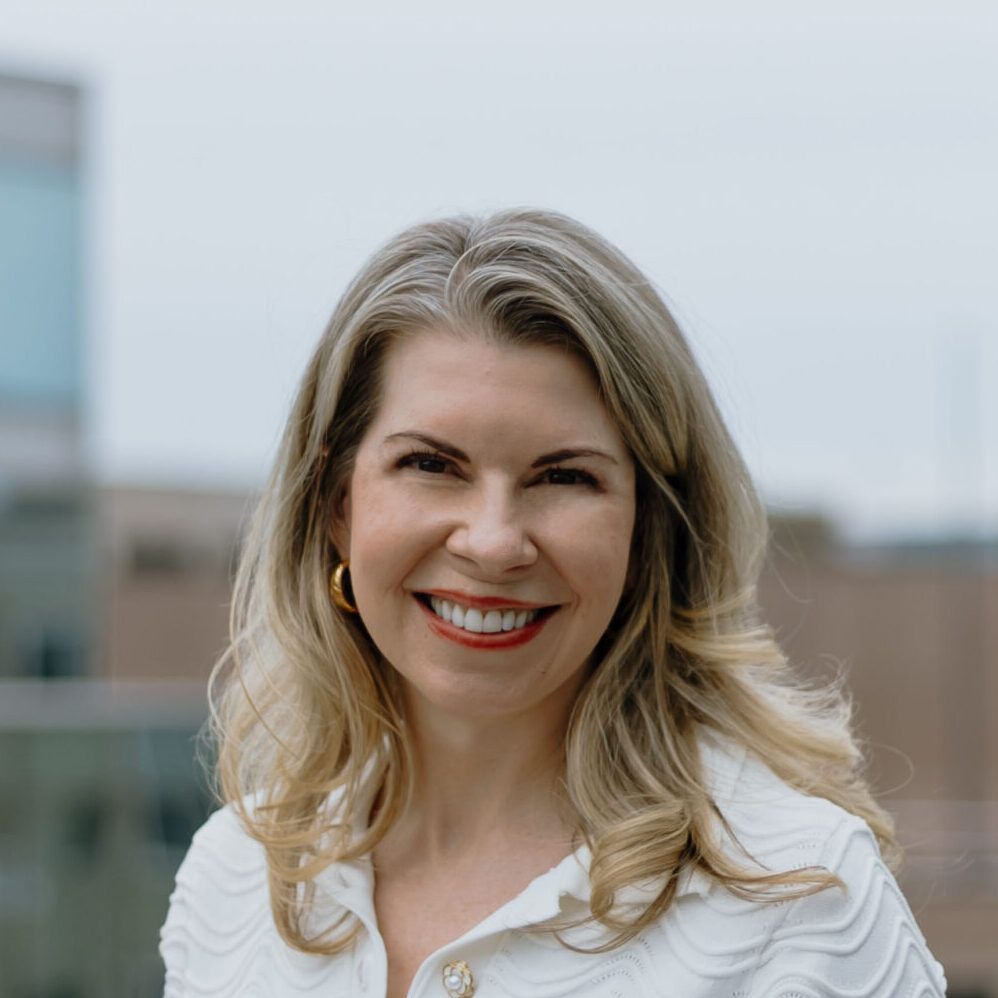 CHERIE HARDER
Ben, as you can tell, we are so glad you’re here. It’s great to have you here. It’s great to have Melissa, Breck, and your extended family here. Welcome. And before we really dive into it, I think one thing that’s on everybody’s mind is just: how are you? I mean, we’ve been hearing all this news about breakthrough pancreatic cancer drugs. Is there a chance the prognosis is going to change?
Well, let’s go small first. First of all, thank you all for making time. Sorry there wasn’t more to do in DC on a Tuesday. I think it’s the 40th anniversary of the release of Fletch. So we’re all gathered around an important milestone. David Coleman, those comments were dishonest on so many fronts. So thank you for your generosity and lying. But David made me feel bad because I don’t remember at all dropping the ball on getting back to him. I do a lot of morphine management right now. And so on a day like today, I’ve ramped up the last couple days. So I still have enough in my system that I’m not in a lot of pain, but I’m not asleep in front of you either. So I cut my morphine off a lot. But my short term memory is crap. Tim Keller was a friend of mine. We weren’t close, but I cared for Tim and knew him for a while, including during his dying years. He never told me this, but his family has since told me that in his last years, one of the benefits he saw in bad metastasized cancer is he didn’t feel any guilt about not being good at managing his inbox, and I’m not over that yet. And David just made it worse. So yes, I was thinking like I got a to do list tonight when we leave. Cherie, I’ll speak to your specific point. I am an oncology rookie, but we have an amazing team at MD Anderson and they tell us that in 40 years, pancreatic cancer is the most lethal form of cancer, 87% death rate in five years across everybody who has it, but of those diagnosed stage four, which I was, 97% death rate within 12 months. It’s nasty, but in 40 years, there have only been two good headlines and both of them are in the last 60 days. And one of them is my drug, daraxonrasib. And at an oncology conference yesterday, I wasn’t there. But as the story has been told to me by a few folks, there were about 4000 folks, a bunch of super nerd researchers and a bunch of financiers who do pharma investing. 4000 people, when Revolution Medicines was named, broke into a multi minute standing ovation. Those are the makers of my drug. So it’s a Silicon Valley, Stanford spin off, these biotech guys created this drug. Apparently they call it the greasy ball, the molecule that is pancreatic cancer’s route. You can’t find a way to wedge the drug into it. So it’s been considered undruggable. The vast majority of deaths from cancer in the U.S. have a relationship to this same problem with pancreatic, cancer which is you can’t deliver the drug against the molecule. And the breakthrough interaction isn’t just for pancreatic cancer. It’s a new technique that we’ll be able to use for molecular glue. So the the good news is Noah Smith, for those of you who read his Substack, formerly an economist at the University of Michigan, but now just a really good general journalist in America. Noah said, summarizing a lot of the news about pancreatic cancer over the last couple of months, he said, we are very likely at a place where we end cancer deaths within 30 years, not end cancer, but end deaths from cancer within 30 years because of these breakthroughs. So it’s amazing stuff for those of us who know that the curse, post the Garden of Eden is far and wide and we should seek to love our neighbor by restraining evil. And beating cancer is a really great thing that we should all cheer for off the charts. It’s great news for somebody who’s as sick as I am. Probably not soon enough to make a lot of difference, but extra months is a real blessing when you want to love your wife and kids. I was given 3 to 4 months to live in December, and I’m pushing six months already and probably have a bunch more months. And it’s because of this miracle drug.
Hurrah! So let’s kind of go back to the beginning. I think most people in the room know you either as a former senator or university president, but before any of that, you were born in the tiny little town of Plainview, Nebraska.
1200 people.
Yes, to Gary and Lynn, a high school teacher and football coach and a homemaker who split shortly after you were born. You have made it sort of a lifelong area of study for you, how character and formation happen. What formed Ben Sasse? How did Ben get to be Ben?
The German Lutheran stoic in my soul, really doesn’t like talking about myself that much, so I don’t know. I mean, Cherie’s awesome, but what a bad question. Let’s get to something interesting. I don’t know. I’ll give you 3 or 4. [By the way] her team is awesome. They said, do you want Gatorade to not puke? You want sprite to not puke? Good, good. We’ll also put a big bucket behind your chair. So hopefully I don’t need to use it. But I’m managing a wave, so forgive me if I’m sort of squirming around a little bit. Bucket one: incredibly blessed to be raised in a Christian home and be catechized. I went to, Trinity Lutheran Elementary School and, Luther’s Shorter Catechism was a core part of our life to understand the warp and woof of Scripture. Number two—I’m making up a list. Let me just say there are four points. I don’t have any yet, but I’ll stop at four. Number two: my dad was a football and wrestling coach, but all my family, besides my dad, were farmers, so [where] I grew up, we lived in the town, but I would be bused out to work on the farms in the summer for family members. And so I just grew up with a rhythm that work is a core part of what you do to live a life of gratitude and love your neighbor. And, my grandfather, Elmer, used to regularly say that every hour of sleep before midnight was worth two hours of sleep after midnight. I don’t know that there’s a lot of Huberman Lab stuff at Stanford that’s backing this up, but we believed it. We got up really early, and you had to work before you got to do anything else. I wanted to read the sports section every day. And my dad said, you got to read an article on the front page, and you got to read an editorial before you can turn to the sports section. And dad was pretty sports addicted. You learn the sense that there was always work that had to be done to serve other people before the next stuff. You mentioned my parents are the Kramer vs Kramer generation. I was born in ‘72. My parents divorced in ‘73. They were both remarried by ‘76. Divorce is terrible, but I had the least bad version of divorce because my parents were both remarried by the time I was four, and all four of my parents got along. So there was a rhythm to what respective authority looked like in two loving households. And I think that’s only three. So I’ll say the fourth is: man, did Husker football dominate all of my childhood?
So you went from the tiny town of Plainview to Harvard, then Saint John’s, then Yale, and then after graduating, you took what might be considered a fairly unusual career move. You worked as the executive director for the National Alliance of Confessing Evangelicals, which is not the typical backstory of a senator. And I’m curious how, if at all, that season shaped your view of public life and civic formation.
That’s interesting. I mean, that wasn’t the motive. Melissa and I got married coming right out of undergrad, and I worked for the Boston Consulting Group in Chicago first. And it was great yuppie sweatshop work in that every year you were going to get two and a half or three years worth of work out of you, because that were the hours. Those were the hours. There’s a subject verb agreement in there somewhere. I was working hard and long and enjoyed a lot of what I was learning, but we looked at how many people were 15 or 20 years down that career path and were divorced and marrying somebody 10 or 15 years younger. Once they had money, then they were going to figure out what the rhythm of work/home looked like. We just thought that was a stupid order to tackle the problem in. so we left strategy consulting, and we’re still wrestling through learning more theology together. Mike Horton was a friend for a long time and theologian at Westminster Seminary in California.And we had been volunteer advisors. Mike was theologically super sharp, but maybe wasn’t that organizationally gifted. And they were raising a lot of money and growing an organization fast and didn’t really have much of a theory of what the business model was. And so I’d been given informal advice, and there was a chance to try to put together a few organizations. I basically was taking business skills from the for profit sector to help some not for profits go through a merger, but the payout for us was getting to be around a bunch of theologians and wrestle through some questions. Our son, who you all introduced, we call him Breck, but his name is actually Augustine Breckinridge Warfield Sasse. Nebraska doesn’t allow you to have that many letters on a birth certificate. Augustine is who we were naming him after, but it’s theologically a bit heady for a 8 or 10 or 12 or 15 (year old) now. On a football field, you can’t shout, go, Augustine, city of God. Woo! So there was a lot of Two Kingdoms Theology that definitely informed my developing worldview and reading a lot of Reformation theology. I don’t want to overplay the Peace of Westphalia or something in our catechetical upbringing, but it was pretty clear that if you believe that government is a good, but it’s a left handed secular good, meaning it’s a provisional good in a world that’s broken, where people want to take your life and your liberty and your stuff, you want to restrain evil. That is a gift. That is a blessing. But it would be weird to make government the center of your worldview. And so the right posture toward government is, in my view, Washington’s phrase later worked out a lot more by Lincoln of the Silver frame and the golden apple. The purpose of government is the silver frame. It can never be the golden apple. Government exists to maintain a framework for ordered liberty, so the more important things can happen by volunteerism and persuasion and love. When you free assemble here, or when you get to invite somebody to marry you, you try to persuade somebody to buy your product or your service, or you try to persuade somebody on ultimate questions at your house of worship, you want a framework which restrains evil but doesn’t try to coerce souls. It just seems to me there’s a kind of a 101 version of Two Kingdoms that all thoughtful Christians should have. And I definitely wanted to read in more depth about that. And so I spent some time helping the Alliance of Confessing Evangelicals.
You’ve always been known as an incredibly energetic guy. And just to kind of bring us from the National Association of Confessing Evangelicals up the present times: you worked in a consulting group, you were elected by the highest vote margin in Nebraska history to the Senate, you wrote two best selling books, you turned around a small college, you went to the University of Florida. You were in the midst of training for a triathlon when things started feeling not so right. And then you got the news of an unexpected terminal diagnosis. How did you and your family absorb that shock?
Well, first, let’s linger on the stupidity of getting diagnosed while training for a triathlon. Holy smokes. I’m going to get in trouble with my wife because I just recognized that I’m bleeding through my pants right here. One of the downsides of being on a KRAS mutation drug is that it shuts off a lot of cell division, and one of them is skin growth. So I’ve gotten rid of the rash on my face, but my scalp is bleeding now. And I just realized I’m bleeding through [my pants] on my knee, so I apologize. But my wife is like you look super tacky. Honey, why didn’t you wear better pants? And I’m like, you know, I’m cheap. And I bled on the last two pair yesterday. So [anyways,] I wear those 45 pound weight vests when I’m training a lot. Those are great to add extra pressure and fatigue for certain kinds of low impact, things. And it’s okay to do some running with a 45 pound weight vest. It makes no sense at all to wear a weight vest when your back is at this [slanted] angle, riding a bike. And for some reason last fall, I just thought I’m not getting enough time to work out lately. So when I have my weight vest on training for this [triathlon] in the running events, if it’s a day that I’m going to do a little running and a little biking, why not just leave it on to add some fatigue? I didn’t reflect on it. It was just stupid. And all of a sudden I started having mid-October, late October, some really bad back pain that radiated like [when you are] a little kid when you feel like you’re about to throw up in seven seconds. And it would radiate from my back all along the front of my rib cage. And for two weeks, I was pretty convinced that I had probably just pulled a bunch of abdominal muscles because I’d been wearing this weight vest on my bike. After two weeks of ignoring it, we started going to the doc and for two weeks they couldn’t figure it out. Then eventually, I asked for some full body scans and the doc called me back. This [was] the morning before Alex, our middle kid, was going to graduate early from the University of Florida, and I went in for the scans and the doc called me back, and you could just tell he was beating around the bush. I said, would you please just give me a hard fact? At this point, he starts talking about how well, you know, one of the crazy things about our time is oncology care is so different than it used to be. And I’m like, dude, you’ve never told me I have cancer, and you’re telling me that oncology care is a lot better than it used to be? Would you please man up? And he said, ‘are you with family?’ I’m going to pull over. I’m driving and I’m like, I’m okay. I can take it. Just give me a hard fact. And he said, Ben Sasse, your torso is chock-full of tumors. I was like, well, that was answering the call for a hard fact. I know that it has been weird for some of our family and friends to experience the last five months sympathetically and empathetically with us. My mom jokingly says, how come you didn’t return my call yesterday? I know you got time to do a million podcasts. We’re truly not. We do one public day every 10 to 14 days. That’s kind of the cadence we’re in right now at our household. For whatever reason, almost all these things go viral and there’s no false modesty here. I just don’t think I’m saying anything very interesting. I think we live at a super weird time with so much peer segregation, [and] death is universal. The curse. There’s so much Genesis 3, Romans 5, stuff we can do. The universal nature of the curse means everybody [will die], regardless of what Ray Kurzweil or Brian Johnson want to make up. People know that death is real and they’re scared of death, but they don’t have many conversations about it, and they’re not around it because we’re so generationally segregated. So, I sincerely called my wife. We were apart for 15 or 20 minutes just because of the flow of the morning, the day before graduation. Then we were back together, and instantly I felt at peace. The verse to live as Christ, to die is gain. To live as Christ, in that context, is Paul saying that the chance to do something to serve your neighbor on behalf of Christ is an opportunity for ongoing service. Paul is saying that for him to die means you get beyond the curse that is in front of us. I’m not unique to having a death sentence. Every one of you have a death sentence. As we look at the curse and look at death, it’s right to call death an enemy. But it’s also pretty great to be able to add [to] that adjective “final.” To call it the final enemy means then all the bad will be undone and the tears will be wiped away. So we embraced, and Melissa said and felt the exact same stuff. She then did a really crappy job of hiding it from our kid for 24 hours, which was our plan. Our daughters—Corey is turning 25 in a couple of weeks and Alex, who is graduating, is 22. Breck is 15, and we decided that we would tell Corey and then try to hide it from Alex for 24 hours so she could have a normal college graduation. Mom is a really bad poker player. Other than that, it was a pretty good weekend.
You know, earlier in our conversation, you mentioned Tim Keller and you have quoted him a couple of times. He also recently died from pancreatic cancer. He said that while he wouldn’t wish pancreatic cancer on anyone. He also didn’t ever want to go back to a time when mortality was not so vivid to him. It’s something you’ve referred to as the prayer of pancreatic cancer. What is it that is gained when one’s mortality is that vivid and present?
I think that work is awesome. The chance to love your neighbor and work hard and produce is awesome. Workaholism is a pretty terrible form of sin, and I’ve been guilty of it kind of my whole life. I don’t do psychoanalysis well, but I kind of think I can look back to me at 8 or 10 years old and self-medicating when something was hard or something hurt by just going and working harder. And there’s a lot about that that I still want to defend. Churchill when he would be down around certain kinds of knowledge work would go and lay bricks. I think being able to go and do manual labor can and should be good therapy. Serving your neighbor and getting over yourself is really important. The idea that we can build a storehouse that’s going to be lasting is a stupid lie. I can’t even grow skin. I can’t build a storehouse that’s going to change the fact that I am a finite sinner who needs a savior. I get to do the trade where I bring the sin and Jesus brings the forgiveness. At that moment, we all get to be little kids saying, ABBA, Father again forever. And all the good that we ever experienced needs to be received as a gift, not as the outcome of my labor. It’s great that justification I don’t get to cooperate in. But getting to cooperate in sanctification is great, and getting to work is great. But at the end of the day, it’s still a gift from the Lord and I. We talk about Ecclesiastes a lot at our house, and you can read the beginning of Ecclesiastes and think it’s nihilism, right? Like it’s all vanity. It’s all a chasing after the wind. It’s all pointless. That’s not what the author is saying. He’s saying it’s vanity and a chasing after the wind if you think you can corral it and put yourself at the center as opposed to receive it as a gift. And so I Iconfess that I kind of lost the thread. Where did we start?
I was asking you about what’s gained by such a vivid knowledge [of your mortality].
Oh, yeah. Thank you. The ability to tell the truth in your prayer about the fact that we are totally dependent, and there’s no functional deism that’s ever going to either be true or satisfy us. I’m not the toughest guy on earth, but I’m pretty tough in terms of the kind of work I did as a kid. I have a moderately high pain threshold. I was in really terrible pain from Halloween until mid-December and couldn’t figure out what was going on. We got an $800 water bill [during that period]. Something like that. I was basically spending the whole night in the shower every night. I found a way to release the handle and get the water to scalding. If I would just lie on the floor in the shower and have it hit the center of my back, it could take away a little bit of the pain, but it was rough. So until I got the diagnosis and then starting a couple days later, the morphine and then daraxonrasib [all of these things] have shrunk my tumors by a ton. So I’m not nearly in the pain I was in. But I look back now and I’m super grateful that I had seven hellacious weeks of pain because there was just no ability to be tempted by workaholism. Oh, I’ll just work through this one. I’ll go build better stuff. I’ll get another job or resume entry or deposit in [my] bank account. We’re mortals, and I don’t think I’d ever felt mortality as much as when I was in a lot of pain. And so David Gibson, a Scottish pastor who wrote a book called Living Life Backwards, which is basically a commentary on Ecclesiastes. He says that Ecclesiastes or more broadly, the wisdom literature, is wisdom that comes at you from behind as a punch, meaning that if it’s face on, it’s like theory you could be taught, and experiential learning is from behind. You’ve already passed through something, and it’s a punch. But then later he says in the book [that] it’s a punch you ultimately are thankful for. We suffered a little bit in the fall, and it was not fun, [but] I’m really grateful for it.
Since getting your diagnosis, you have definitely pursued, we could say, the end of the road less traveled, a sort of contra the tech bros. You have not pursued uploading your brain or downloading your consciousness. If anything, it’s been more like the “Embodied Finitude Tour.”
That’s a great tattoo. The Embodied Finitude Tour with stops in southeast D.C., June 2nd. Follow us to Scranton, June 30th.
On top of that, you’ve launched a podcast about pursuing hope, joy, and meaning in lives. So why have you why have you pursued this unusual route? What impact do you most want to have?
We’re not doing that much. we’re declining almost everything. And in God’s providence, a lot of interviews have gone viral. And I again, think there’s a sociological thing going on where we live such weirdly rich lives that people are insulated from experiencing multi-generational living, and they’re not around death. So I think there’s a curiosity about it. Then once somebody has shared Ben Sasse, end of life content, it serves you more. We’re not doing a lot. But then people that forwarded previous stuff, it kind of goes viral again the next time. So the first bucket is there’s not not a lot of content we’re providing, but I have thought for a long time that there is a common grace theological acuity. Is that the right adjective in our time? That denying death allows you to think [about] something like that clavicular guy and looks maxing. Like if people are gawking at it just because it’s stupid, then I can understand how it becomes a little bit viral. [However] anybody who actually cares about like, ‘can we scrape down the jawline to be perfectly symmetrical on both sides?’ It feels like the only way you could do that is being delusionally in denial about the fact that we’re mortals. Like there’s just so much shallow stuff that we spend a lot of time on, and I think it’s tragic. I think living through the digital revolution as we all are is a really interesting moment to live. But I disaggregate the consumption and production pieces of it. As consumers, middle class Americans are already the richest people any time and place in human history and about to get lots and lots richer. Great. But more consumption when you’re already rich. We have a lot of data—that doesn’t really make anybody happier. It’s just a new baseline. Arthur Brooks talks about it as the arrival fallacy. Whatever becomes the new lived experience median norm that you expect doesn’t actually bring greater joy or pleasure. It’s just a reset moment that now becomes the baseline floor. The real question about this revolution is at a productive level. How do you get leverage out of getting to work better and more meaningfully to serve your neighbors? You got to think about that difference between production and consumption. I think our consumption is so shallow that I’ve wished, and I’ve said this publicly for a long time before I had a terminal diagnosis, that there was a way we could have more meaningful conversations about death because it is a common grace blessing to shatter our self-idolatry. I didn’t really choose to die in public, but I just felt like you had to tell your family and friends. And in a world that’s partly digital, when stuff went viral, even though you’re turning down most interviews, you do some and it looks like you’re dying in public, and then it becomes a little bit of a calling to defend what you believe. I’ve been surprised how many people in the limited number of interviews we’ve done, what a high ratio of them ask, are you mad at God? I don’t fault anybody for the question, but we just don’t identify with it at all. Like if the law is straight and I am crooked, it seems weird to think the thing that’s wrong is the law. The thing that’s wrong is me. Anything that I get that’s good is more than I deserved. Saying that seems surprising to people, but I think it’s an opportunity for Christians together to explain it to our neighbors.
Boy, there’s so many different directions we could go there. I want to pick up on one of the things you said about consumption and production. This is an idea that you’ve developed for many years that essentially part of raising young men and women of character is to focus on production rather than consumption. We’re kind of at a point where the felt need for production is kind of in decline. There’s an increased desire to kind of make one’s money through crypto or online gambling. Now we are on the cusp of an AI revolution, which may well make it unnecessary for people to actually produce work. What does it mean for formation and for the next generation if productive activity is no longer economically necessary?
Yeah I think you’re hitting your nail right on the somewhere your hammer right on the head of the nail. There’s a metaphor in there somewhere. I think you’re spot on that. The debate about UBI, I think, is nearly inevitable. Unless we don’t even get to have the debate because we just drift straight into everybody being on welfare. I think that’s disastrous for human anthropology and for human souls. I think it’s disastrous for a free republic. But I do think it’s the conversation that’s coming soon. And so the overly simplistic debates about the digital revolution and the jobs apocalypse are sometimes just optimism versus pessimism or accelerationism versus safety. I don’t know if this one might possibly be different than all the past times when it looked like there might be a technological revolution that created a jobs apocalypse, but I’m mildly on the optimistic side of the midpoint in the debate, which is the unbundling and rebundling of jobs will probably lead to net job creation, not actually a jobs apocalypse.I think that two things happen in route one. Work becomes discretionary for a lot more people because a lot of people become rich. And I think a lot of the new jobs potentially are much less meaningful and much less satisfying. So I know that, you know, you have a couple of reporters here and some of this is streaming. So I’m just acknowledging what I usually try to duck so that I don’t end up caricatured in it. I don’t want to spend a lot of time talking about online porn, but I think we know that the outcome of that experientially is disastrous for people’s souls. I tend to talk about OnlyFans models that sell foot fetish pictures, right? So skirt just south of porn maybe a little bit, but say I don’t see for the consumer or the producer in this transaction that it’s meaningful. And when you believe that people are created with dignity, we should care not just about the economic stats on some sheet, about whether or not there are jobs, but whether or not these are jobs that on Friday night people—I’m saying Friday night as just stereotypical as the end of a work week—think [they] did something meaningful where somebody needed [them] that week, where you lived a life of gratitude to God by doing something that benefited your neighbor. We all know that there are very few variables that ultimately drive human happiness. There’s some stuff that’s genetic, but it’s basically, do you have a family? Do you have a few deep friendships? Do you have a theology to make sense of death and suffering? And do you have meaningful work? And statistically, in the sociology of happiness literature—and here I’m just stealing from Arthur Brooks—but in the sociology of happiness literature, the highest statistical correlate to happiness is meaningful work. I believe all four of these matter family, friends, theology and work. But statistically, in the social science literature, it looks like having somebody who needs you at work, that there’s something that you do that benefits someone else is the highest correlate to happiness. And I just don’t buy that’s going to come from selling fetish photos of your feet. I don’t mean to be a know-it-all by saying that, I think most everybody kind of knows that. I’m in an argument, a healthy wrestling argument with people I like, with some friends in Silicon Valley. And because I’m not an unmitigated accelerationist at a national security level, [of course] I want the U.S. to win all these things versus the CCP. I’m a regulatory skeptic of a lot of stuff in the space, but because I’m not an unmitigated zealot about the accelerationist position, I have some buddies who basically want to caricature my view and say, oh, well, you’re probably worried about ubiquitous robot sex or something. Like, yeah, I’m really worried about that. I think when the average age of male exposure to porn is like ten years old in America and the frontal lobe isn’t formed, that’s not good for them. An extreme libertarian position that says not only government stay out of the way, but any debates about virtue and self-restraint and self-control stay out of the way. I think that’s a really naive position to hold, and I think it’s worth thinking about the curves. I got to get my x and y axis right. When you do the history, we didn’t have any data during nomadism, but if you do agrarianism, industrialization, and now, the knowledge economy, we know once upon a time it took 95% of American people in a civilization working in agriculture to feed your community. Today in the U.S., it’s well under 2% of Americans working in agriculture. Yet the total output is much higher than it’s ever been before. We know that in the late 1950s, 32% of Americans worked in big tool economy jobs—worked in factories. Today, it’s less than 7% of Americans. You can have debates about globalization and trade. I’m a free trade zealot, but you can differ with me on that. The simple fact is, today’s less than 7% of Americans working in industrialization produce more output than the 32% of Americans who were working in industrial callings in the 1950s. And so we know what these curves look like. The knowledge economy is going to have a declining number of workers once the AI revolution is fully present among us. So the question is, what is the next phase of work? And I think it’s likely going to be some version of, best way to say it, relational jobs, worst way to say it, influencer jobs. I’m not sure that the debates we’ve been having about Ohio and the burned over Rust Belt District and declining brawn jobs [that they] are going to say, “well, that was really bad, but going from knowledge economy jobs to influencer jobs on Instagram, that’ll be just fine for human souls and satisfaction. I think we know that’s not going to be the case. We have to figure out what it looks like to be able to do productive labor because we’re image bearers of God. God worked for six days and then rested, and we now get to move the Sabbath to day one. So we get the gifts of grace first, and then we live a life of gratitude. But we’re meant to do productive work. We’re not meant to conceive of ourselves chiefly as consumers. I think that anthropologically, we got a big thing in front of us.
One sort of interesting and fairly depressing correlate of the rise of the influencer economy has been a huge surge in loneliness. You’ve written a great deal about just how an epidemic of loneliness has affected our personal health and wellbeing. But even more than that, [how it has affected] our civic health and wellbeing. The average number of friends someone reports having has fallen almost half and this seems to affect young men the most. You, as in many ways, are an outlier in this area. You have sustained a circle of close guy friends from college, perhaps earlier on. For the young men out there who might be struggling, I would love to get your thoughts on what does it mean to be a good friend. You know, what have you learned over the years in your own friendships and how [do you] sustain them?
Thank you. I feel incredibly blessed to have 9 or 10 guys that I am still very close to, and the vast majority of them are friendships that were formed at 18 to 24 years old. Maybe just first a point on your loneliness intro: the University of Arizona had a study come out a month or two ago that showed that the share of Americans that have zero close friends has quadrupled since 1990. It’s not a majority of Americans, but it’s a significant share of Americans. I think it’s 35ish percent, but it’s a quadrupling since 1990 of people who have no close friendships. I think it’s pretty obvious that when you work alongside someone in a shared task, in a shared cause, the chances that you get to become good friends are a lot better than something that is merely a discretionary consumption choice. Should we do this one hobby together? Occasionally, there’s no thickness that binds you together like something that feels more foxhole-ish because you really needed each other. The richer we get, the stranger it will be to have lasting friendships. I think if you think of spousal friendship as well as age of family formation, [they continue] to drift later. One deep friendship doesn’t happen for a lot of people until a lot later or never. It also becomes a model for friendship that you don’t get to have when you’re 18 or 20 or 22 years old. It’s a lot harder to form these things later than earlier. One more stat, of 60 year old men, 61% define their wife as their best friend of 60 year old women. Only 29% define their husband as their best friend. It’s funny, like, I definitely tell it to set it up as a punch line but it’s also super tragic in a world where you’re unlikely to have the experiences again at 40 or 45 or 50 or 55 years old that you got to have at 18 or 20 or 22 years old. What’s obvious in that data is that women are better than men, on average, at forming new friendships when disruption occurs, and men are much less good on average, at forming new friendships when disruption occurs. We’re entering a world where disruption is going to be ubiquitous. I don’t think I have any great lessons, but I have a couple of thoughts. One of them is [related to my] time at the Alliance of Confessing Evangelicals. Some of my friends are people that I got to work with there or learn from there. Wrestling through big worldview questions [and] reading long form stuff together can bind you together. There are a lot of people that I share short form crap with, mind rot videos that are funny, so I’m not against it, but we should recognize that it is cotton candy. It’s not a meaningful substitute for reading and deliberation or traveling together. Some of my best buddies are guys I’ve traveled the world with, and it can sound super privileged or entitled to say I’ve traveled the world. No, I mean, I traveled the world. I see Eric Gregory here. Our friend, Scott Brady, and I traveled Europe together in 1992 and ‘93. We literally lived on six bucks a day for like, half a year. so this is not a super privileged thing. We had a eurail pass. And then if you wanted to be in a city two days in a row, you would never stay in that city. Day one and three, you would be in that city so you could take an overnight train out for 12 hours to sleep. And then the next night, you’d take the overnight train back for 12 hours. Who needs a shower once a week? Once every ten days is fine. Why would you pay $12 for a hostel if you can sleep for free on the train? and so the root of the word travel is the same as the root of the word travail. It is not luxury vacation. It is a journey to try to go and see and explore and understand the world. It’s a kind of working together. So I think core work together is essential. But I think reading together, worshiping together, traveling together, there are lots of ways that you can mix your labor with someone else and build a friendship that lasts. Last point here: for those of us who are living through what will, if it works out, be thought of eventually as the hybrid revolution, not merely the digital revolution. What you want is place, embodiment, ensoulment community. What you want is physical material bodies because we’re not abstract spirits. We’re embodied souls. What you want is place that then gets augmented by the benefits of the digital revolution, not the digital revolution and the possible chance to use [technology] as an excuse to let my consciousness drift from the time and place where I’m actually breaking bread with people or making babies with someone or communing with people. You want this to supplement, not supplant those things. And we get that. I think part of the reason why I have the 9 or 10 good buddies that you mentioned is because we use WhatsApp every day. So even if sometimes you’re only together every six months or every 24 months we’re still all kind of current on what’s happening in each other’s lives.
[I have] so many things to ask you. We’re going to get to reading in a second, which you brought up, but I want to camp a little bit on manhood in that these are confusing times for young men. I’m so glad your son, who’s 15, is with us. But there’s—
I just want to say something against the lad. I’ve lost two inches in seven months. I’ve gone from 5’11” to 5’9”. I haven’t gotten a good explanation from my docs about why a tumor pressing on your spine makes you shorter. But I’ve gone from 5’11” to 5’9”. And [he is] so cocky, he’s gone from like 5’2” to 5’6.5” in the same period. So like, our lines are converging and he’s not going to grow a foot in the year, but he seems to have closed on me by a foot in the year and I’m tired of him. He just claimed 5’7.5” which is a one inch exaggeration since yesterday. Back to you, ma’am. Yeah, he’s super disrespectful.
So for young men like Breck, on one hand, there are those who would stifle, even stigmatize, boyish energy, male risk taking, even call masculinity itself, label it as toxic. And on the other hand, you have a lot of toxic, deeply toxic behavior, either excused as merely masculine boys will be boys, or worse, valorized as some kind of alpha male status symbol or prerogative. When you’re a star, they let you do it. Worse, it seems like the biggest voices and influencers are usually of the latter camp. What advice do you give to Breck and would you give to other young men about what it means to be a man?
Well-framed question, and I want to lower expectations at the front that I don’t think I’m any expert on this, but I’ve been thinking about it a little bit. What is the purpose of power? What is the purpose of, sometimes, violence? It’s to protect. It’s not for offense. It it’s for defense. It’s for preservation. And so my dad was a football coach. And weirdly, I’ve joked that when you’re 54, and you don’t have a terminal diagnosis, nobody thinks you’re that wise. [When] you’re 54 and you get a terminal diagnosis. All of a sudden you’re supposedly super wise. I’m on a lot more drugs than before. I don’t think I’m wiser. Maybe a little less self doubt about just saying what you think if you’re on 55mg of morphine, but I get invited to speak to a number of football teams. Now, this is new. So I’ve done some high school stuff, and I’ve turned down some college stuff, but I was thinking about saying yes to a college heading into the end of the summer. And I’ve been reflecting a little bit on what a well disciplined football team does. They use violence in a very precise, controlled way for a specific objective. And all of the other places they police that there’s no violence. You don’t hit after the whistle, you don’t hit somebody on the sidelines. You don’t bully somebody in the locker room. You don’t spit on somebody at the handshake, like you’re using the violence for a very particular purpose. And you execute sufficient self control and group ethos development about what is and isn’t appropriate among us. And so I guess I’ve been thinking a lot about the nature of what it looks like to grow in self-discipline, self-governance, self restraint, self control. So you don’t have to have other discipline, other constraint, other governance, and other control. It aligns with the dignity of what humans are for also, and I won’t go long here because I want you to take the floor back. But I have been thinking a lot about the institutionalization of childhood, and I think it’s pretty bad overall, but I think it’s obviously bad for the vast majority of boys, the idea that you should be inside sitting still on passive receive mode for the vast majority of the waking hours every day, I just think is incredibly stupid. I think eventually, I don’t know if it’s ten years from now or 50 years from now, we’re going to look back on this moment, and we’re going to think it’s weird how long factory model schooling outlived factories. Nomads didn’t educate this way. They didn’t do work/home this way. Agrarians didn’t educate this way. They didn’t do work/home this way. The factory model for work is 175 years old, and the factory model for childhood at a mass scale is only about 110 years old. and contra a lot of, I accidentally wanted to do historiography for a minute, and I’m real proud of myself that I caught myself. There’s a theory that, isn’t it great the way during progressivism of the 1870s to 1910s and 1920s we did this wonderful thing of growing? Truancy laws and compulsory attendance laws. As if this was something that was done on behalf of poor people like the the spread and rise of American public schooling in the factory model was overwhelmingly about separating Catholic kids from their parents and their parish. That’s what it was for. I think we now know that work and home being as separated as they’ve been, has lots and lots of downsides and the digital economy [has been] for good and for ill. Ultimately among intentional parents and workers [it has been] for good, being able to have more scheduled control and choice about when you prioritize family stuff and when you get your focused work done and what kind of work you can do alongside other people. I think eventually the 40 hour a week institutionalized factory model school will not be replaced with some new 40 hour thing. It will be replaced by a 2 hour thing and a 10 hour thing, and a 5 hour thing, and a 15 hour thing and some “digital this” and a “new community that” and better youth sports and different things are going to disrupt that factory model. When that comes, I think we’re going to look back on this moment and wonder why we assumed that the passivity was possibly going to produce entrepreneurial, self-motivated workers who could navigate the disrupted economy of the post-digital revolution. And we’re going to know that we did this for way too long, and we should be encouraging more self ownership, autodidacticism and entrepreneurial disruption among 12 and 14 and 16 and 18 year olds, and especially 14 and 16 and 18 year old boys.
So earlier you mentioned how important reading was to the formation of your friendships, and you’ve written several times about just the importance of deep reading really informing not just friendships, but forming people. And of course, there’s a challenge there because reading is in decline. We overall are reading less. We’re reading difficult literature less, we’re reading in groups less, and we’re spending more and more time on devices who are engineered to basically hijack the attention that’s required for deep reading. So I want to ask you both what is lost by that and what can be regained. Relatedly, you’ve also written about the priority that you and Melissa have placed on building a family bookshelf of weighty works that helped basically ground an ongoing conversation within your family and even your extended family. I would love to hear you talk about the importance of reading books, how you built your own family bookshelf, and what books you think people under 30 should be sure to read.
Yeah, that’s fun. Thank you. I’m glad we’re staying till midnight. First, just a little small point. You said, reading together. Boy, do we miss out if we don’t ever read together. And it’s also sing together and make music together and do lots of other things together. How strange it is that now we think of music as something that you just buy from some maybe at its best singer songwriter or maybe performing artist hired actor to do this thing. It’s great to have some of that. I’m glad we had radios and the next iteration, but [it’s] better still to have somebody in your family or more than one person in your family pull out a guitar or a fiddle or a piano and then sing together. We were with some friends over this weekend and multiple days. We ended up passing out hymnals and everybody just started singing together. I suspect that lots more people want that as lived experience, but it’s a collective action problem that it’s hard to start doing, and we need to figure out how to do it and be willing to do the awkward thing. I have 20 something daughters, and so, you know, I’ve read some of the literature about how much less they dance than people danced in the 80s, my middle school and high school years. And I mean, I was terrible, but there’s no video record of it. So I don’t have to suffer from some stupid moment, except for the people there who can still tell the stories about the overbite, you know I think that was a Saturday Night Live reference, but I’m not sure. The reading together point I think is super important. We still do that at our house. We’re two thirds empty nesters, but Melissa and Breck and I still read books together in the evenings. Not multiple nights a week, but regularly. That is special and needs to be socialized. We use the phrase “the rereadables” about the five foot shelf of books. Like what books? You only got so many days or weeks or months left in your life. How many pages you’re probably going to read, how many books are you going to get read, and how many times do you want to just take the gamble on reading something new that may or may not be worth your time? Do it definitely, but don’t exclusively do it. Also reread good things over and over so that you can form a canon. The canon is always going to have debates. That’s part of the point, but it’s great to have some shared books with people. I know a lot of people who were at Stanford, pre, during, and post the ‘87, ‘88 “hey hey ho ho, Western Civ has got to go.” And after those marches and when Stanford, through their shared curriculum overboard later, some of the alumni when surveyed, said they didn’t necessarily agree with what was in the canon, but they’d rather have a canon they disagreed with than no canon because it was a shared experience, even if you didn’t think those were the right books. So you said [for] people under 30. We’ve been reading a lot of C.S. Lewis lately. I wish if I had more time, I could find people who’d read Rousseau’s Emile with me. He’s terribly wrong about almost everything. And still, what an awesome book. I mean, let’s think about how broken this dude is. His wife dies, and he has four kids, and he dumps them at an orphanage so that he can have more time to write a book about parenting. His anthropology is just wrong about everything but it’s a really instructive way to get to a counterargument. That’s an example of a book that I think is incredibly flawed, and yet I wish I could read it a few more times with people in common. I could do a lot more popcorn, but MLK, letter from the Birmingham Jail is something that we’ve reflected on again recently.
Well, there’s so much more I’d love to ask. In just a minute or two, we’re going to take questions from those of you in the audience. But before that, one last question, and I’m actually going to draw on the beautiful article your daughter Alex wrote for the Free Press. And she said this: Tell me three true things about yourself. If I had to define the parenting style of my father, Ben Sasse, in one sentence, it would be those seven words. After any success or failure, whether jumping with excitement or drenched in tears, my dad asked us to recite three things one that reaffirmed our relationship to God, one that reaffirmed our family’s unconditional love for us, and one that reaffirmed qualities we most valued, like perseverance or grit. Ben, tell me three true things about yourself.
My wife gets all the credit here, she’s the one who started it. But the three questions are about unconditional love from God, unconditional love and acceptance in this family, and now go kick some ass. Like, go be gritty, like go, go fight, win. If you don’t win, the other two things are still true. You’re not earning your salvation and you’re not earning your place in our family. You’re loved, you’re blood, and now go be gritty. Those are roughly my three. I know that my Redeemer lives. I’m unconditionally loved. I have an amazing friend. There’s a lot of stuff that’s not fun right now, and I’m going to spare you. The conversations we have with my hospice doc [are intense]. But Melissa’s going to be my friend to the end. I’m trying to not open up a can of pansy ass here, so I got to go to something more of a joke. February 21st, 1990. I peed down my leg and finished seventh in the state wrestling tournament in Nebraska. And I was supposed to win that tournament the summer before. There’s sort of like a preview for folks who wrestle year-round. There’s a summer state tournament. I won the state tournament easy [the] summer between junior and senior year and in the state tournament, that really mattered, I got seventh instead of winning. I think for five weeks, like from the end of February until April 1st, I don’t think the sun ever shone in Nebraska. It was such a terrible thing to have a terrible wrestling tournament. And now at 54, no joke. I’m super glad I lost. Hhaving won that tournament would have taught me a lot less than losing. You have to be the parent to know to say that. And your kids don’t know that when they’re 17 and they lose something big, they really think it’s the end of the world. They have to know points one and two are true, and then the grit is formed. I again, as the son of a football coach, I know Nick Saban a little bit and I like him just fine, but I kind of get annoyed at how much credit he gets for the way he talks about the process, because this is not unique to him. Every good football coach ever has had the same idea, which is, I don’t golf, but I get the logic of if you miss a shot golfing, when you walk up to the next shot, you should have that last shot be gone out of your consciousness. Now is the time to go and do the thing that’s in front of you. Not have regret about the shot that you just missed. I have many fights with Elon Musk, but one of the things that I am fascinated about, about his spectrum psychology and therefore entrepreneurship is the people around him claim that when they were trying to catch the rockets, when they would miss and it would splash down and the catch of the rocket was a failure, he felt no regret. Like he wasn’t embarrassed about somebody who was going to say, I told you so. It was just a new data point as he built toward the next catch. Like immediately he was living Nick Saban’s “The Process.” It seems to me that’s the only way to live. The vast majority of life is being able to, when something’s great, cherish it [and not] linger when something’s bad. I don’t know what you’re talking about. I’m looking forward.
Yeah. So now we’re going to take a few questions from those of you in the audience.
Audience Question: Thank you very much for being here today. It’s been great to listen to you, even though I’m a Democrat. I think my question, just like looking at your career in retrospect, you’re obviously a very accomplished person, and we all know that you don’t achieve the things that you’ve achieved without working extremely hard and you’ve kind of alluded to it. But I guess the question I have as someone beginning my career is like when you’re actually in the moment, what is it that drives workaholism and like, when is it work? Workaholism versus just being very committed to your career. What does that feel like? And then how do you know when it’s time to maybe step back, start focusing on your family? Should it be balance the like the whole way through? Like, how do you look at that? Thank you.
Thanks. I think a lot about different chunks of time—the day, the week, the season, the year. It’s pretty interesting that the day is firmly rooted in nature. The year is firmly rooted in nature. The month is, you know, 29 versus 30.5 days is a little different. But the month exists in nature and the tides and the moons. The week doesn’t exist in nature. The week is a theological gift and the switching of the Sabbath from the end of the week to the beginning of the week is pretty foundational to my identity as a Christian, right? I’m not working to earn something. And then I get to take a break. I get the gift of grace at the beginning of the week, and then I go live a life out of gratitude to that. But it’s not my identity. My identity is in the gift. It seems to me that, you had multiple portions of your question, but the middle portion was on work versus workaholism. Workaholism is the idolatry of trying to self justify and build an identity or build a name for ourselves to build a storehouse that’s sufficient to insulate me against the vicissitudes of seasons and harvests and time. That’s foolish. I can’t do it. I’m not going to succeed. I’m going to get metastasized cancer, or you’re going to have, you know, a bus hit you right at the at the end of the day, we are finite mortals. We can’t earn an identity. We receive an adopted identity as a gift. Then we get to live in response. Then let’s go kick some butt like, let’s go grit it out and do meaningful stuff. I think it’s pretty interesting to not feel underperformance when that rocket’s crashing down into the sea, and you want to solve the engineering riddle of figuring out how we’re going to catch that rocket. A small version of the theology of the week seems to me to also be acknowledging our need for rest daily. Right? Can I, can I stop working? And at the times when my workaholism was at its worst and I—maybe a parenthetical thought—my repentance to my family about workaholism didn’t come after a terminal diagnosis. It was about 3 or 4 years ago that I went to my family and said, I have a problem and I want to repent of my workaholism. the terminal diagnosis is maybe a time where I’ve talked about it more in public, but this was a handful of years ago, and I definitely knew the times when the addictive behavior or the OCD stuff was the worst, and that was when you couldn’t turn off work to go to bed. You couldn’t look at the product of your day, whether it was successful or not, and be grateful that you had the chance to invest in that kind of service. So to me, the week is the theological picture because it’s such an outlier to nature, but in the Lord’s Prayer, being able to pray, give us this day our daily bread means gratitude for basic needs met. Then you get to live a life that’s pretty dang fun. And there’s a lot of diverse callings in this room that are interesting, but they’re not going to bring about heaven. They’re provisional and they’re driven by gratitude.
Audience Question: Mr. Sasse, thank you so much for being here. I’m a student, so I’m a fairly young person, and you had a lot of really good pieces of advice for people my age [about] education, family, technology. So I was just wondering if you had some thoughts on practical steps you would take as a student or as a young adult, to live a life that sort of really gets the idea of our reliance on God and understands that while still serving Him well. How would you prepare for that as a young person?
And do you mean particularly while you’re a full time student?
Audience Question: I mean, I’m a full time student, but also just as someone who’s sort of still growing into their lives, building a career, family, that sort of thing.
Maybe two. Two small but very concrete things. One is C.S. Lewis’s essay, Learning in Wartime, I think is an excellent essay. Thinking about how could you possibly study things that are seemingly theoretical or abstract when there’s so much urgent stuff around you where there’s need. There will always be urgent stuff around you that has need. God created us to think his thoughts after him and be fascinated by the structure and diversity of the creation. It’s so much more diverse than we can possibly understand. But I’ve made jokes not being very musically inclined. in some of the podcasts, I never got back to the podcast in that earlier answer. Sorry about that I got to write David Coleman back. I got to follow up with Dangling Participles and an answer to a question in front of my friend Cherie. I’ve made jokes about the relationship between abstract math and music. A handful of times on some podcasts over the last six months. 8/5 is a structure that’s in a lot of music, and there’s something in our brains that seems to yearn for closure in a lot of different and harmony stuff where we’re not satisfied, there’s something incomplete when you don’t finish the last note of that song. And I’ve been stunned at how many big brains have written me notes or letters or emails taking that thought, which I thought was just kind of throwaway line from mine. And they said, well, what do you think the language of heaven is, Sasse? Do you really think we’re all going to learn Hebrew or everybody’s going to learn English or there’s some lost language? Don’t you think the language of heaven is probably going to be music like, whoa, more morphine please. I had never thought about that. There’s a reason why somebody is suffering 2 miles or 20 miles from your house that could always disrupt you from being able to think and study more theoretical stuff. And yet we’re also made to explore the diversity of creation. So I think Lewis is really interesting in that the second thing, and slightly more concrete, but related to the comments I was making critical of institutionalized schooling, I think we should always recognize that schooling really is just a tool, and we should think of tools like that as training wheels. What would it look like when the training wheels aren’t there? And I’m all for more. I don’t want to get near a debate, especially when Coleman introduced us. I see Jeremy’s here from CLT. I was meaning to fight the UC system about the decline of standardized testing. Now I’m just bracketing that so you can know why I look like I’m an errant thought here. We need lots of rigor around testing, to be sure. And yet when you go from 14 to 17 to 20 to 23 to 26, at some point, you shouldn’t give a rip about grades anymore, right? The point should be I want to wrestle with these ideas, and I want to be in conversation with other people who’ve read these books. I think we should have the idea, the end in mind early on that “Mother May I” around schooling is just a temporary thing to learn. Some habits, seven and nine year olds are not going to do without some accountability, but we should get beyond the grades in a hurry to being actually intoxicated by the ideas.
And we’ll take one last question.
Audience Question: Thank you Senator.
This guy is scary.
Audience Question: Thank you for the comments and for the witness. Faith is obviously hugely important in your life. I wonder if you could share how you think your life would be different without your faith or what would be missing in your life if you didn’t have it? Or conversely, what it’s given to you that that you wouldn’t have if, if you weren’t a person of faith?
There’s the old philosophical adage that the only real question at the end of it all is suicide. And it seems to me that you either distract yourself or everything would become pointless if you agree that death and mortality and finitude are real and you don’t think there’s any future. I think we’re relational beings and God, the Trinity, [has an] internal relationship that overflowed in love and a choice to create and that bizarrely, God desires relationship with us. If that weren’t true, I don’t know why anything else would ever conceivably matter. And so I think the way you get around that the self-medication would be either to deal with that grand abyss or constant distraction. And I think we look at a lot of our neighbors and there’s never been as plentiful opportunity to self delude and self distract as there is right now. I held up the phone earlier, that supercomputer can be used for amazing good. It can also be an unbelievably ubiquitous liar, trying to be a casino in our pocket, distracting us from anything serious. It seems like real adulthood is the ability to turn that off, to sit still, to think long and to wrestle with questions about the good, the true, and the beautiful. And it’s kind of inconceivable to me that you could say, I think there’s nothing else, but let’s still take a trip to Cancun next weekend. Why? It seems pointless to me. So I am unbelievably grateful for having written texts. At our house this weekend we had a devotional that centered on Romans 5, and after Paul has outlined what it looks like to be justified and forgiven, he moves into what suffering is, and it just seems so self-evidently true that suffering can produce perseverance, character, and hope. And I can’t imagine any of us—not Ben Sasse with a terminal diagnosis, but all 900 of us with terminal diagnoses—I can’t imagine dealing with theodicy and suffering without a sense that there was a future with redemption.
We’re going to conclude with the last word from Ben.
I will not be anti-climactic. I will simply say I already lost a bet. My 15 year old son pointed at his watch a minute ago because he said, “you won’t actually end by 8:30, Dad. You’ll run long.” So I just want to say thank you to you Cherie, and to your team for hosting us. And there is not time to run through all of the names that we feel such great gratitude to. But Melissa and I, in the last two days as we were heading here, got texts from dozens and dozens of you that we wish we could go out for a drink with after this. And we have been just so touched by your prayers. And to say sincerely, in the second half of Ephesians there is a transition point in the letter where Paul basically says there are four things that characterize Christians. It is a life of gratitude. It is singing, constant singing. What a weird thing to be in a list of only four. Number three singing together. So now it’s half. It’s two of the four. And number four, not thinking of yourselves more highly than you ought, but rather wanting to find a way to get into a service posture. We have had so many family and friends wanting to figure out how to serve us during these last five and a half months. And regularly people will say, well, what can we do besides pray? Like, we’ll definitely pray, but like we want to do something else. Can we bring you more food? And we’re like, honestly, dude, we’re throwing away so much food. Like people have been so generous. Your prayers are real. We feel them. And who knows in God’s providence what the instrumentalities are. But we’re also on a miracle drug now we had a 3 to 4 month life expectancy 5 and a half months ago because for the first time in 40 years, there’s a drug that’s making a difference in pancreatic cancer. And I’m going to die of this, but I would much rather have extra months with my wife and my son as we planned for it than to have just dropped dead immediately when we were diagnosed. I’ll be back in the hospital in Houston tomorrow morning. And at MD Anderson, which is an unbelievable facility, amazing team we have and amazing work that they do in general. 36 people die a day of cancer. That’s the scale of this hospital. And every time we’re there, people come up to us and they feel like we’ve done something to serve them because we’ve been talking about the hope of the resurrection in the face of cancer. And I’m gratified by that chance to give somebody, some stranger, a hug when you’re in line at the clinical trial protocol drug weird pharmacy that they got on the ninth floor. I’m also aware of how many people we’ve met there who are suffering alone. there are a ton of people at that special hospital that don’t have anybody there with them when they’re getting their care. We’ve never once felt alone. We’re grateful to God for the hope of the resurrection. But also incredibly grateful to you all that we’ve felt your prayers and your friendship and we’ve never once felt alone. Thank you.
Thank you very much. Thank you and good night.