Slow Theology in a Frantic World, with Nijay Gupta
In a culture shaped by speed, outrage, and constant distraction, many Christians find it difficult to cultivate resilient faith. How can we tune out the noise and hear the “still, small voice”?
Drawing on the themes of his book Slow Theology, co-author Nijay Gupta joins us to reflect on the formative practices that strengthen faith over time, including unhurried prayer and Scripture reading, patient spiritual formation, thoughtful decision making, and honest engagement with doubt. Together we consider how slowing down can renew our love of God and neighbor and sustain a more durable, authentic faith in a restless age.
With thanks to co-host Brazos Press for support of this event!

Speakers
-
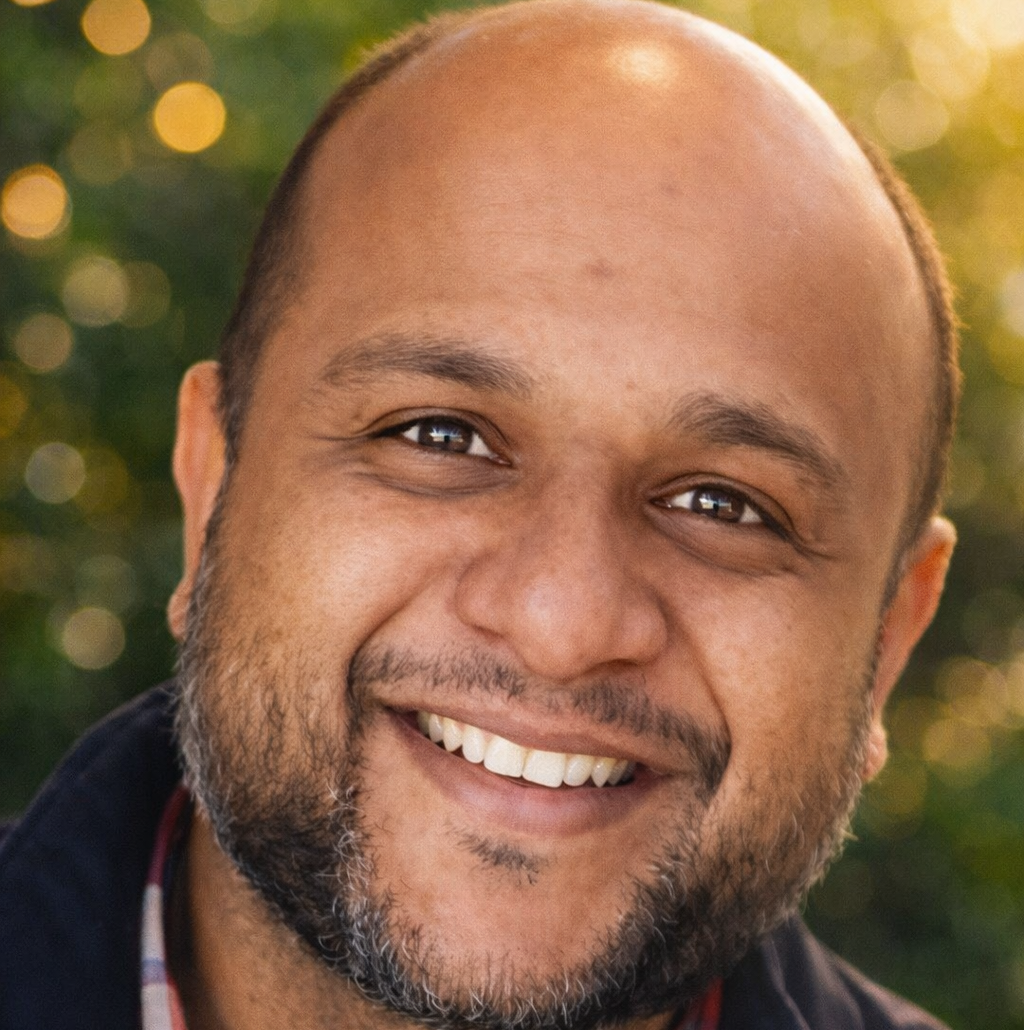 NIJAY GUPTA
 -
 CHERIE HARDER
Thanks to all of you joining us for today’s online conversation with Ajay Gupta on Slow Theology in a Frantic World. We’d like to thank our friends at Brazos Press. It’s always a real pleasure to get to partner with you, and we appreciate your co-hosting this event. And a special welcome to all of you who are joining us. We know there are many of you, hundreds of over a thousand from all over the world, and want to send a special thank you to both our first time guest and to our international guest joining us from at least 18 different countries that we know of. So if you haven’t already done so, drop us a note in the chat box. Let us know where you’re tuning in from. It’s always just fun to see friends from all over the world joining in. And if you are one of those first time attendees or otherwise new to the work of the Trinity For we seek to provide a space to engage the big questions of life in the context of faith, and to offer programs like this online conversation to do so, and ultimately to come to better know the author of the answers. And we hope today’s conversation will be a small taste of that for you today. It seems like we live in a time that is marked by not only a need for speed, but even a greed for speed. We seek and have come to expect fast service, quick answers, hot takes, overnight delivery and instant results which then immediately scale.
It’s a set of expectations that are often valorized in our work as signs of being effective, productive, even visionary, and thus have a tendency to seep into and to form or deform other areas of life as well, leaving us impatient and distracted. Scattered and shallow. Fast and furious. In areas where we’d hoped to be rooted. Resilient and at peace. Our guest today has argued that cultivating a rooted life and an antifragile faith necessarily involves deeply countercultural spiritual practices, including slowing down, pondering mystery, facing pain and prioritizing community, and offers the hope that in practicing what he calls slow theology, the chaos of our time can actually be the compost from which a deeper life in Christ can grow. So, as part of our Lenten conversation series, I’m so delighted to get to welcome our guest today, Doctor Ajay Gupta. Nietzsche is a theologian, author, and scholar who serves as the Julius Mantey Professor of New Testament at Northern Seminary. He’s a senior translator of the Living Bible Translation, the author of over 20 works, including the best selling books Tell Her Story and Strange Religion, as well as numerous biblical commentaries. And along with his friend A.J. Swoboda, he is the coauthor of the superb work Slow Theology, which we’ve invited him to discuss today, as well as the co-host of a podcast by the very same title. So welcome.
Thanks, Cherie. It’s so great to be with you today.
Well, it’s really great to have you here today. So one of the things that I have found just in the course of doing these online conversations is that there’s not only a story in every book, but there’s also a story behind every book. So what led you to write Slow Theology?
Well, thank you, and I’m excited to share about this because it’s definitely a passion of mine. a handful of years ago, my friend A.J. Swoboda, who’s a theologian at Bushnell University in Eugene, Oregon. He wrote a book which I recommend everybody reads called After Doubt How to Question Your Faith Without Losing It. And I think the punchline really behind his book is there are kind of two camps out there that are really popular. One are those who are proud of their confidence in their Christian knowledge, and another group are those who are proud of their cynicism about the Christian faith. And AJ in this book, after Dow wanted to chart a third way. And the third way is humility with not having all the answers, sometimes struggling in our Christian faith while still following at the heels of Jesus. And so I said to AJ, this needs to be more than just a book. It needs to be a whole movement. And this turned into the podcast. It became slow theology. There’s kind of a little bit of a, of a trick behind our podcast. We raised these really complex, challenging Questions about the faith. We talk through them as two academics who love Jesus, and then in the end we say we don’t have the answers, but we know the person to follow Jesus Christ, our Lord and Savior. The reason we wrote the book, Slow Theology, actually comes out of an experience agent I both had. We wrote an article for Christianity Today on Jesus’s own experiences of uncertainty and hesitation in his life.
So think about the Garden of Gethsemane where he says, let this cup pass me by. Think about the cross where he says, My God, my God, why have you forsaken me? And we really wanted to zoom in on that and see how Jesus teaches us how to have faith in the midst of uncertainty. There was a lot of blowback to that article. Some people just found it irreverent. We tried to explain, but what we realized is after we published this article, within 24 hours, people were denouncing us online. Hundreds, perhaps even thousands. And we realized the questions really asked Cherie was people were talking about us, but nobody was talking to us. Nobody said, you know, nobody got into my messages and said, hey, Nijay, we love you, respect you, but we think you’ve erred in this. Let’s have a conversation. Let’s get on Zoom, let’s get on YouTube live. Let’s have a conference. Nobody said that they want to denounce us from afar. And the second thing is they want to do it as fast as possible because there’s a new cycle to, to hook into. And it got us down this road of thinking Cherie of. I grew up in the Roaring 90s, a great age of progress, where we had this great idea that we’re going to sit in front of the TV at dinner time and microwave. Do you remember this microwave? Salisbury steak and mashed potatoes. Do you remember this?
I was there, yes.
Like the everything would be like burning hot and freezing cold at the same time. This mass market quick, lack of nutritious way of doing life, and we’ve decided to carry that forward into the social media age. So we thought to ourselves, you have the slow food movement. We’re going to go back to cooking things naturally. You have the slow church movement. We’re going to slow down in church, get to know each other. We thought we actually need a slow Christianity or a slow theology to make sure we’re putting this thing called our Christian faith together the right way. And in order to do that, we have to take it slow.
Yeah. You know, I’d love to ask you what, how you’re defining theology in that along the lines of what you were just talking about. I noticed in reading your book that you when you describe theology, you often use terms like reflection, meditation, contemplation. And for many of us, we have been sort of raised to think about theology, perhaps in a much more left brain way as analysis, including historical analysis or systemization, of the Bible, kind of like organizing, thinking and hermeneutics into a particular grid. So what is it that you mean by when you talk about theology?
That’s a great question because sometimes I’ll be lecturing at a university or in church and someone will come up to me afterwards. Inevitably, someone will come up to me and say, I love theology, and I, I often roll my eyes, at least privately, to myself, because what they mean is I love arguing about theology, which I personally don’t like to do. what agent I mean by theology is really what the church fathers meant by theology. in the third, fourth, fifth, sixth century, which is a deep study of God in order to have a deeper relationship with God. So for example, there’s a wonderful book by Jen Wilkin and JT called You are Theologian, and they define. They say this, which I find helpful. The goal of theology is knowing and loving God. Well. The Gospel of John says John 17. When Jesus is praying, he says, this is eternal life, that they may know you, the one true God, and Jesus Christ, whom you have sent. There’s a difference between knowing things about God. That’s one form of theology that we sometimes do in the Academy and knowing God. And that’s a completely different thing that is about knowing in a deeper way that’s going to lead to a transformation of life. J.i. Packer, in his famous book, Knowing God Says, what were we made for? To know God? What aim should we set for ourselves in life to know God? What is the eternal life that Jesus gives? Knowledge of God?
You know, let me ask you about that knowledge. One of the things that struck me about your work is when you do talk about a personal knowledge, personal knowledge cannot be gained instantaneously. You know, it’s necessarily, a slow project. And one thing I had not quite thought about in the, in the terms that you use is, you emphasize how God, in the Bible generally reveals his truth over time. Like rarely is there a comprehensive instantaneous revelation. and you actually go so far as to suggest that the desire for such on our part, is misguided and potentially even harmful. And you compared, that desire to, or perhaps like essentially parents kind of prematurely giving the birds and the bees talk to their kids, you know, like, yeah, yeah, too much information too soon before they’re ready for it. So why do you consider, such the, you know, basically the unveiling of God to necessarily and not just, you know, be slow, even protracted, as opposed to the road to Damascus kind of experience.
One of the things I love. Great question. One of the things I love about what the Bible teaches is why we’re here on earth. Why are we here on earth? I remember my Bible study leader in college asking me this, saying, when you’re a Christian, why aren’t you immediately zapped into heaven? And there are a variety of answers. We want to share Jesus with people, but I think one of the key things we learn in Scripture, second Timothy 316 is all Scripture is inspired and useful for teaching, rebuking, correcting, and training in righteousness. The word for training there is paideia, and paideia is what you do with a child to turn them into an adult in their maturity. One of the key reasons that we’re here on earth still, even after we become believers, is we have a journey of growth and maturity. I think about when my kids were little, when they were toddlers, learning to walk. And what do you do? You put the kid on one side of the room, and then you go the other side of the room and you say, come to me. Now, if I’m in that kid’s brain, I’m thinking, you’re the big person. You come to me. You can walk better. Like you know how to walk. You come to me. And that’s often what we do with God. Oh, God. I’m struggling. I’m suffering. I can’t find you. I can’t see you. Why won’t you come to me? And what we don’t realize is God is actually on the other side of the room, cheering us on, saying, hey, I’m going to need you to take those dangerous and difficult and painful steps of learning how to walk.
One of the things we talk about in the book is a theological concept called Deus Absconditus, which means the God who loves to hide. Why does God love to hide? Not because God doesn’t want to be found. Sometimes I hide from my kids because I want to be bothered. You know, they’re teenagers now. but God hides because he wants to be found. Jeremiah says, you will seek me and find me if you seek me with all your heart. So we have these really funny scenes. I’ll just mention one of them, The Road to Emmaus. Jesus appears to these disciples after his death and resurrection. They think he’s gone. They think he died and it’s all over and he appears in disguise. I kind of think like a fake mustache and like a trench coat. Maybe, you know, googly eye glasses. And he’s like, what’s going on? And Cherie, the whole question I have is why does God, why does Jesus, go through this charade and ask these questions? He knows the answers to what are you guys talking about? What happened? Why is it going this long journey? There’s a journey that we have to take of striving after God, not because God is a cosmic killjoy, but because we have growth that needs to take place. And that happens slowly.
Yeah. You know, somewhat related to, um. To the hidden God is the idea of the mysterious God. And one of the practices that you recommended is to essentially kind of ponder mysteries, you know, to take the time to do it. And for many of us, particularly in, you know, kind of just the ecology that we grew up in, pondering mysteries is not something that we gravitate to. We normally gravitate towards, you know, fairly quick and comprehensive resolution. so I’d love to hear you talk a little bit about how pondering mystery and contemplation form us and how it forms us differently than seeking resolution and answers.
Yeah. Well, one of the reasons I love studying the Bible is just how beautifully rich and diverse the whole Bible is. The Bible is not written as a textbook on theology. It’s not even written as a continuous story or narrative. It has poetry. It has lament. It has historical narratives. It has gospels. It has letters. It has apocalypses. It has prophecies. If I were writing the Bible, if I would have been God’s consultant. Thank goodness I’m not. I would have been like, let’s make it like 30 pages. Let’s make it as simple and easy as possible. The Bible is not easy to read. There are parts of it that are clear and easy, but a lot of it requires study, requires reflection. Why? Why does it like that? Because there is value in that richness. But we have to work towards it. One thing that AJ and I point out in our book is two and maybe three books of the Bible Will have no ending, no resolution ending. So look at the gospel of Mark. The gospel of Mark has actually three different endings depending on the ancient Greek manuscripts you look at. There’s the long ending, the sort of long ending, and the ultra short ending. Most scholars think the ultra short ending is the original ending, and if that is the original ending, then Jesus dies. The women go visit the tomb. These angels kind of chew them out a little bit and tell them what happened. And then they’re afraid. And they told no one. Why would the gospel of Mark end that way? The book of acts, the apostle Paul, is the hero from acts nine on going, doing miracles, traveling all over the place.
How’s the book end? He’s in prison. The book of Jonah, one of my favorites. Jonah does not want to go to Nineveh. He does not want to preach to the wicked Ninevites, the idolaters. And so he pouts under a a plant, a big plant. And God says, why shouldn’t I care about these people? And we don’t have resolution. We don’t know how it ends. And, and honestly, Cherie, that bothers me because I love a happy ending. I love a nice wrap up to a story, but I think it is. Part of the reason these happen is we have to live with unknowns. We have to live with tensions because that’s the way we live our daily lives in Christ. You may have on an airplane a conversation with somebody about faith and have no idea what happens after that. you know, someone may have passed away and you don’t know where they’re at with their faith. We live with these mysteries, and I think that’s good for us. I think that’s good for us. More and more in my life, when people ask me really big theological questions that I can’t answer, instead of making up an answer, which I kind of used to do in terms of like, well, I think this and that, you know, I just say, I think that’s above my pay grade. That’s above my clearance level. They’re just stuff. I think it’s okay not knowing. We know the stuff that matters. And we need to learn how to be okay. Not knowing the stuff that we’ll never know.
You know, it’s interesting you say that because of course we we have to live not only with, with mysteries, with, the unresolved, but we all also have to live with pain and we have to live with suffering. Yeah. And, you know, you mentioned poetry a minute or two ago. And, one of the things that you point out in the book, which I thought was such an interesting point, is that around a third of the Bible is written in poetic form. Mhm. And one thing just poetry as a genre requires us to do is to slow down. You know, you can’t really speed read or skim your way through poetry if you’re going to, you know, have any kind of, of understanding out of it. And, you know, it’s also interesting that whether it’s job or Lamentations, many of the books of the Bible that kind of deal the most with pain and suffering are the ones that are written, in poetic form. what do you make of the fact that, essentially the biblical experience of loss, pain and suffering is largely narrated through a form that requires us to slow down? Yeah. when you know of all the things that we endure, you know, usually pain and suffering is the stuff we really love to, to speed through.
Man. Cherie. That is a word. I appreciate you saying that because one of the reasons I love the Bible so much is because it’s gritty and real. there’s so much in the Bible when Dietrich Bonhoeffer, famous Christian theologian, German Christian theologian of the early mid 20th century. He landed in prison for his opposition to the Nazi leadership. and he actually says in some of his private letters that we can now read that he stopped reading the New Testament because it was too happy. And he just read the Old Testament because it was more gritty and really reflected kind of the darker side of life that he was experiencing. I think some of that is also in the New Testament, but, in agreement with Bonhoeffer.
There’s a lot of martyrdom in the New Testament.
There is, there is a lot of martyrdom, but, one of the reasons I think people have found the Bible a lifeline is because it speaks to the darkest sides of human experience. I’ve been studying about, a psychologist from that Nazi period, who was in Auschwitz. His name is Viktor Frankl, and he wrote a book called Man’s Search for meaning. And I want to tell you a little about what I discovered because it’s really fascinating. so he was in Auschwitz. and he had studied, psychology, obviously, and he argued, you know, he survived and he argued the greatest human craving is actually not pleasure or leisure, as Freud said. He said, it’s not power, but rather it’s meaning that our messy, difficult, up and down complex lives have meaning. And he talked to so many people in Auschwitz, he was part of a team that would immediately go within Auschwitz. He was a prisoner to new, new people, new inmates in Auschwitz, prisoners and give them a pep talk to prevent them from committing suicide. And, people would regularly say to him, my life won’t have meaning unless I survive. And he would respond in a tender, loving way. If your life can’t find meeting here in Auschwitz. It won’t have meaning out there. I think that’s really powerful because I think that’s what the Bible is doing in these poetic sections that you’re talking about. Nancy Ortberg, I remember reading one of her works and she said, there are more lament psalms than there are praise psalms. There are more lament Psalms than praise Psalms. That really struck me because when I think of the Psalms, I think, you know, the trees clapping their hands, you know, that sort of thing. But to realize that that’s there is really powerful.
And one thing that, I’m really concerned about is how ill equipped evangelical churches are. I’m part of the evangelical wider family, how ill equipped evangelical churches are to helping people process their suffering in church through lament. There was a study done by Christianity Today of immigrant pastors coming to the United States from various countries, Central America, South America, Africa, Asia and there was a common thread in their observations about American evangelicalism. The common thread was how often we talk about fun in church. I hope you had fun at church today. Come to this event. It’s going to be fun. Come to bunco night. It’s going to be fun. come to this, you know, church clean up party. We’re going to have some fun. And the pastor said, we want people to know joy to the Lord. But church isn’t entertainment. And if we turn church into entertainment, there’s no place, no place for stewarding people’s suffering and lament the way the Bible does. The way the Bible actually gives us a place. One thing that AJ and I realized in sort of the social media age is when you have a bad day, where do you go? You go to Instagram, you go to threads, you go to Facebook, and it feels good to complain about something. I do it sometimes, whereas the biblical playbook is don’t waste your anger in the wrong places. God actually wants you to bring it to him. God gives us a place for that. In Scripture, the lament tradition actually validates our ability to take our anger and our frustration directly to God. He actually wants to hear those things from us. We have to fight fairly with God, but some of us don’t fight at all with God.
You know, we’re talking about slowness. And of course, one of the things that slows us down the most in life is other people. and, you, you talk about this a lot and one of the things you say is that you believe that, theology believing together must be a communal act. Mhm. And so I wanted to ask you, I mean, we so often think about our faith as personalized. yeah, it’s me and Jesus and, you know, and kind of like the primacy being our, our individual soul. So I, I wanted to ask you, why must we do theology with other people? And then somewhat related to that, what is the difference between what you call communal theology? Mhm. And what we often see, especially in the online world, which might be called a more tribal one.
Yeah. Great questions, great questions. I used to teach at an undergraduate and we would, we’d have a survey for freshman students at a Christian school. We have a survey for freshman students. We’d ask them kind of where they’re at in their faith journey and we’d say, I’m a Christian or I’m Jewish or Muslim or whatever, atheist, agnostic. And, there was an other box you could write in and to our shock, A large number of students would check this other box and it would say non-practicing Christian. So much so we had to actually create a field. We had to create a new field called Non-Practicing Christian, which according to the Bible, isn’t really a category because either you’re a Christian or you’re not. There’s not the sort of like, you know, when we when my wife and I travel, we put our mail on hold, you know, you can’t put your Christianity on hold. That’s what these people want to say, you know, that that that somehow you can sort of put. And what we’re seeing, today are these Christians who say, I love Jesus or I like Jesus. I don’t mind the Bible, but I don’t go to church and I don’t care to go to church. There are these kind of lone Ranger Christians. And the Bible actually talks a lot about this. The Apostle Paul, using this body metaphor, says, hey, if we’re going to be this one body of Christ.
We need the arm to pick up things. We need the leg to walk. We need the eye to see. We need the ear to hear. So we can’t have these people going out there on their own. Our faith is stronger together. Ecclesiastes four says, though 1st May be overpowered, two can defend themselves, and a chord of three strands is not quickly broken. I often get asked what my favorite part of the Slow Theology book is. So I’m going to tell you Cherie because I get really excited about this. My wife is really into science and we end up going to these things called science pubs, where you get beer and, and then you listen to a science lecture. So we were listening to a lecture about forest science. And I was really fascinated by this. Obviously, we’ve known about forests since the beginning of time, but only more recently have we understand what goes on under the ground in a forest. There is a type of fungus called mycoardial fungi, and it is this long fibrous fungi that connects trees to one another in the forest. There are two really fascinating things about this fungi. This is going somewhere, I promise. There’s two fascinating things about this fungi. Number one is the fungi networks. These trees. It’s called the wood wide web.
It networks these trees. So that number one they can share resources. And number two, they can actually communicate with one another. So for example, there was a pestilence that was attacking one tree. And that tree sent a warning signal to a nearby tree. It was a fir tree sending a warning signal to a, a ponderosa pine. And it gave that signal early enough. The ponderosa pine could create a defense mechanism against the oncoming pestilence. There was a study done about a 2018 heat wave in Europe, and there was a study done of how forests and trees survived and what they realized. Cherie was networked, trees survived the heat wave, and underworked trees didn’t. I cannot think of a better metaphor for Christian lives today. We are stronger together. Why? We have different minds, different giftings. And so we can say, hey, I can throw water into the network. I can throw nitrogen into the network. Hey, I need this right now. Who can give this to me? What we need to do is be vulnerable, open up, share our lives with one another, and take that difficult step of just saying, can we actually share with one another, share resources, share prayer. help each other out. and, and our faith can be resilient in this frantic world that we live in, if we’re willing to do it together the way Jesus taught us.
Yeah. You know, in reading your book, I recently had a young niece visit and it was fascinating to talk with her just about, you know, she’s a member of Generation Alpha. Just some of the, the assumptions, you know, of her, her peer group and, you know, was thinking about her, you know, and other nieces in reading your book and that, you know, so many young people have essentially, they have never known a world that wasn’t oriented towards the, the instantaneous, as well as the just overwhelming, the deeply distracted and, and the like, you know, and in reading slow theology, I guess one question I had for you is how do, how can young people’s minds be formed for a slow theology when essentially they’ve never even had access to a slow. Ecology. they have not seen or experienced what it means, or what it’s like, you know, to live without, without the need for speed. how, how do you kind of form the, imagine a form, the character of a young people much where an imagination for it when they’ve, they’ve never seen it or experienced it.
That’s a great question. I have three teenagers. So I think about this a lot. a few things come to mind. one is, read long books. my kids, two, two out of three of my kids especially are readers. They love reading print books. and so I love pestering them at 1030, 11:00 at night saying, hey, turn off your light. I love peeking in and they’re reading like a 700 page book.
Well done dad.
Yeah, it’s a relief. because our attention spans are geared towards, hey, ChatGPT, what do you think or whatever. To read long form, books I think is huge. so getting back into, hey, if I struggle with a 200 page book, I’m going to read a 250 page book, then a 500 page book. Then, you know, the second thing I’d say is spend time in multi-generational settings. Because when you’re working with that environment, you got to do things at a different pace. Call your grandparents, spend some time with them. multi-generational is helpful. You know, I think this may be implied, but I’ll just say it, really, really pay attention to and limit your, your social media time. one thing I’m trying to do and it’s really tough when you’re in an airport or waiting room or a parking lot, but one thing I try to do is what I call the two window challenge, meaning you check social media during a particular window in the morning, let’s say 7 to 730, and you check social media at night, let’s say between 8 and 830, and then not at all in between. And it’s sort of like letting you know, having your cake and eating it too.
Okay, I’m still going to use social media. I’m not going to swear it off because I know these people and you know, other parts of the country I want to connect with, or I’m stuck at home for whatever reason. but you’re not beholden to it. I get concerned, when I’m in various places, I look around, everybody’s on their phone and, you know, we’re going to see how unhealthy it is over time and how important it is. We just are present to one another. so I think those things are really important. I encourage people and this happened after I watched the documentary Social Dilemma. I encourage people to take social media off your phone and definitely turn the notifications off. I did that a long time ago. I do have a little bit of social media on my phone because of posting pictures and things, but, but take the notifications off so that you’re not a slave to your phone. but I think we have to have a multi-point strategy to get at this issue. Social media can be good. We just can’t let it take over our lives.
You know, somewhat related to that, and I should say we’re going to go to questions from our audience in just a second. But before doing so, one of the things you note in your book is that there is an effect that you called essentially cognitive carryover. the tempo at which we engage in one activity tends to bleed into other activities that we do. You know, and for many of us, we’re in jobs or in other circumstances where one has to produce quickly, you know, one has to be up on it. There’s a certain, there is a certain tempo, that is required. you know, and, and transitioning from, you know, a context that may take a bunch of our waking hours into something that is, that is oriented towards pondering mystery and being slowed down, you know, in community with others and thinking slowly and embracing silence and stillness, can be very hard to do. so what I mean, I’d be curious just about how you think about, reducing that or containing that cognitive carryover, where, those people who are, you know, in context where they have to move quickly, can move from that to the slower, deeper, spiritual practices that encourage the, the, the, the antifragility of, of faith.
Yeah. A lot of is the way we break up our time. You know, often it’s like we see an opening in our schedule and we think I could put a meeting there, I can put a Zoom meeting there, I can put a phone call there. And one thing I’ve learned from AJ, my co-writer, is whenever he has an hour meeting, he actually books it in his schedule for like an hour and ten minutes or an hour and 15 minutes so that it’s an automatic 10% buffer, between meetings. And what that does is it just allows you to kind of take a second and slow down, let your heart rate come down. maybe say a prayer under your breath. you know, have a drink of water and, and, and just pause. I have a tendency, you know, if this means anything to anybody. I’m an Enneagram three, so I have a tendency to just put everything in my schedule. Just more stuff the better, more meetings, more content. And over time, you know, it leads to burnout. It leads to dissatisfaction. I’m trying to make more space for those margins. for many years, I taught at George Fox University, which is a Quaker founded school. And one thing I learned from the Quakers is the power of silence. So I would start class. I would teach an undergraduate class. Occasionally I taught more at the seminary and I would start class. These are with 18, 19, 20 year olds, with two minutes of silence. This was three days a week. And students would tell me at the end of the term. that was for many of them, the only two minutes of silence. They would have their entire day, sometimes their entire week. And so you think about the frenetic pace we live at just having two minutes.
It actually feels like an eternity. Two minutes of silence before God feels like an eternity if you live at a breakneck speed. And so I’ve, you know, there are different personalities out there. My personality is to overcommit. I’ve learned the power of saying no, saying no, so I can have a Sabbath saying no, so I can enjoy my coffee in quiet time during breakfast time, trying to have more time of stillness. there’s an old saying. You may have heard this Cherie that when, if your pastor goes on sabbatical. they might not come back. The reason why people say that. I know I’m scaring you. Churches out there. Now, the reason that this happens is because pastors run at breakneck speed, and when they finally get a sabbatical and they’re able, then they realize, oh, geez, there’s all this stuff. I gotta deal with my life. I might need a change of career. I might need a whatever we need to build those in. So they, they don’t just burst on us in a sabbatical. We need to build those in daily. We need to have a little daily Sabbath. I’m saying this to myself. I’m reminding myself of this. We need to have a weekly Sabbath. We need to have a monthly Sabbath because we were designed for rest. One thing AJ points out in our book is God could have made the world by just clicking, you know, snapping his fingers. He could have. He could do anything. So why did it take him six long days? I think AJ and I think he did it to model patient, slow work for us. And then the seventh day resting and enjoying our labors.
Well, that is a great note to turn to questions from our viewers, and I see there’s quite a few in. And if you are new to these programs, you can ask a question in the Q&A feature as well as like questions from other people who have posted them. So our first question comes from Bill Singh. And Bill asks, what if any, changes in your theology have come from your slower approach? What changes in the modern church can come if it slows down its theological approach? And will it deal more effectively with the Kingdom of God on earth and the new creation that Jesus launched?
Oh wow. Great question. I could pick so many things, but I’ll just say one thing. I think when I was younger and kind of more ambitious, I think I saw Pleasing God as checking a lot of boxes. You know I’m doing these things for you, God, I’m evangelizing and I’m, you know, doing pastoral ministry work and I’m studying and I’m doing all these things, you know, the way we might try to please our parents. and as I’ve slowed down and, and grown, it’s less about checking boxes and accomplishing things and more of just being there, for the people in our lives, better understanding our own personal health, whether it be physical, social, spiritual, emotional, that sort of thing, you know, maybe it’s a generational thing or, sorry, a stage in life thing. When you’re younger, you want all the answers, right? And as I’ve slowed down, AJ and I both realize in our, you know, we both teach Bible and theology, we’re saying, I don’t know a lot more than we used to. It’s not that we’ve lost answers, it’s that we’ve gained more mystery. We’ve gained. We’ve seen how much bigger God’s universe is, and we’re spending more time in all of it and less time trying to master it. Maybe.
So these are two somewhat related questions that I’m actually going to group together from anonymous attendees. one of them is one of the main criticisms of the modern church from secular, humanist and cultural Christians and others is that it’s intellectually shallow. Do you agree with this criticism and can slow theology help to rectify this? And somewhat similarly, there’s another question says is speed often a mask for rigorous for a lack of rigorous thought?
Okay, we’ll do the second one first. Absolutely. I mean, how many of us have had to make a rushed decision on something, in our lives because the deadline is pushing us and we regret it later. We’re like, I should have taken more time. You know, Billy Graham famously said at the end of his life, I should have spoke less and studied more. I mean, Billy Graham and none of us would look back and say, oh, he didn’t do enough for the kingdom of God like Billy Graham did a lot for the kingdom of God. But he said he wished he would have spent more time with Jesus and less time talking about Jesus. So I do think speed is a problem. We have to make decisions. There’s this concept called second naivete. So first naivete is I’m just going to go on the internet and talk about stuff, even though I have no idea what I’m talking about. Second, I have a day is I there are things I don’t know. I’m going to study and learn the complexity. And some people get stuck there and they say, I can’t make a decision, but most of the time we have to make a decision. So second naivete is now having learned all the views, all the sides, all the evidence, I have to push forward and I have to make a choice. So I think that I think that’s important. So speed isn’t always bad, you know, if you have to make a rushed decision on a medical issue or whatever, you got to do it. But I do think often we do rush through it.
Okay. The other one, lack of intellectual rigor. yes and no. Yes and no. I think there are there have always Christianity has always had a deep intellectual vein. Whether we go back to Augustine, we go to Aquinas, we go to the reformers, and, and some of the most brilliant minds of the 18th and 19th and 20th century, whether it’s science, whether it’s philosophy, they’re Christians. the apologetics movement of the 20th century, 21st century, has brought us great intellectuals. Someone like Tim Keller. Brilliant, right? Reason for God. but is there a lot of Wild West theology out there? Yes, there’s a lot of stuff out there. And there’s this tension, I think, that we have to just maintain and try to wrangle between. Our intellectual curiosity and our experiences. Some people want to say, oh, it’s just about having the spirit, letting the spirit lead. That’s true. Other people want to say, we have to really study these things regardless. That’s true too. The question is, where? Where do we find, where do we find the balance in that? And how do we make sure we’re using our head? But it doesn’t just stay in the head. For those of you that feel like out there. Oh no. Christianity has lost its intellectual rigor. go to publishing websites like Brazos Press. IVP, academic. Zondervan academic. and you’re, you’re going to see, really brilliant stuff out there. So I just encourage people expand your horizons. There’s so many great Trinity Forum follow Trinity Forum.
Speaker 4: They can come to Trinity Forum. Welcome you up. Yeah.
So a question from Lori Tishler. Lori asked, what or how much of these issues are Americans particularly vulnerable to? E.g. I see in other countries friendly folks talking and laughing in cafes and pubs and they walk everywhere, often in nature. What do we need to learn from them?
That is a great, great question. I will say two things. one is I think I think doubt, issues of doubt and issues of disenchantment. they’re part of the human experience. So I think they’re everywhere. And I’ve seen them everywhere. And I get emails from people everywhere. However, I do think some of what you’re saying is right. the US and kind of the modern West influences the rest of the world in terms of social media, in terms of kind of pundits on, on, YouTube or whatever. when I, when I’ve gone on mission trips and I’ve visited other countries and visited churches in other countries, I do think there is a kind of simplicity of faith and, and, and a connection to ancient Christianity that is really beautiful. and so some of this really is, I think behind this question is some cultural values. I think that there is definitely some of that. And I mentioned earlier the importance of intergenerational interconnectivity in worship. I think other countries like India, where my parents are from, do it better in many ways than standard American evangelical churches do it. so I think it’s a little bit of a both and. Can we go to other cultures and learn a slower way of life? Definitely. I encourage people to do that.
So a question from an anonymous attendee about your point about reading long books. They write, it’s hard not to be alarmed by the statistics on the decline of reading, which has already seemed to foster a decline in our ability to think deeply. I can’t see how we do slow theology if we’re fundamentally superficial. What can we do, both as congregations and the church at large to encourage reading?
Yeah, there are a lot of churches that do something called big reads. So big reads is hey, we’re going to do a series on the Gospel of Matthew. So we’re going to read this longer Bible study or, you know, like a more kind of academic type of commentary or book that’s going to give us some depth. Not 100% church going to do that, but you might get 20%, 30% that are going to do that. so I think bringing back book clubs in churches is really healthy and actually trying to meet in person, that’s not always possible. I totally get that. Be able to meet in person for a book study of, I’m gonna just throw out a book. Slow theology could be really cool. there’s so many great books out there. That’s one. The other is, and this is my day job, study the whole Bible together in church. And so I love it when a church puts on like a introduction to the Old Testament or introduction to the New Testament, let’s say ten weeks, ten weeks, Sunday school, ten weeks on a Tuesday night, whatever it is, just read through big chunks of the Bible. One of the reasons I went to seminary Cherie is that I was involved in parachurch organizations in college, like Campus Crusade, The Navigators, which I love, but often they were talking about individual verses of the Bible and kind of constructing a theology of evangelism or mission discipleship. And I thought, why are these other books? They’re like for second Chronicles and Habakkuk like, what are these books about? What do they do? So often our reading of the Bible is in these little bits and pieces. So being able to spend time in these really long books like Jeremiah or Luke acts Luke and acts together. Do that in the church. Go. Go to your pastor at church and say, hey, can we do like a like a deep dive study of the Old Testament over the next six months? Can we, can we plan that for church? And most pastors I think would get really excited if that came from someone in the church.
Speaker 5: I can imagine.
So we have another anonymous attendee who asked, how can slow theology help the modern church deal more effectively with current hot button issues, from political polarization to culture wars to immigration to war and peace? What changes in the church’s approach do you recommend as a result of your slow theology?
Yes. I talk a little bit about in Slow Theology how social media has changed over time. Do you remember when social media first started and you were so excited to make a friend on the other side of the world? It was this cool thing. I feel like when they called it friends, it was really friends because you’re like pen pals. And over time it shifted from friends to followers. And that shift follows how social media works, where now you’re not really having conversations. You’re either just transmitting information, promoting something, or arguing. I have a friend, who told me once he kind of does a lot of, you know, podcasting and things. He told me, I don’t argue with people on the internet because I don’t know if they really exist. And what he means by that is there’s so many bots out there. Yes, you could spend 30 minutes arguing with someone who turns out to be not real. And so he said, I don’t argue with somebody or I don’t engage unless I’ve met them in person or know for sure that they exist. So are we going to spend our precious time arguing with people that might not even exist? So I tell people, don’t argue on the internet. It. I mean, there’s that old cliche who’s changed their mind after being browbeaten on the internet by a group of thugs trying to get them to change their mind about X, Y, and Z.
So what I encourage is how whether online or more importantly in person, can we achieve a shared understanding, a sympathetic ear, and finding a way to make peace or move forward together? It sounds so impossible, but it starts with me being the first to be gracious. Me being the first person to compliment a book that I don’t want 100% agree with, but I agree with some of it. And I like that it’s me giving credit where credit is due, even though I don’t agree wholly with whatever. we have to return to our humanity in that. But I think a lot of it is the importance of being together. I like to say to my students, it’s hard to hate someone that you know. And the opposite is true as well. It’s easy. It’s all too easy to hate somebody you don’t know. And so how can we how can we bring more illumination, and productivity to conversations by actually having conversations saying, hey, let’s jump on Zoom. You want to have a conversation, let’s talk about this. You gotta guard your time. But I think in person, opportunities to have discussions across difference, having good faith that the other person is trying to figure it out and follow Jesus where that’s possible. I think that could be a really beautiful thing.
Speaker 5: Yeah.
And so we’ll take one, one last question. which is what, how do you allocate time for your daily Sabbath? Do you have practices that help ground you as you spend slow time with the Lord? Hmm.
Good question, good question. I have a spiritual director. So I’m like, did that question come from my spiritual director? I, I struggle with this, so I’m going to be the first to admit that I struggle with this because again, I’m kind of a go getter. I wake up really early sometimes before 6:00. and, and I like to just have an hour by myself before the kids wake up. that’s my me time. That’s my special time. I, I make a cup of coffee. I have an espresso machine at home that I’ve had for like six years. So I make myself a little, a little latte and I sit down and read and pray, spend time with Jesus. Just enjoy. Quiet, quiet. Morning. Nothing’s going on. I don’t plan anything for that time. So really starting my day like that is really, really important. in the car, I, I’m in the car a lot. I listen to worship music and that is a real rejuvenating time for me. I don’t do phone calls in the car. I don’t like the phone in general, but I don’t do phone calls in the car. I don’t listen to podcasts because my mind tends to wander. so I would say those.
Yes, yes. Oh, of course. But I’m just saying in the car. In the car, I don’t listen to podcasts. I often listen to podcasts when I’m exercising because I’m trying to distract myself from how miserable I am. But I would say, one thing that we’ve learned about having that time is it doesn’t have to be long for it to be effective. what, what you’re looking for is intentionality and what social, what sociologists recommend is a little bit of time in the morning and a little bit of time at the end of the day, that’s just time for you to kind of spoil yourself with reading your Bible, praying, listening to music, looking at a beautiful painting, you know, a Christian painting or whatever. a little bit in the morning, a little bit of night can do you a lot of good.
Well, thanks, Nijay. This has been fantastic. And in just a moment I’m going to give you the last word. But before doing that, a few things just to share with all of you who are watching. First, immediately after we conclude, we will be sending around an online feedback form. We would love for you to fill this out. We always read these. We try to incorporate your suggestions to make this program ever more valuable. And as a small token of our appreciation for the time and effort that you spend in doing so, we will send you a free code for a free Trinity Forum reading download of your choice. There’s actually several that we would suggest that are direct, directly relate to what we just talked about today. just a few minutes ago, Nijay had referenced Viktor Frankl and a man’s search for meaning that is available as a Trinity Forum reading, as well as writings by Dietrich Bonhoeffer. Augustine’s confessions Why God Became Man by Anselm, Wrestling with God by Simone Bay and many others that pertain to our conversation today. So we hope that you’ll do that. And we really thank you for, the, the honor of your, of your time as well as your feedback. In addition, we’ll be sending around an email tomorrow with a lightly edited video link of today’s online conversation, along with additional readings and resources that will help you go more deeply into this topic. And so we encourage you to be alert for that and to share this online conversation with friends and start a discussion. In addition, we would love to welcome all of you who are watching to join the Trinity Forum Society, which is the community of people who help advance Trinity Forum mission of cultivating, curating and disseminating the best of Christian thought in addition to being part of that community and part of that mission, there’s many benefits of being part of the Trinity Forum society as well, including a subscription to our quarterly readings, a subscription to our daily What we’re reading list of curated reading recommendations, and as a special incentive.
I also wanted to let you know just about a few different events coming up. Right now, we’re in the midst of a Lenten series, but on Friday, April 3rd, we will be hosting Mia Chung with a very special online conversation where Mia is a concert pianist and she will be playing and explaining aspects of Handel’s Messiah, so you can register for that now. There should be a link in the chat feature, and stay tuned for more information on online conversations in the next couple of months. Featuring Amy or Ewan, Makoto Fujimura, Tish Harrison Warren, and many others. As we wrap up, I’d also just like to thank all my colleagues at the Trinity Forum who help make programs like this possible. So a big thanks and shout out to Tom Walsh, Campbell Vogel, Mary Anne Morris, Macrae Hanke and Francis Owen, all of whom helped put the mission of the Trinity Forum into action. And finally, as we wrap up, I promise you the last word and the last word is yours.
Thank you. The last word comes from J.I. Packer, and this is actually at the very beginning of our book. Packer writes “Live slowly enough to think deeply about God.”