Living a Non-Anxious Life, with Alan Fadling
We are a culture well acquainted with anxiety. Recent years have shown a significant rise in anxiety disorders, particularly among Generation Z and Millenials, but affecting all of us. In the Sermon on the Mount, Jesus urges his listeners not to be anxious (Matt. 6:25-34). How can we apply that today, learning to trust in God’s provision?
Author Alan Fadling describes Jesus as “the ultimate non-anxious presence.” Drawing on his book A Non-Anxious Life: Experiencing the Peace of God’s Presence, Alan helps us construct a posture from which we can rest more deeply, live more fully, and lead better. He offers insights on how to fix our minds on grace and eternity, loosening our grip and operating from a sure foundation.
Join us for an Online Conversation with Alan Fadling as we explore a new posture to release anxiety and take up authentic love.
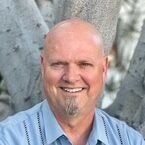
Alan Fadling (M. Div., Fuller Theological Seminary) is President and Founder of Unhurried Living, Inc. in Mission Viejo, CA, inspiring people to rest deeper, live fuller and lead better. He speaks and consults internationally, as well as nationally with organizations such as Saddleback Church, InterVarsity Christian Fellowship, Cru, Halftime Institute, Apprentice Institute and Open Doors International. Along with A Non-Anxious Life: Experiencing the Peace of God’s Presence, he is the award-winning author of An Unhurried Life, honored with a Christianity Today Award of Merit in spirituality, An Unhurried Leader, and What Does Your Soul Love? Eight Questions That Reveal God’s Work in You. He is a trained spiritual director. He lives in Mission Viejo, California with his wife, Gem, and their family.
Special thanks to our sponsors, John and Wende Kotouc, and co-host InterVarsity Press for support of this event!

Speakers
-
 ALAN FADLING
 -
 CHERIE HARDER
Welcome to all of you joining us for today’s online conversation with Alan on Living the Non-anxious life. I’d also like to add my own thanks to our sponsors, John and Wendy, for your generous support for today’s program, as well as to thank our co-host, InterVarsity press. We so appreciate all that you do, and we’re delighted that so many of you have joined the conversation today, and just really appreciate the honor of your time and attention. I’d love to give a special welcome to our nearly 101st time registrants, as well as our international guest joining us from all over the world from at least 20 different countries that we know of. So if you haven’t already done so, do drop us a note in the chat box and let us know where you’re tuning in from. We just really love to see people joining from all the miles and all the time zones across the world. And if you are one of those first time attendees or otherwise new to the work of the Trinity Forum, we seek to provide a space to engage the big questions of life in the context of faith and ultimately come to better know the author of the answers. And we hope today’s conversation will be a small taste of that for you today. By any measure, we are living in an anxious age today.
Anxiety is the most widespread mental illness in the US, and perhaps even around the world. And it is steadily increasing, particularly among teenagers and young adults. Some studies have reported that more than half of all college students have claimed that they face, quote, overwhelming anxiety, and other reports indicate that nearly a third of all Americans will struggle with anxiety at some point in their life, while 1 in 5 of us is doing so currently. For those shouldering the burden of anxiety, everyday life can seem difficult and peace elusive. But our guest today will argue that there are ways to practice the presence of Christ, whom he calls the ultimate non-anxious presence, and helps provide signposts to a way of living marked by rest, gratitude and authentic love. So I am so delighted to get to welcome our guest today, Alan. Alan is an Anglican priest, a spiritual director, and the president and founder of Unhurried Living Incorporated, which aims to inspire people to rest deeper, live fuller and lead better. He’s also the also the author of several works, including the Christianity Today award winning book An Unhurried Life, The Unhurried Leader What Does Your Soul Love? And his latest work, A Non-anxious life, which we’ve invited him here today to discuss. Alan, welcome.
Thank you. It’s a great treat to be with you.
Well, it’s really good to have you here. So one of the things that I have found just in the course of doing these online conversations is that there’s not only a story in the book, but behind every book there is also a story. And at the very beginning of your work, you write, you wrote that writing this book has been a necessary personal quest. And so, as we start off, I’d love to hear you talk a little bit about what it was that you were searching or questing for and what led you to pursue it through writing this book?
Well thank you. So, there’s a few different stories. I’ll say that one of the stories was having written about Hurry and an Unhurried Life. I proposed this book as, something that I was learning as I talked with a lot of leaders, which is to say that anxiety was a primary engine for a lot of people’s anxiety, for a lot of people’s hurry. And so that was sort of the ministry author reason for the book. The personal reason is my entire life I have wrestled with the reality of anxiety. It has paralyzed me. Sometimes it has intimidated me at times, and it has driven me at times in my own life as a pastor and in my work. Most personally. I grew up in a home with a mom who was a child in a midwestern orphanage. And if you grow up from your childhood into your teen years in an orphanage, you learn anxiety. And I’m not blaming mom for mine, but I learned a lot of it from our family system. So it’s been almost like an operating system for me that I’ve had to reassess and decide whether or not I might find a better way forward.
Yeah. You know, obviously anxiety is not new. There’s been anxiety as long as there’s been humans. But it does seem like the prevalence and the pervasiveness of it is, you know, I’m thinking of, say, Jonathan Heit, the social psychologist who basically has sort of done so much research showing that every succeeding generation, is more anxious as well as more depressed than generation before. that there’s never been a generation as anxious as Gen Z. What is going on? Like, why are we, we as a people, increasingly anxious?
Yeah. Well, golly, there’s so many answers to that. I think if I were to maybe use some shorthand. So I think, to use some biblical words, the word hope. I think we’re in a season where hope feels thin and hope and peace are very good friends. Hope and anxiety don’t go so well together, so a hopelessness or despair contributes a great deal to anxiety. I know that personally. Another word I would use is presence. We are living in a time where very few people have a a robust sense that God is with them and that God with them is good. And so I think that sense of so many don’t have an active living sense of the God of peace being present to them. Another word I would use is grace. We live at a time where it feels like everything is scarce. We don’t have enough of anything we feel we need. And scarcity and anxiety, unfortunately, are familiar friends. And then the last word I’d use is love. Anxiety is a feeling like nobody cares for me. I’ve only got myself to depend on, and I’m not sure if I’m completely confident in my ability to do what I need to have done. So those are at least some of the pastoral reasons I notice about why I think anxiety is so high.
Yeah. You mentioned that, hope and peace often go together, and you have written quite a bit about the fact that hurry and anxiety often go together as well, that they are close pals. I’ve read before that one of the best ways to become very quickly emotionally dis-regulated as well as anxious is to be hurried and harried. and you’ve actually called anxiety a bad habit of soul. Hurry. what do you see as the link between hurry and anxiety? And I guess even in addition to that, what then do you say to the many people who are probably listening right now who are probably thinking, well, I’m in a job or I have a set of responsibilities or competing responsibilities where I’m always under deadline and I have a ton of competing responsibilities to manage. How do I how do I think about hurry in that context?
Yes. Well, so the interplay between hurry and anxiety is huge. it goes in both directions. I don’t know if I can just say this causes this or vice versa, but in practical terms, one of the things I always want to clarify is that busy and hurry are not the same thing. Having a full calendar, a full a long to do list is not the same as having a hurried soul. It is possible to be busy and unhurried. In other words, Jesus had days when the crowds just kept coming. But you don’t get a sense that somewhere in the middle of that day, Jesus had a panic attack and didn’t know what to do with himself. Now, I’m not blaming anybody who experiences that. I have experienced that. But what I want to say is there’s a way to move through our days, no matter how full they are, With a more unhurried and peaceful soul. It takes practice, but it is something that we can learn. And so that’s what I often say, especially to leaders that I work with. it may be that you’ll want to prune back what you’re responsible for a bit. Maybe you’re saying too many yeses, or maybe you’re giving too much time to relatively unimportant activities. But regardless of that, you can learn to bring an unhurried soul to a very full day.
Yeah. You know, you mentioned a little bit earlier about how scarcity and perhaps especially around, and when it comes to love, is perhaps one of the drivers to our increase in anxiety. And one of the points you make in your book that I thought was really important, as well as insightful, is you distinguish between the peace of God and, what you called a baptized stoicism. And, you know, stoicism seems to have made, you know, a real, it’s almost faddish. A lot of people are thinking about, you know, stoicism and really, stoicism is largely detachment. whereas, of course, Christ is all about engaged love. So I’d love to hear you talk a little bit more, about the distinctions and how, you know, we can route our care and our love for others and for for situations without lapsing into anxiety.
Yeah. So it is tempting to define peace as or to seek a peace where, life is trouble free or I somehow become detached from the real troubles that surround me. And I don’t think that’s a good description of the peace of God’s kingdom or the peace of God. I think what’s beautiful about the peace of God is that it works right in the middle of the most troubling times. Like if I have to have a trouble free life or a or a trouble free interior, that’s nearly impossible without, I don’t know, closing my door and shutting my ears and turning off all my devices. And now I’m just detached from the world to circle around. Anxiety reminds me what I care about. I worry about things I care about. The problem is that in anxiety, my caring doesn’t have a robust sense that God cares even more. Like my caring, as big as it feels, is contextualized in a much greater high and wide and long and deep is the love of God. When I practice the presence of God’s caring, it puts my caring in perspective. And it does have a way of, helping me see it with less overwhelm. I think that’s been my experience.
Yeah. Yeah. Another thing you mentioned in your book is learning to distinguish between the voice of anxiety in one’s head up from the voice of God. And, I had so many questions about this, which I thought it was just a really interesting point. so I guess we’ll start off with, like, how does one learn to distinguish between, say, the voices of wisdom and prudence if one is in a stressful or even a dangerous situation? and the voice of anxiety.
Yeah. So again, I think for me, one of the great, opportunities when I feel anxious. So one of the things I want to distinguish is I haven’t figured out how to not feel anxious. I haven’t figured out how to not have anxious thoughts or even anxious physical sensations. So I’m not trying to say I found some magical pill that now I just go through life in this Zen state with, you know, never a care in the world. What I have learned is to practice the presence of God right in the middle of feeling profoundly anxious, mentally, emotionally, physically. And so one of the things I say is that when I when my focus lands on my anxiety and I and I let it move me to worry, my worry is almost like practicing the absence of God. I can I imagine a future where God is not robustly present, actively caring, very much involved. I imagine instead a future where it’s just me and this terrible world and all of the hardship that I imagine. You know, I joke in the book that anxiety has often pretended to be a wonderful counselor. the more I look at it, the more it feels like a false prophet. And so I think that idea of practicing God’s presence as I look into the future, rather than letting anxiety paint a much more dire and cataclysmic future, which almost never happens. It turns out.
You talked about anxiety, pain, a dire and cataclysmic future. One thing that you have noted, and I think, there’s others that I’ve spoken to, like Curt Thompson as well, has noted there is actually there is a relationship between anxiety and even conspiracy thinking. and you kind of mentioned it, kind of buying it. There’s a tendency when we are anxious to basically trust the anxious voice and dismiss, any counter-evidence, but, you know, as I was sort of thinking about that, I thought, well, that’s just motivated reasoning. That’s how we function when we want to believe, we have a motive to believe one set of beliefs over the other. There’s a certain impermeability, to contrary data, even when it’s, you know, in the end, patently absurd. But then I thought, well, why, if this is motivated reasoning, why are we motivated to hang on to the anxiety which frustrates us, which hurts our health, hurts our life, which is a false prophet? What’s going on there?
Yeah. Well, I said in the book, you know, that in my life as a leader, I came to the realization, especially as I wrote this book, that I, I really thought of my anxiety as an asset, like I needed it. It drove me. It pushed me to high standards. It kept me moving. I remember a moment in writing the book where I was afraid if I don’t have my anxiety, will I get anything done? Which is goofy. It’s silly to think that way. But the longer I lived with that question, the more I thought, you know, maybe peace and its friends like hope and Joy. Maybe that’s a better engine. Maybe that’s a better source of energy and motivation than my anxiety ever has been. And if anxiety is fuel, it’s fuel that burns dirty. And increasingly, my health and the quality of my relationships and for that matter, the quality of my work begins to seriously suffer. That’s especially true over time. And so I just think that that has been really an important insight for me. I, I have to ask myself, is there a way in which I think I’m benefiting from my anxiety and to almost do a cost benefit analysis on that assumption? Maybe I’m wrong. Maybe it’s hurting more than helping. So I think that’s at least one of the reasons we cling to our anxiety, rather than gladly releasing it for a better alternative.
You know, we’ve been, talking so far exclusively about essentially, like, the voices in our head. you know, that compete. And, one of the things you’ve noted that, you know, listening only to the voices in one heads, it’s very easy to kind of lapse into almost a Gnostic approach, you know, to consider ourselves akin to, what Jamie Smith called, heads on a stick. A brain, you know, not much having to do with the body. And, and you’ve noted there’s a strong tendency between anxiety and that tendency to live in our heads. I’ve also read that vigorous exercise can be almost as effective as medication in, in addressing anxiety. So I’d love to hear you kind of dilate a little bit about, how better understanding our embodiment and perhaps even more so, practicing embodiment, moving, getting out in nature, touching grass and the like can affect our struggles with anxiety.
That’s good. I, you know, grew up managing my life through thinking, and I brought that habit into my adult life. And so. Jamie’s brain on a stick is very familiar territory for me. And so it’s been good for me to realize that Christian spirituality is always embodied. Prayer is always something that involves my body, my voice, my hands that I lift up, my knees that I. I settle down into all of the ways in which this physical body, the gift of it, enables me to encounter God. But it has been very important for me to realize that, engaging the energy, one of my counselors said, Alan, anxiety is just energy. What are you going to do with it? What are you going to do with it? In the end, it’s God given. God makes the energy. Nobody else makes energy. It can be misused, it can be misdirected. And so learning that this anxious energy could be used in the honoring God with my body through holy activity, through exercise. I sometimes I’m as I’m sitting here, I can see my backyard and I have a row of bird feeders. Jesus said, look at the birds in this passage on anxiety. I take that seriously. Sometimes I will go outside and sit in my chair and I’ll just watch them. And for me, it’s a very physical experience. There’s something creative and beautiful, engaging that, as you said, it sort of takes me out of this mental loop I sometimes find myself in and makes me a little more integrated and engaged and embodied.
On a totally different topic. or not a different question, at least. recently I had a friend who realized that, essentially has a, a terminal disease and, knows that his days are numbered and he has he has talked about how that radically shifted his mindset. and the things that used to, used to worry him no longer do, because there’s been such a shift in what he thinks about what he values, what he cares about. It is part anxiety simply trying to avoid our own mortality.
Yeah, I think that’s a really interesting question. So maybe one of the ways I would say it is in the end, anxiety has this constricting effect. It puts me in a tunnel. It gives me very little vision. One of the things I cease to be willing to look at is my inevitable mortality. There’s a beautiful tradition in Christian spirituality of praying that God might give me the gift of a good death. Now, that sounds morbid to an American ear, I think. But the longer I run into that idea in Christian spirituality, the more I see the wisdom of it. It’s not. It’s not morbid. It is real. It is a vision of this little wink of a life that I’ve been given in, in these 50, 60, 40, 80. I don’t know how many years I’ll have. It’s one element of the gift of an eternal life into which I’ve been invited. Thinking about that, I am living an eternal life with this little physical, embodied life that begins. It has been actually very freeing. It puts my life in context. Anxiety keeps making my life smaller and smaller in so many ways, and that’s part of what drives the anxiety, I think, at least for me.
You also suggest some, some practical kind of signpost to living in peace. there also, I’ll note very helpfully, alliterative makes it a little bit easier to remember. I think it was solitude, silence, stillness, sameness, stability, simplicity and Sabbath. So, yeah, Just to kind of dive into some of those. I wanted to ask you about solitude and silence in particular, because, there seems to be a natural tension between entering into solitude and silence. and on the other hand, trying to, be more embodied and not just listen to the ruminations and voices in one’s head. And I’ve noted that you’ve also said that silence is often been more diagnostic, diagnostic than therapeutic for you. So why, why is solitude and silence helpful, particularly if it renders us, if anything, more vulnerable to rumination?
Yeah, I think that’s really a critical question, because if you struggle with anxiety and you decide to be quiet and still, the first thing you’re going to hear in your mind or feel in your body is anxiety. That’s no surprise. That’s what I mean by not therapeutic, but more diagnostic. But the mistake I’ve often made is that if I’m still for ten minutes or 20 minutes or 30 minutes, I’m going to feel the same level of anxiety that whole time. Maybe. But often what I find, and I’ve even seen this sometimes in my own therapeutic experience, like being in counseling. One of the pieces of counsel I was given was when you’re feeling panic, one of the things you may need to do is sit and be still and let it pass, because it may well just be a physical sort of adrenaline that is running your body. And if you don’t stop, if you keep moving and racing in your anxious activity, you’re just going to leave that adrenaline flow on and it just keeps going. So often what happens is I sit, I’m still, I’m quiet. I feel the anxious feelings in my body, my emotions in my thinking. But if I if I lean into it, If I stay put, it only has so much endurance to keep at it. And if I. Quiet even my physical body. There can be this quieting of mind and quieting of emotion that comes. Not always, but frequently. And in terms of maybe then the therapeutic. Practicing that discipline over time has been one of the very important places of recovery for me from my deep seated anxiety.
How long does it take you for the dust to settle?
You know, when I first started practicing it, every time I sat down to be silent, I dreaded it. I just something in me said, oh no, I don’t want to experience this. I’d much rather jump back on my email or jump into another project. busyness. Hurry. Over time, with practice, I can often sit and move to stillness and silence rather quickly because it’s become a physical. I’ve trained my body. I’ve trained my mind. As you said earlier, I’ve learned to notice in my mind. Oh, yes, there is me worrying. This is not unfamiliar. I’ve been doing this my whole life. Now, the message of this anxiety may not be helping me. In fact, most of the time it’s been mistaken. So I can. I don’t have to fight it. I don’t have to wrestle it. I can just let it sort of be over here in the side, or maybe in the back seat instead of behind the steering wheel. And so that quiet stillness, the other S’s that you listed, all of those are sort of disengagements from the frantic engagement with anxiety that tends to sort of remove some of the fuel or some of the power source from. It’s continuing to rev inside of me.
You know, some of the practices that you mentioned have to do not only with, stillness and slowing down, but also a removal of novelty and stimulation. And when I read about that, I my first thought is like, oh, that’s hard. And then I thought, well, okay, why? Why is it so hard? why do we almost I’m projecting here maybe immediately feel like a pushback towards, you know, kind of a cessation of consuming, the new, the flashy, the stimulating, the interesting. why is that so hard for us?
Yeah. Well, you mentioned, maybe before we got on, you know, Jonathan Hite’s work. And recently I overheard something he was saying about the great challenge of short form videos in how those are impacting us. I think they are contributing profoundly to anxiety levels because of how it’s conditioning our physical bodies. So I grew up a little while back. I’m in my 60s. We didn’t have any of these things, and I didn’t have any of these things. These kinds of anxiety levels. I had my own version. back in the 60s and 70s as a kid or as a youth. But we didn’t know. I didn’t know the word boredom. We just never used that word. So I think we overestimate how terrible boredom is. I think boredom can be an incredible gift if you befriend it. I understand it’s not exciting. That’s the point. maybe we need just a little less stimulation, a little less excitement, a little more rootedness, a little more just feeling at home. And so I find that, we’re here in the middle of lent, and one of my disciplines is a pretty significant pushback against some of my media habits. So I’m really saying a big no to some of my usual ways of engaging media. But we’re only a week into that, and I’m feeling the change. I’m feeling a quieting. I’m feeling a a growth of my attention capacity. I’m feeling what I would say, a little more peace. That little no is enabling me to say a heartier yes to things I care about, and that I want to say yes to. So I think that all of those ways of stepping back from our normal ways of engaging, let’s say media, can make space for peace.
I think you know what you just described, like the rootedness, the stepping back. really, this is about embracing limitation in some ways, you know, going deep but not going as far, like there’s a certain humility baked into that. And as I was sort of thinking about, that teaching in your book, one of the the tensions that occur to me is that, you know, if the ways of limitation and humility, you know, which are inherent in embodiment for sure, you know, is the are the ways of health and peace at the same time, we are constantly, encouraged, even under pressure, to expand. It’s often called to have a growth mindset or the like to. Even within the Christian world. You know, we are ministries. if they don’t grow, it’s hard to get support and funding, workers. If you don’t show growth, you may not keep your job. how do you encourage people to reconcile the external, not just pressures, but also valorization of constant expansion of the self, when often it is the limitations of our of our embodiment that are the way to to health and peace.
Yeah, there are so many places my mind goes as I hear you share that question. one of the things I want to I keep saying, you know, let’s look let’s look at Jesus. What does he measure? What matters to him? What is his way? how is it that we are here 2000 years later talking about a movement, he began. So he knows about fruit. Good fruit, lasting fruit, much fruit. Fruit that lasts. And the thing I want to say is, anxiety has a way of making me try to be virtually omnipresent. I imagine I can sort of take a control that is not humanly possible, and that has a way of ramping up my anxieties. the other thing I would say is that one of the motives underneath that dynamic you just described is that I imagine that I am what I do, and so I must do more, or I am what I have, so I must have more, or I am what everyone says about me. So I must impress more people more and more and more. Strangely, that more is not leading to peace. It is leading to more and more anxiety until some point at which I realize there is no more. I can’t do more, have more, impress any more. So I think there’s a baked in dynamic to this expansive assumption. The last thing I’ll say is I think this is especially a Western, or maybe especially a North American dynamic. Richard Halverson, who was chaplain of the Senate, some decades back, said the faith began in Palestine as a relationship when it moved to Rome, it became an empire. When it moved to Greece, it became a philosophy. It moved to Britain. It became a culture when it moved to North America. It became an enterprise. So that entrepreneurial dynamic, as strong as it is, as good, as good as it is, as much as a gift as it is, every strength has its potential flat side. And to me, this is one of them that you’ve just described.
You know, I’m fairly confident that there’s a number of people watching and listening right now who have who struggle with anxiety and have prayed for it to be taken away, have tried to engage in different spiritual disciplines to to reorient their thoughts and may feel, if anything, doubly frustrated by adding what seems like spiritual failure on top of the anxiety that they’re already struggling with. what would you say to those folks who are wrestling with both anxiety and a sense that I’m trying to do what we’re commanded to do, and it’s simply not working?
Ah, well, first I would say I empathize because that’s been my experience for so long. And the thing I would want to say is there was a whole season pre-COVID, I was doing a great deal of traveling, and none of the flights went where they said they would go or landed when they said they would land. And if there’s anything that pushes my anxiety buttons, it’s that reality of traveling which feels only noisier today than it did 5 or 6 years ago. And I began to practice a habit when I would hit that moment of unexpected, surprise, change, whatever. I began to just rehearse the simplicity of Psalm 23. The Lord is my shepherd. I shall not want. Now anxiety said, I shall want. You are going. You are going to miss this. You are not going to get there. Something terrible is going to happen. I can tell you a story after story about this, but that simple line from the Psalms was an answer to the claim of anxiety that thought of anxiety. It never says God is going to be there and take good care of you no matter what happens, even if you don’t like it. Even if it is not what you planned. But God will be. And practicing that is part of what I’ve learned. Praying my anxieties is I’ve spent too much time praying in the middle of my anxieties and then leaving with them and wondering why they weren’t gone. And there’s a way of saying, I’m still going to have these anxieties. I don’t know how to ask God to just take them away. What I am learning how to do is God. How can I learn that you’re with me right in the middle of my anxious experience? That has seemed to be more fruitful for me.
So in just a second, we’re going to turn to questions from our audience. But before we do that, a last question from you for you, which is, you know, if a third of all Americans are going to suffer from anxiety at some point in their lifetime, that means that almost all of us are going to live with, work with, and love people who are, wrestling with anxiety. what encouragement would you give to those who live, work and love with those who do struggle with this? in terms of, being a help and encouragement and a conduit of peace?
Well, I speak to a lot of leaders, and one of the things I’ve found myself saying quite often to them, and when I say leader, I don’t necessarily mean, at the top of a pyramid in an organizational setting. I mean relationships of influence. The thing I’ve often been saying is one of the great gifts you might give to our anxious world, and to those who are anxious in your circle. Is your own life becoming less anxious? Learning to practice the peace of God. Learning to become a non-anxious presence. that doesn’t feel like a, you know, a one year plan that your supervisor is going to look at and say, hooray, we’re giving you a raise. But I want to say that is one of the things our world most desperately needs. I want to come into the presence of a friend or a family member or someone that I might be coaching or counseling, and I want to be in their presence, a non-anxious presence. And the way I am learning to do that is I’m practicing the presence of the one who is a Prince of Peace. That robust awareness, as it grows in me is helping me navigate the realities of anxious thoughts, feelings and emotions. dramatically. It really has been.
So we’re going to turn to questions from our viewers. And if you are watching this and you have a question, you can enter it in the Q&A box where you are always, just love to see what what questions occur to all of our viewers. And we’ll start off with a question from, from Victoria martino. And perhaps this is in regards to the statement you made about Christianity turning into an enterprise in the US. Do you believe there is a link between anxiety, materialism and the practice of Christianity in the West?
Yeah, that’s a good way to ask the question. So one of the connections I make in the book is the connection between anxiety and greed. Now greed is the big ugly word. You know, it’s not as nice as entrepreneurial. And not all entrepreneurialism is necessarily greed. But if I think I am only going to have a good life if I get more, that isn’t. That is immediately an engine for hurry. And it’s immediately, therefore an engine for anxiety. Because I don’t have enough Peace and contentment really go together. And Paul knows how to be content when he has a lot, and he knows how to be content when he doesn’t have enough. We can learn to experience peace in those things, too. But if I measure my life by, my life is better when I have more, that is inevitably a recipe for more hurry and more anxiety. That’s what I see, I think, in a lot of our cultural realities right now.
So question from Nathan Swanson, who asks, how do we avoid slipping into hurry or to mitigate its effects when serving in our local congregations, or serving the least of these while also balancing our jobs, family obligations, life administration and sleep rest and Sabbath?
Yeah, maybe the way I would respond to that is I keep coming back to I am an apprentice of Jesus. I think he’s an absolute master of life. I want to learn not only what he says I want. I want to watch what he does, but I also want to watch his way. And I have long been impressed. Especially I see this in the Gospel of Luke, that even when the needs are at their greatest, even then Jesus withdraws to lonely places to pray. In fact, many of the times when he withdraws are times when there’s an immense amount of momentum like that’s not the right time to step back. But Jesus does. So what I want to say is practicing a rhythm of life, working and resting, engagement and disengagement, work and prayer. this rhythm one. When I step back, I receive from God that which I will give to others when I return to my work. If I keep giving and giving and giving, I end up sort of this empty cup and then I don’t have much to give. I can still be busy, but I’m not giving as much when I’m doing what I do. So I think that rhythm is really important. No matter how full your life is of responsibilities, God is always inviting you to the place of prayer. He’s always inviting you to the place of abiding. And that takes some time too.
So a question from Bill Singh, who says Jesus often retreated to silence before making major decisions like choosing the 12. How do we move from silence as therapy to silence as strategy, where we use that quiet to discern how to better seek the kingdom in our specific neighborhood or vocation?
Yeah, well, I would just say the question already has a bit of the answer, right? Baked in. this is what I mean by a rhythm. It is it’s profoundly counterintuitive for many of us in a North American context, we measure work by doing more, getting more done, accomplishing more. We don’t realize that the that fruitfulness in the kingdom of God, whether that fruitfulness happens in a ministry environment, a church environment, a business environment, an educational environment, whatever environment, if we’re cooperating with Jesus, then the fruit we bear will be the indirect outcome in some ways of a direct engagement with God. The John 15 language I’m a branch that abides in the vine. The result of that connection is fruit. More fruit, better fruit, lasting fruit. We often don’t have a sense of that connectivity between what is happening in our life with God and how that then expresses itself in what we do in our work. And so there’s a qualitative element, let’s say alongside the quantitative one. And they have a great deal of interplay. So I’ve just I’ve always said I can get more done in six days than I can get done in seven, which is my cute way of saying that’s why I practice Sabbath, not utilitarian. But when I get one day where I step back and remember I am not what I do. I am the one God loves. And in that relationship, I get to do things. I get to do things with him. That is freeing. Instead of I’m doing things for God and now tomorrow I’m doing things for God. I’m doing more things for God. I become quite exhausted in a place like that. So I, I do think there’s a strategic relationship between those places of disengagement and engagement.
Yeah, I think there’s something there. I just mentioned the idea of indirection. This was one of Dallas Willard’s genius insights. I thought, and still think, that that piece is indeed a fruit of the spirit. There is baked into that, a sense of an indirection that the piece that arises is, is a fruit of my alignment with the Spirit of God, in my way of living and in my way of working. And so when I when I hear that Matthew six language of seek first his kingdom and his righteousness, I hear first in that an invitation to alignment. Sometimes we immediately jump to do things for God. What I want to say is, of course we’re going to do work with God. But I’ve had away at some points in my life of imagining that working for God was the main thing, instead of the expression of the main thing, which is, David puts it in Psalm 27, one thing I ask of the Lord, this is what I’ll seek. There’s that seek language that I might dwell in the house of the Lord all the days of my life, that I might gaze upon the beauty of the Lord. That, singular rootedness is what bears fruit. Like peace, like joy, like love, like energetic engagement in the work God gives us. So again, to me, there’s a sequencing there, even implicit in the Matthew six language.
So a question from another anonymous attendee that says, you mentioned that one can be busy but unhurried. But in Matthew six, Jesus links anxiety directly to our master, specifically mammon, the pursuit of wealth. Is it possible the hurry, we feel, isn’t just a lack of spiritual practice, but a symptom that our daily busyness is actually serving the modern world’s goals based on meritocracy rather than Jesus’s kingdom goals.
Well, isn’t that a thoughtful question? I do think, yes. So in that context, the anxiety language comes right after the who will you serve? Who is your master, Mammon or God? And I do think there’s a very real connection there. Again, I said earlier, if I define my life as do more I and therefore I am more acquire more, and therefore I am more, then yes, I am serving a world that defines the good life as more possessions. And that consumer instinct is something that very much serves the culture, but may not be what Jesus is most inviting us to, that he is inviting us to see that no, our lives have a basic grand commandment love God and then love your neighbor as yourself. That great commandment has not changed in centuries, nor in millennia. That is at the heart of who God has invited us to be. That’s what God has made us to be. That’s who God is. And that inner central sort of focus is gives shape to everything and gives definition, I think, to everything.
So a question from Josh Sofaer and Josh, apologies if I mangled your last name. He asked, when we think about anxiety, how do we think about those who are in war zones or living through other similar and extreme situations?
You know, this sort of taps into your question earlier about mortality. I think, before Covid, I found myself traveling to a lot of parts of the world. There was a season I was doing a great deal of travel to Nigeria, not far from the northeast, where Boko Haram has been so active. And so I would be in a room full of brothers and sisters if I were to ask, how many of you have lost a family member or friend to attacks by Boko Haram. Every hand in the room would have gone up and they had a piece that was that could not be explained by lack of trouble. It could only be explained by they had learned in the midst of this constant threat, to practice the presence of God. And there was almost a sense in which the dire day to day reality pressed that question more for them than our own troubles here in the West. Press us. So again, my experience with brothers and sisters in other parts of the world where they face far more threats than we actually do, they’re pressed to some of what I’m talking about in a way that we aren’t. And so I think when we, when we experience trouble, when we feel suffering, physical, cultural, whatever the invitation is, how will I practice the presence of God right in the teeth of that place. Rather than ask God, please make this go away. I don’t know that that’s the main prayer God wants to answer. He wants to make us resilient people in the in the midst of the world that we that we face.
So Tracy Bowser asks, how can we discern how much or little of the news to consume with all of this in mind?
Oh golly, that that is a question of discernment, I think. because the great challenge, of course, is, how much of what I’m getting is news and how much, of course, is a perspective on the news which may have embedded in it certain biases or certain assumptions that may sort of fire me up inside. It’s one thing to learn about what’s happening in the world. It’s another to be told how I should feel about what’s happening in the world. And it’s that latter that sometimes has a way of stirring, my anxieties. So I try to find sources of news that are not rooted in a particular perspective. Perhaps, let’s say, I wouldn’t say that’s an easy thing to do. And then when I’m viewing elements of news, I try to see if I can’t sort the what’s happening. from the what am I supposed to feel about it? What’s happening?
So Rachel Brewster asks, can generosity be a tool to combat anxiety, and if so, how?
I think so. Very much so. I think generosity and grace, couple. Very well. When I learn that my life is a life that is a gift of grace, when I one of my daily practices, as I look back over the last 24 hours and I, I look for ways in which God was gracious. Maybe I noticed it in the moment. Maybe I didn’t when I practiced that kind of gratitude. It grows. My awareness of grace and what it fosters is generosity. I am not lacking. I am not living a miserly life, even if things feel simple around me. And so I do think being generous, realizing I have more than I can hold. Psalm 23 talks about our lives as a cup. My cup overflows. Well, there is a way to learn to be the kind of person whose life is an overflowing cup that then, is expressed in generosity. So I do think generosity and peace are very familiar friends.
And a somewhat related question. An anonymous viewer asked, what role can music play in fighting anxious feelings?
Well, I think certain sorts of music can give our minds a place to be. I think the beauty of music, Beauty, I think, helps us in our anxiety. It’s one of the abundances in the world. God’s made that that calls into question the scarcity assumptions of anxiety. The other thing I would say one of my little habits in the morning is I don’t just read the Psalms, I often sing them, just in a very simple way. I sing them aloud with very simple little melodies. And there’s something about that. I think Augustine was the one who said, the one who sings the psalms prays them twice. There’s a simplicity in that singing that is an embodiment. Literally, my body is doing something. It’s being creative. So I do think music in a lot of different ways can help us, move from anxiety to peace.
You know, we’re going to be wrapping up in a few minutes, and I’m going to give you the last word before we close. But before even all of that, I’d love for you just to, as you know, there’s probably a third of the people watching today who are struggling with anxiety. And if there was one thing that they could take away from your thought and your book on living a non-anxious life and pursuing the peace of God, what would it be?
Well, I would say again, it has made an immense difference for me to remember that Jesus is a prince of peace. That our God is a God of peace. That the spirit is a spirit of peace. That peace is a fruit, a natural result of the presence of the spirit with us. So rather than trying to fix my anxiety, which is what I’ve spent a lot of my life trying to do, I’m trying to practice the presence of this God of peace right in the middle of my anxious realities. Some of those are internal, some of them are external. That would be the one thing, the one thing I would just want to encourage a person. There is a God of peace with you. If you’ve ever been around a peaceful person, it affects you. Well, we’re in the presence of a God of peace that can begin to affect us. And that makes I think that makes a great deal of difference.
Absolutely. Alan, thank you so much. I’ll give you the last word.
Thank you. Well, think about Paul the Apostle. In nearly every letter he writes, he says, May the grace of our Lord Jesus Christ be with you. I would like to just speak a word of blessing on each one listening. It’s my prayer that God’s empowering presence, his measureless generosity, his great goodness would be with you, seeking you before ever you seek him. And I pray that his grace would bear in you a deep sense of well-being, freedom from anxious care, and that you would have a soul at rest in the presence of God our father and the Lord Jesus Christ. Amen.
Thank you Alan, that was beautiful. And thank you to all of you for joining us. Have a great weekend.