An Epic for our Times with Malcolm Guite in Nashville, TN
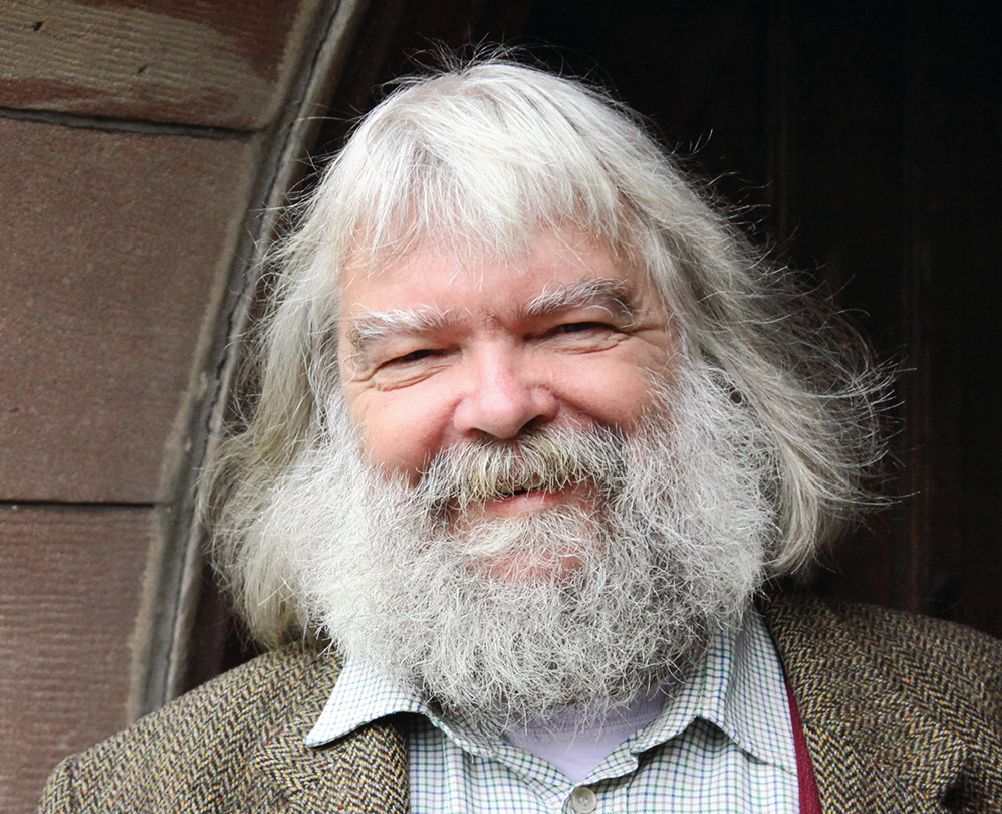
The Trinity Forum is delighted to welcome to Nashville the poet, Anglican priest, and scholar, Malcolm Guite. Malcolm draws upon Merlin’s Isle: An Arthuriad, his forthcoming epic poem (Rabbit Room Press) on the legends of King Arthur and the Knights of the Round Table. He describes his purpose:
“To ‘slip past the watchful dragons’ of secularism and awaken again in the modern world that openness to beauty and mystery which prepares the heart for the coming of Christ. My aim is to make a poem that restores the spiritual elements that have been shorn away and renews their deepest meaning.”
With this work, Malcolm brings into the 21st century a tradition of epic storytelling that includes Lewis, Tolkien, Milton and many others.
Presented in partnership with Montgomery Bell Academy and St. Paul Christian Academy.
We thank our sponsors for their support of this event.
Interested in sponsoring this Evening Conversation? Contact Campbell Vogel.
Friends
- David and Janet Chestnut
- Kevin and Jessica Douglas
- David and Ashley Edwards
- Jon and Laura Foster
- Bill and Elizabeth Hawkins
- Michael and Sarah Ruth Hendrix
- Ken and Donna McElrath
- Eric and Eleanor Osborne
- Ed and Molly Powell
- Clay and Amy Richards
- Gif and Anna Thornton
- Chris and Eleanor Wells
- Two anonymous donors
Foundation
- Charis Foundation, Inc.
Corporate
- Sims|Funk PLC


Speakers
-
 CHERIE HARDER
 -
 MALCOLM GUITE
 -
 WILL NORTON
 -
 SUSAN COBB
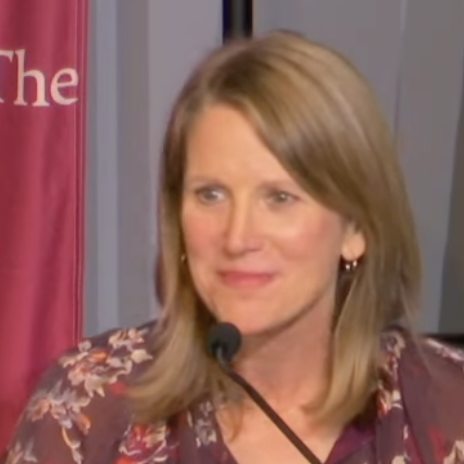
Good evening. My name is Susan Cobb and I’m the director of the junior school here at MBA, and I want to extend a very warm welcome to you to tonight’s Trinity Forum conversation with Malcolm Guite. It is a privilege for MBA to host the event this evening. And with our partnership with Saint Paul Christian Academy. Just so exciting, honestly, to see such a great crowd and was hearing how many people traveled from a fairly good distance to hear from Malcolm. So it’s fun to see his fan club here in the southeast to gather together. I know they’re excited to hear from you. So I would like to welcome Cherie Harder, who is the president of Trinity Forum, up to the podium to introduce tonight’s speaker.
Well, thank you so much, Susan, and welcome to all of you joining us for tonight’s evening Conversation with Malcolm Guite on an epic for our times. We are so glad to be here once again. This is actually our 12th year in partnership with MBA and Saint Paul, and we just so appreciate the vision, the collegiality. This has been such a rewarding as well as enjoyable partnership, and just really appreciate the leadership of Will Norton and Susan, as well as William Daughtry at NBA. As we start out, I’d like to thank not only our partners, but also our sponsors who made tonight possible, including the firm of Sims Funk, the Charis Foundation, David and Janet Chesnutt, Kevin and Jessica Douglas, David and Ashley Edwards, John and Laura Foster, Bill and Elizabeth Hawkins, Michael and Sarah Ruth Hendrix, Ken and Donna Mcelrath, Eric and Eleanor Osborne, Ed and Molly Powell, Clay and Amy Richards, Gif and Anna Thornton, Chris and Eleanor Wells, as well as a couple of anonymous donors. That’s a long list, but it takes a village to make tonight possible. So hearty thanks to all of you. I’d also like to send a special welcome to those of you who are here for the very first time, as well as, as Susan mentioned, several of you have traveled many hundreds of miles from out of state. So thank you for the honor of your time and attention. And if you are one of those new people or are otherwise new to the work of the Trinity Forum, part of our son at the forum is to cultivate, curate and disseminate the best of Christian thought and to provide a place where leaders can wrestle with the big questions of life in the context of faith and ultimately to come to better know the author of the answers.

And part of the way we pursue that mission is by offering conversations and engagement with some of the most thoughtful scholars, artists, and leaders on ideas of enduring significance to help connect timeless wisdom with timely issues. Our guest tonight is a poet, scholar, and songwriter who is well known for weaving together artistry and erudition the ancient and the current, and sonnets, songs and scholarship that invite reconsideration of the importance of the imagination in understanding and appreciating the world. Tonight he’s going to draw upon his forthcoming and ambitious new work, Merlin’s Isle, and authored a four volume epic poem that retells the stories of the quest, battles, and adventures of King Arthur and the Knights of the of the Round Table. And if you’re sitting here and thinking you can’t imagine what relevance King Arthur might have for today. Or wonder what the point of a retelling might be. Well, our guest tonight might respond that imagination and wonder is exactly the point in his reflections on morals. Merlin’s Isle. He reminds us that imagination is not escapism, but a way of knowing and loving the world at a time when we’re bombarded with a dizzying onslaught of misinformation, propaganda, algorithmically driven outrage and customized information streams. It can become all too easy to be inured to a sense of confusion or meaninglessness, or to mistake Take cynicism for reality. An encounter with old stories can offer wisdom and perspective. To better understand where we are and orient us to the journey ahead. Our guest tonight has written.
Unless we read old books and stories, we have no access to other ways of seeing and knowing. Our guest tonight is one of those rare guides who invites us to see our own fractured time in light of a mythic past, and to glimpse the ways in which old tales can orient our hearts towards hope. Malcolm Guite is a renowned and beloved poet, priest, songwriter and scholar who’s been described as what you might get if John Donne journeyed to middle earth, taking musical cues from Jerry Garcia and fashion tips from Gandalf. He is, I am very proud to say, a Senior fellow of the Trinity Forum, as well as a Life Fellow of Girton College at Cambridge University, and where he has served for more than 20 years as chaplain there, as well as teaching at the Faculty of Divinity and lecturing widely across North America. He’s the 2023 winner of the Lanfranc Award for Education and Scholarship. A singer songwriter with a band Mystery Train, and a remarkably prolific author and poet who writes the weekly column Poet’s Corner, as well as over a dozen books spanning works of poetry, criticism and anthologies. A list that’s too long to go through, but I will mention that his forthcoming work, Merlin’s Isle, which is published by The Rabbit Room, a four volume epic poem on the legends of King Arthur and the Knights of the Round Table, the first volume of which will be released this March. Entitled Galahad and the Grail. Be on the lookout for sure after Malcolm provides keynote remarks. Saint Paul headmaster Will Norton will pose the first question, and then we’ll moderate questions from the audience. Malcolm, welcome.
Thank you so much. Can I just first say, I mean, it was very encouraging and wonderful introduction. It’s all downhill from here, but, I how encouraged I am that you’re all here. You know, we live in a time when poetry itself has become marginalized and fractured. And, you know, some people would hear the word poetry and go, oh, no. Well, I’m addressing a large group, and I’m not sure how many of them are into poetry or not. You know, I sometimes feel I have to perform a minor exorcism because sometimes, particularly if this is for guys, people think, oh, poetry’s not for me, or I don’t get it, or, you know. And usually that’s because somewhere resting on the margins of your mind is the is the unlisted shade of a bad English teacher who told you couldn’t do it? Who told you that your first trembling inkling of what this poem meant to you and she goes, that’s wrong, you know. And then the teacher’s pet has the right answer. The kind of teacher whom your own wonderful poet, Billy Collins, the poet laureate of Texas, described as that bad English lesson which the whole idea of doing poetry was to tie the poem to a chair and beat it with a hose pipe till it confess what it meant, you know. But by contrast, he says, I wanted to put my ear up to the murmuring hive of the poem and wonder what music, what honey the innumerable bees of its words were making.
You know, very different. So, the great Nobel laureate, Seamus Heaney said that at his best, perhaps poetry offers phrases that feed the soul. And maybe, you know, that’s just what you’ll get tonight. Because some phrases that feed the soul. So I’m amazed that you’ve come for talk and poetry. Hooray! And then it’s a talk on epic poetry and on the making of a new epic. You know, this is, as I explained to the to the publishers when I was looking at this. I’m so glad that Rabbit Room took this on. And they’re just doing an amazing job. I mean, here tonight is Stephen Crotts, the he was on my rider. I said, I’ll do this poem with you as long as I get Stephen Cross as my illustrator. And, you know, there he is. He’s going to do amazing things. You’ll see that. But they’ve really they’ve really run with it. But when I was first pitching it, I said, you know, they always say when you pitch things, you have to have what they believe is called the USP, which is the unique selling point. So I said, well, nobody has tried to do anything like this for 150 years, that Tennyson was the last guy who managed to retell the story, you know, and read what the other 1 or 2 exceptions, but epic.
But then I had to point out that the unique selling point might also be the unique sinking point, because, you know, there might be a reason why no one wanted to do that, but I had a hunch that the time was coming. I had a hunch that the more we get this dwindled twittering soundbite, this temporary, brief faked AI flicker across our screens. The more we were in a world where when a young person buys a brand new phone, the software is obsolete before they’ve even taken it home. The first thing you have to do is update it, that there might be a hunger for the things that last, that there might be a yearning for something of permanence and beauty in the midst. And that one, you know, one of the great great tales, the formative tales, the tales that in our telling of them retell us. There might be there might be a time and a place for that. So anyway, I’ve always loved these. I’ve always loved these stories since my mother told them to me. And you know, I just felt the time was, coming again. I’m gonna just read you now, if I may, a few passages from the the appendix from the first volume, which in which I set out what I was trying to do and why and, you know, give you some other background.
So I’ve loved these stories since I was a child and heard them from my mother, who was a great storyteller herself, but also had extensive knowledge of the medieval sources, especially the great gathering of those stories and their rendering into Middle English by Sir Thomas Malory in the 15th century. So the stories that first moved me were not some sanitized Hollywood version, but the real thing. Haunting, numinous, continually suggestive of the holy and beautiful reality of God and his saints and angels, shimmering through the fabric of the stories of the knights with all their aspirations and all their human flaws. At the heart of those early versions of the stories is the Holy Grail itself, the presence of Christ and His gospel moving as an unbearably beautiful light through the mists and magic of Pre-celtic pre-Christian Celtic Britain, drawing even the wizards and the fairy folk towards himself, baptizing the imagination of our ancestors, fulfilling and disclosing the true meaning of their earliest stories. As a student at Cambridge, I rediscovered these stories in their original sources, and I became aware of how so many modern versions of them seem to marginalize or even completely erase the deep Christian impulse that had formed their original telling. And as the poet, I longed to restore that lost element in the hope of a new telling that might baptize the imagination of the growing generation brought up in a secular world, trapped in the immanent frame and deprived of their inheritance in the gospel.
Let me cut to the chase on this, and I will confess the real ambition I have here. Many of you may know the extraordinary story tha C.S. Lewis tells about himself in Surprised by Joy. He looks back to his ardently atheist, slightly awkward, ludicrously precocious 16 year old self, going off to be tutored to get ready for Oxford or Cambridge. And he’s randomly browsing a bookstore at the station at Bookham, and he sees a novel by George MacDonald called Phantastes. And he says, I had no idea what I was letting myself in for. And he grudgingly opens these stories, and he encounters, though he doesn’t even know a name for it then, not simply beauty or strangeness or haunting myth, but holiness. And he says it was like a kind of bright shadow, like a light. It seemed to enchant even the trees in the woods as he passed in the railway. And he said he crossed over a border. And he says in some way his imagination was baptized in that reading. In fact, you might say that the whole plot of Surprised by Joy, The Shape of my early life, how he’s based this: my imagination was baptized before I was, and the rest of me just took a bit longer to catch up somehow.
And let me confess, I would like to write a book which, maybe after I’m dead is picked up by some random teenager, you know, in a jumble sale who happens to be the next C.S. Lewis, and that I might have a hand in baptizing an imagination that would then go out as his did, and kindle so many imaginations minds, including for Christ. So, the love of the stories is there. But let me let me go back to something I said in the appendix before we get into a little bit of the stories themselves. I’m trying to recover a sense of the numinous and trying to discover it. I’m trying to lift the veil to see, not so much to re-enchant, but as to un-disenchant the world. To help us see what is already there. And of course, I’m influenced by many. It’s amazing how many of the inklings about Lewis, Tolkien, Charles Williams, Owen Barfield all loved the Arthurian stories, all touched on them in different ways. Williams more than most. But Lewis too, and there’s a very interesting passage. And here I speak to you, I mean, I hope my book will be widely read and enjoyed in America and I think it the stories of Arthur are a common heritage for all the English speaking peoples, wherever they are, and indeed the Welsh and Latin speaking peoples.
But they are peculiar to our islands.They are almost the very story the land holds. And I am trying, in you know, at least to contribute to the reawakening of my own nation, to its true vocation, to remembering the things that it’s forgotten. So, if I may, I’ll read you a passage which comes not from me, but from C.S. Lewis’s That Hideous Strength. When at the end of the novel, when, as it were, Merlin has been revived, the evil has been averted. The new Pendragon, who is their ancestor, was celebrating, and they’re thinking about the meaning of what they’ve just done. And Lewis writes through one of his characters in the story, “something we may call Britain is always haunted by something we may call Logres”. So Logres is the old Welsh name for the kingdom of Arthur, something we may call Britain is always haunted by something we may call Logres. “Haven’t you noticed? We are two countries after every Arthur and Mordred. Behind every Milton, a Cromwell. A nation of poets. A nation of shopkeepers. Don’t you feel it? The very quality of England. If we’ve got an ass’s head. It was by walking in a fairy wood” so brilliant that. If we got an ass’s head by walking in a fairy woo. Now, here’s the thing.
We’ve heard something better than we can do but can’t quite forget it. Don’t you see it in everything English. A kind of awkward grace. A humble, humorous incompleteness. We’ve heard something better than we can do. I think that’s true of the vocation of every nation. You might like to consider it in the vocation of the States. I make no further comment that you’ve heard something you might be in danger of forgetting. But I certainly say for England. We’ve heard something that’s better than we can do. But let’s be honest, that’s not just true of any nation, is that not true of every one of us who’s heard the gospel? It’s not just that we’ve come to know Christ as our Savior, and that’s a wonderful thing, but okay, Christ is my Savior. Now what? He’s shown me the glimmerings of his kingdom. He showed me a whole new way of seeing. He’s told me that one day the veil will be lifted. That God’s kingdom will come on earth. His will be done. And that, you know, we’ll suddenly see everybody if Solomon the wayside weed is Solomon arrayed in all his glory, how much more he will he array you? We’re going to see a glory and splendor in one another, and we somehow have to live by that vision. But we heard something that’s better than we can do, and we keep falling away from what we’ve heard and needing to be reminded of it.
And one of the things that these great stories that come out of the baptized imagination of a nation early remind us of that. So that passage I’ve just quoted, I wrote in my Prolog, I say this, I remembered this passage, that thing about the good haunting about my nation needs to remember. Britain needs to remember logres. Okay, I remember this passage when, at the death of her late Majesty Queen Elizabeth, Britain suddenly remembered herself. Remembered why we have the hallowed Abbey of Westminster, why we have the beautiful symbolic rituals and gestures of immemorial tradition in church and state. People who had been told they only had an attention span of five minutes, queued for days to walk out of a noisy world and in awestruck silence, stand and genuflect in the ancient chamber where Her Majesty lay with a guard of honor, with bright swords, with the fabled beauty of the crown resting on her coffin, laid aside for the greater glories of heaven. It felt like a kind of national awakening, a national remembering of the true Christian kingdom of Logres that always haunts modern Britain. And it filled me with hope. Hope that I might make a poem that would reach down to that root, rekindle that memory, and awaken us even further. So, folks, that’s what I’m trying to do.
And as you can imagine, it’s no mean undertaking. I mean, you know, I have confessed like, I’m Mr. Sonnet, you know, I’m known for the sonnet. I published two sonnet sequences that have fortunately done well, and I figured out how to do that. And you know, the great thing about the sonnet is a lovely contract between the writer and the reader, because you start by saying, look, don’t worry, it’s only going to be it’s only going to last 14 lines. I promise you, we’ll get to the end. And of course, we’re writing towards that 14th line, and you play all kinds of games so I can do that. And I’ve got to the point where I can, you know, I can write a sonnet in a a hotel lobby, but I can’t write an epic in a hotel lobby. I’ve had to go back to the beginning. I’ve had to learn new skills. I’ve had to soak myself in the epics of the past. But it’s been a great and exciting adventure. In a sense. I feel rather like I did notice that when Gandalf calls on first Bilbo and then later Frodo, they’re not young whippersnappers. They’re just about to set into the other end of comfortable middle age when they’re suddenly called away from their hobbit holes. And I feel I’m being called away.
Well past middle age, into an epic adventure. So it took a bit of bit of gearing up towards. And I kept on saying to myself, I can’t do it now because I don’t have the exact form. I can’t do it now. Now’s not the right time. I, you know, and then the Rabbit Room sent me a thing asking me if I would write a brief Galahad story for another book that they were doing, and I decided to do that, and I suddenly found that the form I could use was the ballad form, staring me in the face. I just spent four years doing an in-depth study of Samuel Taylor Coleridge’s The Rhyme of the Ancient Mariner, and written a book called Mariner: A Voyage with Samuel Taylor Coleridge. It was staring me in the face, so I wrote this ballad story, and it just was like the pebble that loosed the avalanche. I suddenly realized I could do it. I’d found the form, but it was still daunting. So I went out for a walk one morning to kind of have a few words with my muse and see if she and I were up for this. And in what turned out that it wasn’t so much my having a few words with her, as it was her having some fairly severe words with me to the end of, stop procrastinating and get on with it.
So that became the prelude poem. The poem, as it were, which I’m going to read you now. Which will appear at the beginning of each of the four volumes and is my marching orders, as it were, to do this thing and why I’m doing it. And you’ll see, as I read this, that I am riffing on that very passage, I read you from That Hideous Strength about Britain and Logres. But you’ll also see, I hope, some of what I’m trying to do in terms of suddenly getting busting us out of this, this reductive ism, this nothing buttery, this idea that, you know, everything is explicable in terms of the mere random concatenation of atoms. You know the stuff where you’re nothing but the unwinding of enzymes or the self-replication of a selfish gene or, you know. I mean, those things are physically there and they’re marvelous and mysteries in themselves. But you’re way more than that. Lewis put his finger on this very, very well. I think if you remember in Voyage of the Dawn Treader, where in that world a star, a resplendent, luminous body of the heavenly things taking part in the great dance is able to become a human form and speaks to us. So, Eustace, who’s the kind of, you know, ship skeptic, is introduced to this guy and he’s a star. I mean, not a star like you have a star in Nashville, but a star, an actual heavenly.
And Eustace says, well, in our world, a star is just a ball of flaming gas exploding into the infinite vacuity of space. And the guy who is a star, says Eustace. Even in your world, that’s not what a star is. It’s just what it’s made of. To put that in the hands of a child, the distinction between you are so much more than what you’re made of. Just to know that, hey, there’s someone trying to restore that. So here is the prelude, and it’s called Take up a Tale. And it’ll give you an idea of the kind of form and meter I’m working with. ”
As I walked out one morning. All in the soft, fine rain. It seemed as though a silver veil was shining over hill and vale, as though some lovely long lost spell had made all new again. And through that shimmer in the air I seemed to hear a sound. As though a distant horn were blown in some lost land that I had known, that seemed to speak from tree and stone and echo all around. And with the music came these words. ‘Poet, take up the tale. Take up the tale. This land still keeps in earth and water. Magic sleeps. The dryad sighs. The naiad weeps. But you can lift the veil. From where the waves wash. Cornwall’s caves. Out to the white horse veil. This land still holds the tale of old like hidden treasure. Buried gold. Once more the story must be told. Poet. Take up the tale. Take up the tale of courtesy. Take up the tale of grace. Revive the land’s long memory. Summon the fair folk. Let them be something of fairy, wild and free still lingers in this place. Lift up your eyes to see the light on Glastonbury Tor. Then come down from that far green hill. To where the sacred waters spill and shine. Within the chalice well. And listen to their lore. Yay! Listen well before you start. Be still, you begin. Though modern Britain lies without fair logres lives within. See through the surface. Round about the noise, the rush, the fear, the doubt. Though modern Britain lies without fair loggers lives within. You may yet walk through Merlin’s isle. By oak and ash and thorn. The ancient hills do not forget. And you might wake their wisdom. Yet who knows what wonders might be met on this midsummer morn. So I have taken up the tale. To tell it full and free. The tale that makes my heart rejoice. I tell it for I have no choice. I tell it till another voice, takes up the tale from me.
So that sense that we are part of a long tradition. Thank you. So as I come towards the end of my time, and we’re going to have lots of time for open discussion and so on, I just want to kind of confront something head on. I’m a priest and a poet, but you know, some people say, well, why do you have to do what you do, why all these stories of Arthur and Merlin and everybody you know? Can’t you just tell them the gospel straight and pure and here’s Jesus, here’s what he did for you. This is a transaction. You know you can. And let me first say there is definitely a place for that. I know people who can share the gospel in five minutes on a street corner and change people’s lives. And I say hallelujah and pray for them. But I also know how long it took me to come back. And I know how it was the opening of the eyes of my imagination. First, that it was sheer beauty and poetry that made me realize I wasn’t just the unwinding of a selfish gene. I had experiences of beauty and art that I realized that undid the mere dogmatic materialism that I espoused at that time because there was an abundance, an overplus, a moreness, a mystery just in the art. It was John Keats’s Ode to a Nightingale that did that for me. Now, Keats is not a Christian poet, nor is The ode to a Nightingale, a Christian poem.
But when I read it as a homesick boy standing in Keats’s house as a 16 year old, I was so moved by it and suddenly, out of nowhere. Not explicitly, not as a prooftext. The biblical figure of Ruth appeared. And he imagined Ruth hearing the same nightingale that he was hearing when sick for home. She stood in tears amidst the alien corn. And I suddenly realized how homesick I was. I am home, but also inside that, homesick for something more. I had what Lewis called the yearning for the far off country. Now, of course, I needed more. And I went up to Cambridge and I studied English literature, and it was partly through reading literature that I became a Christian again. And like I would, my story is very similar to Lewis’s in that, you know, my imagination was baptized before I was the rest of me took a bit longer. Now there was definitely a place for the reading and opening of scriptures. There was definitely a place for a mentor to sit me down and say, you can’t go on like this Guite, you’re going to have to make a decision. There was all of that. But to get me even to the place where I could begin to think that made sense. There was all the ruins of beauty. There was all the kindling of my imagination, and there was the realization that there was divine wisdom, even in these apparently pagan stories.
But in fact, more than that, of course, because the astonishing thing about the Arthurian is that it gathers together stories which are clearly pre-Christian. I mean, there are Druids, there are ladies of the lake, you know, there are all kinds of things, there’s the green knight in it. And yet Merlin the Druid is having a conversation in the stories with the Archbishop of Canterbury about how Arthur can become king. Now there was a fashion at the end of the 19th and beginning of the 20th century, when scholars looked at this as both Christian and pagan, because they were all anti-Christian. It was the beginning of the aggressive secularism of the 20th century. They said, oh, they’re really pagan with just a light Christian gloss. You know, the chalice isn’t really the chalice of the Last Supper and the gift of Christ himself to the world. It’s the old pagan cauldron of generation where you could put stuff in and it would come out as plenty. But of course, they were living in a Christian age, so they had to paint this little light, Christian gloss on it. So the fashion was to scrape the Christian gloss off and saying, they’re really pagan stories. But frankly, that won’t wear. The more you read the original text, the more you see how deeply and thoughtfully Christian they are.
And yet they had room for the old stories. So the scholar who really got this was in fact Charles Williams, the great friend of C.S. Lewis. And he, had he lived, he would have published a book called The Figure of Arthur. But he died before it was finished. But Lewis published it in an extremely rare book called the Arthurian Torso, in which he gives you whatWilliams was saying. And Williams was being very much one of my guides in writing this. And Williams says, the real nature of the between the pagan and the clearly Christian in the telling of these great stories is not essentially pagan, with a later added Christian gloss. On the contrary, the Christians chose to remember and baptize the pagan for a reason. And he takes you to acts 17 And Paul said, observing the statues, and he said, Men of Athens, I see in every way you were very religious. As I observed the objects of your worship, I saw this statue to an unknown God, whom therefore whom you worship as an unknown him I preach. Now that didn’t mean he was saying, fine. So groove on down to Apollo. He’s saying the God who made the cosmos doesn’t live in marble blocks. But you were onto something. There is a story that makes sense of all the stories you’ve ever loved. There is a God who brings to perfection all the glimmerings whereby he, as it Paul says in Romans, he has not left himself without witness that you might feel after and find him.
And I came to believe that the beautiful tellings of the Arthur stories were actually an imaginative apologetics of the kind of evangelism to England that actually they were telling these old Celtic tales and saying, do you know what that magic cauldron of generation was always about? It was always about the gift of Christ in bread and wine and the Last Supper, because in those stories a body is broken and put into a cauldron and comes out alive. They’re death and resurrection stories. They had a story about a magical spear that could bring ruin, but also bring great goodness. The spear of bronze. No, no, it’s the Spear of Longinus. It’s the spear with which we killed our savior. And yet from his heart comes the blood and water that redeems us. They were seeing more and more that Christ. And I still feel that there is a place in telling these stories which will actually prepare hearts and minds for the coming of Christ and make sense. But obviously, it’s been refreshing to do a purely pagan thing for a long time. I was very worried that, you know, I’m boy, I’m going to be in trouble as I do this with the pagan retellers.
Those nasty Christians have stolen it back. You know, it’s all that stuff. So one of the best and most skillful of those pagan retailers, or pagan in that time was a guy called Martin Shaw. And I was kind of road testing this, and I put some bits of it out on my YouTube, and I got the thing I was dreading. I got this email from Martin Shaw and I said, oh boy, I’m in trouble now. You know, he’s got this massive neo-pagan Substack following, you know? And so he says, Malcolm, I love what you’re doing. Keep doing it. And then he said, I like the storytelling, which was really nice because I thought that might be my weak point. And he’s a great storyteller. It’s great, you know, magical neopagan storyteller. And then he said, come and see me sometime if you’re down in Devon. And I went down to see him and it turned out all kinds of things were moving in his life bringing him. And one of the deep symbols in the, Arthuriad is the figure of the White Hart, this white hart with golden horns. And it’s a magical moment where the Grail knights see the white hart with a hermit and four golden lions, and it goes into a chapel and they follow it, and suddenly they see Christ behind the altar. And the four lions have become the four living creatures around the throne, but also the four Gospels.
So, Martin won’t would mind me telling you this story, because he’s now become very public with this thing. But I called on him because it was literally a dark and stormy night. His power was out. He was living in this little thatched cottage, completely lit by candles. I sort of thought, I don’t know what’s going to happen here. So I kind of came with a peace offering of a bottle of single malt whiskey. He welcomed me in and we talked about things and stories, and he said, he knew perfectly well that I would know the symbolism of the dream. He said I’d been having a persistent dream. And in this dream, a white hart comes the door of this cottage and stoops and gets in. And then it somehow with its great antlers, and it comes in and trashes the place. And he said, I think it’s Christ. It’s a bit awkward, really. And we both knew because we loved the Arthur story is what this was all about. And I was able to read him a wonderful poem of C.S. Lewis’s called A Cliche Come Out of His Cage, which is about how it’s easier to share the gospel with a pagan than it is with a materialist. You know, somebody had said to the Lewis, the world’s going back to paganism.
He went, “if only, then I would have some material to work with” and that is really happening. Believe me, there’s a real revival. There’s all kinds of people in that world. So anyway, Martin Shaw, when he told me more about this and things that happened and I said, I believe that, you know, Christ is at work in your life, but you need to be sure and you need to pray, but you need to do it your way. You need to know that nothing will be wasted if all the other stuff you’ve done, all the love you’ve had for for the great myths of the pre-Christian world, God will use all of that. Some of it He’ll let go. You’ll bring it to the life of Christ, and the Christ will say, no, but others. You’ll go, ah, you know, this is it. So we’ve talked about that. So I said, lent is a 40 days of preparation for baptism. You need to kind of work on this for 40 days. And if it if it’s right, you’ll know and you’ll be baptized. And it’s exactly what he did. And he was baptized as received into the Orthodox Church. And I mean, I wasn’t even a midwife. I think, the White Hart had that well in hand. You know I was just a random guy that, you know, came and turned up on the side and gave some encouragement. But he gave enormous encouragement to me that taking this material up and telling it again was something really worth doing. I read to you from the very beginning. I’ll stop now, because I’ve already gone ten minutes over what I was supposed to do and just read you the very end, which will. Perhaps it’s not a plot spoiler. Sir Bors has got back after the achievement of the Grail, and he’s telling this whole story to the Arthurian court. And Arthur is saying, get the scribes out here and write this down. This story isn’t just for this generation. So the tale is not for us alone, but for our children, too.
“So take the tale up if you can, and pass it on to maiden land, that it may grow like living grain, both beautiful and true.” That’s the end of what Arthur says. And then I bring myself in again. “And so the tale came down the years in every land and tongue. And old folk told it through their tears and gave it to the young. And even I, in these dark days have heard and found it true. So I have taken up the tale and passed it on to you.”
Thank you.
Well, thank you Malcolm. Good evening. My name is Will Norton, and on behalf of the Saint Paul community, we’re so delighted that you are able to join. And special thanks to Susan Cobb and William Daughtry and Cherie for hosting us. And we’re delighted to be here. And what a wonderful inspirational program. I’m going to give the first question.
Just as institutions or education institutions face artificial intelligence and a horizon that seems to stifle creativity, what advice or disciplines as you see that landscape, would you speak into for academic institutions?
Wow. How long have you gotten? So now that is a really important question in the nature, right? So first of all, let’s just deal with the misnomer in the naming of AI of what those two letters stand for, allegedly. Artificial intelligence. Artificial. Certainly. However I don’t think the word intelligence is usable at all because intelligence, as we would understand it, has to have an inside as well as an outside. It has to have a registering consciousness. Actually, what artificial intelligence is, I mean, it’s algorithms, but basically it’s an averaging interface. That’s what it is. It takes a bunch of stuff and it produces a simulacrum of conscious discourse, but it’s not conscious discourse because there’s no consciousness. So the great miracle of language, and particularly poetic languages, is that it provides this extraordinary bridge whereby I can from my heart, from the inner innerness of my feeling, conscious, unique self, I can make a shape of words such that something of my experience flows over. You receive it and it speaks into your individual. So it is, you know, as Newman said, which Latin always puts these things much better than English, cor ad cor loquitur heart speaketh unto heart. Now AI can never do that, because it has no heart, and it never will. Which is why another thing if I say I not artificial intelligence, yes, Averaging interface. My third, fulfilling of the acronym AI would be abominable invention. Now, that’s not true when we use it to figure out how to read medical tests, how to spot the tiny bit of cancer, you know, it can train itself on a million MRI images and find that, there’s brilliant stuff we can do with it, and there are brilliant minds that are putting it together. But if once we start getting it to pretend to be human, which is we’re already doing, then we’re making an idol. And when we make an idol, we dumb down ourselves. You know, hands that have they have not, eyes that see they see not, ears that hear they hear not, tongues they have they speak not, those who make them shall be like unto them. We’re already doing that with computers. We already talk about people being hard wired for stuff. We use the abominable idea of programing or reprograming people. People are not computers because anything we make is less than we are. By definition. We transcend the things we make. Let’s not make ourselves in the image of a thing we’ve made, because what we lose is the infinite mystery that every one of your souls is infinitely and inexplicably and inexhaustibly mysterious and known only in its depth to God.
And no, no algorithm is ever going to come close. But a word of hope. Okay, I think that AI is going to get so good at faking things that it will make itself redundant. In principle, it’ll soon be the case that because deepfake, that anything you encounter online could be faked. However realistic the interview with you know, the Prime Minister or the comment from the author or however realistic that interview is, you will never be able to verify it. And what that will create is a premium on unique experiences that are unfakeable. And the FOMO, the fear of missing out that’s driven people onto internet and websites will completely reverse the flow. And that will be so cheap internet will be trash. And people will be able to say, I was at that gig, I was at that church meeting. I was in that classroom and we were real people, and I learned a real thing from an actual person. And I think the work of a school like this, the work of churches, the work of musicians, the work of artists honing their unique work in a place where that is going to have a real premium. And I think people will forsake the empty and return to the full and fulfilling. So I’m hoping I will disappear up its own.
Again, with a pretty important question, which single malt did you bring as a peace offering?
Okay well, I gave it a lot of thought, of course, because, you know. It was an Oban 14 year old so I could open the conversation with, where were we both when 14 years ago this whiskey began to wait for us. And it was a way it was a way of getting him to tell a bit of his story.
Hi. I recently heard a conversation between a an atheist, a Christian, and I guess the third was a psychologist who is somehow neither one of those, but his own category. And they were talking about purpose and meaning, and they couldn’t even come up with a shared definition of what they thought, what purpose for a human was or for mankind. And so I’m curious, how might you define purpose and what do you think our purpose is, is when.
The clue is in the fact that they couldn’t find a shared definition. And that speaks to a fractured-ness, and it speaks to a long process that began at the scientific revolution and continued in the enlightenment of the interiorization, or privatization of questions of ultimate value. So supposedly, objective truth was only the stuff you could weigh and measure so you could be certain about about that, but everything else which actually makes life worth living, all the things which are qualities rather than quantities, were put into the private terrain here and called subjective. So it was objective, subjective, and then the subjective was just we can make it up as we go along. Now that is kind of the opposite of the truth because clearly the idea that those subjects over here, an object over there and never the twain shall meet. And there are two different kinds of truth and two different kinds of knowledge is, as you can demonstrate almost immediately that this is absurd, because if you take the prime thing that you know, which is that you exist, your statement I am. If am is the verb to be, “I” subject, “am” verb. What am I? I’m me. Object. You are the object of your own subjectivity. Everything which is object is also subject in you. And of course, God calls himself “I am that I am”. So there is a validity and a mutual indwelling between subject and object. So the subject must therefore be able to experience some things that really are objective.
There’s real truth to be had out there. So let’s go back to your not common definition.
I think the most awful thing that we visited on the rising generation is the idea that they have to invent meaning and purpose, but they have to invent themselves every day. And maybe a long time ago, that felt like a liberation. “Hey, I can be anything I want.” But actually, it’s an intolerable burden. And it’s and it’s a kind of dread because I keep reinventing myself and finding a new identity. I still don’t get as many likes on Facebook as I’d like. You know, so maybe I have to try again. And it’s wearing.
So it’s incredibly good news when you say, do you know, you don’t have to invent yourself because somebody else who loves you has already done it. You from the beginning, the real heart of who you are, deeper and more beautiful than you could ever know, has simmered in the divine mind since before the beginning of time. And now he’s speaking you. You don’t have to invent yourself. You have to just become the beautiful thing that God is right now in the process of making you. I’ll give you a historic context for this. Right. So there’s a story about Coleridge, you know, he was one of my great heroes. And Thomas Clarkson, another hero. Thomas Clarkson began the campaign against slavery, and he recruited William Wilberforce. So Wilberforce is more famous because he was in Parliament and leading it but Clarkson was the guy that was driving it, and he was doing all the research and that took them year after year and it kept being rejected. And Clarkson had a bit of a breakdown and not only began his compassion fatigue, but he didn’t tell many people that he was beginning to lose his faith. Not surprising when, you know, every year they presented the manifest injustice of slavery. Every year in the House of Lords, the bench of bishops voted to keep slavery going anyway, so he and his friends sent him to the Lake District and hired a little cottage for him. And happily for him, he bumped into Coleridge one day and they talked. And Coleridge was a massive fanboy because Coleridge had campaigned against slavery, but he was surprised to find his great hero who had inspired him, was now exhausted and depressed. Of course, as Englishmen, they didn’t actually say any of this stuff to each other at the time. They were living in cottages at the other end of the village, but they wrote each other a letter. So Clarkson writes to Coleridge, and he says, he says, my dear, let me confess. I have no idea any more of the divine. And Coleridge writes back to him and says, my dear Clarkson, don’t worry for now, whether you have any idea of the divine, but never forget that you are a divine idea, that you know the Lord thought of Thomas Clarkson. And he wanted to speak Thomas Clarkson into the world for this moment and for this campaign and for this cause. And he has not yet finished saying what he has to say. He said, you and I, Thomas, we are logoi from the logos. We are little words being spoken by the word. And then he said, so let Jesus finish saying what he has to say to the world through you. He finished up, he says, try not to become an impediment in the speech of Christ. And it’s totally different. If three people say, I have my idea of meaning, you have your idea of meaning, let’s reinvent meaning today, you’re going to get nowhere. But if I say, I know God means something by you and I, to whom you have come, may know more than you do about what God means by you. Let me tell you some of the things that God is saying to me through you. Do you see what a different conversation it would be? So I had that in a poem of my own. I can’t remember it all, but it went,
“I cannot Speak unless I have been spoken. Nor can I teach unless I have been taught. I cannot break the bread except as I am broken. I’m being uttered.”
And I think we can offer people, especially people who feel they’ve got to be the source of meaning every day for themselves. A kind of immense relief, like the job is already taken, but you have the joy of exploring every day, discovering a little more every day of what it is that God is speaking into the world through you. Sorry, long answer to a short question like that.
Thank you so much for sharing with us. I’ve stood in the queue for so long that I will ask my question, but you’ve actually already answered it because you’re running circles around us all, I think. A bit ago you mentioned the stories being pagan stories that had some Christian Polish put on them. Yeah. And we’re going back to sort of reignite the polish.
So my question was just since God is the author of the answers and the author of the stories themselves, since he is the creator of all, and since even in his word, every story that we talk about now is, is imprinted by what he imprinted in the earth.
They’re just being told over and over and, and to know that these stories repeat that the pagans have taken God’s stories and pervert them. And so what we need to do now is manifest the stories as we’re the manifest sons and daughters of God being revealed that the earth is groaning for.
I think, first of all, we have to be slightly careful about wagging our fingers at the pagans, especially the ones who lived before Christ as perverting stories. Because if you’re going to pervert a story, you have to pervert it from something. You can’t pervert something until you know the good thing that it should have been, and then you deliberately bend it or eye from it. Now it’s perfectly possible. And I think this is actually what has happened that stories which we now see the Christian meaning of are literally being perverted back to something without that meaning. And that’s exactly what I’m trying to reverse, you know, by writing this epic. But I still think that these great stories, as they were told, were a preparation for the gospel and they were still mediating some goodness and truth and they’re often intuitive. One of the big the great themes in the early Arthurian stories, which a lot of the neopagans seized on as a classic example of supposedly pagan things is a theme called the wasteland. So in that you have a king and his land, and the king is the king of the land, and somehow, mystically, the king and the land are kind of either married or connected. So if all is well with the king, it’s well with the land. And in this story, somebody wounds the king. In the case of the Arthurian version of it, it’s somebody seizing the very spear that wounded Christ and wounding their host, the king. And as soon as the king is wounded, the land is laid waste. And there’s a total barrenness. And we have to wait for a redeeming figure to come who will come through the wasteland and will heal the king with the very same spear with which the king was wounded. And when the king is healed, the land will be healed.
Right now you could say that’s a weird pagan story and what actual people say. Oh, this is a pagan fertility rite. Jesse Weston an American woman in the 20s wrote a book From Ritual to Romance, which said exactly that right now, I’d say that’s a perversion of the story. That story written by people who did not at that time have or formed by orally, not written down, by people who did not at that time have access to the Holy Scriptures. So you can’t criticize them for not reading what they’ve never seen. Right? Now think about the big arc of the great narrative of creation, fall and redemption, specifically in relation to our relations to nature. Right? We sin. We are put in the in the Garden of Eden, we’re kings and queens, because that’s what it means to be made in the image of God. The image is, you know, subdue the earth, have dominion over it. Right. And the land will flourish because we flourish and we screw up. And what do we hear? The ground shall be cursed because of you.
The poet John Milton made it even clearer when finally, in book nine of Paradise Lost, we actually get to the action and Eve reaches out and takes the fruit. He doesn’t go and say Eve did a private peccadillo and felt rather slightly guilty. You know, as a privatized, buffered individual self, you know, he doesn’t say that. The first thing that Milton says is earth felt the wind and nature sighing out through all their works, gave sign that all was lost. Nature is suffering because we screwed up and nature is longing for us. totally all of this in Romans eight, the whole crew, the creation was subjected to futility, and the whole creation waits in eager longing for the revealing of the children of God.
Now, if I wanted to put that into an allegorical story, I couldn’t do better than the story of the Wounded King, the wasteland, and the redemption. And yet, I know that story predates the arrival of the Gospels or the scripture to the island of Britain, so far from dismissing it as a perversion. I’m seeing it as a glorious anticipation history meaning I’m now privileged to reveal to the pagan who tells it to me. Hope that helps.
First I’d like to thank you for the work that you’re about to publish in March and congratulations on that. My concentration at university was Arthuriana, and it led to a career for me as a translator in Welsh. Through that particular journey that I’ve taken, I discovered the poet David Jones. I wondered if you could mention something about David Jones?
I love David Jones and I think this is really important to me, as is in parentheses, and the extraordinary Arthurian themes going through. David Jones is the fourth of the great high modernists and is there with basically James Joyce, T.S. Eliot, Ezra Pound, maybe Samuel Beckett. So his technique is high modernist. Now he’s great and you’re a scholar of him and so am I. But I have to say, if you’re going to read In parenthesis, it’s written in several languages. He uses untranslated Welsh, Greek, you know, it is bristling with footnotes, and it is not like the average teenager is not going to read. I have to say I mean I read David Jones as a teenager, but I, you know, I didn’t have video games so I love Jones. And for a long time, I was actually held back from doing my art in awe of David Jones and feeling like I can’t do better than that. But eventually, when I when I had a breakthrough and said, David Jones has already done that, that’s great, but I’m going to write something in this ringing, swinging ballad form that’s going to reach out.
However, I’m going to acknowledge David Jones. I mean, there’s so much to say about David Jones, but, David Jones had an actual experience in the First World War, which was kind of converting, which was so strangely parallel to a very important experience in the Arthurian story that he couldn’t help but make the fusion and see that these so he was out gathering wood in no man’s land.
He was he enlisted as a private in the First World War. Complete chateau ruination the wasteland. To devastation and of what was once a French village. But he sees one building. It’s a little shack. It’s like a barn. It’s a little bit of light coming out of it, and he doesn’t know if the Germans are in there or whatever. And he goes up and he sneaks up and he looks, you know, through the crack in the wood, and he sees a fully vested priest lifting the chalice up with 3 or 4 kind of wounded French peasants trying to make Eucharist in the midst of the wasteland. And because he loves, he immediately writes this is exactly what happened to Lancelot in the wasteland, a Chapel perilous that he sees the Grail, but he can’t get close to it, and it becomes part of Jones’ own conversion to Roman Catholicism. And then he writes this book about the First World War in which Arthurian things are peeping through. Then he writes a book, Anathemata, which is basically the plot timeline, is the celebration of Eucharist.
But all the sections of that have become eons and era like. So you know when the priest is washing his hands and getting ready, he has a whole thing of all the strata’s of geological time, getting ready for human beings to whom the gospel will come. It’s amazing. So he’s really good. But I quote him in my epigrams to try and get to what I want from him. So let me read you those. This is David Jones in a book called Art and sacrament. I think about what it, as one’s trying to do as a writer, and I put this first, so I’m not using his style, and I’m not writing in the way that he does, but to conserve, to develop, to bring together, to make significant for the present what the past holds without dilution or any deleting, but rather by understanding and substantiating the material. This is the function of genuine myth, neither pedantic nor popularizing, not indifferent to scholarship nor antiquarian, but saying always of these thou hast given me, I have lost none as equating Jesus. But so I honored David Jones but I’m not writing a new anathemata.
Good evening. Malcolm. My name is Kevin. I have a question about your book. And if the answer is “I have to wait to buy it”, I will accept that, it’s okay. Lewis once bemoaned the fact that we were no longer telling good stories to children. He thought storytelling the children was a great way of instilling virtues. In White’s once and future king, you see virtues taught to Arthur. in Sir Galahad and the Green Knight we see great virtues of Galahad. What are some of the virtues that you hope that we will see and learn from your work?
Okay. Thank you for that. So I’m very conscious of that. I know that passage, and I’m beginning, as Aristotle says, you should, in medias res, in the midst of things. So I’m starting about two thirds of the way through the thing with the Galahad. By the time Galahad shows up, Merlin is off the scene. This is the beginning of the end, in a sense, of the round table. But in the next book, volume two, we go back to the beginning and we we we have the upbringing of Arthur and I take some leaves out of T.H. White’s book and I’m very, very much in that book. But to some degree in this one as well, concerned with the formation of character in my readers, and unashamedly so. I have unashamedly ethical designs on you. I want to nurture and exemplify the virtues that without which, life becomes intolerable for people and the development of character, particularly the character of a man. I think there’s been I tell you, one thing that both astonishes me, but also points me in a direction.
I have this YouTube, which I meant to do for just a couple of dozen students for a month or so and then somebody came up to me one day and said, oh, I see your YouTube has blown up. I said, oh dear, how do I fix it? I had no idea what that meant. Anyway, so it now has a very considerable reach, and 1 or 2 of them have had over a million views, but somebody showed me the other day how to look at these stats, So 97% of the 160,000 subscribers of to my channel or the other viewers are men between the age of 18 and 35 and a lot of them are younger than that. So there’s something happening here that maybe it’s God’s alternative to the Tate brothers, I. But the fact is I think young men are wanting to know, how can I do this thing? How will I grow? You know, and for whatever reason, there’s this paunchy, pipe smoking old guy. You know the granddad or the dad that they were looking for and they tune in you know, every week. I’m very, very interested in this question of how character is formed.
And there’s a passage, particularly in volume two where Merlin changes himself and Arthur into owls, and they fly up to this high tower, this stargazing tower, they become human again. And ostensibly Merlin is teaching, teaching Arthur both about the outer world, the Macrocosmos, but then about the inner world and the. The heart of that passage is he shows Arthur how to find the pole star, how to find the true North Star, and shows him how that stays there while the rest of the heavens revolve around it, and that wherever he is, or whatever time of night and day, he can find the pole star and get some sense of where he is and what his direction should be. And then, of course, Merlin says there is a pole star within. All of this is within. You need to find that pole star, and you need to look at it and you need to check with it. You know, the inner voice of your conscience, you know. So there’s, as I say, there is unashamed moral formation. But it also comes with flying owls and magic, you know?
You mentioned in response to the question about AI, that it was about heart connecting to heart. Our goal is heart connecting to hearts. So what advice would you give to my daughter who is a young writer. She’s 15 years old. And something that she’s expressed to me is “I want to write something important. I want to write something that makes someone else feel something”. So writing with that connection in mind. What advice would you give a young writer right now?
How long have you got? So I think this is a really important distinction to be made. Heart speaketh unto heart. Another way of putting that is to quote the Psalms, deep calleth unto deep abyssum invoke. That’s wonderful. So now, she’s got to learn to write from her depths, and then find the images in the poem that are capable of carrying that weight or that depth they’d have to be good images. But, this is a really important distinction, Hearts speaking unto heart is not the same thing as my reading this poem to you as my therapy. It doesn’t have to be confessional. It doesn’t have to be all my processed stuff. I mean, my unprocessed stuff may be really important and I may need to process it in my journal. But when I get to a poem that I want to share with someone else, I have to go from this particular to the universal. There has to be something in me that I’ve noticed, which I’ve noticed because of a depth in me, but which is then communicable to the other person. And I don’t have to explain it to them. You know what I mean? Now, how do you do that? Well, you do it, I think, by loving and reading lots of poetry. You do it by following Shakespeare’s advice where he says imagination, bodies forth the form of things unknown. The poet’s pen turns them to shapes and gives to airy nothing a local habitation and a name. So finding something particular local namable, which can then become the symbol, you know, is really important.
But let me give you an example. Sometimes I write a poem out of a very specific occasion, right? You know, this thing happened, and I wrote a poem personally for my friend about it. Now, normally I don’t publish those. I don’t. They’re not necessarily keepers. I send them privately to the person who needs them. But every so often I write something which I think was just personal. But it turns out when other people see it and it made that connection and I didn’t know.
I was a situation once where I wanted to go with my dad to the funeral of his friend because my dad also had cancer as his friend did. My dad and I were sensing in a very British, unspoken, understated way that this was sort of about him as well. You know, I really wanted to be there with him. And at the last minute before we went to the funeral, I was called away to my college to deal with an emergency. So I couldn’t do it. And as I was looking back, my friend who was with me, and my dad, who was going to go to funeral too, reached out and held his hand as they were turning around the corner. And she did that beautifully, and I would have loved to have done it, but I wouldn’t have done it. Of course, in English we wouldn’t have done it, but she could do it. So I just thought, oh great, I wish I could have been there. But she did that. So I penned this little poem for her at the end of the day called Holding and Letting Go. And I also I made a note of it in my diary. I read it to my wife. She said, can I send this to a friend of mine in Canada? So I still was thinking, this is not a publishable poem. A week later I get an email from Canada from Vancouver with the title Your Hospice Poem, and I’m getting my hospice poem. I have no hospice poem. I’ve never…, you know, what is this? And then I realized that this poem and you can imagine me rereading my own poem that I thought I got that I thought was just about this one little thing, and how the one little thing that I noticed became universal. So the poem goes like this. It’s called holding and letting go. It goes.
We have a call to live. And oh, a common call to die. I watched you and my father go to bid a friend goodbye. I watched you hold my father’s hand. How could it not be so? The gentleness of holding on helps in the letting go. For when we feel our frailty, how can we not respond and reach to hold another’s hand and feel the common bond? For then we touch the heights above. And every depth below. We touch the very quick of love. Holding and letting go.
I’m going, “this is my hospice poem” So be specific, but not confessional would be the answer. Thank you. Very interesting questions you’re going for here.
How did you get started writing and what advice would you have for young writers who haven’t published yet?
Okay, so my first advice to young writers is to be young readers. I think you become a poet really only if you love poetry. And the great thing about loving poetry is you can have as many poetic lovers as you like. You know, there’s no restriction here. You can have a mad, passionate affair with Gerard Manley Hopkins and then go, that’s a bit too much I’m going to read Thomas Hardy now, or I’m tired of this long splurgy things from Tennyson. I’m just going to spend my time with Emily Dickinson now. But the point is, everyone you really love as a poet is secretly teaching you. You don’t even know what they’re teaching you. But what they’re doing is they’re showing you what’s possible and then you can practice, I would say. Remember that the first draft is only for you. Nobody has to see any of this. I began I mean, I had a long apprenticeship and had I shamelessly imitated the poets I loved, not for publication, but to figure out how they did that. Like playing music off a record. And what made me feel it was okay to do that? Keats was my first poetic love. I was then and still am a wannabe Keats, right? I want that rich, lush sound. So I was reading through all of Keats works when my total Keats fanboy mode, and he has an early poems. Not very good, but it’s called lines written in imitation of Spenser. That’s the actual title of the poem. And he’s learning his chops. So I went, okay, I’m going to too. So don’t be afraid to imitate. Don’t publish your imitations. But don’t be afraid to imitate. Read lots. And when you’ve read enough, you find you have your voice. And I think one of the best ways to start writing is to start writing in conversation with another poet. Read a poem and that you like and go, yes, but write a reply. And then there’s a sense in which all English literature is a reply to earlier English literature. People say, are you afraid of the blank page? I go, what blank page? There’s just a long conversation. And I listened to it for long enough to be to have the temerity to jump in. So that’s the first thing.
The second thing I’d say that why, if I’m asked what gives me confidence, you know, what gives me the temerity to call myself a poet? I’d say I’ve said this before. I said the conviction, my conviction, is that all the words I use are older and wiser than I am. The words know more than I do, right? And be good to the words that come to you and ask for if. If some words of a line come like cherish them, write them down, take them for a walk and look at the piece of paper you write them down on. And if nobody’s looking, hold it up and say, have you got any friends? You know they usually have. They’ll start welcoming some other words. And before, you know, you’ve got a party. That’s what I’d say.
Not too much pressure. Two parts. Do you believe there are news stories or all stories? Retellings of old stories? And are there new forms of storytelling? In other words, what value tv shows, movies, video games have as a means of connecting to the divine.
Okay. are there other new stories, or are they always the recycling of old stories? First I mean, any retelling of an old story makes it new. So there’s a paradox whereby an old story, if it’s a really good story, is a continually new story, but it is equally true that a new story, which is totally new for the reader and totally compelling, may still be completely riffing on an old story. And if it’s done now, then the reader who read it for the first time will actually be thrilled to discover. I’ve been deep in writing the story of Arthur. Arthur’s fostering, right? So Arthur is the super selected child. A strange bearded wizard takes him away to be fostered by this slightly unsympathetic family. And he has this older brother who’s like always kind of, you know, annoying him. And he’s the runt of the litter, and he doesn’t really know who he is, and he doesn’t realize that he’s deaf for a great destiny. And, you know, he might as well be living in a cupboard under the stairs like it’s the entire Harry Potter thing and like, she totally took it from now. And I’m not blaming her, you know, if you’re gonna steal stuff from the best. But now I get I get great pleasure out of seeing those parallels.
So I think yeah, there are and there are lots of echoes of great story in modern story. And Star Wars would be the obvious example. And, a lot of people would say, you know, looking at pre-Christian, the great stories of the Iliad and the Odyssey or Jason and the Argonauts, those themes come up again and again and again in other storytelling. But that’s the point. You tell them fresh and they become fresh, as are their new media. I think it’s very interesting that the media thing, you know, it’s great. You can certainly tell stories and brilliantly stories are brilliantly told through film and through television, but they’re distinct completely from literary stories. Because in the literary stories, the inside of your mind is the director’s cut. You are the director. You make the image. And I think it would be really bad for us if we outsourced our imagination. So some other director gets to pick all the images that I had because I think they need to generate. So I’m putting in I think there’s a uniqueness of literary story, but I think it would be very interesting is I know most people I speak to now say most young people don’t actually read books. They listen to them on audiobooks, and I’m not passing any judgment on that. But I am saying that therefore means that poetry is a pre-literate art. Poetry began before writing. Poetry was poetry was poetry precisely because the tribe wanted to remember the great stories. Therefore, they told them in a memorable form, with meter and rhyme and so on to help people remember them. So I wonder whether, as we move off the page and back into the ear, in the tongue, whether we might be on the verge of a whole new era of great oral poetry is telling. And in fact, I mean, this is designed to be read aloud. I hope people have the book and read it, partly because they will get the joy of Stephen Kratz’s great illustrations. But I am, you know, part of the deal, part of the contract is that I’m going to go into a studio and I’m going to read aloud to you every verse of this book. And in that case, it will be if you if you do want to do this properly, you need a roaring fire. You need glasses of wine and goblets and good flaming ale. You need comfy chairs. You need to set up the speaker where I’m reading and strike a harp. And you need to keep pouring Guinness over the speaker, and it’ll be just like an ancient mead hall.