How to Succeed Without Selling Your Soul, with David W. Miller
How can we make deeply ethical decisions in our personal and professional lives?
On July 10th, David W. Miller will help us wrestle with this fundamental question as we discuss his book, The Five Questions for Ethical Decisions: How to Succeed Without Selling Your Soul.
Miller is the director of the Faith and Work Initiative at Princeton University and serves as an advisor to CEO’s of multiple organizations.
Join us for an Online Conversation with David Miller on July 10 to discuss his book, The 5 Questions for Ethical Decisions
A special thanks to our sponsor Howard Dahl for supporting this event.
Speakers
-
 CHERIE HARDER
 -
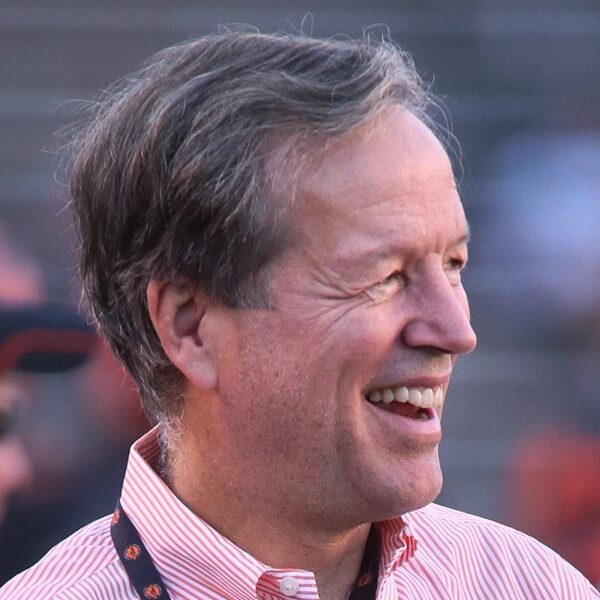 DAVID MILLER
At some point, nearly all of us will face ethical decisions and dilemmas in the workplace that are more complicated than we would like for them to be. And we may wish that there was a simple formula for always knowing the right thing to do. But unfortunately, ethical decisions rarely present themselves that way and often involve competing goods, conflicting loyalties, imperfect information, as well as very real stakes both for us and for others. Our guest today argues that wisdom begins not by simplifying these dilemmas, but by asking better questions and cultivating habits of reflection, examination, and inquiry. So today, together, we’ll explore not only his framework for ethical discernment, but what it reveals about becoming the kind of people capable of choosing wisely in confusing times. David Miller is the founder and has served for almost two decades as the director of the Princeton Faith and Work Initiative. He previously worked for more than 15 years in international finance, including roles at IBM, State Street Bank and a London based private equity firm, and now advises executives on ethics, values based leadership and the role of faith in the workplace. He is also, I’m very proud to say, a senior fellow of the Trinity Forum. The author of God at Work and his brand new work, The Five Questions for Ethical Decisions, which we’ve invited him here today to discuss. David, welcome.
Thank you. It’s wonderful to be with you, Cherie.
Well, it’s great to have you here. So you note, at the very start of your book, that most people who will come to your book do so because they have a particular story, something in their story has driven them there. And so as we start out, I would love to ask what it is about your own story that led you to write this book.
Well, I’ll certainly do that. But can I first thank you for the kind introduction, but let me add a P.S. to it. So I’ve had 18 amazing, wonderful years at Princeton University, but I’ve decided to retire, but not retire as in permanently. I’m retiring from the university, and I’m having the joy of, and very excited about going to become a senior fellow at the Center of Theological Inquiry, also CTI as it’s known. So I’ll be continuing the work of the Faith and Work Initiative from a new platform. And I couldn’t be more excited, and appreciative for these great times at Princeton and very much looking forward to what’s ahead.
Well, congrats to you and to CTI.
Well thank you. I’m humbled by it and very excited. It’ll be great. So back in my corporate days, I remember sitting in the annual ethics lecture that we were all required to have for compliance purposes. And I just thought they’re the most boring, ridiculous thing. Waste of time. Of course I know what the right thing to do is. Why am I here? I’m not a bad person, but as I proceeded through my corporate life and then later my theological studies and thinking about these things, I realized, well, actually, even though I may think I know everything, I certainly don’t. And even the smartest, best, and most well intentioned people will sometimes find themselves in situations where you just don’t know what to do. And I thought, well, wow, that’s what we need to work on. And then to find a way that makes it interesting and exciting and not just sort of a boring compliance exercise.
Yeah. So I think it’s only appropriate as we start out to basically ask what is ethics and how is it distinct if it is from, say, virtue and character?
Yeah. So I used to open my ethics classes with the undergraduates and also graduate students as well in MBA programs, and ask that very question of them and they would say things like “well, ethics is what you ought to do or what you should do, or it’s what you do when nobody’s looking”. And those are all good answers, but I somehow found them, and frankly, most of the academic books defining ethics, I find them somehow wide of the mark. That they are either too theoretical or too simplistic. So I had to take my own medicine and come up with my own definition. And I’ve come up with one sort of lengthy sentence. But to me, ethics is the art and discipline – so there’s a cognitive part of it. That’s the discipline, a thoughtful approach to things, not just winging it, but there’s also an art. There’s a sense of artistry to it. So it’s the art and discipline of discerning, which is a robust word, not just winging it, but serious thought, the art and discipline of discerning the right, the good, and the fitting action to take. And the right, the good, and the fitting are a simple way of saying three different intellectual traditions or historical traditions of ethics. So right is rules based, deontology. You could call the good teleology or utilitarianism. So sort of performing a moral calculus on who benefits and who harms? Do you accomplish your goals or not? And the third is really virtue ethics, kind of to your point where you don’t need a rule book, you don’t need laws, you don’t need to perform moral calculus, but you just [are] virtuous. You just know the appropriate thing to do. So I talk about discerning the right, the good, and the fitting action to take. And then I end my definition by saying “and having the creativity and courage to do it”. Because a lot of times we finally get to what we know we ought to do even in a complex situation, but do we have the courage to do it? And sometimes it takes creativity.
Well, I want to dig into that in just a second. But before we do, one of the things that really sort of struck me at the outset of your book is that you noted there was a survey that said that 96% of employees agreed with the idea that they always act with integrity at work. And yet it seems like cheating is rampant. Ethical infractions have have increased. And that’s not only true for employees. There’s also something kind of going on with leadership. Just in the process of kind of doing a little bit of research for our interview, I stumbled across a PricewaterhouseCoopers survey that said that 90% of executives believe that their company is trusted by their customers. But when customers were surveyed, it was only 30%. So it seems like, you know, you mentioned at the outset, why should I study ethics? I’m an ethical person. It seems like there is something going on where there is a huge perception gap in how ethical we believe ourselves to be, whether we’re an employee or whether we’re in management. What do you think is going on here.
So I think a researcher suggests our self-image is often higher than it ought to be. I’m really fascinated by this. I used to think a lot about the bad apples. Like, what do you do with the bad apples? And I really don’t think about that much anymore because they’re always going to exist. But I’m really interested in the good apples, people like you and me and probably everyone listening to this. We don’t go to work on Monday saying, well, I’m going to try to commit fraud today, how do I do that? But we find ourselves inevitably, in some situations where we might consciously or subconsciously make poor decisions, ill advised decisions. Even the Apostle Paul says in his book to the Church in Rome, I do that which I know I ought not to do. So it is a real thing. So I think one of the things I hope the book will accomplish is to have people become self-aware and say, okay, so what do I do about that? How do I be self-aware? And are there any practical things I could do to insulate myself from poor judgment and bad decisions.
Yeah. Well, let’s go back to the framework that you mentioned about the different I think at one point you called them different lenses, the right, the good and the fitting. And maybe you can walk us through what that actually looks like to, to use each of those lenses in terms of ethical decision making.
Sure. So if any of you have been to the eye doctor, you’ll notice that when they put that thing in front of you, it’s called the phoropter with all the different lenses and the ophthalmologist is going click, click, click click, wait, stop, stop. It’s 20/20. I can now see. So my research suggests that we all are sort of pre-wired to one of these three ways of thinking ethically. I can’t quite prove it. But just like there’s Myers-Briggs test or introverts or extroverts, neither is good or bad. They just are what they are. So some of us, the population make decisions based on, well, what’s the rule book say? What’s the law? Well, that’s great, except sometimes as one of Shakespeare’s characters said, the law is an ass or the law is immoral. Apartheid was immoral, yet it was the law. Slavery in this country and so forth. So the law is a good place to start, but not always the only place you should look. So particularly if someone is only wired to think a certain way, other people will make sort of an ethical calculus. But the trick is to bring all three together like a Venn diagram. So just like we can get visual clarity with the phoropter that we can maybe get ethical clarity by asking different questions, which come from each of these three different ethical lenses, and that I think can often help us avoid unintended consequences. And sometimes the law is just out of date. Maybe it’s well intended or think [about] today with AI and new technologies or new financial instruments. If you’re in the financial sector, the legislature is some people deciding things [and] they often don’t even understand, frankly, what they’re regulating and what they’re trying to legislate, even with the best will in the world. So we need more lenses than than just law.
You know, I can imagine scenarios in which people using the three lenses come to very different conclusions. And one example that comes to mind would be Martin Luther King Jr. Like what he articulated in the Letter from a Birmingham Jail where, in addressing the white clergymen, he was arguing that what is legal is not actually right. And they also had very big differences on what is fitting. Letter from a Birmingham Jail largely argues from the point of view of what is good in God’s law. What does one do as an ethicist when, even when people are using those three lenses, they come to very different conclusions and the stakes are really high.
Well, in fact, that’s actually a good thing, as opposed to having groupthink where everyone immediately jumps to one conclusion without pausing. By the way the title of the book is The Five Questions for Ethical Decisions, and the subtitle is How to Succeed Without Selling Your Soul. So these five questions, it’s actually good if you slow down and it’s good if you have different points being argued around the table. In fact, I suggest that management teams and any work group organization, large or small, they will have richer conversations if they have people who have different orientations towards one of those three lenses. Now, at the end of the day, you do have to make a decision. You have to decide, is it fair or foul, in or out? Do I capitalize or do I expense it? Do I say yes or do I say no? But it’s okay, in fact, [it’s] sometimes the absolute correct thing to slow down in a world which is going faster. For the ethical gray zone, we need to slow down. And there’s a lot of research, and we draw it in the book. Daniel Kahneman has a great book called Thinking Fast and Slow. And there are some times when we should slow down, particularly when there’s a high stakes situation going on.
Yeah. Now, you mentioned there’s five distinct questions and we kind of talked about the first one, which is simply like, what is ethics? Yeah. But, you know, I’m sure there’s many of us who would really like a single moral principle, but in doing this book, why does there need to be five questions rather than, you know, one kind of guideline? And what is it that you think each question kind of illuminates?
Yeah. So to me, there’s the actual ethical moment when you’re making a decision, but there’s a lot that precedes it and a lot that follows it. In fact, I break out in the book and by the way, the book is written with Susan Richardson, a great colleague of mine here at Princeton. And one of the ways I think about and we articulated in the book is, there’s sort of three modes of ethics, to your question. One is what I call preventive ethics. So before anything even happens, are we thinking about this? Are we practicing our ethical fitness? So we use that analogy that just like we could be physically fit and work at that we could be ethically fit. So for example, some companies that I know, they will start out a meeting once a month, they’ll do this and they will focus on a particular ethical dilemma that’s happened in their industry, or maybe even in their company. And they’ll say, well, what do we do about it? How do we think about it? What sort of advanced planning, you know, think the great athletes or musicians, they’re always anticipating what will happen and what the opposing team, if you’re an athlete, what they’re going to do, what they’re going to throw at you. And so you know how to respond once you see it, you’re not surprised or caught off guard. So there’s preventive ethics because we all break at some point, by the way. So how do we stay ethically fit? The second is what I call live ethics. So we were in the middle of a situation. You’re using these three lenses and other tools. And then finally there’s restorative ethics. Sometimes we make the wrong decision and we have to apologize and find a way to rebuild a relationship. Maybe it’s with a friend or a partner or a client or a customer or the regulators. So thinking of ethics and sort of like the old joke, how do you eat an elephant? One bite at a time. So here are three bites and ways to think of it with those three things. But you know, one of the questions, kind of my favorite question, by the way, isn’t the one about decision making, the ethical gray zone. It’s the fifth and final question is how do you stay ethically fresh? How do you stay ethically fresh? And by that, I mean, how do you stay in your game? I have seen, sadly, many people at later points in their career of doing something they know they shouldn’t have done. And there’s a couple examples in the book where two of my good friends ended up going to jail for white collar crime, so we don’t want to be that kind of person. Going back to the Apostle Paul, he talks about running a good race and finishing well. So I think that even at younger points in our career, it’s wise to think how do we stay ethically fit, ethically fresh? Well, it’s having symbols or reminders. Here in my desk, I have a plumb line, an old metal plumb line. That was my granddaddy’s. And you might remember plumb line is how you tell something straight. So what is their sort of moral rectitude involved? Is it straight? So I have that. I have a picture of my wife, of our nieces, other things that make me stay grounded, help me stay grounded.
Yeah. You know, part of what you describe, it’s really fascinating to me in that part of the assumption of your book is that one needs to have a good sense of our own nature in order to make wise decisions and also to ask the right questions. The kind of the assumptions that you make about human nature, you call most people part of the “movable middle” that is neither spotless saint nor thoroughly sinister, but quite vulnerable to right incentives and insecurities and pressures and the like. And essentially, an acknowledgment that we are fallen and we are frail. In many ways that is an assumption that seems to echo and embody a theological doctrine of original sin, and its an assumption that’s not shared by everyone. There are a lot of folks who really feel like human nature needs to be liberated rather than corralled or redeemed. And you’re teaching this course at a secular Ivy. And your course on ethics has been consistently rated one of the most popular courses there. How do you go about teaching a course on ethics, which inevitably has assumptions about human nature that are theological in nature at a secular Ivy university?
So there’s the loaded question for me, right? It’s actually not so hard. I mean, most ethics courses are either taught with an accent on jurisprudence, which is fine. What does the law say? Or they’re taught through sort of a Greco-Roman secular philosophy. And that’s also really important. What did Plato say? And all the great philosophers from centuries gone by. But I think it’s almost intellectual malpractice to not ask, what do the great religious traditions say? And not just my tradition, but all traditions. And if you go back and look at them, they actually have an awful lot to say about behavior and conduct, and who is my neighbor and how I should treat my neighbor. And even some of the texts in the Hebrew Bible actually talk about what to do if you’ve harmed someone in a trade, in a purchase or a sale, in ways to make that person whole. The course had some boring academic title, and the students have nicknamed it How to Succeed Without Selling Your Soul. Hence the subtitle of the book.
But I say at the beginning, this course is not about whose religious tradition is right or wrong. That’s not an unimportant question, but that’s not what the course is about. It’s about what wisdom can you gain from traditions? And oh, by the way, it’s an international world we live in now, and some of you will be living or working overseas, or you’re going to have international employees. And you need to understand and respect the religious systems from other countries because they often shape and inform culture and art and legal systems and governmental systems. So the students actually breathe this huge sigh of relief once they find out this isn’t about being sold something or pushed into a certain religious worldview, but rather it’s just simply respected. And then the students are really curious, and I ask them to learn about whatever their own tradition might be, including atheism and agnosticism. I mean, this is what I call faith friendly from A to Z, from atheism to Zoroastrianism. We need to understand this and have respect, and in it find great wisdom.
Yeah. You know, you mentioned just a second ago some folks you’ve known who late in their life and career have wound up in prison because of really wrong ethical decisions. And you’ve talked in your book about how most of us sort of think about ethics at a moment of big crisis, but actually often disastrous ethical decisions aren’t made in some dramatic moment. They are the logical, perhaps almost inevitable outcome of a whole series of small decisions that have preceded them that might have seemed insignificant, or perhaps even even close to harmless. And I wonder the extent to which those big decisions really kind of reveal or reflect habits that we’ve kind of cultivated over years and how much of the work of kind of cultivating ethical leadership is actually about the cultivation of personal character.
The little things add up. We have certain tests in our life. There’s a great course that’s taught at another school and a book, I think by a similar title called Defining Moments. And they may not be dramatic, they might be small-ish, but as we have these defining moments, they will begin to inform who we are and the character we’re cultivating. And one of the points in the book is who are we becoming and that there’s actually a lot more potential for change in our life than we sometimes think. I think the stereotype is, as you get older, you just get more crotchety and stuck in your ways. And maybe some people do that, but there’s a lot of change also. And indeed, if you look at religious traditions, they often have something about a redemption or a chance to have forgiveness and healing and becoming whole so someone can change. And that can include ethical things as well as other behaviors. But as you mentioned earlier, there is this what I call sort of this ethical bell curve that I think of at one end, we’ve got the saints. I’m not one of those. At the other end, we’ve got the I don’t know, the schmucks, the bad like really chronically, pathologically, people [who] always are going to try to get over the system, but most of us live in the middle, this moveable middle and it’s a function of the culture that we’re in. And by that, I don’t mean culture as far as the arts, but the the tone that’s set in the company. Is it a company that really is always trying to do the right thing? And it’s not just lip service and platitudes, but they really mean it and they do take care of their people. So this moveable middle, how can we create environments that move us towards the sainthood end of this this bell curve? That’s what really interests me. And a lot of the things are sort of subconscious biases. In fact, I tease my students sometimes I said, you have more odds of going to jail for white collar crime than someone who’s maybe not even gone to college or has gone to a community college or something. Like, what are you talking about? That’s because you’re all so doggone smart that you can rationalize anything. You can rationalize it if we really want it. You can rationalize, I can rationalize anything. And I think the slippery slope phenomenon, little cheating on little things or doing little things and kind of becoming numb or inured to them. That and rationalization are the two biggest things that we talk about in the book, and other things that will cause good folks to have ethical lapses.
Mhm. You know, in some ways that’s incredibly sobering. But one of the things that kind of occurred to me while reading the book is, you know, you’ve talked a lot about our ethical frameworks. And that’s one of the big questions, what is your decision making framework? But our ethical frameworks are largely developed through reflection, community, and formative institutions. But it seems like we’re at a time where our technologies, even our very media of communication are increasingly distracting us from reflection, isolating us from community. You know, they are kind of, in many ways reinforcing our worst instincts by confirming our biases, feeding us customized algorithms of rage. AI often reinforcing or flattering our opinions. And they are eroding our institutions as well. All of which is sort of taking us away from or eroding our capacity for the strength of those very frameworks that allow us to make ethical decisions. I’m sure you have thought about this. What do we do?
Buy the book and read all the five questions. No, I’m being silly, but I think intentionality is maybe what we need. I mean, the mere fact that you raised that question and that other people are raising it too, and I think people are looking for practical resources. I mean, I kid around sometimes if you’re in an ethical dilemma that you’re probably not going to say, well, gee, what did Immanuel Kant say about this? Or what did Epicurus say about this? Or what? But if you develop your own phoropter, your own three lenses framework that asks some basic questions that can really help. So I think it’s intentionality, for example, is maybe another part. It’s a question, what’s your public language for doing ethics or for having an ethical discussion? And today, in this age of incredible polarity and extreme positions of one or the other. How does one in a meeting, if you don’t think it’s the right thing for your company to do, and let’s say you’re the junior employee at the table, do you say something? And if so, how do you say it? I had a situation one time. The students were, for whatever reason, they just weren’t raising their hands to volunteer to ask questions. And I asked one of them, am I scaring everybody? What’s up? And they said, no, no, no, no. We’re just, we’re anxious about what our peers will think about what we say, particularly if it’s a minority opinion on something. So the next class, I said, “look, we have 12 weeks, three hours a week. 12 times three is 36. You all have 36 chances to fail to raise your hand and say something that isn’t coherent, that’s okay. But I tell you what you should do that you need to practice that now. Practice. How do you speak ethically about ethical issues in a polite, appropriate way? That’s not holier than thou or that’s not angry or things like that. Because when you leave and you go to work for a bank or a consulting company or whatever you end up doing, you’re not going to get 36 chances to fail. So part of one of the points in the book is to really have ethics become interesting. I mean, it’s a story of life. I have the students read, one of the required readings is the Wall Street Journal that because that’s the story of life, of success, of failure, of exciting things, there’s art, columns, there’s religious stories in the Wall Street Journal, things people wouldn’t think of. So that just cultivates habits and disciplines. You know, Aristotle talked about habituation, and this sort of idea that we can cultivate habits. And the younger we start, the better. And after a while, things are just more natural. They come naturally to us as opposed to having to go through a big analysis.
Yeah. You know, you mentioned your fourth question about what is your public language for ethics? And it seems to me that the corporations have a real problem because trust has tanked. You know, there’s just kind of study after study showing that public confidence in corporations has really gone down. And there’s some obvious reasons for that, you know, ethical scandals, you know, the hypocrisy around, you know, the cause one year is exactly opposite from the cause the next year. And there’s also, frankly, real benefits for companies to prioritize cultivating an image of honesty while cutting corners. There’s a lot of built in incentives to do that. You’ve had a lot of corporate CEOs as clients. People who have an obligation to the bottom line and are often pressured by quarterly reports. How do you encourage them to build trust in their company and build honesty in that kind of environment.
Sure. Well, first, you know, I actually want to push back a little bit on the first part of the question. The Edelman Trust Barometer, which is one of the great survey organizations [reveals] that actually trust in the business community is one of the higher ranking trusts. It wasn’t that way in 2008, to be sure, with the great financial crisis. But it has rebounded. In fact, there’s less trust in religion and religious organization, [and] there’s less trust in government. So there’s certainly a broader institutional distrust. But surprisingly, the business community comes out better than some people would think. To be sure, we always hear the the salacious stories and those are the ones that are the lead with stories. But the vast majority of the executives I know and employees, they want to do the right thing, And they usually do. So I think the it’s sometimes the wrong assumption to assume that business people have this horrible conflict. Yes, they have to have satisfactory profits for their shareholders and their owners. But most of them also do care about society. And it’s not lip service. They care about their employees. And particularly, think of small and medium sized businesses, or even like Howard Dahl who is sponsoring this. Like he really cares about his people and his clients, and he will sacrifice things as the owner of the business to help his clients, his employees, because he really cares. He’s playing the long game. And a lot of even publicly traded companies, a lot of the folks are playing the long game.
Yeah. Also, I’d love to get your thoughts about what happens when we mess up. You know, because we’re in an environment where there’s cancel culture on one hand, there’s also examples of whether different organizations that have excused just about anything as long as the perpetrator is powerful, popular or profitable. How should organizations and leaders think about repentance or failure, repentance and second chances? You know, both broadly, but also specifically in the context of a fiduciary duty to the public.
Sure. So, I wrote with one of my other colleagues, Michael Tait, a paper a while ago called towards a Restoration of Trust. And the subtitle was Insights and Lessons from Wisdom Traditions. And we did a study looking at all continents, the three Abrahamic traditions, asking what does Judaism, Christianity and Islam have to say about the restoration of trust. So when we’ve made a mistake and from an organization, if a corporation has made a mistake. And we came up with 11 different theses that all were grounded at common amongst these three different religious traditions of ways to help begin building trust. In fact, the company that commissioned this white paper invited me then to go to Davos and presented at Davos. And people were fascinated by the idea. They had never thought about. Gee I tend to think of religion as a personal and private matter, which I think it is. But at the same token it has public ramifications, and it can be sort of people’s North Star in many cases even if they’ve moved away from the beliefs from their childhood. But still they have that training, the sense of what’s beautiful, right, and good to do. So I think this question of restoring trust is an important one. And religious traditions offer an awful lot of wisdom. I mean, as my wife would sometimes say, first you start by saying, I’m sorry. So it’s a good place to start. And being honest and owning what it is and then putting in place structures and systems. It’s going back to organizational life so that it doesn’t repeat itself. Again, the book has lots of stories and examples of organizations and individuals who are all about restoring trust when inevitably something breaks.
You know, it was a great pedagogical technique. You ended every chapter by saying a few bullet points, saying, if you remember nothing else. So we’re going to turn to questions for our audience in just a second. But before doing that, if your readers remember nothing else from your book, what would you want them to remember?
Yeah. By the way, in every class I have about 3 or 4 times I’ll say to students, if you remember nothing else, remember this. And like after a while they go, Professor, it’s like 40 different things over the semester. So now I have to answer that question. That’s a good one. I would say for the ethical gray situation, slow down and don’t trust your gut. Slow down. Put it through your phoropter, through your three lenses, and seek wise counsel from other people. Don’t do it in a vacuum. That would be it. If you remember nothing else, slow down, seek wise counsel, and don’t make big decisions in a vacuum.
That’s great. Very memorable. So we’re going to turn to questions from our viewers. So the first question comes from an anonymous attendee, and they ask for those of us who are Christians in secular settings, do you have thoughts on how to make ethical decisions informed by faith? And to communicate them in ways that make sense to those around us?
Yeah. Wow, what a super question. I think it could be the same for whatever religious tradition someone is, but this person asking out of the Christian tradition. I think if you start reading the Bible through the lens of the marketplace and the commercial world, you’ll find that there’s an awful lot of [wisdom]. The New Testament records 40 different parables. I’m sure Jesus told more, but there’s 40 that got into the the four Gospels. And over half of them are about life in the marketplace, life in the what today we will call the business world and the economic structure. So read those through that lens. That would be one thing I would suggest. I’m kind of old school, I think prayer really helps. That can help also with creativity, sleeping on something, seeking wise counsel. Then the second half of the question. I think it’s probably not helpful in most cultures or contexts to say, “well, the Bible says X” because other people [at] the table may not care about what the Bible says, or they may have a different Bible they look at. So I think I would use language that’s softer. And to say that, well, this doesn’t feel right to me and here’s why. Or I’m uncomfortable with this decision and here’s why. Or is this what we want to be known for? If this were a public conversation what we’re having right now, would we be proud of that conversation? And the other person may not need to know the internal motivations.
So [now] a question from Kate Gardner. Kate asks.
Hi, Kate! Former student.
Oh, there we go. She’s [says] Professor Miller, thanks for the insights. Have you thought about creating a self-identification tool similar to Myers-Briggs about one’s natural proclivity with ethical decision making? What would be the strengths and limitations of it?
Wow. Well, first of all, Kate, thank you. Yes. In fact, I’ve done that with a couple of other folks. I’ve put together an instrument called The Integration Profile. It’s very hard to do actually. It’s a psychometric scale, but I have sort of a very simplistic way of doing it. And then there’s formal psychometric scale. So we could talk offline if you if you ever want to, Kate. But there’s some simple questions you can ask yourself or one can ask oneself that would let one be self-aware. Oh, I tend to be in the right lens or the good lens or the fitting lens.
Right. So a question from an anonymous attendee and they say, you mentioned Daniel Kahneman’s classic work, Thinking Fast and Slow, which reveals just how little we understand of our own motivations, something Christians should be able to grasp given our understanding of human fallibility. How can we distinguish between following our conscience and simply rationalizing a decision we already want to make?
Yeah. So that I think if we’re aware enough that we’re already rationalizing that’s a good sign that we should stop. There’s a fair bit of research about instinct and gut feel. And as a general rule of thumb, as a Christian or just in general, if you think something is a really good idea and your gut tells you that, you probably shouldn’t trust your gut. But if your gut is saying, I’m a little uncomfortable with this, that’s when you should trust your gut. So that would be maybe a simple way to think about that. Because when there’s something shiny and beautiful and exciting and we want it and we’re attracted to it or it’s money or it’s promotion or it’s praise. It’s extraordinary the length that we will go to, and I include myself in that. How do we make sure that we don’t go down that path of rationalizing these things?
So our gut is more accurate when it’s a downer.
Exactly. Yeah.
A question from Joshua Lund. A Joshua asks Doctor Miller, could you speak to the use of AI as a tool at work, particularly to the decision making in situations that could appear morally neutral at best. What do you feel are ethical limitations for the use of this new technology, and should it have a role in making critical business decisions?
Yeah, boy, this is kind of the question of the century, in various formulations. So I’ve been fortunate to be at the seat of the table at some very interesting conversations. I spent a couple trips last year over to the Vatican, working with the Vatican. As you’ve probably followed, both Pope Francis and now Leo are very interested in this. And the recent encyclical written is all about AI and trying to protect the humanity in this whole process. There’s a few groups I work with that weekly get together with a mixture of technical and religious people from all religious traditions who are very concerned about the the algorithms and how AI is making decisions. One of my colleagues, Michael, wrote a thesis actually on automated, autonomous weapons. So all driven by AI. Do we want AI deciding whether to pull the trigger or drop the bomb? Or do we want a human being in that cycle? So it’s a huge question. No simple answer. What I would say is that the important thing is to have humans still making decisions and not relying just on AI. But AI is going to get better and better and better. And arguably, sometimes AI will be better than some people at making decisions. So it’s a haunting question and one that will be with us for a while. What I recommend is for people, like I’m doing and many others who are working with the big tech companies and trying to have these conversations. And actually the tech companies are interested in it. They do want to hear even the religious voices, which might come as a surprise to some people.
So Tom Nelson asks, how might religious leaders better equip and encourage their parishioners in Monday Ethics?
Hey there Tom. Yeah. Well, Tom’s a master at this himself as a pastor of a large church and writes a lot about the Sunday-Monday connection, if you will. I think what clergy could do is have more illustrations and examples in their sermon about daily life in the work world. And I don’t care whether you’re bagging groceries at the grocery store or stocking shelves, or if you’re an M&A lawyer or if you’re a CEO, from secretary to CEO, have stories in your sermons, illustrations, and then tie them back somehow to the biblical text where there might be a resonance with it. And I’ll bet you will also find more people will actually be interested in going to church if they hear sermons that are incorporate that.
So another question from an anonymous attendee and he says, David, it’s sad to think of people making serious ethical errors and facing the consequences. Focusing on organizational dynamics, how can a leader create a culture where people feel safe, raising ethical concerns before they become ethical failures?
Well, you know, people talk about the tone at the top as a cliche, but it is true. In fact, one of the illustrations we use in the book, Craig Philip was CEO of a very large company and he tells a story on himself of when he had a lapse in ethical judgment, where it’s a long story, which I won’t go into, but essentially, it was a safety issue that he violated their own safety code and safety was the number one thing in this company because it was a dangerous work environment. And Craig had created a culture such that he got home that night, and he got an email from one of the rank-and-file low level employees who emailed and essentially said, Mr. Philip, you broke our safety code today. And Craig, to his immense credit, first of all, that the person felt he wouldn’t get fired for doing that. Often the messenger gets shot. Then Craig sent out an email to the whole company apologizing, saying, you’re absolutely right. And then he also said, but you folks to please remember next time. Someone should have called me out then and there when it happened as well as later. But thank you for letting me know. And I am sorry. So boy, I tell you that that story probably got told thousands of times over and over and that the culture in that company now is different. So I think when a leader is candid and transparent, particularly if she or he make a mistake, to apologize and let it be known.
Yeah. Someone along those lines, another anonymous attendee asked, do you have any advice for managing upwards when you feel you are making the right ethical decision, but your boss either disagrees or overrules?
Yeah. So let’s assume it’s not a life and death ethical [situation]. One of the challenges I give students is one of the toughest parts about ethics is picking your fights. Because if every single thing that’s just a little bit not right and you’re a noisy clanging gong after a while that people just may not listen to you, that may mean you’re in the wrong organization and you should move on if you’re able to, if the organization sort of chronically unethical. I’ve found, first of all, most bosses, they do want to hear someone, they do want someone to speak truth to power. They do want to have a contrarian view. If the boss doesn’t like that and the boss wants everyone just to sort of salute, again, you have two choices. Do you stay and when do you raise your hand to the question? And maybe one way to do it is to say, “look, I understand why this is important and the logic behind what you’re proposing, but can I throw out another way of thinking of this?” So it’s not you’re wrong, I’m right. But to say, is there a third way? Is there another way we can approach the problem? Or I’m a little bit concerned about the unintended consequences of this, or if this goes awry or things like that. So I would put it forward as a question, as opposed to taking someone on. And if the person doesn’t respond well to that, then you probably don’t have the best boss in the world. And it may be time to think about another strategy or another organization. Or within your own organization, maybe to move to a different area if it’s a big company. But I take the point. I mean, that can be a scary thing to go to your boss, particularly if it’s your boss’s pet project or pet strategy.
Nathan Swanson asks, other than Howard Dahl, who are some current business, cultural or public square leaders who model your insights well?
Oh gosh. Well, buy the book and read it. There’s dozens of stories in there. I don’t want to single anyone out here, but there are some companies that are just known year in and year out for taking the long view and doing the right thing. In many different industries and we tell some of those stories in the book.
That’s great. So Zach McCourt says, hi, Professor Miller, amazing discussion. How do you think about making ethical decisions in the context of what might be best for an individual versus a broader organization?
Well, hey, Zach, first of all, great to see you. I hope you’re watching Wimbledon. , Zach’s a tennis player as captain of the tennis team here. Ethical trade-offs are a real thing. Something could be good for the individual as he was just saying, but not so good for the company or vice versa. So one of the teachings out of the Christian faith accents self-sacrifice that doing something for the common good may actually disadvantage us some. So a radical way to think about it might be to think really first, what’s best for the team, what’s best for the company, what’s best for the organization, even if that means I’m disadvantaged some myself. And I think over time, behavior like that, being known as that sort of person goes a long way. Let’s say you’re in charge of, if you’re an organization that has bonuses or something at the end of the year, maybe you give yourself a bit less of a bonus and give that to other people who maybe wouldn’t have as much. Or even if you’ve earned every bit of your bonus, I think there are other ways where it’s kind of exciting to be known as the person that cares about the team. But that’s contrary, I think, to a lot of the world we live in where it’s about how do I get ahead? How do I maximize my career? How do I be the best version of myself? And all these kind of phrases that as opposed to thinking about who is my neighbor and how do I help the team?
So an anonymous attendee asks, I’m interested in what you’ve observed on how students have engaged these questions over time. Have you observed changes in how they’re doing so?
Yeah. So I would say over the past couple of decades of teaching, if there’s one generalization I would make is, by the way I think every older generation thinks that they were more ethical than the generation behind them. But I think that just goes on every time. But if I’m not deluding myself, I would say the one both concern I have and the one thing that actually gives me great hope for the next generations is, the concern is there’s a sense of ethical relativism, that there’s a discomfort with having boundaries with having frameworks, guidelines. There’s a rejection of that as a general statement. And if you reject guidelines and boundaries and standards, it can lead over time to a pretty unethical or chaotic world. Or antinomianism might be the fancy way of saying it. So that would be my concern. Ethical relativism, a resistance of hard and fast rules. On the other hand, there’s extraordinary care for the world of people not just wanting to go out and have a great career and make a lot of money, which is fine. There’s nothing wrong with that. But they also want to make the world a better place. And whether it’s the environment or the products that they’re selling, having meaning and purpose, things that frankly, I didn’t think as much about when I was starting my career. I have both some concerns and some great hope about the students I teach.
So the questions just keep coming there. We’ve got quite a few of them. Ken Leahy asked, is there a helpful way to speak into ethical concerns on an issue on social media?
Where angels fear to tread.
So yeah. So it depends, of course, which social media you’re talking about. I think some it’s a lost cause because there are people who are just going to be angry and trolling. And unfortunately, with anonymity, people can hide and do some pretty cruel things. So it’s a tougher platform. I don’t have any good advice there other than you’re probably going to have a lot of frustration based again [on] which platform you’re talking about. Is it really an earnest conversation with people who really care? Or is it just a free for all where, where people are slamming each other and finding joy in being rude and obnoxious?
You know, the next question, also from an anonymous attendee and somewhat along the same vein, they ask, given the moral maze that is the internet. Any suggestions on where we go for a reality/sanity check on a difficult ethical dilemma, especially if all of our friends are, quote, like us and share similar views.
That’s very interesting. Yeah. So what some leaders do in their management teams is they will assign a person and it’s a rotating assignment. So let’s say there’s a weekly team meeting. They rotate who this person is and someone is the designated contrarian or the designated devil’s advocate to go back to an old Catholic tradition. And that person’s job is, and they’re given permission to take the contrary view of what the team is talking about. And I think that’s a really creative and kind of a fun way. So the person is empowered and they may actually believe what they’re saying too and would have been afraid to say it if they had not been the designated contrarian that day. There’s some literature on what they call constructive deviance. I worked for IBM for many years before going into finance and I had a poster on my wall, it’s beautiful, of Canadian geese in the V formation and sort of photoshopped into it was like Daffy Duck or this duck figure, and the caption was, IBM wants a few wild ducks as long as they fly in formation.
So another question from an anonymous attendee and they say, back on the theme of Christians in a secular workplace, how can employees navigate situations where core business goals of the organization seem to conflict with their ethical principles? Let’s assume the employee needs the job.
Yeah, well, I suppose it depends on the magnitude of the Christian principle that you feel is being violated. Is that sort of de minimis or is it just a major, major, major issue for you? If it’s the major issue and you don’t have an alternative, because not everyone has the choice to to go to another company. Then my counsel and without knowing the details would be to try, at least in your own orbit, to be the kind of person that you want to be. I believe everyone has a sphere of influence, even if you’re at the the bottom of the ladder, the hierarchy of the organization, you at least have peers, you have colleagues, you have friends and try to be the kind of person that’s there for everybody else and to follow your ethical principles in the places where you do have influence and take some satisfaction that where you can change the organization or impact it positively you’re doing that even if you can’t change the overall organization.
And so we’ll take one more question. This is one is also from an anonymous attendee. And they say, if you don’t mind a personal question, what was your experience writing this book? Was there anything in particular that you learned in the process of putting these ideas to paper that challenged you?
So as I mentioned, I did this with Susan Richardson. So that was a huge help. I’ve been asked a variation of that question. How long did it take to write the book? And the answer is 20 years, which is not that I was behind my laptop for 20 years, but it’s 20 years of stories and experiences and trying to put it into this framework. I think what I learned myself was a reminder of, it’s actually question two, that we haven’t talked about. What’s the source of your ethics? And the students will often say, or companies because I’ve used the same five questions, by the way, one of the big international banks has adopted this as their decision making framework for things in the ethical gray zone. Quarter million employees were trained on it in 110 countries around the world. And people tend to wrestle with that question the most. What’s the source of your ethics? Well, your mom, your dad, your grandma, your rabbi, your priest, your coach, your spouse, these are. But where did they get it from? And you ultimately bump into metaphysical questions. You begin asking sort of theological questions. And that’s one of the things that really, really hit me, the, the importance of that. And even if someone is not faith oriented or spiritually inclined or religiously inclined, it’s a question worth pondering. What’s the source of my ethics and how do I stay true to them?
And finally, we’ve reached that point, David, where I’m going to give you the last word to close this out.
Alright, well, one last just logistical thing before doing that. Susan and I have put together a website called the five questions.com. And there’s exercises and resources in ways that build on the book. So you’re welcome to go there and check that out. So my final last word, after all is said and done with all these things we’ve talked about. Sometimes it helps to have sort of an acid test, a quick acid test. So I’ll leave you with the four M’s of ethical decision making. The first is what would your mother say? Like, would my mom say, Davey, I didn’t raise you to be that way. The second, what would your mentor say? Would your mentor say, wow, I’m kind of disappointed. You know, I thought you were of a different fiber or would your, your mentor say, I’m really proud. That was a tough decision. The third is what would the media say? What would the headline read? Is it one that you’d be proud of or kind of be embarrassed? So your mother, your mentor, the media, and the fourth M is what, if you’re so inclined, would your Maker say? So I leave you with the four M’s and thank you, Cherie, for having this and for Howard and for all I hope was worth your time.
David. This was great. Thank you so much. And thank you to all of you for joining us. Have a great weekend.